
The Authority in Global Agricultural Chemistry & Bio-Resources
Bulk Talc Powder Specs That Often Get Missed at Sourcing Stage
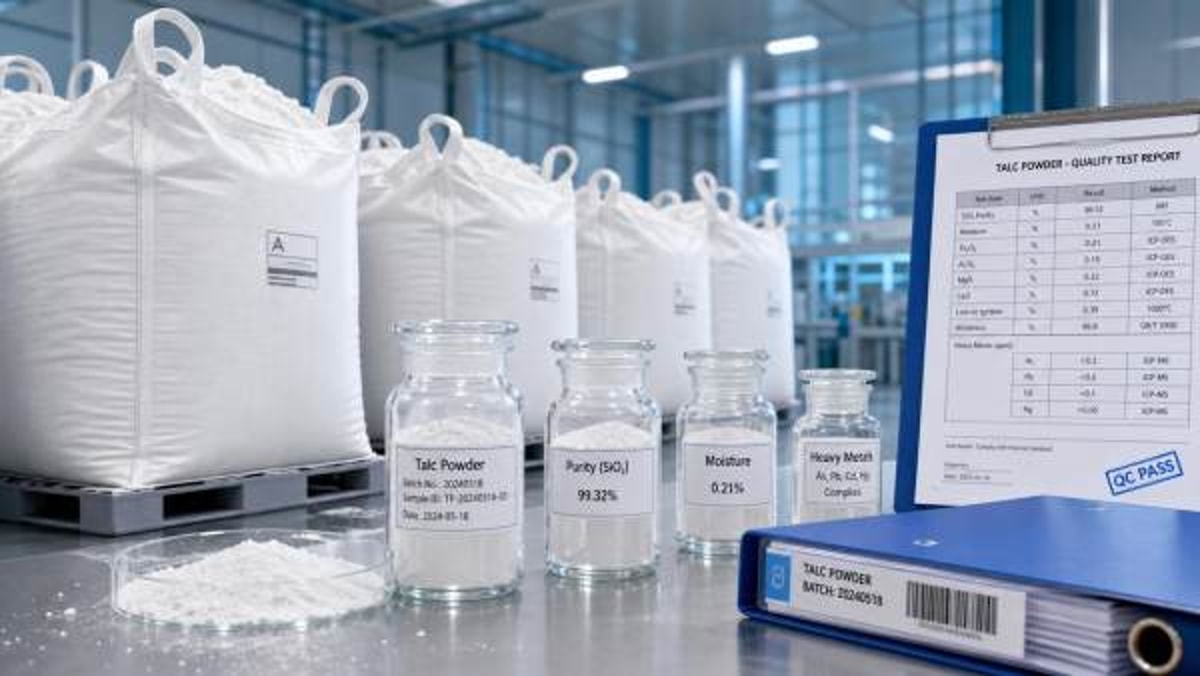
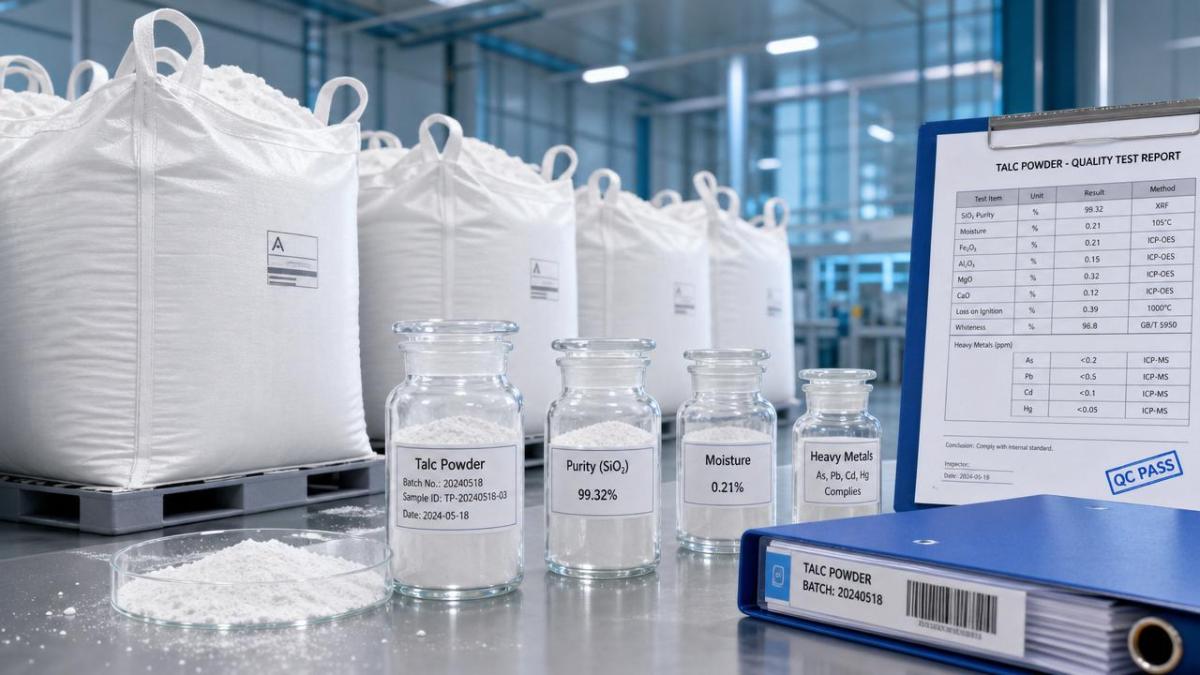
When sourcing bulk talc powder, procurement teams often focus on price, particle size, and whiteness while overlooking critical specifications that directly affect product safety, processing stability, and regulatory acceptance. From purity and moisture content to heavy metal limits and documentation traceability, these missed details can create costly downstream risks. Understanding them early helps buyers secure more reliable supply and better long-term performance.
What bulk talc powder really means in industrial sourcing
In practical terms, bulk talc powder is not a single uniform commodity. It is a mineral-based material whose performance depends on ore origin, beneficiation method, particle engineering, contamination control, and final application fit. Two suppliers may both offer talc with similar visual whiteness and median particle size, yet the powders can behave very differently in plastics compounding, coatings, paper filling, agriculture carriers, rubber processing, or cosmetic-grade systems.
For procurement professionals, this distinction matters because talc is often specified into formulations where consistency is more important than the lowest purchase price. A missed variable at the sourcing stage may lead to poor dispersion, unstable viscosity, abrasive wear, off-color production, or failed compliance checks. In regulated and quality-sensitive sectors covered by AgriChem Chronicle, the sourcing conversation must move beyond basic commercial descriptors.
Why the market is paying closer attention to hidden specifications
Global raw material procurement has become more demanding for three reasons. First, downstream manufacturers are operating with tighter process tolerances. Second, regulatory scrutiny on mineral contaminants and traceability has expanded across regions. Third, supply chains now involve more cross-border documentation, creating a larger gap between a supplier’s standard data sheet and the buyer’s true operating requirement.
That is why experienced buyers of bulk talc powder increasingly ask deeper questions about mineral composition, heavy metal control, lot-to-lot variation, and test methods used. The objective is not just technical completeness. It is risk control across procurement, compliance, production, and customer acceptance.
Specifications that often get missed before contracts are signed
The most commonly missed specifications tend to be those that are less visible on marketing materials but highly influential in real-world use. Buyers evaluating bulk talc powder should review the following areas carefully:
- Mineralogical purity: Talc percentage alone is not enough. Associated minerals such as chlorite, dolomite, magnesite, calcite, quartz, and serpentine can change softness, brightness, and processing behavior.
- Moisture content: Excess moisture can affect storage flowability, blending accuracy, and downstream drying load.
- Loss on ignition: This can indicate the presence of bound water, carbonates, or other mineral phases relevant to thermal processes.
- Oil absorption: Especially important for coatings, polymers, and compounds where formulation balance depends on filler interaction.
- pH and surface chemistry: These influence compatibility with additives, binders, and active ingredients.
- Heavy metal profile: Lead, arsenic, cadmium, and mercury limits may be decisive for regulated applications.
- Asbestos and fibrous mineral exclusion: This is a non-negotiable requirement in many sectors and jurisdictions.
- Microbiological status: Usually overlooked, but relevant in cosmetic, pharma-adjacent, and certain agricultural formulations.
- Bulk density and packed density: These affect dosing, freight economics, and mixing system performance.
- Documentation traceability: A strong certificate package is often as important as the powder itself.
A practical overview of key hidden parameters
The table below summarizes why these less-discussed specifications deserve early attention when qualifying a bulk talc powder supplier.
Where missed talc specs create operational impact
The value of a deeper specification review becomes clearer when viewed across application contexts. In plastics, a bulk talc powder with poor particle distribution may reduce stiffness targets or create surface defects. In paints and coatings, the wrong oil absorption level can force formulation changes and increase additive consumption. In paper, impurity differences may influence brightness retention and machine cleanliness. In agricultural carriers and technical powders, moisture and flow behavior affect dosing precision and shelf stability.
For procurement teams serving multiple business units, it is risky to approve one generic talc grade for all internal users. Even within the same company, technical expectations can differ significantly between polymer fillers, feed-related processing aids, and fine chemical formulations. A specification that appears acceptable in one plant may generate complaints in another.
Application-oriented view for buyers
A useful way to source bulk talc powder is to classify requirements by application rather than by mineral name alone.
Documentation is a specification, not an attachment
One of the most overlooked truths in mineral sourcing is that documentation quality often predicts supplier reliability. For bulk talc powder, buyers should verify whether the supplier can provide a consistent package including certificate of analysis, test methods, SDS, country of origin, batch coding logic, contamination control statement, and where relevant, asbestos-free and heavy metal declarations tied to actual lots.
Procurement teams should also check if laboratory results come from internal quality control only or are periodically validated by accredited third-party labs. In higher-risk applications, that distinction matters. A supplier with clean paperwork but weak traceability can become a serious exposure during customer audits or import reviews.
How procurement teams can assess supply quality earlier
The best time to identify specification gaps is before commercial approval, not after a production complaint. A more robust qualification process for bulk talc powder usually includes four practical steps.
- Build an application-linked specification sheet that includes hidden parameters, not just appearance and size.
- Request multi-lot data to understand normal variation rather than relying on one ideal sample.
- Compare supplier test methods with internal or customer-required methods to avoid false equivalence.
- Validate plant-scale performance through trial batches, especially when changing origin or grade.
This approach is especially relevant for organizations that supply regulated, export-oriented, or performance-sensitive sectors. A low-cost bulk talc powder that fails on documentation, consistency, or contamination control is rarely low cost in total ownership terms.
Questions worth asking suppliers before final selection
To improve decision quality, procurement specialists can ask a short set of technical-commercial questions during evaluation:
- What is the ore source and how stable is the mineralogy across production periods?
- Which contaminants are routinely monitored, and at what frequency?
- Is the asbestos-free statement supported by a defined analytical method and current testing schedule?
- What is the guaranteed moisture limit at dispatch and after normal storage?
- Can the supplier provide historical data for particle distribution, bulk density, and brightness by lot?
- How are nonconforming lots identified, isolated, and communicated?
These questions help separate commodity-style offers from professionally controlled industrial supply programs.
A more reliable sourcing mindset for bulk talc powder
The central lesson is simple: sourcing bulk talc powder should not stop at price, whiteness, and nominal fineness. The more reliable view combines mineral understanding, application fit, contamination control, and document integrity. That broader evaluation supports better production outcomes and fewer surprises in audits, customer approvals, or cross-border trade.
For procurement teams in primary industries, fine chemicals, agricultural processing, and adjacent regulated sectors, a stronger specification discipline creates measurable value. It reduces reformulation risk, protects operational continuity, and improves confidence in every shipment received. If your current talc qualification standard still treats bulk talc powder as a simple commodity, now is the right time to revise the checklist and align technical review with actual end-use demands.
Related Intelligence
- APIs & IntermediatesWholesale Zinc Oxide Prices Vary for Reasons Beyond PurityWholesale zinc oxide prices vary by more than purity alone. Explore how process, specs, compliance, and freight impact cost to source smarter and reduce supply risk.
- APIs & IntermediatesWholesale Iron Oxides: Shade Consistency Is Harder Than It LooksWholesale iron oxides shade consistency is harder than it looks. Learn the hidden causes of batch variation, key QC checks, and smarter sourcing steps to reduce risk and protect product quality.
- APIs & IntermediatesBulk Phosphoric Acid Buying Mistakes That Delay ProductionBulk phosphoric acid buying mistakes can trigger delays, rejects, and higher costs. Learn how to compare specs, suppliers, and documents to protect production.
The Morning Broadsheet
Daily chemical briefings, market shifts, and peer-reviewed summaries delivered to your terminal.
