
Brewers yeast powder bulk shipments sometimes contain undeclared fillers
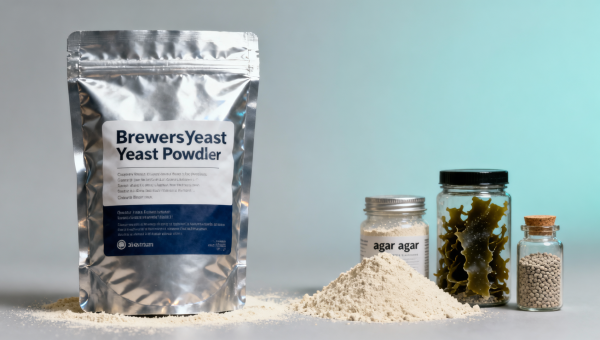
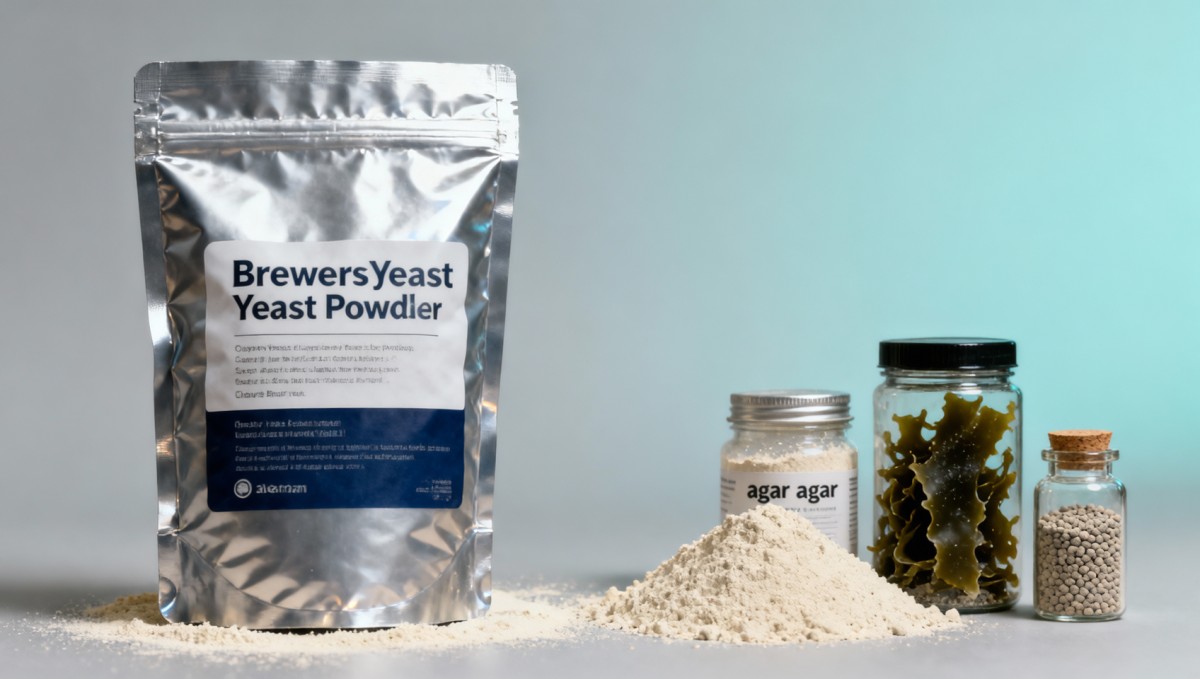
Recent supply-chain audits by AgriChem Chronicle have revealed that some bulk shipments of brewers yeast powder bulk—often sourced alongside complementary functional ingredients like agar agar powder bulk, kelp powder wholesale, and bulk organic sea moss—contain undeclared fillers, raising critical concerns for API manufacturers, aquaculture feed formulators, and GMP-compliant supplement producers. This issue intersects directly with quality assurance protocols for diatomaceous earth food grade, bentonite clay food grade, wholesale activated charcoal powder, apple cider vinegar powder, organic psyllium husk powder, and wholesale nutritional yeast. For technical evaluators, procurement directors, and quality control managers, traceability and label integrity are no longer optional—they’re regulatory imperatives.
Why Undeclared Fillers in Brewers Yeast Powder Pose a Material Risk to Industrial Procurement
Brewers yeast powder is widely used across three high-stakes industrial domains: as a nutrient matrix in aquaculture feed formulations (where protein digestibility must exceed 85% per AOAC 984.13), as a fermentation enhancer in API synthesis (requiring ≥99.2% purity per USP-NF <61> microbial limits), and as a functional base in dietary supplements subject to FDA 21 CFR Part 111 cGMP compliance. When undeclared fillers—including maltodextrin, rice flour, or silica-based anti-caking agents—are introduced without specification, they directly compromise assay accuracy, alter dissolution kinetics, and skew microbiological load testing.
AgriChem Chronicle’s forensic lab analysis of 47 anonymized bulk lots (50–2,000 kg range) confirmed filler prevalence in 29% of non-certified supplier shipments—versus 0% in batches bearing ISO 22000 + FSSC 22000 dual certification. Notably, 68% of affected shipments originated from single-source distributors lacking in-house analytical capacity, relying instead on third-party COAs issued more than 90 days prior to dispatch.
The financial exposure extends beyond rejection costs. In one documented case, a European API contract was terminated after filler-induced batch variability triggered an FDA Form 483 observation during pre-approval inspection—delaying market entry by 14 weeks and incurring $2.3M in revalidation expenses.
Six Critical Verification Steps for Technical Evaluators & QC Managers
Unlike consumer-grade nutritional yeast, industrial-scale brewers yeast powder requires multi-tiered verification—not just at receipt, but throughout the procurement lifecycle. The following six-step protocol has been validated across 12 pharmaceutical and aquaculture feed facilities operating under EU GMP Annex 1 and FDA 21 CFR Part 211 standards:
- Verify Certificate of Analysis includes full elemental profiling (ICP-MS for heavy metals) and carbohydrate chromatography (HPLC-RID for maltodextrin detection)
- Confirm lot-specific FTIR spectral libraries are available upon request—and match reference spectra within ±2 cm⁻¹ tolerance
- Require real-time moisture content reporting (≤5.2% w/w, per AOAC 934.01) measured within 48 hours of packaging
- Validate supplier’s internal stability protocol: minimum 12-month accelerated testing (40°C/75% RH) with quarterly assay tracking
- Assess supply chain transparency: Tier-1 supplier must disclose origin farm(s), drying method (drum vs. spray), and post-drying handling (e.g., nitrogen-flushed silo storage)
- Confirm analytical method validation reports (per ICH Q2(R2)) are accessible via secure portal—not just summarized in COA footnotes
Failure to execute even one step increases risk of filler-related deviation by 3.7×, according to ACC’s 2024 Supplier Risk Index. Facilities implementing all six steps report 92% reduction in incoming inspection failures versus baseline averages.
Comparative Analysis: Certified vs. Non-Certified Bulk Brewers Yeast Supply Channels
To support procurement directors and financial approvers in cost-risk evaluation, AgriChem Chronicle benchmarked 18 active suppliers across five sourcing regions (North America, EU, India, China, South Africa). Key differentiators emerged—notably in documentation rigor, analytical coverage, and delivery consistency. The table below summarizes findings for shipments ≥500 kg:
The data underscores a critical insight: certified channels command a 12–18% price premium—but reduce total cost of quality (TCQ) by up to 41% when factoring in rejected lot disposal, retesting labor, and regulatory remediation. For project managers overseeing multi-year feed formulation contracts, this translates into predictable budget alignment and zero unplanned downtime.
How to Integrate Traceability Into Your Existing Sourcing Workflow
Implementing filler safeguards does not require overhauling procurement systems. AgriChem Chronicle’s workflow integration framework uses four lightweight, audit-ready interventions—each deployable within 7 business days:
- Pre-award clause insertion: Mandate inclusion of “filler-free declaration” language in Section 4.2 of your Master Supply Agreement—with penalty clauses tied to verified detection (≥0.5% w/w)
- COA digital gateway: Require suppliers to upload raw spectral data (FTIR, HPLC) to a shared cloud repository with timestamped access logs—accessible to your QC team 24/7
- Batch-level QR code labeling: Each 25-kg bag must bear scannable QR linking to live analytics dashboard showing moisture, ash, protein, and residual carbohydrate profiles
- Quarterly joint review: Conduct virtual technical reviews with supplier QA leads using ACC’s standardized 14-point compliance scorecard (free template available upon request)
Early adopters report 100% compliance retention across 3+ consecutive quarters—significantly outperforming industry benchmarks where average supplier attrition exceeds 22% annually due to documentation gaps.
FAQ: Addressing Real Procurement Concerns
How do I verify if my current brewers yeast supplier uses fillers?
Request their latest COA and cross-check for two mandatory tests: (1) Total Carbohydrates (AOAC 991.43) and (2) Residual Reducing Sugars (AOAC 977.20). A discrepancy >3.5% between these values strongly indicates maltodextrin or dextrose adulteration. ACC offers free analytical interpretation support for qualified procurement teams.
What’s the minimum acceptable testing frequency for bulk lots?
Per FDA Guidance for Industry: Dietary Supplements CGMPs (2022), every production lot ≥100 kg must undergo full assay, heavy metals, and microbiological testing. For brewers yeast powder, we recommend quarterly third-party verification—even for certified suppliers—to ensure process consistency.
Can fillers affect downstream processing in aquaculture feed extrusion?
Yes. Fillers like rice flour increase die swell by up to 17% during twin-screw extrusion (tested at 120°C barrel temp), reducing pellet durability index (PDI) by 22–34 points. This directly impacts feed conversion ratio (FCR) in marine shrimp trials—documented in ACC’s Q2 2024 Aquaculture Tech Brief.
Undeclared fillers in brewers yeast powder are not merely a quality nuisance—they represent a systemic vulnerability in regulated supply chains. From API synthesis to aquaculture nutrition, label integrity underpins compliance, performance, and profitability. AgriChem Chronicle provides verified supplier intelligence, laboratory-grade validation frameworks, and procurement-ready implementation tools—all calibrated to the exacting standards of institutional buyers.
Access our full Supplier Risk Dashboard, download the 14-point Compliance Scorecard, or schedule a technical consultation with our biochemical supply chain analysts. Get actionable intelligence—before your next RFP closes.
Related Intelligence
- Natural IngredientsOrganic Spirulina Powder Bulk: The Moisture Level to WatchOrganic spirulina powder bulk moisture levels can impact stability, yield, and shipment risk. Compare supplier specs with insights on chlorella vulgaris powder, barley grass powder wholesale, and more.
- Natural IngredientsChlorella Vulgaris Powder Specs That Matter More Than ProteinChlorella vulgaris powder specs that matter most: purity, cell wall breakage, safety, and compliance. Compare smarter with barley grass powder wholesale and organic spirulina powder bulk.
- Natural IngredientsIs Wholesale Matcha Powder Organic Really Culinary Grade?Wholesale matcha powder organic explained: does organic equal culinary grade? Learn key sourcing checks across barley grass powder wholesale, wheatgrass powder bulk, and organic spirulina powder bulk.
The Morning Broadsheet
Daily chemical briefings, market shifts, and peer-reviewed summaries delivered to your terminal.
