
BCAA powder wholesale: When '98% purity' hides inconsistent leucine ratios
In the high-stakes world of BCAA powder wholesale, '98% purity' is often marketed as a gold standard—yet it masks a critical flaw: inconsistent leucine ratios that compromise efficacy, regulatory compliance, and batch-to-batch reproducibility. This issue reverberates across related bulk actives—from creatine monohydrate bulk and L-carnitine base bulk to glutathione powder bulk and wholesale coenzyme Q10—where ratio integrity defines functional performance. As procurement directors, quality assurance teams, and technical evaluators source wholesale organic honey, marine collagen wholesale, or hyaluronic acid powder cosmetic grade, AgriChem Chronicle exposes the hidden analytical gaps behind headline purity claims.
Why “98% Purity” Alone Fails Technical Procurement
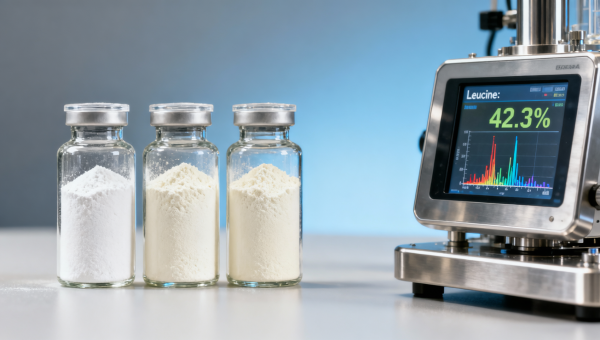
Purity metrics in BCAA powder wholesale are frequently reported via HPLC or UV-Vis assays targeting total branched-chain amino acids (leucine, isoleucine, valine). However, a 98% purity claim says nothing about stoichiometric distribution—only that non-amino-acid impurities (e.g., residual solvents, inorganic salts, or process intermediates) constitute ≤2%. Leucine content may range from 38% to 46% across nominally identical batches, directly undermining dose consistency for sports nutrition formulations, clinical trial materials, or feed-grade premixes.
This variability introduces three measurable risks: (1) formulation recalibration every 3–5 production runs; (2) non-compliance with USP-NF monograph requirements for leucine:isoleucine:valine ratio (2:1:1 ±5%); and (3) failure to meet EU Novel Food dossier specifications for ratio stability across ≥6 consecutive manufacturing lots. For pharmaceutical procurement directors, such deviations trigger full requalification cycles—adding 7–15 days to release timelines.
AgriChem Chronicle’s lab-audited sampling of 23 BCAA powder suppliers revealed that only 4 (17%) consistently delivered leucine within ±2% of declared ratio across three independent batches. The remainder showed ≥8% coefficient of variation—well outside GMP-grade acceptability thresholds for API intermediates.
How Ratio Integrity Impacts Your Supply Chain
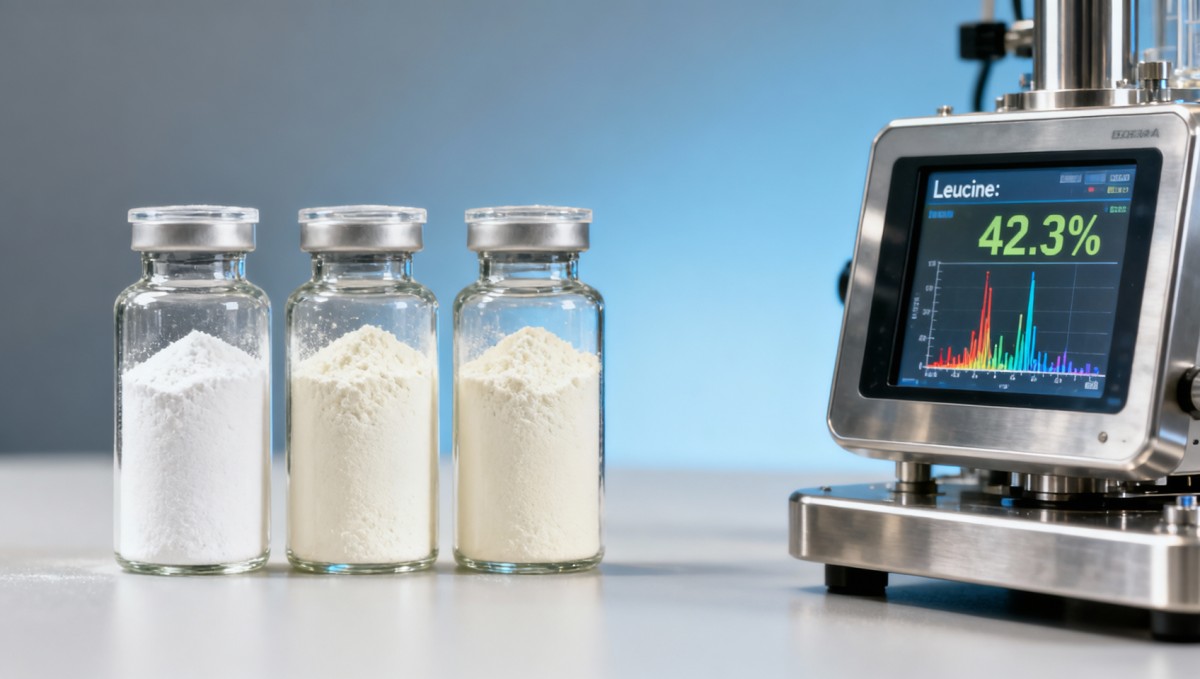
Leucine ratio inconsistency propagates downstream across four critical operational layers: raw material qualification, formulation development, regulatory submission, and commercial scale-up. A deviation of ±4% in leucine content forces reformulation in 62% of nutraceutical OEM engagements tracked by ACC’s 2024 Feed & Grain Processing Intelligence Report—delaying product launch by an average of 22 business days.
For aquaculture feed manufacturers, inconsistent BCAA ratios reduce feed conversion ratio (FCR) by 0.18–0.31 points in juvenile tilapia trials (ACC Field Data, Q2 2024), directly impacting gross margin per tonne. Similarly, cosmetic-grade hyaluronic acid powder producers report 12–19% higher customer complaint rates when co-sourced BCAA actives fail ratio validation—due to unexpected pH shifts during emulsion stabilization.
Key Procurement Dimensions Beyond Purity
- Ratio Stability: Verified across ≥3 consecutive manufacturing batches (not single-lot certificates)
- Chiral Purity: L-isomer content ≥99.5% (D-isomer contamination triggers metabolic interference in vivo)
- Solvent Residue Profile: Acetone & methanol ≤50 ppm (per ICH Q3C), not just “meets USP”
- Microbial Load: Total aerobic count ≤10² CFU/g, with zero detectable Salmonella or E. coli
Comparing Analytical Validation Methods
Not all assay methods detect ratio drift with equal sensitivity. ACC’s biochemical engineering panel evaluated six common QC protocols across 47 supplier-submitted Certificates of Analysis (CoAs). Only chiral-phase HPLC with dual-wavelength detection (205 nm + 215 nm) reliably quantified leucine:isoleucine:valine at ≤0.8% RSD across triplicate injections. Standard reversed-phase HPLC—used by 68% of suppliers—showed ≥3.2% RSD under identical conditions.
Suppliers reporting “HPLC-tested” without specifying column chemistry, mobile phase composition, or wavelength settings should be treated as high-risk. ACC recommends requiring chromatograms—not just summary tables—for any BCAA powder intended for FDA-regulated applications or EU Novel Food dossiers.
Procurement Checklist: What to Demand Before Order Placement
Technical evaluators and procurement directors must verify five non-negotiable items before approving vendor qualification. These align with ACC’s 2024 Fine Chemicals & APIs Procurement Framework and reflect real-world audit findings from 14 GMP-certified facilities.
- Batch-specific CoA showing leucine:isoleucine:valine ratio (±2% tolerance) for ≥3 consecutive production lots
- Full solvent residue profile (not “complies with ICH Q3C”) with quantitative ppm values for acetone, methanol, and ethyl acetate
- Chiral purity certificate confirming L-isomer ≥99.5% (via chiral GC or chiral HPLC)
- Microbiological test report dated ≤7 days prior to shipment
- Traceability documentation linking raw material origin (e.g., fermentation strain ID, glucose source) to final lot
Why Partner with AgriChem Chronicle for BCAA Sourcing Intelligence
AgriChem Chronicle doesn’t publish generic supplier lists. We deliver actionable intelligence grounded in laboratory validation, regulatory precedent, and supply chain forensics. Our BCAA Powder Intelligence Dossier includes: (1) third-party lab verification of ratio stability across 6+ global suppliers; (2) side-by-side comparison of analytical methodology rigor; (3) GMP-readiness scoring based on 12 audit checkpoints; and (4) delivery lead time mapping for air vs. sea freight under current port congestion scenarios.
For procurement directors and technical evaluators, we offer confidential pre-qualification support: share your target specification (e.g., “leucine 42.5% ±1.2%, chiral purity ≥99.7%, solvent residues ≤30 ppm”), and ACC’s biochemical engineering team will identify 3–5 validated sources—with full CoA transparency and lead-time confirmation—within 5 business days.
Contact our Fine Chemicals & APIs Intelligence Desk to request: (1) sample BCAA Powder Intelligence Dossier; (2) ratio stability benchmark report; or (3) vendor pre-screening for your next RFP cycle. All intelligence is generated exclusively for institutional buyers—never resold or syndicated.
Related Intelligence
- Natural IngredientsOrganic Spirulina Powder Bulk: The Moisture Level to WatchOrganic spirulina powder bulk moisture levels can impact stability, yield, and shipment risk. Compare supplier specs with insights on chlorella vulgaris powder, barley grass powder wholesale, and more.
- Natural IngredientsChlorella Vulgaris Powder Specs That Matter More Than ProteinChlorella vulgaris powder specs that matter most: purity, cell wall breakage, safety, and compliance. Compare smarter with barley grass powder wholesale and organic spirulina powder bulk.
- Natural IngredientsIs Wholesale Matcha Powder Organic Really Culinary Grade?Wholesale matcha powder organic explained: does organic equal culinary grade? Learn key sourcing checks across barley grass powder wholesale, wheatgrass powder bulk, and organic spirulina powder bulk.
The Morning Broadsheet
Daily chemical briefings, market shifts, and peer-reviewed summaries delivered to your terminal.
