

The Authority in Global Agricultural Chemistry & Bio-Resources
ANVISA Launches Fast-Track for Natural Ingredients in Brazil
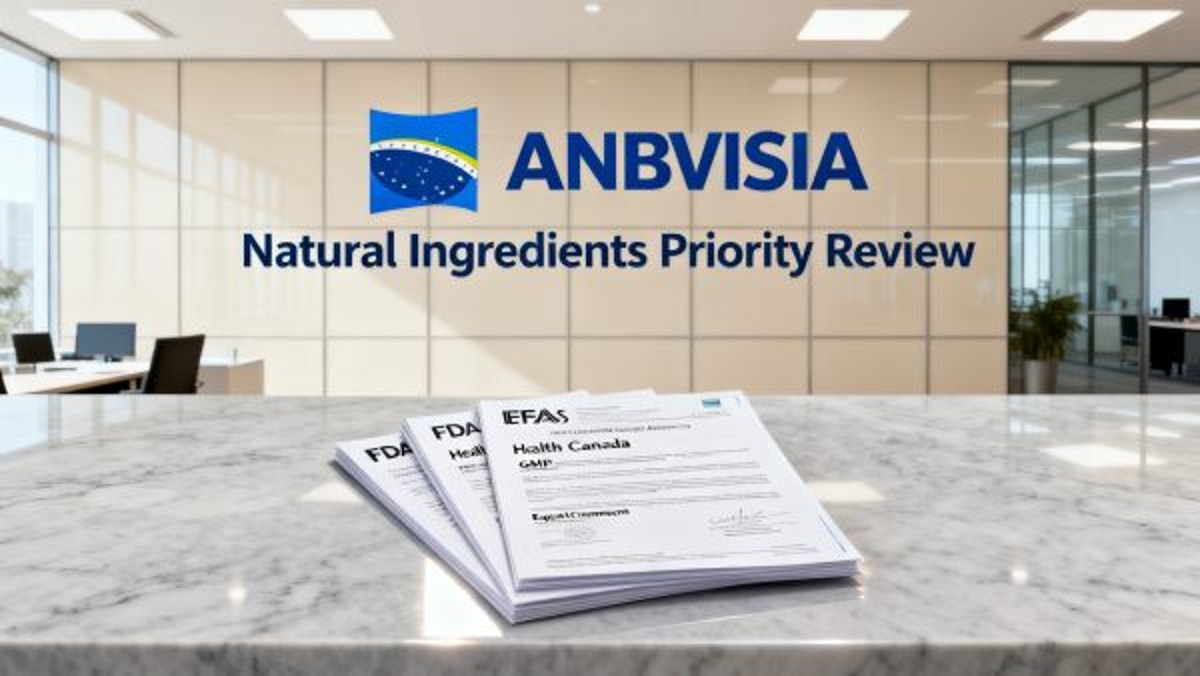
On May 6, Brazil’s National Health Surveillance Agency (ANVISA) launched the ‘Natural Ingredients Priority Review Program’, reducing import registration timelines for eligible natural dietary ingredients from 90 to 21 working days. This update is especially relevant for exporters and suppliers of natural ingredients—including manufacturers, traders, and regulatory support providers—operating in or targeting the Brazilian health and nutrition market.
Event Overview
On May 6, ANVISA announced the initiation of the ‘Natural Ingredients Priority Review Program’. Under this program, natural dietary ingredients that meet specified criteria—including holding current GMP certification and prior approval by FDA, EFSA, or Health Canada—are eligible for expedited import registration. The official processing timeframe has been shortened from 90 calendar days to 21 working days. Eligible ingredients include curcumin, resveratrol, and yeast beta-glucan. Chinese exporters must concurrently submit valid overseas GMP certificates and a statement of regulatory equivalence.
Industries Affected
Direct Exporters & International Traders
Exporters of natural ingredients to Brazil face revised documentation requirements and tighter procedural coordination. The 21-working-day timeline applies only upon full compliance with submission criteria—meaning delays may still occur if GMP certificates or equivalence statements are incomplete or outdated.
Raw Material Sourcing & Procurement Firms
Firms sourcing natural ingredients for formulation or re-export must now verify upstream supplier compliance with ANVISA’s new eligibility conditions. Prior FDA/EFSA/Health Canada approval status and active GMP certification become mandatory pre-qualification filters—not optional differentiators.
Contract Manufacturers & Formulators
Manufacturers incorporating imported natural ingredients into finished products (e.g., dietary supplements, functional foods) will experience faster ingredient onboarding—but only if their suppliers proactively meet the priority pathway criteria. Supply chain visibility into regulatory status becomes operationally critical.
Regulatory & Compliance Service Providers
Consultancies and regulatory affairs firms supporting ingredient registrations in Brazil must update internal checklists and client advisories to reflect the new evidentiary requirements: GMP validity, jurisdictional approval mapping, and equivalence declaration formatting.
Key Considerations & Recommended Actions
Monitor Official Guidance Updates
ANVISA has not yet published detailed technical guidance on ‘equivalence statements’ or accepted GMP certificate formats. Stakeholders should track ANVISA’s official portal and register for updates on implementation protocols.
Verify Ingredient Eligibility Before Submission
Not all natural ingredients qualify—even if structurally similar to curcumin or resveratrol. Eligibility depends on documented prior approval by FDA, EFSA, or Health Canada *for the exact same substance and use*. Companies should cross-check active regulatory listings before initiating fast-track applications.
Distinguish Policy Signal from Operational Readiness
The 21-working-day target reflects a formal commitment—not an immediate guarantee. Initial application volumes, staffing capacity, and inter-agency verification steps may affect real-world processing speed during the rollout phase.
Prepare Documentation Proactively
Overseas GMP certificates must be current (not expired), issued by recognized authorities, and accompanied by certified translations where required. Equivalence statements should explicitly reference the corresponding FDA/EFSA/Health Canada decision number and scope of authorization.
Editorial Perspective / Industry Observation
Observably, this initiative signals ANVISA’s intent to align its regulatory efficiency with international peers—particularly for low-risk, well-characterized natural ingredients. Analysis shows it is less a fully operationalized system change and more a targeted policy signal aimed at improving market access predictability. From an industry perspective, it reflects growing recognition of regulatory harmonization as a trade enabler—but actual impact remains contingent on consistent implementation and transparency around eligibility interpretation.
Conclusion
This measure does not lower safety or quality standards; rather, it compresses administrative review time for ingredients with established global regulatory acceptance. It is best understood not as a broad deregulation, but as a risk-proportionate acceleration mechanism—one that rewards regulatory preparedness and documentation rigor. For stakeholders, sustained attention to ANVISA’s procedural clarifications—not just the headline timeline—is the most pragmatic next step.
Information Sources
Main source: Official ANVISA announcement dated May 6 (no document ID or URL provided in input).
Note: Technical specifications—including acceptable GMP certificate issuers, equivalence statement templates, and list of qualifying ingredients beyond the named examples—remain pending formal publication and are subject to ongoing observation.
Related Intelligence
- Natural IngredientsANVISA Launches Fast-Track for Natural Ingredients in BrazilANVISA fast-track for natural ingredients in Brazil cuts import registration to 21 working days—key for exporters, formulators & compliance teams. Act now!
- Natural IngredientsANVISA Launches 21-Day Fast Track for Natural IngredientsANVISA Fast Track cuts natural ingredients registration to 21 days — if OECD GLP-certified. Boost Brazil market entry for plant extracts, enzymes & flavors.
- Natural IngredientsCosmetic Grade Mica Powder: Natural Look or Better Coverage?Cosmetic grade mica powder explained: discover whether it creates a natural glow or supports better coverage, with skin-type tips and smart makeup-buying guidance.
The Morning Broadsheet
Daily chemical briefings, market shifts, and peer-reviewed summaries delivered to your terminal.
