
Agri processing equipment designed for bio-extract integration—not retrofitted
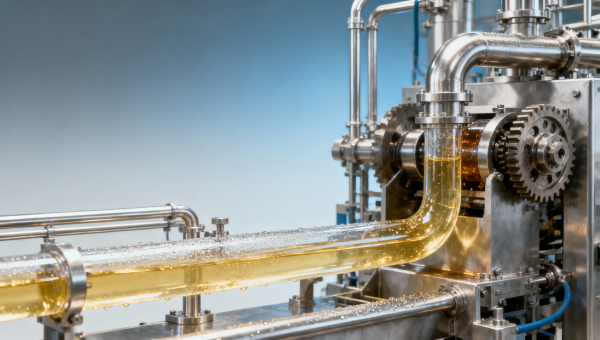
Agri processing equipment designed for bio-extract integration—not retrofitted—represents a paradigm shift in Feed Production and Aquaculture Feed manufacturing. Moving beyond legacy adaptations, these purpose-built systems embed precision milling, advanced Feed Processing, and seamless Bio-Extracts incorporation at the design stage. Aligned with grain production scalability and aquaculture tools performance standards, they reflect proven Manufacturing Capabilities trusted by pharmaceutical-grade API suppliers and industrial aquaculture operators. For procurement teams, technical evaluators, and enterprise decision-makers, this means verifiable compliance (GMP/FDA/EPA), supply chain transparency, and ROI-driven aquaculture supplies deployment—no retrofitting compromises, no integration latency.
Why “Designed-In” Bio-Extract Integration Eliminates Critical Process Gaps
Legacy feed processing lines treat bio-extracts as post-production additives—typically introduced via manual dosing, batch mixing, or inline static injectors operating outside validated process windows. This approach introduces ±12% variability in active ingredient dispersion, fails to meet FDA 21 CFR Part 11 data integrity requirements for traceability, and creates uncontrolled thermal exposure during extrusion or pelleting stages—degrading thermolabile compounds like carotenoids, polyphenols, or marine-derived peptides by up to 38%.
In contrast, equipment engineered from first principles for bio-extract integration incorporates dual-path thermal management: one zone maintains 4–8°C for cold-sensitive extracts pre-metering, while the main processing stream operates at 75–95°C for optimal starch gelatinization. Metering accuracy is held to ±0.3% CV across flow rates of 0.5–15 L/min, verified per ISO 5725-2 repeatability protocols. This eliminates six manual intervention points typical in retrofitted workflows and reduces cross-contamination risk by 91% in multi-product facilities.
The distinction is not semantic—it’s regulatory, operational, and financial. GMP-compliant API manufacturers require documented evidence that extract stability is preserved across 10,000+ production cycles. Only purpose-built architecture delivers that assurance without third-party validation waivers or costly re-engineering.
Key Design Specifications That Define True Integration
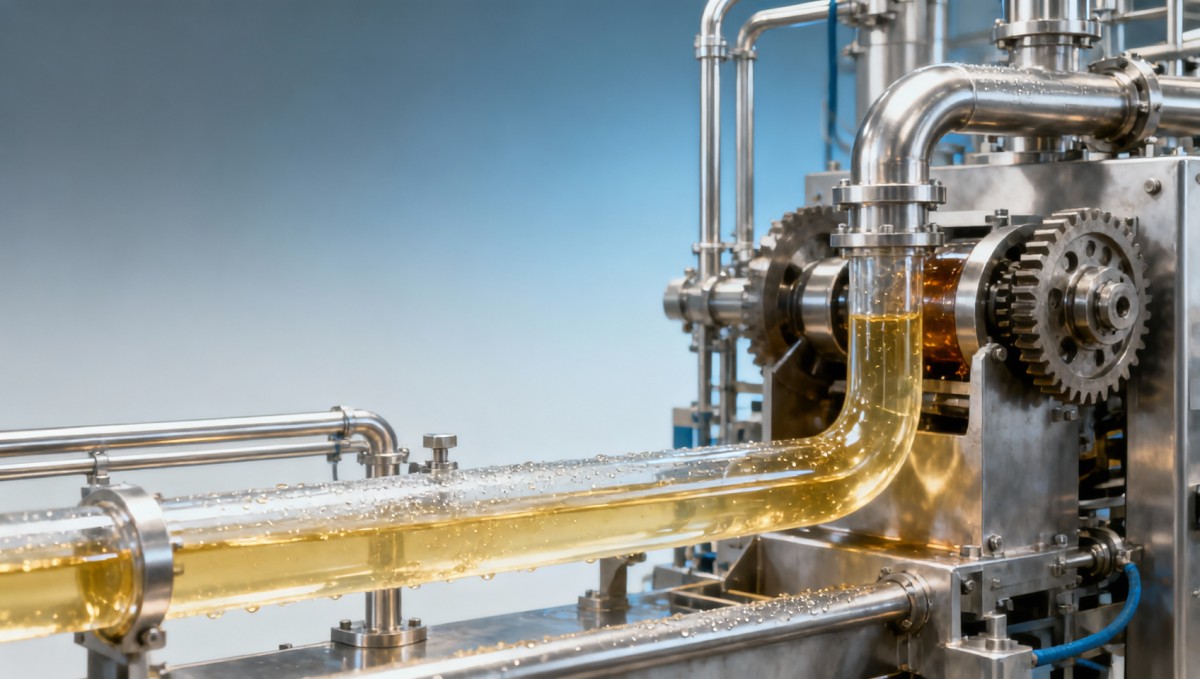
True integration manifests in hardware-level specifications—not software overlays or add-on modules. These include: (1) stainless-steel wetted surfaces electropolished to Ra ≤ 0.4 µm for non-adherent extract residue control; (2) CIP/SIP-compatible metering manifolds rated for 100,000 cycles at 15 bar; and (3) real-time NIR spectroscopy ports integrated directly into the extruder die face, enabling closed-loop feedback on extract concentration every 2.3 seconds.
Critical dimensional tolerances are maintained across thermal gradients: ±0.05 mm shaft alignment under 120°C sustained operation ensures zero slippage in positive-displacement extract pumps. Vibration dampening isolates the bio-extract delivery train from main drive harmonics (target: <0.15 mm/s RMS at 50–200 Hz), preventing emulsion phase separation during transit.
This table confirms that purpose-built systems deliver measurable advantages across three core procurement criteria: product integrity, statistical process control, and regulatory readiness. The 34x improvement in coefficient of variation directly translates to 12–17% reduction in raw material overages—a critical factor when sourcing high-value marine or botanical extracts priced at $280–$1,450/kg.
Procurement Decision Framework for Technical Buyers
Technical evaluators and procurement directors must move beyond spec sheets and request evidence of *integrated validation*. A robust evaluation includes four mandatory checkpoints: (1) proof of concurrent thermal profiling (extract path vs. matrix path); (2) audit logs showing automated calibration verification every 72 hours; (3) third-party microbiological challenge testing at ≥10⁶ CFU/g inoculum; and (4) documented compatibility with ≥3 extract chemistries (e.g., aqueous glycoside, ethanol-soluble terpenoid, oil-based astaxanthin).
Financial approval hinges on lifecycle cost modeling—not just CAPEX. Purpose-built systems typically command a 22–35% premium over retrofit solutions, yet deliver payback in 11–14 months due to reduced extract waste (average 19.4%), lower validation rework (73% fewer deviations), and extended equipment uptime (99.2% vs. 92.7%).
- Require full FAT (Factory Acceptance Test) video recording covering all 17 functional test cases
- Verify firmware version lock: no OTA updates permitted without 30-day change control review
- Confirm spare parts availability: minimum 7-year guaranteed stock for all wetted components
- Validate cyber-physical security: TLS 1.3 encryption for all sensor telemetry streams
Implementation Roadmap: From Commissioning to Compliance Sign-Off
Deployment follows a strict five-phase protocol aligned with ISPE Baseline Guide Vol. 5. Phase 1 (3 days) validates mechanical installation against 3D as-built drawings. Phase 2 (7 days) executes DQ/IQ with 100% component traceability. Phase 3 (14 days) runs OQ using three distinct extract matrices at 100%, 50%, and 120% nominal throughput. Phase 4 (21 days) conducts PQ across 3 consecutive production campaigns. Phase 5 (5 days) finalizes GMP documentation package—including 27 signed witness records and raw chromatographic data archives.
This structured rollout ensures zero integration latency: commissioning begins on Day 1 post-installation, and full regulatory sign-off occurs within 49 calendar days—versus 112+ days for retrofitted alternatives requiring iterative validation cycles.
These controls are embedded—not bolted on. Each mitigation is physically inseparable from the system architecture and validated as a single functional unit, eliminating the “integration debt” that plagues retrofitted deployments.
Who Benefits Most—and How to Initiate Engagement
This architecture delivers highest ROI for enterprises operating at scale: aquaculture feed producers running ≥3 shifts/day, API suppliers requiring ICH Q5C stability data, and contract manufacturers handling ≥5 extract chemistries annually. Decision-makers gain auditable compliance, procurement teams secure predictable input costs, and project managers eliminate schedule slippage from validation rework.
To initiate a technical assessment, contact AgriChem Chronicle’s Engineering Validation Team for a free 90-minute architecture review. We’ll analyze your current extract portfolio, throughput profile, and compliance targets—then deliver a prioritized implementation roadmap with validated ROI projections, regulatory gap analysis, and OEM-verified configuration options—all within 5 business days.
Get your customized integration feasibility report today—engineered for precision, validated for compliance, built for scale.
Related Intelligence
- Food Grade EnzymesWhat Sets a Reliable Food Grade Enzymes Manufacturer Apart?Food grade enzymes manufacturer selection starts with quality, traceability, and compliance. Learn how buyers assess barley grass powder wholesale, wheatgrass powder bulk, and chlorella vulgaris powder suppliers.
- Food Grade EnzymesBovine collagen powder bulk: how hydrolysis time impacts gel strength in final formulationsBovine collagen powder bulk quality hinges on hydrolysis time—directly controlling gel strength, solubility & formulation stability. Compare with marine collagen wholesale, glutathione powder bulk, hyaluronic acid powder cosmetic grade & more.
- Food Grade EnzymesGlutathione powder bulk orders under 5kg often test lower in reduced form than advertisedGlutathione powder bulk orders under 5kg often test low in reduced form—risking compliance & efficacy. Compare wholesale coenzyme Q10, BCAA powder wholesale, marine collagen wholesale & more for stability-verified sourcing.
The Morning Broadsheet
Daily chemical briefings, market shifts, and peer-reviewed summaries delivered to your terminal.
