
Turmeric Extract Curcumin: Why Test Results Often Don’t Match
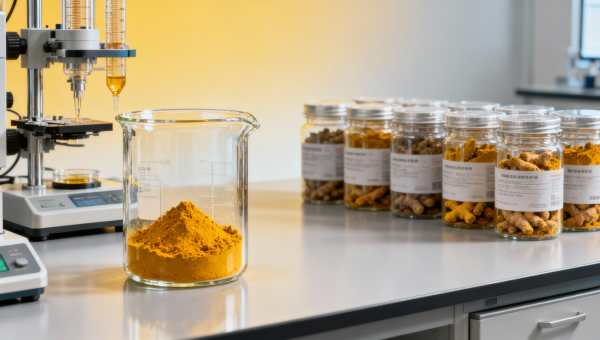
Turmeric extract curcumin is widely promoted for potency and consistency, yet laboratory reports often tell different stories. For buyers comparing turmeric extract curcumin with ingredients such as erythritol powder bulk, stevia extract wholesale, vanilla bean extract bulk, or lutein powder wholesale, mismatched test results can create serious risks in quality control, sourcing, and compliance. This article explains why discrepancies occur and what technical and procurement teams should verify before making decisions.
In B2B ingredient supply chains, a mismatch of even 2% to 5% in assay results can affect formulation claims, import documentation, release testing, and final product cost. For quality managers, formulators, and procurement teams, the issue is rarely just about one laboratory being “right” and another being “wrong.” More often, the discrepancy comes from differences in test methods, raw material variability, extract specification, sample handling, and reporting conventions.
Turmeric extract curcumin is especially vulnerable to interpretation errors because buyers may use the term to describe several different things: total curcuminoids, curcumin alone, standardized extract ratios, or finished ingredient blends. When those definitions are mixed, the same shipment can generate apparently conflicting certificates of analysis. That creates downstream risk for compliance, pricing negotiations, and supplier qualification.
Why turmeric extract curcumin results vary from one report to another
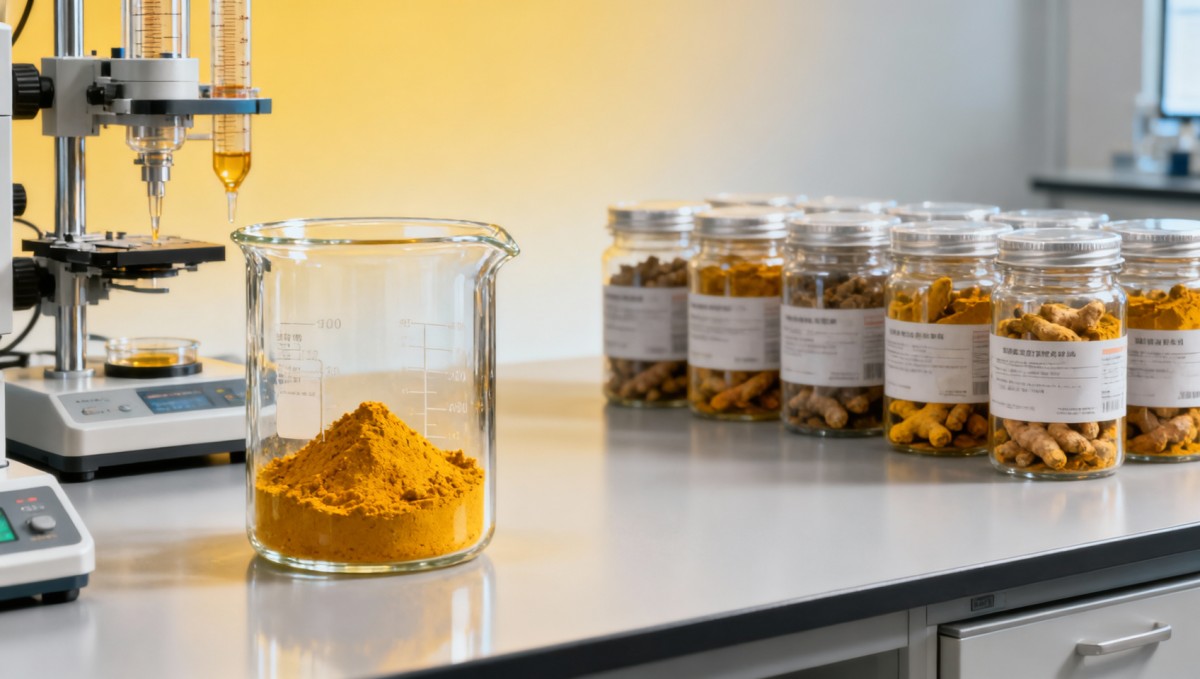
The first source of confusion is terminology. In commercial trade, turmeric extract curcumin may refer to an extract standardized to 95% total curcuminoids, while another buyer may expect 95% curcumin as a single compound. Those are not identical specifications. A common extract can contain curcumin, demethoxycurcumin, and bisdemethoxycurcumin in different proportions, such as 70% to 80%, 15% to 25%, and 2% to 8% respectively.
The second issue is method selection. HPLC, UV-Vis spectrophotometry, and gravimetric approaches do not measure the same thing with the same selectivity. HPLC can separate individual curcuminoids and is usually preferred for higher specificity, while UV methods may estimate total absorbance and can overstate results if other colored compounds are present. If one report uses HPLC and another uses UV, a 3% to 10% gap is not unusual.
The third factor is the sample itself. Curcumin-rich extracts are sensitive to light, heat, pH, and prolonged exposure to air. If a retained sample has been stored for 30 to 90 days under poor warehouse conditions, its assay profile may shift before retesting. That matters for traders, contract manufacturers, and distributors handling multiple transfers before final release.
Differences in moisture basis and reporting basis also create confusion. Some laboratories report “as is,” while others report “on dry basis.” A sample with 4% moisture can produce materially different numbers depending on which basis is used. The same problem appears in sweeteners and extracts such as erythritol powder bulk or vanilla bean extract bulk, where water activity, carrier content, or solvent residue affect the final declared value.
Four common technical causes behind mismatched reports
- Specification mismatch: total curcuminoids versus isolated curcumin.
- Method mismatch: HPLC, UV, TLC, or non-harmonized in-house methods.
- Sample integrity problems: segregation, oxidation, humidity exposure, or delayed testing beyond 7 to 14 days.
- Calculation mismatch: dry basis, as-is basis, solvent-free basis, or different rounding rules.
For commercial teams, the practical lesson is simple: without a shared specification sheet and a predefined release method, two laboratories can both work competently and still issue non-matching numbers. This is not unique to turmeric extract curcumin, but it is more visible in plant extracts because botanical matrices are inherently variable.
How analytical methods change the meaning of a curcumin assay
A purchasing decision should never rely on the headline assay alone. The method behind the number matters just as much as the number itself. In ingredient sourcing, two reports can both say “95%” while measuring different analytes under different extraction and calibration conditions. That is why technical evaluation teams should treat test methods as a procurement parameter, not merely a laboratory detail.
HPLC remains the most practical reference method for many industrial buyers because it can quantify individual curcuminoids with better selectivity. However, HPLC results still depend on column choice, mobile phase, sample preparation, detection wavelength, and calibration standard purity. If laboratories do not harmonize these parameters, inter-lab variance can still occur within a range of about ±1.5% to ±4.0%.
UV-Vis testing may be faster and lower in cost, but it is generally less discriminating in complex botanical extracts. In procurement environments where incoming lots must be released within 24 to 72 hours, some operators prefer rapid screening with UV and then confirm selected lots by HPLC. That hybrid model works only if screening thresholds and dispute rules are documented in advance.
The table below shows why the same turmeric extract curcumin lot can generate different values depending on the analytical approach and reporting objective.
The key conclusion is that assay numbers are method-dependent. A strong procurement protocol should specify not only the minimum assay target, such as 95% total curcuminoids, but also the exact method family, reporting basis, and acceptance tolerance. Without those controls, price comparisons between suppliers are often misleading.
What technical teams should lock before commercial comparison
- Define whether the product is turmeric oleoresin, standardized extract, or purified curcuminoid fraction.
- Confirm analyte target: total curcuminoids, curcumin only, or full profile breakdown.
- Fix the release method and dispute method, ideally in the same purchase specification.
- Agree on moisture correction, unit expression, and allowable variance, for example ±2.0% absolute.
This level of discipline is standard in APIs and increasingly necessary in bio-extracts and ingredients. It also helps financial approvers because it reduces hidden costs tied to rejected lots, retesting fees, and reformulation delays.
Raw material variability, processing choices, and storage effects
Turmeric is a botanical source material, not a synthetic compound produced under perfectly uniform conditions. Rhizome origin, harvest season, drying method, and extraction solvent can all affect the final curcuminoid profile. Even when two lots meet the same nominal specification, their chromatograms, color intensity, bulk density, and residual volatiles may differ enough to influence lab outcomes and formulation behavior.
Regional and agronomic variation matters. Soil conditions, rainfall, maturity at harvest, and post-harvest drying can alter pigment concentration before extraction even starts. In practical sourcing terms, this means a supplier with stable process control can still show batch-to-batch differences if raw material intake varies across a 6-month to 12-month harvest cycle.
Processing choices introduce another layer. Solvent extraction, purification steps, recrystallization, and carrier addition can shift both assay and physical properties. Some commercial formats include excipients to improve flowability or dispersibility. If the buyer assumes a pure extract but the supplier delivers a formulated ingredient, the assay on an as-is basis may look lower even though the product is performing as designed.
Storage and logistics are often underestimated. A warehouse temperature consistently above 30°C, repeated drum opening, or exposure to high humidity can reduce stability. For global shipments lasting 3 to 8 weeks, packaging choice becomes operationally important. Multi-layer liners, light-resistant containers, and tamper-evident seals reduce changes during transit and sampling.
Variables that can change assay consistency before the sample reaches the lab
For operators and quality staff, representative sampling is one of the fastest ways to improve data reliability. Composite sampling from multiple points in a drum or lot is usually more meaningful than a single surface sample, especially when powders settle during transport. The same principle applies to other bulk ingredients such as stevia extract wholesale or lutein powder wholesale.
A practical storage and handling checklist
- Test incoming lots within 7 business days when possible, especially after long transit.
- Keep samples in sealed, light-protected containers and document sample split dates.
- Use composite sampling procedures and trained personnel for lots above routine batch size.
- Record temperature and humidity conditions if a dispute may affect payment or release.
These measures do not eliminate every discrepancy, but they reduce preventable variation and strengthen supplier discussions with verifiable records rather than assumptions.
What buyers, QA teams, and project managers should verify before approval
In B2B procurement, the goal is not only to buy turmeric extract curcumin at the right price, but to buy a specification that can be released, used, and defended. That requires alignment among procurement, formulation, QA, regulatory, and finance. A low-cost lot becomes expensive if it triggers 2 rounds of retesting, 1 delayed production slot, or label claim adjustments.
A robust approval process should begin with a technical data package. At minimum, buyers should request product specification, analytical method summary, certificate of analysis, residual solvent information when relevant, microbiological limits, heavy metal screen, and packaging details. For regulated applications or export-sensitive supply chains, teams may also require allergen, GMO, or country-of-origin declarations depending on market needs.
Commercial review should then convert these documents into acceptance criteria. For example, if the target is 95% total curcuminoids by HPLC, the contract should state the tolerance, sample retention period, dispute window, and who bears the cost of third-party testing. Many procurement teams overlook these details until the first mismatch appears, when negotiation becomes slower and more expensive.
The matrix below can help cross-functional teams standardize evaluation before first purchase or annual supplier review.
The strongest buying teams also compare ingredients across categories using the same governance model. Whether sourcing turmeric extract curcumin, erythritol powder bulk, or vanilla bean extract bulk, the same discipline applies: define the analyte, define the method, define the handling rules, and define the commercial remedy if data diverge.
Recommended pre-purchase checklist
- Obtain a signed specification and confirm the exact analyte target.
- Review the certificate of analysis against your internal method requirements.
- Request a retained sample or pilot quantity for confirmation testing.
- Define the retest and dispute process before issuing the first PO.
- Document storage, sampling, and release timing at your receiving site.
These 5 steps are simple, but they often determine whether a relationship scales smoothly from trial orders to recurring contracts.
FAQ: resolving common misunderstandings in turmeric extract curcumin sourcing
Because test discrepancies affect technical review, pricing, and internal approvals, buyers often ask the same operational questions. The answers below focus on practical decision-making rather than marketing claims.
How much assay difference is usually acceptable between labs?
There is no single universal number, but many industrial contracts define an acceptance window such as ±2.0% absolute when the same validated method is used. If different methods are involved, the variance can be larger. The more important rule is to agree on one release method and one dispute method before shipment, not after a problem appears.
Can a high-assay turmeric extract still fail operationally?
Yes. A lot can meet assay requirements and still present issues with color consistency, flowability, dispersibility, odor, residual solvents, microbial limits, or packaging stability. That is why QA teams should not reduce qualification to one number. A balanced specification normally combines chemical assay, physical parameters, and handling requirements.
Why does one supplier quote a lower price for the same stated percentage?
The offers may not be technically equivalent. One supplier may quote total curcuminoids, another may refer to curcumin-rich material with carriers, and a third may use a different reporting basis. Price gaps can also reflect packaging, origin, lot size, and testing scope. Unless the specifications are normalized line by line, price benchmarking is unreliable.
Is third-party testing always necessary?
Not always for every lot, but it is highly useful during supplier onboarding, annual verification, specification changes, or dispute cases. Many buyers use third-party confirmation for the first 1 to 3 commercial lots and then move to a reduced frequency once process confidence is established. This approach balances cost with risk control.
Turmeric extract curcumin test mismatches are rarely random. In most cases, they come from definitional gaps, non-harmonized methods, sample handling problems, or incomplete procurement controls. For organizations managing bio-extracts, fine chemicals, and ingredient portfolios, the solution is a disciplined sourcing framework that aligns laboratory method, specification language, logistics conditions, and contractual remedies.
If your team is evaluating turmeric extract curcumin or comparing it with other specialty ingredients, a structured technical review can prevent costly surprises in release, compliance, and formulation performance. Contact us to discuss your sourcing criteria, obtain a more robust evaluation checklist, or explore tailored content and market intelligence support for industrial ingredient decisions.
Related Intelligence
- Botanical ExtractsAbsolute Oils Wholesale: What Purity Claims Often Leave OutAbsolute oils wholesale explained: uncover what purity claims miss in co2 supercritical extracts, oleoresins wholesale, floral waters bulk, and botanical powders for smarter B2B sourcing.
- Botanical ExtractsCO2 Supercritical Extracts or Solvent Extracts for Clean Label UseCO2 supercritical extracts vs solvent extracts for clean-label sourcing: compare purity, compliance, flavor retention, and sourcing risk across oleoresins wholesale, absolute oils wholesale, and floral waters bulk.
- Botanical ExtractsWhy Oleoresins Wholesale Orders Fail in Heat Sensitive FormulasOleoresins wholesale orders often fail heat-sensitive formulas due to thermal instability and poor carrier fit. Compare co2 supercritical extracts, absolute oils wholesale, and floral waters bulk to reduce risk.
The Morning Broadsheet
Daily chemical briefings, market shifts, and peer-reviewed summaries delivered to your terminal.
