
The Authority in Global Agricultural Chemistry & Bio-Resources
How to reduce risk when switching botanical extract suppliers
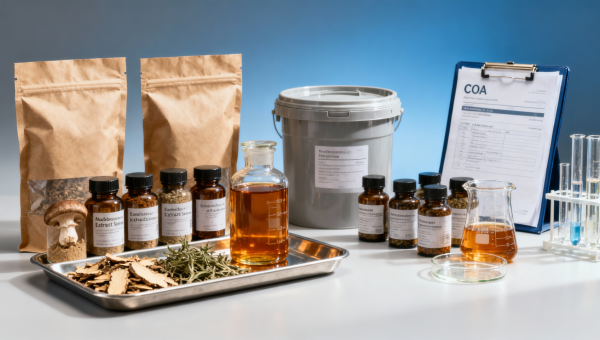
Switching botanical extract suppliers can protect margins, improve compliance, and strengthen continuity—but it also introduces technical, regulatory, and commercial risk. Whether you source maitake mushroom extract, shiitake mushroom powder, chaga mushroom extract, cordyceps extract wholesale, lion's mane mushroom powder, reishi mushroom extract bulk, astragalus root extract, echinacea purpurea extract, elderberry extract wholesale, or pomegranate seed extract, a disciplined evaluation framework is essential to avoid quality failures, documentation gaps, and costly supply disruptions.
Why supplier switching creates hidden risk in botanical extract procurement
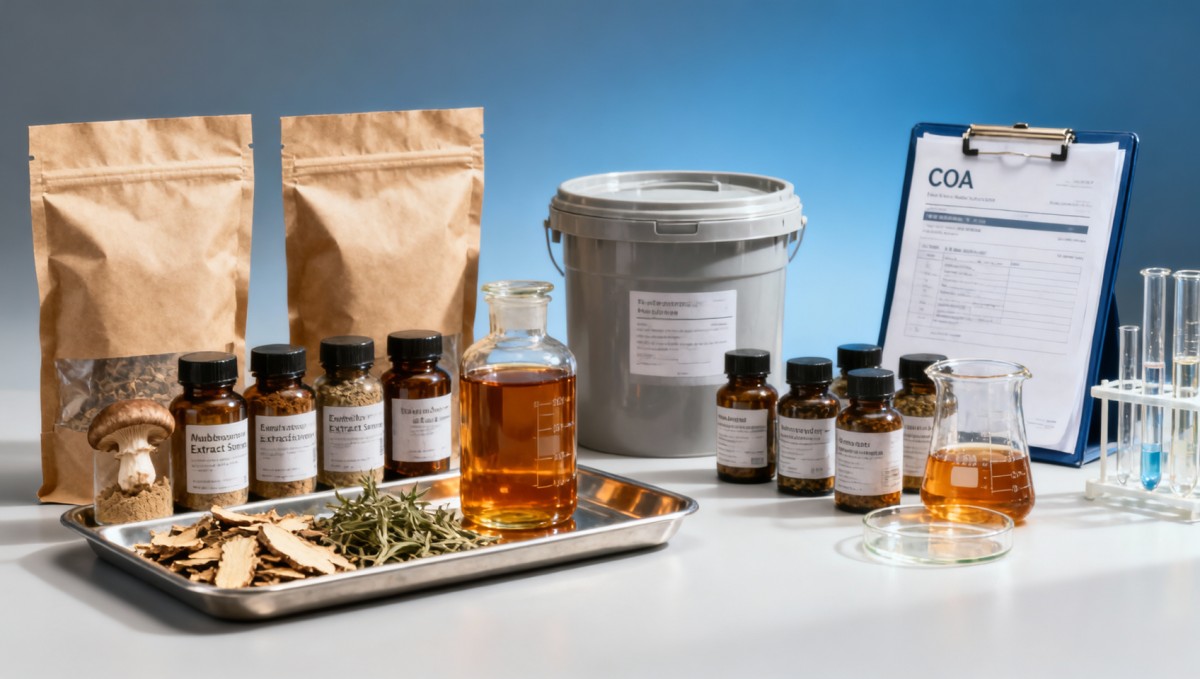
In the bio-extracts and ingredients segment, a supplier transition is rarely just a price change. It can alter raw material origin, extraction solvent, active marker range, microbiological profile, residual solvent status, packaging integrity, and document quality. For procurement teams, technical reviewers, quality managers, and financial approvers, the real challenge is that these changes may not be visible during quotation comparison.
This risk becomes more serious when the extract is used in regulated or specification-driven environments such as nutraceutical manufacturing, pharmaceutical intermediates, food processing, feed applications, or export-oriented formulations. A 2–4 week delay in document verification or a failed incoming QC release can disrupt production schedules, inventory planning, and customer commitments across multiple departments.
AgriChem Chronicle follows these supplier transition issues closely because they sit at the intersection of market intelligence, biochemical quality, and trade compliance. In global sourcing, buyers are no longer choosing between “cheap” and “expensive” suppliers; they are balancing continuity, specification stability, and regulatory defensibility under tighter audit expectations.
A practical review should begin with three questions: does the new supplier match the functional specification, can it support the required documentation pack, and is its supply chain stable over the next 6–12 months? If any of these answers is uncertain, the switching project should move into controlled validation rather than immediate replacement.
The most common risk categories buyers underestimate
Many teams focus first on assay and price, but the broader risk map usually includes five categories that affect downstream performance. These categories apply whether you are buying reishi mushroom extract bulk for blending, elderberry extract wholesale for beverage systems, or astragalus root extract for encapsulation.
- Specification drift: active marker levels may fit the quotation but differ in test method, plant part, concentration ratio, or carrier content.
- Compliance gaps: certificates may be incomplete, outdated, or inconsistent with destination market requirements such as food, supplement, or industrial use.
- Supply instability: harvest season, regional climate, export restrictions, or low inventory depth can create 4–8 week replenishment uncertainty.
- Quality variance: microbial counts, heavy metals, moisture, particle size, and organoleptic consistency may fluctuate between batches.
- Commercial execution risk: Incoterms, minimum order quantity, claim handling, packaging loss rates, and lead time commitments may be weaker than expected.
These issues are especially relevant in cross-functional buying environments where operators care about handling performance, QA teams care about release consistency, procurement cares about landed cost, and management cares about continuity and audit exposure. A sound switching strategy aligns all four perspectives before approval.
What should you check before approving a new botanical extract supplier?
Before a supplier switch is approved, a structured pre-qualification checklist helps reduce avoidable surprises. This is not limited to one product family. The same logic applies to shiitake mushroom powder, chaga mushroom extract, pomegranate seed extract, or echinacea purpurea extract. What changes is the critical parameter set, not the discipline of review.
For most B2B buyers, four stages are practical: desktop qualification, sample validation, commercial alignment, and controlled onboarding. Depending on product complexity and destination market, this process often takes 2–6 weeks, and longer if method transfer or customer re-approval is required.
The table below summarizes a practical procurement review matrix that technical, sourcing, and QA stakeholders can use together. It is designed for botanical extract supplier evaluation where composition, documentation, and lot consistency matter as much as price.
A review matrix like this helps teams avoid approval based on a single favorable sample or a low introductory quotation. It also creates a common language between operators, QA, procurement, and finance. In practice, the most reliable switching decisions are made when at least 5 key documents and 1–3 representative samples are reviewed together.
A four-step onboarding path that reduces disruption
- Pre-screen the supplier remotely: request specification, COA format, regulatory statements, and standard lead time before asking for a full quote.
- Run sample and document validation: compare assay, organoleptic profile, micro limits, and physical behavior against the current approved material.
- Confirm supply and commercial terms: align MOQ, batch size expectations, order frequency, complaint handling, and packaging protection for storage and transit.
- Approve through phased onboarding: begin with trial lots or one production cycle before converting strategic volume to the new supplier.
This phased path is useful when switching higher-risk items such as concentrated mushroom extracts or botanicals with strict contaminant thresholds. It creates a buffer period in which legacy and new suppliers can overlap for 1–2 cycles, reducing the risk of a hard cutover failure.
Which documents should never be skipped?
A minimal package usually includes a current specification sheet, a batch-specific COA, SDS, country of origin statement, and a declaration relevant to the target application. Depending on the market, buyers may also need statements for allergens, irradiation status, GMO status, pesticide residues, or residual solvents. Missing paperwork is one of the fastest ways to turn a “qualified” supplier into a delayed launch.
How to compare suppliers beyond price: quality, compliance, and continuity
A botanical extract supplier comparison should not stop at the quoted price per kilogram. In many sourcing reviews, the larger financial impact comes from rejected lots, retesting, expedited freight, excess safety stock, or reformulation work. This is why experienced buyers compare total switching cost over a 3–6 month horizon instead of headline unit cost alone.
The strongest comparison models use a weighted scorecard. For example, a procurement team may allocate weight to specification fit, documentation quality, lot consistency, lead time reliability, MOQ flexibility, and responsiveness. That method allows finance and operational stakeholders to see why a slightly higher price may still represent lower supply-chain risk.
The table below illustrates how two botanical extract suppliers can look similar on paper but differ meaningfully in execution. The criteria apply across categories including cordyceps extract wholesale, lion's mane mushroom powder, elderberry extract wholesale, and standardized root extracts.
This type of comparison reveals the operational trade-off. Supplier B may offer a lower price on larger volume, but longer lead time and weaker documentation readiness can increase risk during the first 1–2 purchase cycles. The right choice depends on whether your priority is immediate savings, rapid validation, or supply continuity during transition.
Three indicators of a safer supplier transition
Across primary industries and fine chemicals, safer switching projects usually show the same three signs. First, the new supplier provides clear process and specification transparency before onboarding. Second, sample performance matches commercial-scale expectations, not just laboratory appearance. Third, the supplier can explain how it manages harvest variation, inventory planning, and document control.
These indicators matter because botanical extract sourcing combines agricultural variability with industrial quality expectations. A supplier may know the plant well but still be weak in export paperwork. Another may have good documents but insufficient production depth for quarterly procurement cycles. Buyers need both dimensions in balance.
When is dual sourcing a better option than full replacement?
If the ingredient is strategically important, has volatile seasonal supply, or supports customer formulas that are difficult to revalidate, dual sourcing is often the safer route. Maintaining 20%–40% of volume with the incumbent supplier for one or two cycles can protect continuity while the new source proves lot-to-lot stability and claim responsiveness.
Standards, certification, and technical evidence: what buyers should request
In botanical extract procurement, compliance is not a marketing add-on. It is part of the risk-control mechanism. Buyers evaluating a new supplier should map requests to intended use, market destination, and customer audit expectations. Requirements for dietary supplement use, food ingredient use, feed inclusion, or industrial processing can differ, even when the same botanical name appears on the quotation.
AgriChem Chronicle consistently emphasizes this distinction because documentation packages are often over-assumed. GMP, FDA, EPA, and related terms may appear in discussions, but buyers should verify what is actually applicable to the product category, facility operations, and destination market. General claims should always be translated into concrete documents and test records.
For many switching projects, the most useful evidence is not a long list of labels, but a focused technical file that can survive customer review or internal audit. That file should support identity, purity, safety, and supply traceability across at least one recent batch and preferably several production runs within a 6–12 month window.
Core evidence pack for a botanical extract supplier review
- Product specification with clear test methods, marker compounds, physical description, and acceptable limits for moisture, ash, contaminants, or carriers where relevant.
- Batch-specific COA showing analytical results and release information consistent with the specification and target market expectations.
- Safety and handling documents such as SDS, storage recommendation, shelf life statement, and packaging details for common storage periods of 12–24 months where applicable.
- Supply traceability records including botanical source, plant part, country or region of origin, and internal batch coding logic.
- Application-specific declarations such as allergen, GMO, irradiation, residual solvent, pesticide, or heavy metal statements when required by customer or market.
When documentation is inconsistent, the switching risk rises sharply. A supplier that sends a polished quotation but cannot maintain cross-document consistency may create problems later in customs clearance, customer approval, or complaint investigation. For QA and regulatory reviewers, consistency across the dossier is often more important than volume of paper.
Common technical red flags during sample review
Red flags usually appear in small details: unexpected color shift, unusual odor, poor flowability, sediment behavior different from previous lots, or assay language that does not state the method. A sample may still be usable, but these differences should trigger clarification before any commercial batch is booked. For powder extracts, particle size and carrier composition can materially affect blending and encapsulation performance.
Operators and project managers should also confirm packaging compatibility. A technically acceptable extract can still fail on the warehouse floor if drum lining, moisture barrier, or label traceability is inadequate for routine receiving, storage, and line issue procedures.
FAQ and action plan for switching botanical extract suppliers with less disruption
Decision-makers often need concise answers before moving a supplier transition forward. The questions below reflect common concerns from procurement managers, technical evaluators, quality teams, project leads, and finance reviewers handling botanical extract supplier changes across complex B2B environments.
How long does a safe supplier switch usually take?
For standard botanical extracts with complete documents and straightforward testing, qualification can often be completed in 2–4 weeks. If customer approval, method verification, or multiple trial lots are required, the timeline can extend to 6–8 weeks. The critical point is to plan the transition before safety stock reaches its final reorder threshold.
What matters more: assay result or full specification match?
Full specification match matters more. Assay alone does not capture extraction process, carrier use, contaminants, particle size, or physical handling behavior. Two lots with similar active marker values may perform differently in blending, dissolution, flavor impact, or shelf stability. Procurement teams should treat assay as one checkpoint among several, not the final decision.
What are the most common mistakes during botanical extract supplier switching?
The most common mistakes are approving on price only, validating a single sample without batch context, skipping review of application-specific statements, and changing suppliers without overlap inventory. Another frequent error is assuming that a supplier serving one market automatically meets the requirements of another. Cross-border and cross-industry use cases often require more precise document control.
How can buyers reduce risk if they must switch quickly?
Use a staged approach: request the core dossier first, validate 1–3 samples, purchase a limited trial batch, and retain backup volume from the incumbent supplier for one cycle where possible. Also confirm lead time, complaint response path, and packaging details in writing. Speed is possible, but only when the process remains disciplined.
Why work with a specialist intelligence partner before making the switch?
Supplier transitions increasingly involve more than procurement. They touch market risk, technical variation, compliance interpretation, and downstream acceptance. AgriChem Chronicle supports institutional buyers and industrial teams by connecting editorial-grade industry analysis with practical sourcing questions across fine chemicals, APIs, bio-extracts, machinery-linked processing chains, and primary industries. This broader view helps teams identify not just who can quote, but who can execute reliably.
Why choose us for supplier-switching research and sourcing decisions?
AgriChem Chronicle is positioned for buyers who need more than generic supplier lists. Our coverage is built around regulated, technically sensitive, and internationally traded sectors where documentation quality, operational transparency, and market timing shape purchasing outcomes. We speak to procurement directors, quality teams, agronomic and biochemical specialists, and project leaders in a language that supports real approvals.
If you are evaluating a new source for maitake mushroom extract, reishi mushroom extract bulk, lion's mane mushroom powder, pomegranate seed extract, or other botanical ingredients, you can consult ACC on practical decision points such as parameter confirmation, specification comparison, supplier shortlisting, documentation expectations, lead-time risk, sample strategy, and quotation alignment.
For teams under deadline pressure, it is especially useful to clarify 5 items early: critical quality parameters, acceptable substitution range, target delivery window, required declarations, and trial order scope. That allows technical, purchasing, and financial stakeholders to review the switch with fewer blind spots and faster internal consensus.
Contact AgriChem Chronicle if you need support with supplier evaluation frameworks, product selection logic, documentation review priorities, sample planning, compliance-oriented sourcing questions, or market-facing content that strengthens trust with institutional buyers. A disciplined switch is not just a procurement exercise; it is a risk-management decision with technical and commercial consequences.
- Fine Chemicals
- Bio-Extracts
- pomegranate seed extract
- elderberry extract wholesale
- echinacea purpurea extract
- astragalus root extract
- reishi mushroom extract bulk
- lion's mane mushroom powder
- cordyceps extract wholesale
- chaga mushroom extract
- shiitake mushroom powder
- maitake mushroom extract
- APIs
- Trade Compliance
- Procurement Directors
Related Intelligence
- Botanical ExtractsFDA Issues Q2 2026 Import Alert for Botanical ExtractsFDA Q2 2026 Import Alert for Botanical Extracts: 18.7% mycotoxin failure rate—act now to ensure GMP-compliant, batch-level testing & avoid U.S. detention.
- Botanical ExtractsECHA Launches Nano-Carrier Review for Botanical ExtractsECHA's nano-carrier review for botanical extracts demands urgent action: exporters, formulators & labs must submit nano-toxicology dossiers by Aug 2026.
- Botanical ExtractsFDA Updates Botanical Extracts Import Checklist: Aflatoxin Testing Now MandatoryFDA now mandates aflatoxin testing for all botanical extracts entering the U.S. — learn how AFB1, OTA & ZEA compliance impacts your imports, supply chain, and market access.
The Morning Broadsheet
Daily chemical briefings, market shifts, and peer-reviewed summaries delivered to your terminal.
