
The Authority in Global Agricultural Chemistry & Bio-Resources
FDA Updates Botanical Extracts Import Checklist: Aflatoxin Testing Now Mandatory
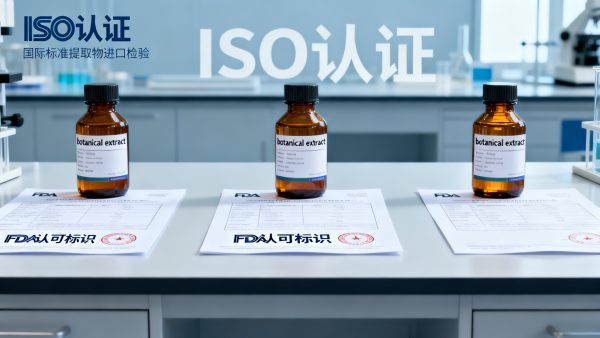
On May 6, 2026, the U.S. Food and Drug Administration (FDA) issued Import Alert 54-12 Rev.3, titled Import Safety Guidance for Botanical Extracts. This update introduces batch-level laboratory retesting requirements for mycotoxins — specifically aflatoxin B1 (AFB1), ochratoxin A (OTA), and zearalenone (ZEA) — for all botanical extracts entering the U.S. market. The requirement applies to importers across dietary supplement, natural health product, cosmetics, and functional food supply chains, and signals a material shift in FDA’s risk-based enforcement posture toward plant-derived ingredients.
Event Overview
On May 6, 2026, the FDA published Import Alert 54-12 Rev.3. It mandates that importers of botanical extracts submit, at the time of FDA Prior Notice filing, scanned original copies of third-party laboratory test reports verifying compliance with limits for AFB1, OTA, and ZEA. Testing must be conducted by an FDA-recognized laboratory. Failure to provide these documents triggers automatic detention without physical examination (DWPE). The policy took effect immediately upon publication.
Industries Affected by This Update
Direct Trading Companies
These entities — often acting as U.S.-based importers of record — are directly responsible for submitting Prior Notice and associated documentation. Under the new rule, they now bear full accountability for verifying the authenticity, completeness, and laboratory accreditation status of each batch’s mycotoxin test report before submission. Noncompliance results in DWPE, causing shipment delays, storage fees, and potential loss of customer trust.
Raw Material Sourcing Firms
Firms procuring botanical extracts from global suppliers (e.g., in Asia, Latin America, or Eastern Europe) must now ensure upstream partners routinely test for all three specified mycotoxins — not just one or two — and issue reports bearing verifiable accreditation marks recognized by the FDA. Historical reliance on internal QC or non-FDA-recognized labs is no longer sufficient for U.S. entry.
Manufacturers & Formulators
Companies blending botanical extracts into finished products (e.g., capsules, powders, topical formulations) face downstream risk if their incoming raw materials lack compliant documentation. Even if final products undergo full testing, FDA may detain shipments based solely on missing or invalid batch-level mycotoxin reports for incoming extracts — regardless of finished-product compliance.
Distribution & Logistics Providers
While not legally liable for documentation accuracy, logistics partners handling customs clearance or warehousing may experience increased scrutiny, hold times, and administrative friction when shipments lack required reports. Their operational planning must now accommodate pre-clearance verification checkpoints for extract batches.
Key Actions for Affected Businesses
Verify current FDA-recognized laboratory status for all testing partners
Importers must confirm — and retain evidence — that the third-party lab issuing each mycotoxin report appears on the FDA’s official list of recognized laboratories for mycotoxin analysis. Status changes occur periodically; relying on outdated accreditation data risks DWPE.
Implement batch-specific documentation tracking ahead of Prior Notice submission
Each import entry must map to a unique, legible, unaltered scan of the original test report for that exact batch (defined by lot/production number). Merged reports, summaries, or certificates of analysis without full analytical data will not satisfy the requirement.
Review supplier contracts and quality agreements for mycotoxin testing scope alignment
Existing agreements may specify only AFB1 or total aflatoxins. Contracts must now explicitly require testing for AFB1, OTA, and ZEA — and mandate reporting of individual results (not pass/fail only) using units and detection limits acceptable to FDA.
Prepare for potential lead-time extension in procurement cycles
Testing turnaround time, shipping of samples to FDA-recognized labs, and report issuance may add 5–10 business days per batch. Procurement teams should adjust safety stock levels and reorder triggers accordingly to avoid production stoppages.
Editorial Perspective / Industry Observation
Observably, this update reflects a tightening of FDA’s import oversight framework — not a new regulatory standard per se, but a significant escalation in enforcement rigor for an existing risk category. Mycotoxin contamination in botanicals has long been flagged in FDA warning letters and import alerts; what’s new is the mandatory, batch-level, pre-entry verification requirement tied directly to admissibility. Analysis shows this is less a signal of imminent new legislation and more a formalization of existing enforcement expectations into a hard gate. From an industry perspective, it confirms that botanical extracts are now treated with the same evidentiary threshold as high-risk food commodities — where documentation integrity is inseparable from product safety.
Current observation suggests this requirement is already operational — not prospective. There is no grace period or phased rollout stated in Import Alert 54-12 Rev.3. That makes real-time compliance, rather than future-readiness, the immediate priority.
Conclusion
This update does not introduce new maximum residue limits or redefine safety thresholds for mycotoxins in botanical extracts. Instead, it enforces stricter documentation discipline and laboratory traceability at the point of U.S. entry. It is best understood not as a technical revision, but as a procedural hardening of FDA’s import control system — one that elevates documentation quality to the same level of importance as analytical results. For stakeholders, the practical implication is clear: batch-level, FDA-recognized mycotoxin testing is now a prerequisite for market access, not a quality differentiator.
Source Attribution
Main source: U.S. FDA Import Alert 54-12 Rev.3, Import Safety Guidance for Botanical Extracts, published May 6, 2026.
Areas under ongoing observation: FDA’s public list of recognized laboratories for mycotoxin testing (subject to periodic updates); potential future expansion to additional mycotoxins or analytes in subsequent revisions.
Related Intelligence
- Botanical ExtractsFDA Issues Q2 2026 Import Alert for Botanical ExtractsFDA Q2 2026 Import Alert for Botanical Extracts: 18.7% mycotoxin failure rate—act now to ensure GMP-compliant, batch-level testing & avoid U.S. detention.
- Botanical ExtractsECHA Launches Nano-Carrier Review for Botanical ExtractsECHA's nano-carrier review for botanical extracts demands urgent action: exporters, formulators & labs must submit nano-toxicology dossiers by Aug 2026.
- Botanical ExtractsFDA Updates Botanical Extracts Import Checklist: Aflatoxin Testing Now MandatoryFDA now mandates aflatoxin testing for all botanical extracts entering the U.S. — learn how AFB1, OTA & ZEA compliance impacts your imports, supply chain, and market access.
The Morning Broadsheet
Daily chemical briefings, market shifts, and peer-reviewed summaries delivered to your terminal.
