
How to read monk fruit extract mogroside specs
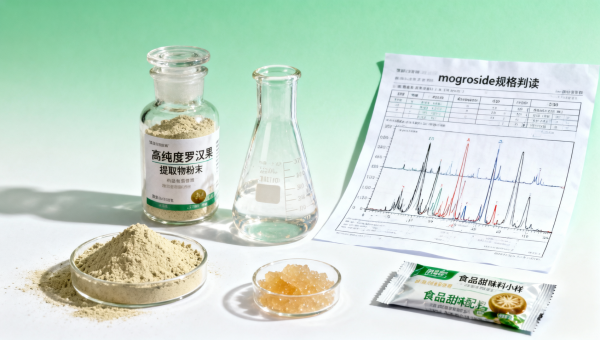
For buyers, formulators, and quality teams evaluating monk fruit extract mogroside, reading a specification sheet correctly is essential for compliance, cost control, and product performance. This guide explains how to interpret purity, mogroside V levels, carrier ingredients, testing standards, and application fit, while also helping teams compare related ingredients such as wholesale inulin powder, fructooligosaccharides fos wholesale, and xylitol sweetener wholesale.
If you only check the headline number on a monk fruit extract specification sheet, you can easily make the wrong buying decision. The most important point is this: a higher mogroside percentage does not automatically mean a better ingredient for your product. Procurement, formulation, and QA teams need to read the full monk fruit extract mogroside specs, including mogroside V content, carrier system, sweetness equivalence, test methods, solvent and contaminant limits, microbiological standards, and intended application. That is what determines whether the ingredient is compliant, cost-effective, stable, and fit for use.
What matters most when you read monk fruit extract mogroside specs
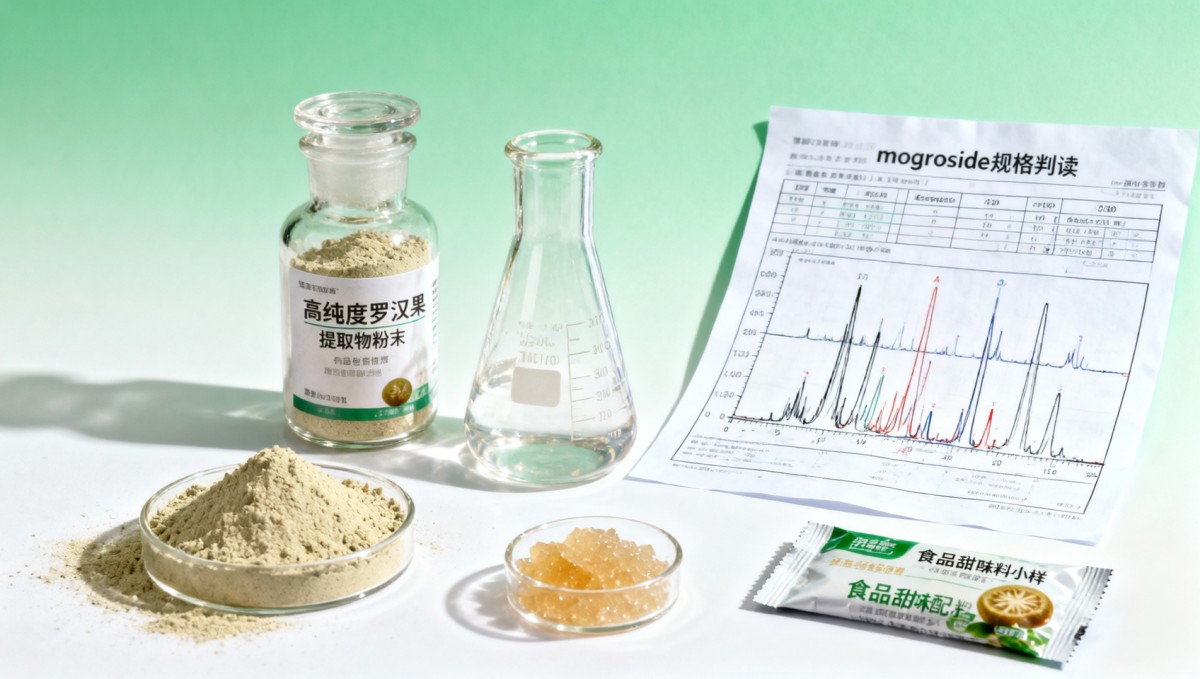
The core search intent behind this topic is practical interpretation. Readers are usually not looking for a botanical introduction to monk fruit. They want to know how to read a spec sheet correctly, compare suppliers, avoid misleading numbers, and decide whether a product is suitable for food, beverage, nutraceutical, or table sweetener applications.
For most professional buyers and technical teams, the key questions are:
- What does the stated mogroside percentage actually mean?
- Is the number referring to total mogrosides or specifically mogroside V?
- What other ingredients are included in the extract?
- How sweet is it in real use compared with sugar or other sweeteners?
- Does the spec sheet show acceptable safety, purity, and compliance data?
- Is the product suitable for my formulation process and labeling requirements?
- Can I compare it fairly against alternatives such as inulin, FOS, or xylitol?
In commercial practice, monk fruit extract mogroside specs should be read as a technical and commercial document, not just a purity claim. A good spec sheet helps you assess three things at once: ingredient functionality, regulatory fitness, and true cost-in-use.
Start with the mogroside claim: total mogrosides vs mogroside V
The first line on many monk fruit extract specification sheets highlights a percentage such as 25%, 40%, 50%, or 80%. This often causes confusion because suppliers may refer either to total mogrosides or to mogroside V, the key sweet-tasting component.
This distinction matters because mogroside V is generally the most commercially relevant marker for sweetness quality. A product labeled as “50% mogrosides” is not necessarily equivalent to a product labeled as “50% mogroside V.” If the spec sheet does not clearly define which marker is being measured, buyers should ask for the analytical method and chromatogram.
As a practical rule:
- Total mogrosides indicates the sum of sweet triterpene glycosides.
- Mogroside V is a more specific indicator and often more useful for formulation comparison.
- Unclear naming can distort side-by-side supplier evaluation.
For procurement teams, this means you should never compare products based only on a front-page percentage. You need to confirm whether the specification is built around total mogrosides, mogroside V, or both.
Check the test method before trusting the number
A specification claim is only as meaningful as the method behind it. Reputable monk fruit extract suppliers usually identify HPLC or another validated analytical method for measuring mogrosides. Without a clear method reference, the purity figure may not be reliably comparable across suppliers.
Quality and compliance teams should verify:
- Whether mogroside content is tested by HPLC
- Which reference standard is used
- Whether the result is reported on an as-is basis or dry basis
- Whether a certificate of analysis matches the specification format
Dry basis versus as-is basis can create pricing confusion. A material with similar headline purity may deliver different active content depending on moisture level. This is especially important when large-volume contracts or annual sourcing plans are being negotiated.
Do not ignore carriers, bulking agents, and excipients
One of the biggest reasons buyers misread monk fruit extract mogroside specs is that they focus on the active marker but overlook what else is in the powder. Some monk fruit ingredients are highly concentrated extracts. Others are diluted or standardized with carriers such as erythritol, maltodextrin, or other bulking agents for handling and dosing convenience.
This affects:
- Actual sweetness per kilogram purchased
- Label declaration requirements
- Flowability and blending behavior
- Nutritional profile and calorie positioning
- Clean-label suitability
For example, a monk fruit sweetener designed for tabletop use may include substantial carriers and therefore should not be evaluated in the same way as a high-purity extract intended for industrial beverage formulation. Purchasing the wrong format can create avoidable cost overruns, labeling issues, or rework in formulation trials.
Read sweetness performance separately from purity
High mogroside content does not always translate into the best sensory result in a finished product. Sweetness onset, lingering aftertaste, interaction with acids, and compatibility with other sweeteners all influence actual performance.
That is why experienced formulators look for more than a purity statement. They want to know:
- Estimated sweetness multiple versus sucrose
- Recommended dosage range
- Best-fit applications such as beverage, dairy, confectionery, or supplements
- Whether the ingredient is commonly blended with erythritol, allulose, stevia, or fibers
In many commercial applications, monk fruit extract works best as part of a sweetening system rather than as a standalone sugar replacement. This is where comparison with ingredients like wholesale inulin powder, fructooligosaccharides fos wholesale, and xylitol sweetener wholesale becomes relevant. These ingredients may not serve the same role, but they can affect sweetness build, mouthfeel, sugar reduction strategy, digestive tolerance, and total formulation cost.
Use the spec sheet to judge safety, compliance, and supply-chain quality
For QA managers, food safety personnel, and procurement directors, the specification sheet is also a risk-control document. Beyond mogroside content, it should include contaminant and compliance data that support supplier qualification.
Key areas to review include:
- Appearance, odor, and organoleptic description
- Loss on drying or moisture
- Ash content
- Residual solvents
- Heavy metals such as lead, arsenic, cadmium, and mercury
- Microbiological limits for total plate count, yeast, mold, coliforms, salmonella, and E. coli
- Allergen status
- GMO status
- Irradiation status
- Country of origin and traceability details
- Storage conditions and shelf life
If the ingredient is intended for regulated export markets, buyers may also need supporting documentation such as specification version control, COA format, non-GMO statement, allergen statement, BSE/TSE statement, pesticide residue controls, and applicable food safety certifications.
For enterprise decision-makers, complete documentation reduces approval delays, audit friction, and downstream regulatory risk.
How procurement teams should compare monk fruit offers fairly
When comparing suppliers, the common mistake is to compare price per kilogram only. A much better approach is to compare on a functional and compliant delivered-value basis.
Create a comparison grid using the following criteria:
- Mogroside basis: total mogrosides or mogroside V
- Analytical method and reporting basis
- Carrier composition and percentage
- Sweetness equivalence in the target application
- Regulatory and QA documentation completeness
- Micro and heavy metal limits
- Minimum order quantity and lead time
- Packaging size and logistics efficiency
- Sample-to-commercial batch consistency
- Cost per unit of sweetness or cost per finished batch
This type of analysis often changes purchasing decisions. A lower-priced material may appear attractive at first, but if it has lower effective sweetness, weaker documentation, or inconsistent lot quality, the total commercial cost may be higher.
How monk fruit compares with inulin, FOS, and xylitol in buyer evaluation
The introduction mentions wholesale inulin powder, fructooligosaccharides fos wholesale, and xylitol sweetener wholesale because many buyers are not choosing a single ingredient in isolation. They are evaluating a sweetening or texture system.
These ingredients differ significantly:
- Monk fruit extract: high-intensity natural sweetener, low-use level, often used for sugar reduction
- Inulin powder: more useful for bulking, fiber enrichment, and mouthfeel than for high-intensity sweetness
- FOS: provides mild sweetness and prebiotic positioning, but not the same sweetness intensity as monk fruit
- Xylitol: bulk sweetener with sugar-like sweetness and cooling effect, useful where body and sweetness are both needed
For buyers, this means monk fruit extract mogroside specs should not be judged only against other high-intensity sweeteners. They should also be evaluated within the wider formulation strategy. If a product needs body, texture, sugar-like bulk, digestive tolerance management, or fiber claims, monk fruit may need to be paired with other ingredients rather than replace them.
A simple checklist for reading monk fruit extract mogroside specs
Before approving a supplier or sending a sample into formulation trials, use this checklist:
- Confirm whether the spec refers to total mogrosides or mogroside V.
- Verify the analytical method, preferably HPLC with a defined standard.
- Check whether values are reported on an as-is or dry basis.
- Review carrier ingredients and standardization agents.
- Assess sweetness equivalence and intended application fit.
- Review moisture, ash, solvent, heavy metal, and microbiological limits.
- Confirm labeling, allergen, GMO, and irradiation status.
- Request a recent COA and compare it with the master specification.
- Calculate true cost-in-use, not just price per kilogram.
- Evaluate supply reliability, lot consistency, and documentation readiness.
Conclusion
To read monk fruit extract mogroside specs correctly, focus on what the number actually represents, how it is tested, what else is in the ingredient, and whether the material fits your application, compliance needs, and cost model. For most professional buyers and technical teams, the best specification is not simply the highest percentage. It is the one that delivers verified active content, clear documentation, stable performance, and predictable commercial value.
In short, a strong monk fruit specification should help you answer three practical questions: Is it real, is it safe, and is it right for the job? Once you evaluate specs that way, supplier comparison becomes much clearer, and formulation or purchasing decisions become far more reliable.
Related Intelligence
- Botanical ExtractsANVISA Extends Traceability for Botanical Extract Imports to Tier-2 SuppliersANVISA extends botanical extract traceability to tier-2 suppliers—key for Chinese exporters of herbal ingredients, supplements & cosmetics. Act now for July 2026 compliance.
- Botanical ExtractsANVISA Extends Traceability for Botanical Extracts to Tier-2 SuppliersANVISA extends botanical extract traceability to tier-2 suppliers—solvents, filter aids, adsorption media—effective Sept 1, 2026. Essential for exporters & supplement brands.
- Botanical ExtractsEU CBAM Carbon Tariff First Applies to Botanical ExtractsEU CBAM Carbon Tariff now covers Botanical Extracts—key for exporters, importers & LCA providers. Act now to ensure compliance by 24 April 2026.
The Morning Broadsheet
Daily chemical briefings, market shifts, and peer-reviewed summaries delivered to your terminal.
