
Floral Waters Bulk Supply Problems Often Start with Packaging
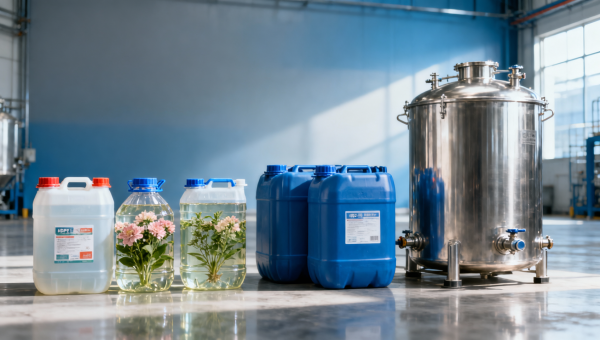
In floral waters bulk procurement, quality failures often begin long before filling lines or freight delays—they start with packaging choices. For buyers comparing floral waters bulk, co2 supercritical extracts, absolute oils wholesale, and oleoresins wholesale, container compatibility, barrier performance, and compliance can directly affect purity, shelf life, and commercial risk. Understanding these packaging variables is essential for technical teams, procurement leaders, and distributors evaluating reliable large-volume supply.
In large-volume botanical ingredient trade, packaging is not a secondary logistics issue. It is a product-protection system that influences oxidation rate, contamination risk, traceability, handling efficiency, and downstream customer acceptance. For B2B buyers working across cosmetic, food, aromatics, nutraceutical, and fine chemical channels, even a minor packaging mismatch can create rework costs, claim disputes, or shortened usable inventory windows.
This article examines why floral waters bulk supply problems often begin with packaging, how different formats perform under industrial conditions, what procurement teams should verify before issuing a purchase order, and which control points matter most when evaluating global suppliers of floral waters and adjacent bio-extract categories.
Why Packaging Is a Primary Quality Variable in Floral Waters Bulk Supply
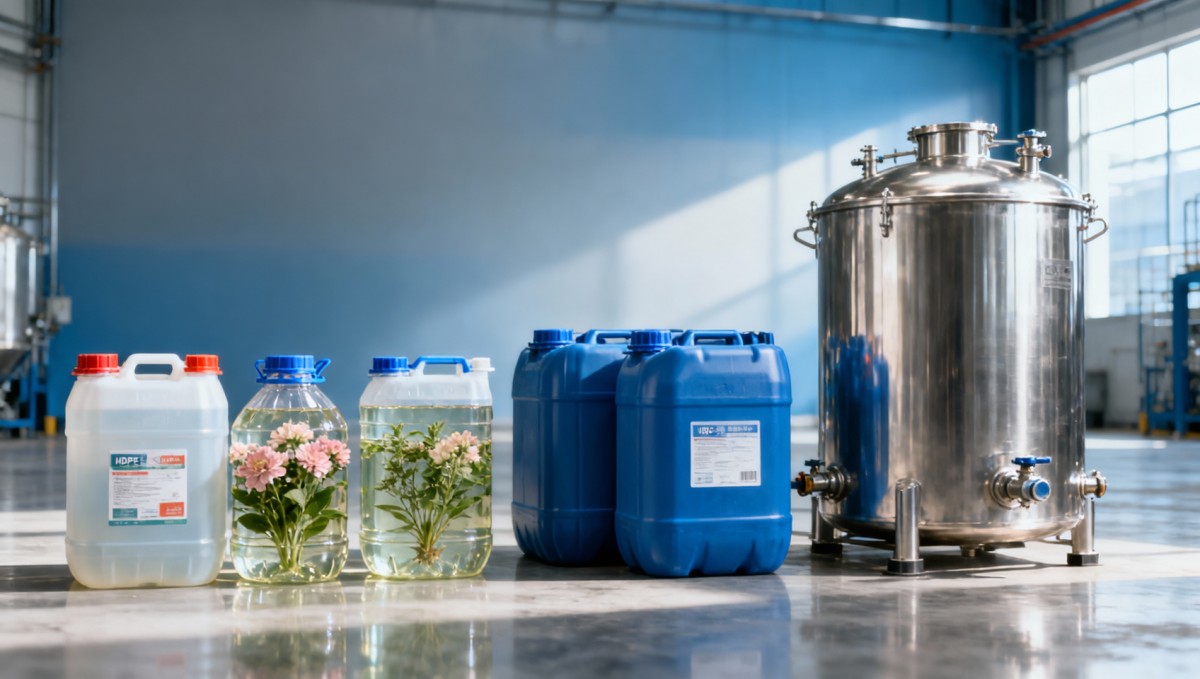
Floral waters are typically more sensitive than many buyers assume. Although they may appear less concentrated than essential oils or oleoresins, they still carry volatile aromatic fractions, dissolved botanical components, and microbiological exposure risks. In a 200 L drum, 1,000 L IBC, or multi-drum export lot, packaging integrity directly affects aroma retention, clarity, and microbial stability over storage periods of 3–12 months.
The most common procurement mistake is evaluating floral waters bulk only by origin, distillation method, or price per kilogram. That approach overlooks the fact that packaging material can interact with the product, permit oxygen ingress, or fail under temperature swings during sea freight. A technically acceptable batch at dispatch can become commercially downgraded after 4–8 weeks in transit if container selection was not aligned with product sensitivity.
For procurement teams comparing floral waters bulk with co2 supercritical extracts, absolute oils wholesale, and oleoresins wholesale, the packaging question becomes even more important because these product families have different viscosity, volatility, light sensitivity, and residue behavior. One container type rarely fits all four categories without qualification testing.
Common Failure Mechanisms in Bulk Packaging
Packaging-related failures usually follow 4 routes: chemical incompatibility, barrier underperformance, closure failure, and sanitation breakdown. Chemical incompatibility may involve liner leaching, odor pickup, or polymer stress. Barrier underperformance often shows up as aroma loss or oxidation. Closure failure can allow slow leakage or air ingress. Sanitation breakdown typically results from poorly cleaned reused containers or weak filling environment controls.
These issues are not limited to low-grade supply chains. Even reputable exporters can face quality drift when they standardize on a packaging format designed for lower-value liquids rather than sensitive plant-derived ingredients. That is why technical assessment should review packaging as a controlled specification, not a shipping afterthought.
What operators and QA teams usually observe first
- Unexpected color shift after 30–60 days of warehouse storage.
- Top-note aroma reduction after container opening, especially in high-headspace packs.
- Seal deformation or cap loosening after temperature cycling between 5°C and 35°C.
- Batch-to-batch inconsistency caused by mixed packaging formats within the same shipment.
For distributors and finance approvers, the practical outcome is simple: packaging errors can turn a nominally lower-cost offer into a higher total landed cost once claims, testing, disposal, relabeling, and customer credit notes are included.
Container Materials, Barrier Performance, and Product Fit
The ideal packaging for floral waters bulk depends on product chemistry, shipment distance, filling temperature, and end-use requirements. Stainless steel is often preferred for premium or highly controlled applications, but cost and cleaning validation requirements can make it impractical for many export programs. Food-grade HDPE drums and IBCs are common, yet they vary widely in wall thickness, closure quality, and liner design.
Buyers should evaluate at least 5 parameters before approving a packaging format: material compatibility, oxygen barrier performance, light protection, closure integrity, and palletized handling stability. For floral waters shipped across 2–6 weeks of transit, the difference between a standard drum and a validated high-barrier system may determine whether the batch still meets receiving specifications on arrival.
The comparison below summarizes how common bulk packaging options perform for floral waters bulk and related botanical extracts under practical B2B conditions.
The main takeaway is that lower acquisition cost does not equal lower supply cost. A 1,000 L IBC may reduce unit freight and handling expense, but if the discharge valve design or internal cleanliness is poorly controlled, it can create more receiving risk than four validated 200 L drums.
How adjacent extract categories differ
Co2 supercritical extracts often require stronger oxidation and light controls because concentrated aromatic or lipophilic fractions can degrade faster under exposure. Absolute oils wholesale may demand tighter liner compatibility because solvent-sensitive aroma compounds can react with unsuitable seals or gaskets. Oleoresins wholesale frequently present viscosity challenges, making discharge design, warming allowance, and residue minimization more important than with floral waters.
This is why multi-product suppliers should not use a single “standard export package” across all botanical lines. Buyers should expect a packaging matrix matched to product family, MOQ, climate route, and receiving process.
Procurement Checklist: What Buyers Should Verify Before Ordering
A strong floral waters bulk procurement process usually combines quality review, packaging review, and logistics review into one approval pathway. If these are separated across departments without a shared checklist, critical packaging details often go unchallenged. The result is that QA approves the product, logistics approves the shipment, but nobody fully owns container suitability.
For industrial buyers, a practical pre-order assessment should cover 6 checkpoints: product-contact material, sanitation status, tamper evidence, lot coding, pallet stability, and documentation consistency. This matters whether the product is a rose hydrosol, a neroli floral water, a co2 supercritical extract, or a viscous oleoresin shipped to contract manufacturing sites.
The table below can be used by procurement, technical evaluation, and QA teams as a baseline internal approval tool.
Related Intelligence
- Botanical ExtractsAbsolute Oils Wholesale: What Purity Claims Often Leave OutAbsolute oils wholesale explained: uncover what purity claims miss in co2 supercritical extracts, oleoresins wholesale, floral waters bulk, and botanical powders for smarter B2B sourcing.
- Botanical ExtractsCO2 Supercritical Extracts or Solvent Extracts for Clean Label UseCO2 supercritical extracts vs solvent extracts for clean-label sourcing: compare purity, compliance, flavor retention, and sourcing risk across oleoresins wholesale, absolute oils wholesale, and floral waters bulk.
- Botanical ExtractsWhy Oleoresins Wholesale Orders Fail in Heat Sensitive FormulasOleoresins wholesale orders often fail heat-sensitive formulas due to thermal instability and poor carrier fit. Compare co2 supercritical extracts, absolute oils wholesale, and floral waters bulk to reduce risk.
The Morning Broadsheet
Daily chemical briefings, market shifts, and peer-reviewed summaries delivered to your terminal.
