
FDA Issues Import Alert for Botanical Extracts: GMP + Full-Profile Certification Required
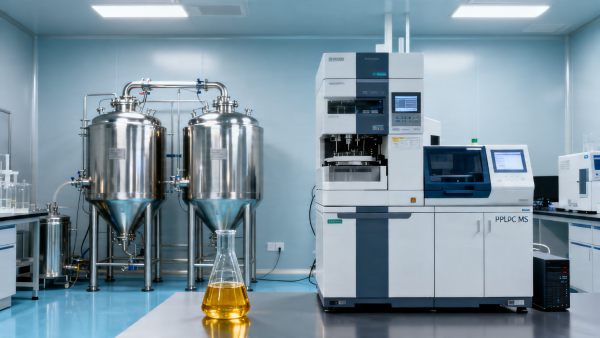
On April 16, 2026, the U.S. Food and Drug Administration (FDA) updated Import Alert 54-15, mandating that all botanical extract dietary supplement ingredients entering the U.S. market must be accompanied by both a current Good Manufacturing Practice (cGMP) certification and a full chemical fingerprint profile (HPLC-MS/MS) issued by an FDA-recognized laboratory. This requirement directly impacts exporters, ingredient suppliers, and contract manufacturers—particularly those based in China, where compliance deadlines apply as of July 2026.
Event Overview
On April 16, 2026, the FDA published an update to Import Alert 54-15 titled “Detention Without Physical Examination of Botanical Extract Dietary Supplement Ingredients.” The alert specifies that botanical extracts offered for import into the United States will be subject to automatic detention unless the importer provides, at time of entry, (1) a valid cGMP certification issued by a third-party auditor recognized by the FDA, and (2) a full-component fingerprint report generated via HPLC-MS/MS analysis from an FDA-recognized laboratory. The FDA confirmed that non-compliant shipments will be detained and may trigger follow-up field investigations.
Industries Affected by the Alert
Direct Exporters (e.g., Chinese botanical ingredient suppliers): These entities are responsible for ensuring documentation accompanies each shipment. Failure to submit both certificates results in automatic detention—not just refusal—and potential on-site audits at origin facilities. Impact includes delayed customs clearance, increased documentation overhead, and possible reputational exposure if repeated detentions occur.
Ingredient Procurement Firms (e.g., U.S.-based supplement brand sourcing teams): Buyers now bear upstream verification responsibility. Under FDA’s enforcement logic, importers of record are liable—even if the supplier provided incomplete or inaccurate documentation. This shifts due diligence burden toward pre-shipment validation and contractual alignment with suppliers.
Contract Manufacturing Organizations (CMOs) & Private-Label Formulators: Many CMOs source botanical extracts directly from overseas vendors. The alert increases raw material qualification requirements: cGMP status and analytical traceability can no longer be assumed from supplier self-declarations. Ingredient lot acceptance now requires verified dual documentation prior to use in finished products.
Distribution & Logistics Providers: While not directly regulated, these firms handle documentation submission and customs coordination. They face operational risk if they process entries lacking required certifications—especially under FDA’s new automated detention protocol, which does not require human review before flagging.
What Stakeholders Should Monitor and Do Now
Track official FDA guidance updates and laboratory recognition lists
The FDA has not yet published a public list of laboratories authorized to issue HPLC-MS/MS fingerprint reports under this alert. Stakeholders should monitor FDA’s Import Alerts page and the FDA-Recognized Laboratories database for newly added labs—particularly those offering botanical fingerprinting services.
Verify cGMP certification scope and validity ahead of July 2026
cGMP certificates must explicitly cover botanical extract manufacturing (not just general dietary supplement production), and must be issued by auditors listed on FDA’s Third-Party Certification Program roster. Certificates issued before April 2026 may lack required scope language; re-audits or scope expansions may be needed before the July 2026 deadline.
Distinguish between policy signal and operational readiness
The alert is active as of April 16, 2026—but FDA enforcement typically begins with targeted sampling rather than universal screening. However, the “detention without physical examination” mechanism means any shipment flagged by entry data (e.g., missing certificate fields in ACE filing) triggers automatic hold. Operational readiness—not just policy awareness—is critical.
Prepare documentation workflows for dual-certification submission
U.S. importers must ensure their ACE (Automated Commercial Environment) filings include both certificate references and supporting files. Internal SOPs should assign clear ownership for collecting, validating, and uploading both documents per lot—ideally integrated into existing supplier quality management systems.
Editorial Perspective / Industry Observation
From an industry perspective, this alert is less a sudden regulatory shift and more a formalization of long-standing FDA expectations around botanical authenticity and supply chain control. Analysis来看, the pairing of cGMP + fingerprint profiling reflects FDA’s increasing reliance on analytical traceability—not just process compliance—to verify identity, purity, and absence of adulteration. Observation来看, the July 2026 deadline for Chinese exporters suggests FDA anticipates capacity constraints in certification and testing infrastructure, particularly for smaller-scale producers. Current更值得关注的是 how rapidly FDA-recognized labs scale fingerprinting capacity—and whether regional accreditation bodies (e.g., CNAS in China) accelerate alignment with FDA’s technical criteria for HPLC-MS/MS method validation.
It is better understood as a near-term enforcement signal backed by existing statutory authority (FD&C Act Section 801(a)(3)), rather than a new rule requiring notice-and-comment. Its significance lies in its operational immediacy: unlike draft guidance, import alerts trigger binding consequences upon publication.
Conclusion
This FDA action marks a concrete escalation in evidentiary requirements for botanical extract imports—not a broad-based ban nor a theoretical standard, but a targeted, executable checkpoint. For affected stakeholders, it underscores that documentation integrity and analytical transparency are now prerequisites—not optional enhancements—for U.S. market access. The most rational interpretation is that this alert represents the baseline for foreseeable enforcement, not a transitional phase toward softer requirements.
Information Sources
Main source: U.S. FDA Import Alert 54-15, updated April 16, 2026. Status of FDA-recognized laboratories offering HPLC-MS/MS fingerprinting for botanical extracts remains pending public confirmation and is under ongoing observation.
Related Intelligence
- Botanical ExtractsFDA Issues Import Alert for Botanical Extracts: GMP + Full-Profile Certification RequiredFDA now requires GMP + full-profile certification for all botanical extract imports—act before July 2026 to avoid automatic detention & supply chain delays.
- Botanical Extracts2026 CHINASHOP Introduces 'Low-Alcohol Zone' for Botanical ExtractsDiscover the 2026 CHINASHOP 'Low-Alcohol Zone' — where botanical extracts meet Gen Z demand for functional, low-alcohol beverages. Explore trends, compliance insights & formulation shifts.
- Botanical Extracts2026 CHINASHOP Highlights Botanical Extracts & Clean-Label FoodBotanical extracts & clean-label food take center stage at 2026 CHINASHOP — discover certified suppliers, low-alcohol innovations, and global OEM/ODM opportunities.
The Morning Broadsheet
Daily chemical briefings, market shifts, and peer-reviewed summaries delivered to your terminal.
