
Wholesale Water Pumps for Farming in 2026

In 2026, sourcing wholesale water pumps for farming demands more than price comparison—it requires technical validation across solar water pumps agricultural systems, submersible deep well pumps, and supporting farm infrastructure. For buyers also evaluating tractor implement parts, agricultural tires wholesale, and agricultural diesel engines, this guide outlines the key performance, compliance, and procurement factors shaping reliable investment decisions.
Why wholesale water pumps for farming require a broader procurement view in 2026
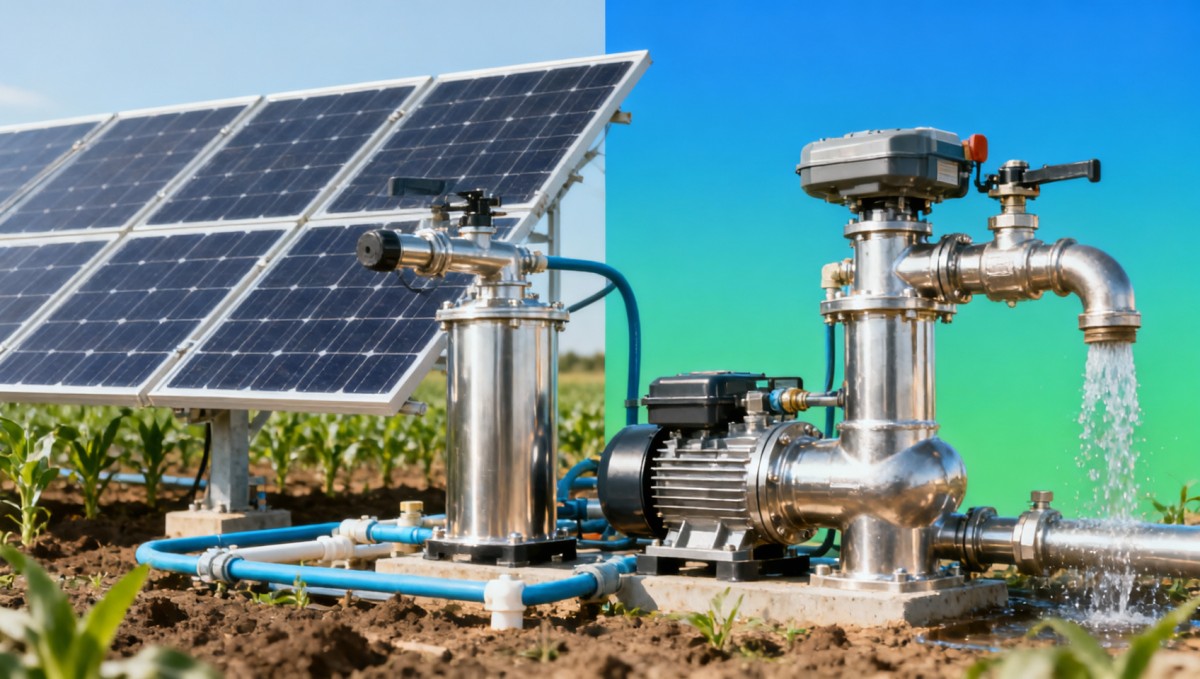
For agricultural operators, distributors, and project managers, a farm pump is rarely a standalone purchase. In many projects, irrigation pumping capacity must align with power availability, pipe losses, field elevation, seasonal water demand, and the durability of related farm machinery. That is why wholesale water pumps for farming are increasingly evaluated as part of a wider equipment package rather than a single line item.
In practical terms, buyers typically compare 3 core dimensions before shortlisting suppliers: hydraulic performance, lifecycle cost, and supply chain reliability. A low unit price can quickly lose value if the pump curve does not match the required head, if spare parts lead time stretches from 7–15 days to 4–6 weeks, or if seal and motor protection specifications are not suitable for continuous field use.
This matters across mixed procurement environments. A commercial farm expanding irrigation may simultaneously source solar water pumps agricultural packages, agricultural diesel engines for backup, and agricultural tires wholesale for transport equipment. Technical teams focus on compatibility and duty cycle. Procurement teams focus on quote comparability. Finance teams focus on total cost over 3–5 years, not just the initial purchase order.
AgriChem Chronicle supports this decision process by translating technical documentation, compliance language, and market realities into buyer-ready intelligence. For institutional buyers and industrial farming operators, that means clearer evaluation criteria, more disciplined supplier comparison, and fewer errors in early-stage specification work.
What has changed for buyers
The 2026 market is shaped by tighter operating margins, water-use efficiency targets, and stronger scrutiny of equipment traceability. Buyers are asking sharper questions about motor efficiency, enclosure protection, material compatibility, and after-sales response time. They also expect documentation packages that support internal review by technical evaluators, quality teams, and commercial approvers.
- Irrigation projects often require 2–4 rounds of technical clarification before final order confirmation, especially for deep well and solar configurations.
- Many buyers now ask for pump curves, motor data, materials lists, and recommended operating ranges in one consolidated file.
- Projects with remote fields increasingly prioritize serviceable designs and spare parts continuity over marginal upfront savings.
Which pump types fit which agricultural scenarios?
Selecting among centrifugal surface pumps, submersible deep well pumps, and solar water pumps agricultural systems starts with the water source and duty pattern. A river-fed transfer application differs from a borehole irrigation setup. A greenhouse requiring stable daily cycles differs from open-field seasonal pumping. The correct choice depends on head, flow, run time, and power conditions rather than on category labels alone.
For example, shallow-source irrigation with moderate lift may use surface pumps where suction conditions are manageable and maintenance access is important. Deep bore applications usually favor submersible deep well pumps because they avoid suction limitations and provide more stable performance under higher heads. Solar pumping becomes attractive where daytime irrigation aligns with sunlight availability and grid access is limited or expensive.
Buyers should also evaluate how the pump interacts with the rest of the farm system. If irrigation uptime depends on tractors, diesel generator backup, mobile water transport, or field mobility, the decision should account for related procurement such as tractor implement parts, agricultural diesel engines, and agricultural tires wholesale. A technically sound pump can still underperform in an underdesigned system.
The table below provides a practical comparison framework for common farming pump options used in wholesale procurement and project planning.
This comparison shows why model selection should begin with application data, not catalog familiarity. A buyer who defines required flow in cubic meters per hour, target head, daily operating window, and water quality exposure will usually reach a better shortlist than one comparing only motor power or headline price.
Scenario-based selection logic
When solar pumping is the stronger option
Solar water pumps agricultural systems work best when the site has consistent daylight demand, limited grid access, and acceptable seasonal variation. They are especially suitable for daytime irrigation over 6–10 hour pumping windows, livestock watering, and remote plots where fuel logistics raise operating cost.
When deep well pumps are the safer choice
Submersible deep well pumps are often preferred when static water levels are significant, suction limitations make surface options impractical, or distribution pressure must stay stable across long distances. In these cases, proper stage selection and motor protection become more important than simple purchase-price comparisons.
- Use source depth and seasonal water variation as the first screening filter.
- Use daily water volume and peak irrigation hours as the second filter.
- Use power source stability and service access as the third filter.
What technical parameters should buyers verify before ordering?
Technical evaluation should move beyond nominal horsepower. For wholesale water pumps for farming, the critical issue is whether the pump can deliver the required duty point within a stable operating range. Buyers should request at least 5 technical items in every quotation package: flow rate, total dynamic head, motor power, material configuration, and recommended operating curve.
Water quality is another decisive variable. If the source contains suspended solids, abrasive sand, fertilizer residues, or mild corrosive content, component life can decline quickly unless the impeller, shaft, seals, and motor housing are selected accordingly. This is especially relevant for mixed-use farms that also handle fine chemicals, feed processing, or biologically active inputs where contamination control matters.
Duty cycle must also be reviewed carefully. A pump that runs 1–2 hours per day may be configured differently from one expected to operate 8–16 hours during peak irrigation periods. Overlooking run profile leads to overheating, unstable pressure, or premature wear. Technical teams should match the motor protection approach and enclosure rating to ambient temperature, moisture exposure, and field conditions.
The following parameter guide helps procurement teams, engineers, and quality reviewers align on the most useful screening points during supplier comparison.
A useful procurement rule is to reject any quote that lacks a duty-point basis. Without a clear link between required flow and total dynamic head, price comparison becomes unreliable. This is where a journal-led evaluation framework, such as that used by AgriChem Chronicle, helps buyers separate complete technical offers from incomplete commercial offers.
A 4-step technical screening checklist
- Define source conditions: water level, distance, pipe route, solids exposure, and seasonal change.
- Define performance target: required flow, pressure, daily run time, and expected continuous operating hours.
- Define energy architecture: grid availability, diesel backup, or solar operating profile.
- Define maintenance expectations: spare parts stock, seal replacement interval, and on-site service constraints.
Following these 4 steps reduces mismatch risk early and allows finance, operations, and engineering teams to review the same technical baseline before commercial negotiation begins.
How should procurement teams compare suppliers, cost, and compliance?
For B2B buyers, the most common mistake is comparing invoice totals without normalizing scope. One supplier may include cables, controllers, spare seals, and commissioning guidance, while another offers only the pump body. In wholesale water pumps for farming, quote normalization is essential if the procurement process involves distributors, EPC teams, or cross-border sourcing.
Lead time is a second major variable. Depending on configuration complexity, standard agricultural pumps may move within 2–4 weeks, while solar packages, custom voltage arrangements, or deep well systems with accessory kits can require longer coordination. Buyers should separate ex-works readiness from real project delivery timing, including documentation review, payment approval, and inland logistics.
Compliance is the third pillar. Even where a specific pump category is not subject to a single universal agricultural certificate, procurement teams still need traceable documentation related to electrical safety, material declaration, environmental compatibility, and quality assurance procedures. For projects touching regulated sectors, such as feed processing or chemical handling near agricultural operations, internal compliance review may be stricter.
The supplier comparison matrix below is designed for technical buyers, financial approvers, and commercial evaluators who need a balanced view of risk, cost, and implementation readiness.
The matrix highlights a simple truth: low bid value is not the same as low procurement cost. When internal stakeholders include project engineers, safety managers, distributors, and finance controllers, a complete and verifiable offer often reduces downstream cost more effectively than a nominally cheaper but incomplete quotation.
How ACC adds value during supplier evaluation
AgriChem Chronicle operates at the intersection of machinery, compliance, and industrial sourcing intelligence. That matters because agricultural equipment procurement increasingly overlaps with regulated supply chains, technical documentation standards, and cross-border trade questions. ACC helps decision-makers assess whether a supplier narrative is technically coherent, commercially complete, and suitable for institutional review.
For distributors and commercial teams, this reduces ambiguity. For engineers and quality personnel, it improves the quality of early screening. For executives, it shortens the path from market research to budget-ready decisions.
What mistakes do buyers make, and what should they ask before issuing a PO?
Many sourcing teams still begin with a general request such as “need a farming pump for irrigation” without defining actual operating conditions. This invites inconsistent offers, weak comparability, and internal disagreement. By the time technical clarifications arrive, the project may already be under time pressure, especially when irrigation deployment must align with planting calendars or seasonal water windows.
Another frequent error is treating solar, diesel-backed, and grid-powered systems as interchangeable from a cost perspective. They are not. Capital expenditure, maintenance profile, fuel dependency, and control architecture differ substantially over a 12–36 month operating horizon. A finance approver may favor the lower upfront option, while operations may bear the higher ongoing burden later.
A third mistake is overlooking support scope. In remote farming projects, the value of commissioning guidance, wiring documentation, spare parts planning, and replacement response can exceed a small discount on the initial unit price. This is especially true when the pump supports high-value crops, aquaculture water circulation, or integrated primary processing operations.
Before issuing a purchase order, buyers should use a structured question set that aligns technical, commercial, and compliance expectations.
FAQ for technical and procurement teams
How do I choose between a solar water pump agricultural system and a diesel-backed setup?
Start with the operating window and site access. If irrigation can run mainly during daylight and fuel supply is difficult, solar may be a practical fit. If the site needs high flexibility, nighttime operation, or emergency pumping during low-sun periods, diesel backup or hybrid planning may be more suitable. Review daily water demand, expected runtime, and seasonal variability over at least one full crop cycle.
What is the most important number in submersible deep well pump selection?
The most important figure is not motor power alone but the duty point: required flow at the actual total dynamic head. Without that combination, a submersible deep well pump may be oversized, undersized, or forced to run outside its efficient range. Include drawdown assumptions, pipe losses, and discharge pressure when reviewing offers.
What delivery timeline should buyers expect for wholesale water pumps for farming?
Timelines vary by scope. Standard configurations may move in 2–4 weeks under normal production conditions, while custom voltage, solar controller integration, or bundled accessories can extend the process. Buyers should confirm 3 separate dates: manufacturing readiness, document completion, and dispatch timing. This helps avoid confusion between factory availability and actual project receipt.
Which documents should quality and safety teams ask for?
At a minimum, ask for technical datasheets, performance curves, materials information for wetted parts, electrical configuration details, test or inspection routine descriptions, and any applicable declarations relevant to the target market. For corporate review, it is also helpful to request packaging details, spare parts recommendations, and installation guidance.
- Confirm whether quoted accessories cover cables, control units, couplings, and mounting needs.
- Confirm whether the supplier can support spare parts planning for 12–24 months of operation.
- Confirm whether the system can be adapted if the field layout or crop plan changes after installation.
Why work with AgriChem Chronicle when evaluating farming pump suppliers?
AgriChem Chronicle is built for buyers who cannot afford vague technical language or fragmented market information. Our coverage spans agricultural and forestry machinery, aquaculture systems, feed and grain processing, and chemically sensitive industrial environments where documentation quality and supply chain transparency directly affect purchasing decisions. That editorial scope gives readers a stronger basis for evaluating wholesale water pumps for farming within the realities of modern industrial agriculture.
For information researchers and technical evaluators, ACC helps convert scattered vendor claims into structured comparison criteria. For procurement officers and business reviewers, it clarifies where cost differences come from and which commercial details deserve negotiation. For enterprise decision-makers and financial approvers, it supports investment discipline by connecting equipment choice with operational risk, maintenance exposure, and delivery certainty.
If your team is comparing solar water pumps agricultural solutions, submersible deep well pumps, diesel-supported irrigation packages, or related farm infrastructure, ACC can help frame the discussion around facts that matter. That includes parameter confirmation, application matching, documentation review, supplier comparison, and cross-category sourcing insight for items such as tractor implement parts, agricultural tires wholesale, and agricultural diesel engines.
Contact us if you need support with 4 practical areas: shortlisting by duty point, checking quotation completeness, reviewing lead-time assumptions, or aligning technical documents with internal procurement and compliance workflows. This is the fastest way to move from broad market research to a procurement decision that can stand up to engineering review, commercial scrutiny, and operational reality.
What you can discuss with us
- Parameter confirmation for flow, head, run time, and power source before supplier outreach.
- Product selection guidance for solar water pumps agricultural systems versus submersible deep well pumps.
- Lead-time and scope review for wholesale projects involving accessories, spares, and documentation.
- Compliance-oriented document planning for technical review, safety checks, and internal approval.
- Quote communication support for custom configurations, bundled sourcing, and distributor discussions.
When the purchase decision affects irrigation reliability, crop timing, and capital efficiency, clarity is not optional. A well-structured evaluation process helps your team buy the right pump, from the right supplier, on terms that fit the real operating environment.
Related Intelligence
- Aeration & Water Tech2026 Shanghai Fastener Show Adds Aeration & Water Tech ZoneAeration & Water Tech Zone debuts at 2026 Shanghai Fastener Show—featuring corrosion-resistant fasteners for aquaculture & wastewater systems. Discover engineered, smart connection solutions.
- Aeration & Water Tech2026 Shanghai Fastener Show Highlights Aeration & Water TechAeration & Water Tech takes center stage at the 2026 Shanghai Fastener Show — discover energy-efficient, IoT-enabled aeration systems, global procurement trends, and smart infrastructure integration.
- Aeration & Water TechCIBF2026 Marks Earth Day: Zero-Carbon Factory Policy & Battery Recycling AccelerateZero-carbon factory policy & battery recycling take center stage at CIBF2026—key for lithium battery, PV, smart greenhouse, and RAS exporters targeting EU/US markets.
The Morning Broadsheet
Daily chemical briefings, market shifts, and peer-reviewed summaries delivered to your terminal.
