
Agricultural Diesel Engines Fuel Cost Guide
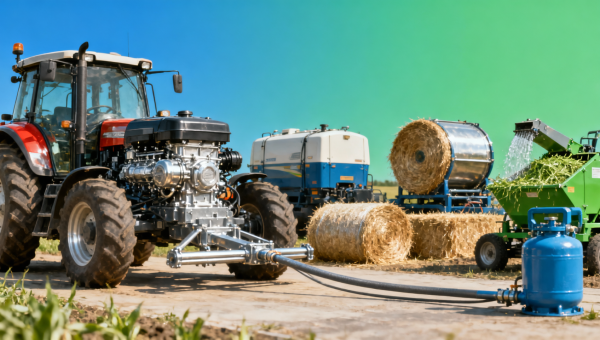
Rising fuel prices are reshaping machinery budgets across modern farms, making agricultural diesel engines a critical focus for technical evaluators and procurement teams. This guide examines real-world cost drivers, efficiency benchmarks, and lifecycle considerations while connecting engine decisions to broader equipment planning—from tractor implement parts and pto drive shafts bulk sourcing to grass forage chopper, square baler machine, round baler machine, and irrigation systems such as solar water pumps agricultural and submersible deep well pumps.
Why fuel cost analysis now matters more in agricultural diesel engine procurement
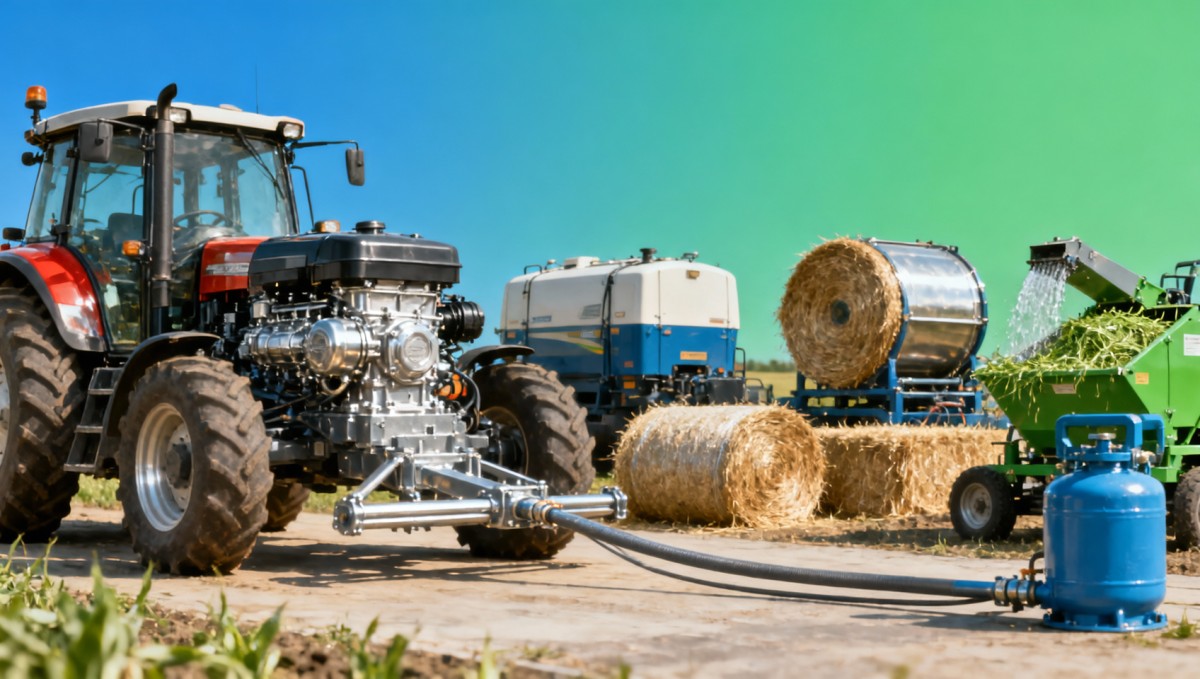
For many farms and agro-industrial operators, the purchase price of an engine is no longer the main cost question. What matters is the total fuel burden over 3–7 years of use, especially when engines support multi-season field work, transport, pumping, and processing tasks. A diesel engine that looks affordable at the quotation stage can become expensive if its fuel burn rate is poorly matched to operating loads.
This issue affects more than farmers. Procurement managers, project engineers, finance approvers, and distributors all need a practical framework for comparing agricultural diesel engines under realistic duty cycles. In mixed operations, one engine may power tractors during planting, drive a square baler machine during harvest, and support irrigation equipment later in the season. That workload variability changes fuel economics.
AgriChem Chronicle addresses this decision gap by connecting machinery analysis with supply chain logic, technical review, and compliance awareness. For readers managing agricultural and forestry machinery portfolios, the goal is not only to identify lower fuel use per hour, but to understand the full operating context: rated power, load factor, maintenance intervals, fuel quality tolerance, and parts availability across domestic and export markets.
In practice, fuel cost reviews should cover at least 4 dimensions: liters per hour at typical load, annual running hours, maintenance-related efficiency loss, and the compatibility of the engine with the equipment train. That includes pto drive shafts bulk purchasing decisions, tractor implement parts, and connected systems such as grass forage chopper assemblies or submersible deep well pumps that influence real power demand.
- Field operations often run in seasonal peaks of 6–12 weeks, which means short periods of intense diesel consumption can dominate annual machinery budgets.
- Engines operating at 50%–80% load usually behave very differently from units frequently pushed close to rated output.
- Distribution networks should review not only engine efficiency, but also spare filters, injector servicing, and repair lead times of 7–15 days in peak seasons.
What actually drives agricultural diesel engine fuel cost in the field?
Fuel cost is shaped by more than engine size. A 4-cylinder agricultural diesel engine used on baling, towing, and pump-duty work can show very different consumption depending on load stability, operator habits, terrain, attachment drag, and service condition. Technical evaluators should avoid judging engines only by rated horsepower because the duty profile usually determines the real fuel bill.
A practical review starts with brake-specific fuel consumption trends, but field purchasing teams often need simpler working metrics: liters per hour, liters per hectare, or fuel used per ton of harvested output. For example, baler operations may prioritize throughput per hour, while irrigation systems care more about continuous run efficiency over 8–16 hour cycles.
Core variables procurement teams should test
The most useful cost model combines engine data with implement demand. A tractor pulling a round baler machine or grass forage chopper may experience fluctuating load spikes, while a diesel unit driving a pump typically sees steadier demand. Those patterns affect injection behavior, thermal efficiency, and service wear over time.
- Rated power versus actual working load, commonly reviewed across 40%–90% load bands.
- Annual runtime, often from 500–800 hours for smaller farms to 1,500–2,500 hours for intensive commercial operations.
- Fuel quality consistency, especially where storage practices or supply chain variability affect injector cleanliness and combustion.
- Idle time ratio, since repeated low-load idling can inflate fuel waste and accelerate maintenance needs.
Another overlooked factor is drivetrain and attachment matching. If pto drive shafts, gear ratios, or pump couplings are incorrectly selected, the engine may operate outside its efficient torque band. That pushes up fuel use without delivering more useful work. Project managers should therefore evaluate the whole power transmission path, not only the engine block.
The table below summarizes common field-level drivers that influence agricultural diesel engine fuel cost across machinery, irrigation, and harvesting applications.
For buyers, the key message is simple: fuel cost is an operating-system issue, not a single-engine issue. The correct evaluation combines engine data, field use pattern, attached machinery, and expected service conditions. This is particularly important for institutions comparing capital expenditure against 12-month or 36-month operating budgets.
How to compare engine options across tractors, balers, choppers, and irrigation systems
Different agricultural applications reward different engine behaviors. A tractor used with tractor implement parts and frequent PTO work may need strong mid-range torque. A forage setup feeding a grass forage chopper may value load response under changing crop density. A pump installation may favor stable continuous efficiency rather than short-term power reserve. Therefore, comparison should always be scenario-based.
Technical teams should separate intermittent field duty from continuous process duty. In many operations, diesel power still competes with electrified or solar-supported alternatives for water movement. Solar water pumps agricultural systems may reduce fuel spending in suitable regions, but diesel remains relevant where flow demand, site distance, mobility, or backup resilience require dispatchable power.
Scenario-led selection priorities
Selection should consider at least 3 questions: What load profile does the engine face? How many hours per season will it run? How costly is downtime during the operating window? These questions often matter more than headline output figures in catalogs.
Typical comparison matrix
The table below helps purchasing and engineering teams compare agricultural diesel engine priorities across common machinery categories in mixed farm operations.
This comparison shows why agricultural diesel engine selection cannot be standardized across every machine. A distributor serving multiple farm segments should create at least 2–3 engine packages rather than one generic offer. That improves quotation quality and reduces post-sale dissatisfaction related to fuel expectations.
ACC’s industry perspective is especially relevant here because machinery decisions increasingly intersect with broader supply chain planning. Buyers are not simply comparing engines; they are evaluating complete systems, service risk, logistics reliability, and the compatibility of machine fleets across agricultural, biochemical, and primary processing environments.
Procurement guide: what finance, engineering, and operations should check before approval
A strong procurement review for agricultural diesel engines should combine technical suitability with budget discipline. Too often, teams approve based on upfront price and brochure power, then face higher fuel and maintenance costs across the next 12–24 months. Cross-functional review is essential, particularly when engines are purchased for multi-site fleets or dealer networks.
For engineering and quality teams, the first checkpoint is application matching. Review the expected load profile, ambient operating conditions, continuous run requirement, and compatibility with implements or pumps. For finance teams, compare the expected fuel spend over the planned service window. For procurement teams, examine lead time, spare parts continuity, and supplier documentation quality.
A 5-point approval checklist
- Confirm the real duty cycle. Separate transport, field work, PTO-driven work, and continuous pumping hours instead of using one blended estimate.
- Request fuel-use data under comparable load conditions. A nominal figure without workload context is rarely enough for decision-grade evaluation.
- Check maintenance intervals for oil, air, and fuel filtration. Service cycles of 250–500 hours can materially affect annual downtime and labor planning.
- Verify parts and service support. During peak season, a 7-day delay on a filter, injector component, or coupling can cost more than a small purchase saving.
- Review compliance and documentation. Depending on the region and use case, emissions, safety labeling, and traceable technical paperwork may be necessary for approval and resale.
Quality control and safety managers should also assess fuel system cleanliness risk, exhaust handling in semi-enclosed environments, and training needs for operators. Even efficient agricultural diesel engines can become costly if operators use poor shutdown practices, low-grade stored fuel, or unsuitable loading patterns during the first 100–200 hours of service.
For distributors and agents, standardizing procurement templates is useful. A structured form covering 6 key items—power range, load profile, duty hours, service interval, parts availability, and documentation status—can shorten evaluation cycles and improve consistency across customer quotations.
Cost control, alternatives, and compliance questions buyers often overlook
Reducing fuel cost does not always mean replacing diesel immediately. In many agricultural environments, the better strategy is to optimize engine sizing, improve attachment matching, reduce idle waste, and shift selected irrigation loads to alternative power where conditions allow. A blended equipment strategy often delivers better economics than a single-technology decision.
For example, solar water pumps agricultural solutions may reduce diesel dependence for daytime irrigation in stable weather regions, while diesel remains the backup for high-demand intervals or off-schedule watering. In contrast, mobile harvesting and baling operations still rely heavily on diesel because energy density, portability, and operating flexibility remain decisive in the field.
Common cost-control levers
- Right-size the engine to the implement and avoid chronic operation below efficient load bands.
- Plan preventive maintenance every quarter or by running-hour threshold, rather than waiting for visible performance decline.
- Improve fuel storage turnover and contamination control, especially during warm seasons and remote-site use.
- Compare diesel-driven irrigation with solar-supported or hybrid pumping for fixed-location installations.
Compliance is another hidden cost area. Depending on market destination, buyers may need to confirm emissions-related specifications, operator safety information, and technical records that support import, resale, or project approval. While exact requirements vary by jurisdiction, commercial teams should never assume that an engine suitable for one market can be transferred to another without documentation review.
Practical risk signals
Warning signs include unclear service schedules, no defined spare parts pathway, fuel consumption claims without test context, and poor alignment between engine rating and equipment load. These issues may not appear in a basic quotation, but they become visible when technical, commercial, and operational teams review the project together.
This is where ACC’s editorial model adds value. Because the platform sits at the intersection of agricultural machinery, regulated supply chains, and industrial procurement, it supports readers who need decision-grade intelligence rather than isolated product messaging. That is especially useful for enterprises comparing machinery investment across multiple operational disciplines.
FAQ for technical evaluators, buyers, and project managers
How should I estimate agricultural diesel engine fuel cost before purchase?
Start with 3 inputs: expected annual operating hours, typical load profile, and the equipment the engine will drive. Then compare engines using liters per hour or task-based measures such as fuel per hectare or fuel per ton processed. If the machine runs across very different tasks, build separate estimates for each task instead of relying on one average.
Which applications are most sensitive to poor engine matching?
High-variability PTO work, grass forage chopper operations, and baling are especially sensitive because crop density and field conditions can change quickly. Continuous-duty pump applications are more stable, but they still suffer if the engine is oversized, poorly maintained, or matched to an inefficient coupling or pump curve.
What service interval details should procurement teams ask for?
Ask for maintenance schedules by operating hours, including oil, air filtration, and fuel filtration. A practical benchmark is to review service points in 250-hour steps and confirm what parts are locally available. Also ask how long critical spare parts usually take to supply during peak agricultural season.
Can solar alternatives replace diesel in all irrigation scenarios?
No. Solar water pumps agricultural systems can be effective for fixed daytime irrigation with predictable flow needs, but diesel may still be necessary where pumping demand is variable, nighttime operation is frequent, or water depth and pressure requirements create higher power peaks. A hybrid review is often more realistic than a full replacement assumption.
What is the most common buying mistake?
The most common mistake is choosing by sticker price or rated horsepower alone. Buyers often underestimate fuel cost over 1–3 seasons, ignore attachment compatibility, and fail to account for maintenance downtime. In commercial operations, those hidden costs can outweigh a modest purchase-price difference very quickly.
Why consult AgriChem Chronicle for machinery cost evaluation and sourcing intelligence
For organizations evaluating agricultural diesel engines, the challenge is rarely limited to one machine. Decisions often extend into implement compatibility, pto drive shafts bulk sourcing, harvesting equipment planning, pump strategy, documentation review, and supplier risk screening. AgriChem Chronicle is structured for that wider decision environment, bringing together agricultural machinery insight, regulated supply chain awareness, and industrial-grade editorial analysis.
If your team is comparing engine configurations, reviewing fuel cost assumptions, or building a procurement case for tractor implement parts, square baler machine systems, round baler machine platforms, grass forage chopper lines, or irrigation equipment including submersible deep well pumps, ACC can help you frame the evaluation with clearer technical and commercial criteria.
Contact us when you need support on parameter confirmation, application-based product selection, expected delivery windows, documentation and compliance questions, component matching, sample or specification review, or quotation planning for multi-item agricultural machinery sourcing. That is the most efficient way to move from broad market research to a decision that engineering, operations, and finance can approve with confidence.
For manufacturers, OEMs, and industrial suppliers seeking stronger visibility among institutional buyers, ACC also provides a specialized publishing environment for validated technical capabilities, laboratory-backed findings, and market-facing whitepaper content. This helps qualified suppliers present credible operational information directly to decision-makers across primary industries and fine chemicals.
Related Intelligence
- Heavy Agri MachineryIndia Launches Anti-Dumping Review on Chinese TractorsIndia's anti-dumping review on Chinese tractors may raise duties from 22.3% to 28.5% — critical for exporters, distributors & supply chain teams. Act now.
- Heavy Agri MachineryIndia Launches AD Review on Chinese Tractors, Tariff May Rise to 28.5%India's AD review on Chinese tractors may raise tariffs to 28.5% — critical insights for exporters, importers & agri-machinery stakeholders.
- Heavy Agri MachineryIndia Launches Anti-Dumping Review on Chinese TractorsIndia's anti-dumping review on Chinese tractors (≥50HP, smart hydraulic suspension) may raise duties to 22.5–28.5%. Exporters, CKD assemblers & suppliers: act now to assess risk and compliance.
The Morning Broadsheet
Daily chemical briefings, market shifts, and peer-reviewed summaries delivered to your terminal.
