

The Authority in Global Agricultural Chemistry & Bio-Resources
New Maritime Code Effective May 1, 2026: Aeration & Water Tech Equipment Reclassified
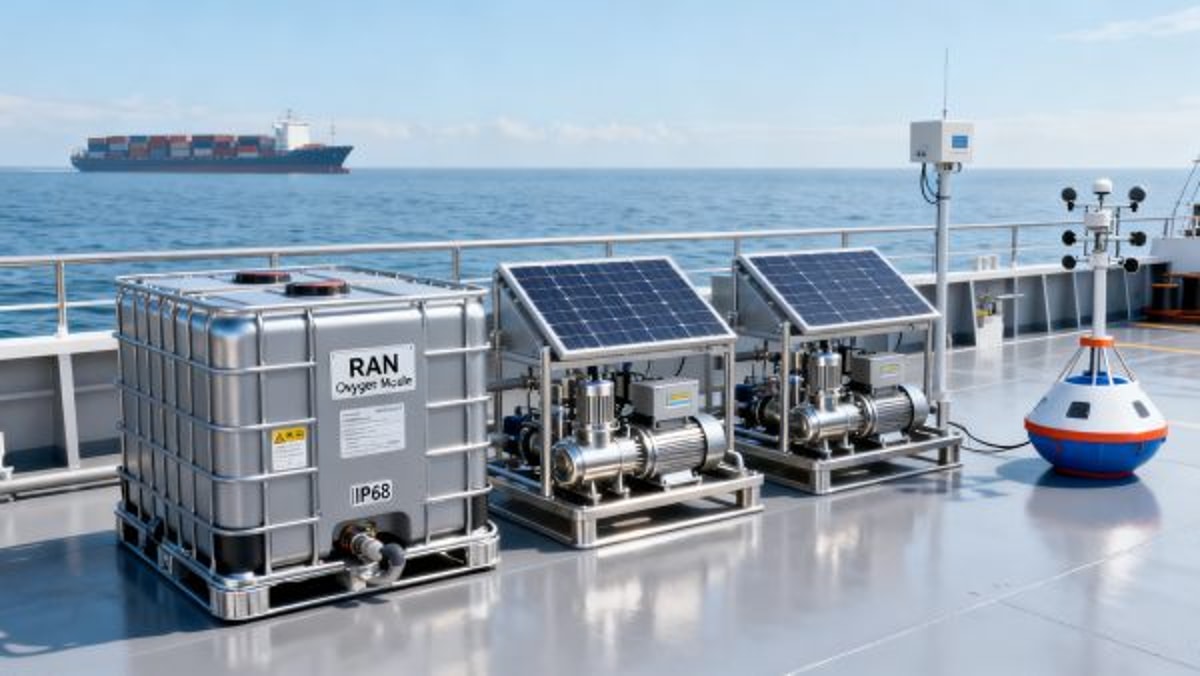
Effective May 1, 2026, the revised Maritime Code of the People’s Republic of China formally classifies water treatment and aeration specialty equipment—including RAS oxygenation modules, aquaculture aerator pump sets, and intelligent water quality monitoring buoy arrays—as ‘high-risk seaworthy cargo’. This change imposes stricter seaworthiness obligations on carriers and mandates full-chain temperature and humidity monitoring with evidentiary accountability. Exporters and importers of such equipment—particularly in aquaculture infrastructure, municipal water tech, and marine environmental monitoring sectors—should assess operational impacts now, as the revision directly affects liability allocation, documentation requirements, and claims resolution in international maritime transport.
Event Overview
The newly revised Maritime Code enters into force on May 1, 2026. It explicitly adds ‘water treatment and aeration specialty engineering equipment’ to the official list of ‘high-risk seaworthy cargo’. Covered items include recirculating aquaculture system (RAS) oxygenation modules, aquatic aerator pump assemblies, and intelligent water quality monitoring buoy arrays. Under the revision, carriers are required to fulfill enhanced seaworthiness duties and bear the burden of proof for continuous temperature and humidity monitoring throughout carriage.
Industries Affected
Direct Exporters and Importers of Aquaculture & Water Tech Equipment
These enterprises face direct exposure to revised liability rules. As carriers now assume heightened evidentiary responsibility for environmental conditions during transit, buyers may rely more heavily on carrier-provided monitoring records—not shipper declarations—to resolve disputes over equipment performance degradation or sensor calibration drift post-arrival. Impact manifests in contract negotiation terms, insurance coverage scope, and pre-shipment documentation protocols.
Manufacturers of RAS Oxygenation Modules and Aerators
Manufacturers supplying high-precision, environmentally sensitive components must now anticipate tighter contractual alignment with logistics partners. Since carrier monitoring data—not factory test reports—may become the primary evidence in cargo condition disputes, product packaging specifications, thermal buffering requirements, and real-time telemetry integration may need formalization in commercial agreements and shipping instructions.
Suppliers of Intelligent Water Quality Monitoring Buoy Arrays
As these systems often contain calibrated sensors, battery-dependent electronics, and embedded firmware, their classification as high-risk cargo triggers new expectations around environmental stability verification. Shippers may need to specify minimum/maximum thresholds for temperature and humidity exposure in bills of lading and request carrier confirmation of compliance—especially for air-ocean intermodal legs where ambient fluctuations are pronounced.
Key Considerations and Recommended Actions
Monitor official implementation guidance from MSA and customs authorities
The Ministry of Transport and China Maritime Safety Administration are expected to issue supplementary notices clarifying definitions of ‘continuous monitoring’, acceptable device certification standards, and evidentiary formats. Enterprises should track these updates before finalizing Q2 2026 shipping contracts.
Review and revise Incoterms® usage—especially CIF and FCA clauses
Under the revised Code, carrier obligations expand significantly. Companies using CIF (where seller arranges carriage and insurance) should verify whether existing insurance policies cover carrier monitoring failures; those using FCA (where buyer controls main carriage) should ensure contractual language assigns clear responsibility for monitoring validation and record retention.
Assess current packaging, labeling, and pre-shipment conditioning practices
While the Code does not prescribe technical packaging standards, its evidentiary focus makes environmental preconditioning—e.g., stabilizing internal humidity before container loading—more operationally relevant. Enterprises should document such steps and align them with carrier monitoring timelines to strengthen position in potential disputes.
Engage freight forwarders and NVOCCs early on monitoring capability verification
Not all carriers or intermediaries currently deploy certified, tamper-evident environmental loggers across all vessel types and routes. Shippers should confirm hardware compatibility, data accessibility (e.g., API access or downloadable CSV), and chain-of-custody integrity prior to booking—particularly for long-haul or transshipment-heavy lanes.
Editorial Observation / Industry Perspective
Observably, this revision signals a structural shift—not just procedural adjustment—in how Chinese maritime law treats technologically sophisticated, functionally sensitive industrial goods. Rather than treating equipment as generic cargo, the Code now recognizes that certain water tech products derive core value from stable environmental exposure history. Analysis shows the change is less about immediate enforcement capacity and more about establishing a legal framework for future digital supply chain accountability. From an industry perspective, it reflects growing alignment between domestic regulatory logic and international best practices in cold-chain and climate-controlled logistics—but with distinct emphasis on evidentiary burden rather than prescriptive technical standards. The rule’s practical impact will depend heavily on how consistently monitoring data is collected, preserved, and admitted in dispute resolution forums.
Conclusion
This revision does not introduce new export restrictions or licensing requirements. Instead, it recalibrates risk allocation in maritime transport for a defined subset of water and aeration technology equipment. Its significance lies in formalizing evidentiary expectations—making environmental monitoring data a central element of cargo condition verification. Currently, it is more accurately understood as a legal signal preparing the ground for higher operational discipline in climate-sensitive equipment logistics, rather than an immediate operational disruption. Enterprises are advised to treat it as a trigger for cross-functional alignment—not a compliance deadline.
Source: Official text of the revised Maritime Code of the People’s Republic of China, effective May 1, 2026; public notice issued by the Standing Committee of the National People’s Congress (March 2026).
Note: Implementation guidelines, carrier monitoring certification criteria, and judicial interpretation remain under observation.
Related Intelligence
- Aeration & Water TechNew Maritime Code Effective May 1, 2026: Aeration & Water Tech Equipment ReclassifiedNew Maritime Code (May 1, 2026) reclassifies aeration & water tech equipment as high-risk cargo—impacting liability, monitoring, and global shipping. Act now.
- Aeration & Water TechBulk Activated Carbon: Which Specs Matter for Water Treatment?Bulk activated carbon for water treatment: learn which specs truly matter—iodine value, particle size, ash, moisture, and hardness—to improve performance, control cost, and choose suppliers with confidence.
- Aeration & Water TechTHE Alliance Raises Aeration & Water Tech Freight Rates on Asia–Middle East RoutesAeration & Water Tech freight rates rise 22% on Asia–Middle East routes amid THE Alliance’s new BUC—key for aquaculture exporters, forwarders & importers. Act now.
The Morning Broadsheet
Daily chemical briefings, market shifts, and peer-reviewed summaries delivered to your terminal.
