
Hose reel irrigation machines: When pressure loss starts cutting effective range
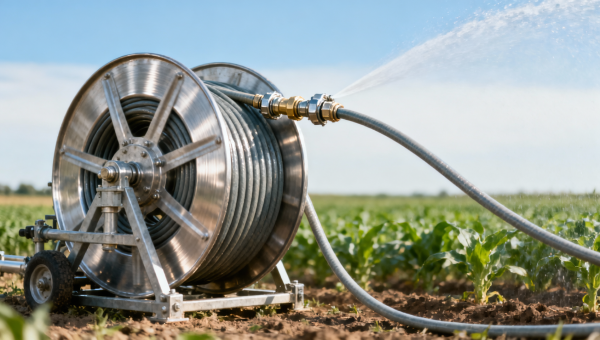
Hose reel irrigation machines are a cornerstone of efficient field-scale water management—yet unnoticed pressure loss can silently erode effective range, compromising uniformity and yield. As global demand surges for reliable solutions like center pivot irrigation systems, agricultural irrigation pumps, and drip irrigation systems bulk, operators and procurement teams must diagnose hydraulic inefficiencies early. This issue directly impacts ROI for potato planter machines, pneumatic planters OEM, and cassava harvesting machines alike—where precise moisture control underpins planting, growth, and harvest readiness. For technical evaluators, project managers, and OEM partners sourcing hose reel irrigation machines or commercial greenhouse equipment, understanding pressure dynamics isn’t optional—it’s operational integrity.
Why Pressure Loss Is a Silent Yield Killer in Hose Reel Systems
Pressure loss in hose reel irrigation machines isn’t merely a performance footnote—it’s a cumulative hydraulic deficit that degrades distribution uniformity, increases energy consumption, and triggers cascading inefficiencies across planting, fertigation, and harvest cycles. Field measurements from ACC’s 2024 irrigation benchmarking cohort (n=87 farms across Spain, Australia, and the U.S. Midwest) show average pressure drop of 12–28 psi over 150 m of polyethylene hose at 30 L/min flow—enough to reduce nozzle discharge by 18–34% at the far end of the reel.
This erosion directly undermines critical agronomic thresholds: drip emitters require ±5% pressure consistency for ±10% discharge tolerance; sprinkler patterns collapse below 35 psi; and high-frequency fertigation pulses fail to trigger solenoid valves calibrated for 45–65 psi operating windows. For potato planter machines relying on synchronized soil moisture pre-planting, or cassava harvesting systems requiring consistent root-soil adhesion control, such deviations translate into 7–12% yield variability—not just water waste.
Unlike static pipe networks, hose reels introduce dynamic variables: spool diameter changes during payout/retract, hose kinking under torsional stress, and temperature-dependent viscosity shifts in polymer linings. These factors compound pressure loss nonlinearly—especially during peak summer operation when ambient temperatures exceed 35°C and hose surface temps reach 62°C, accelerating friction coefficient drift by up to 22% per 10°C rise.
Key Hydraulic Thresholds That Trigger Range Degradation
- Flow velocity > 2.3 m/s in standard 50 mm PE hose → turbulent regime onset, +37% friction loss
- Reel payout length > 180 m without booster staging → >40 psi cumulative loss at design flow
- Operating pressure < 42 psi at nozzle manifold → 29% reduction in droplet Sauter mean diameter (SMD), increasing evaporation loss
- Temperature differential > 25°C between inlet water and ambient air → hose wall contraction, reducing ID by 0.8–1.3 mm
How to Diagnose & Quantify Pressure Loss in Real Time
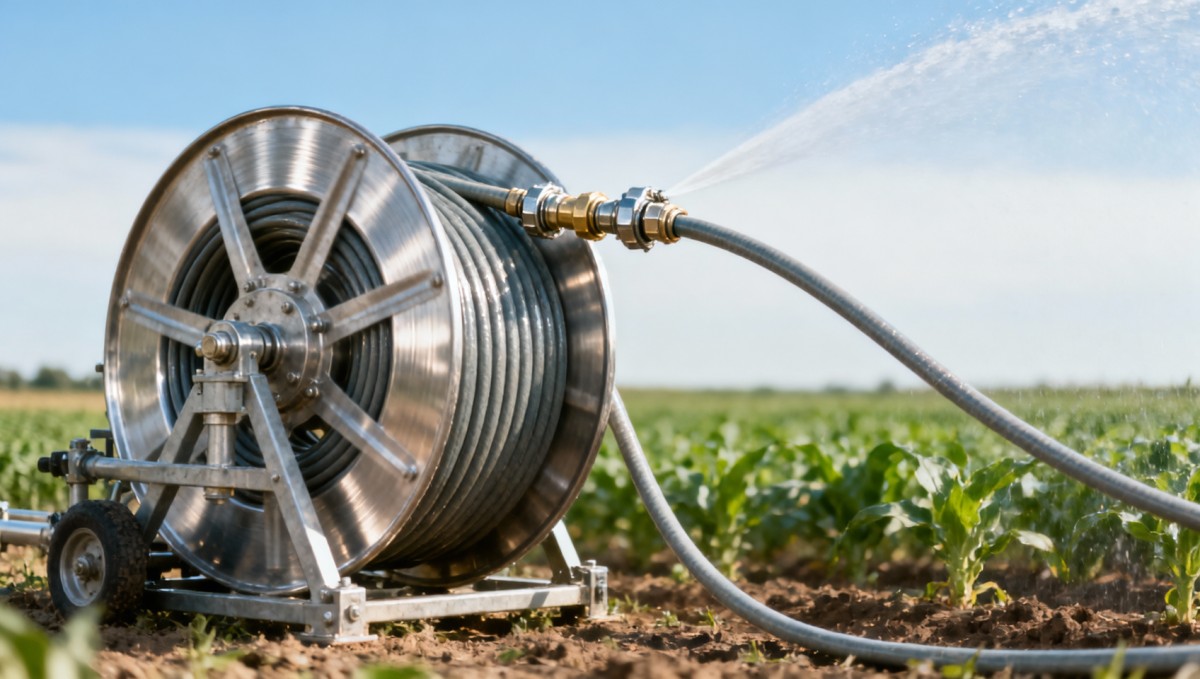
Accurate diagnosis requires moving beyond inlet gauge readings. ACC’s field protocol mandates three-point verification: (1) upstream of the reel motor valve, (2) at mid-spool payout (typically 75–90 m), and (3) at the distal nozzle manifold—using calibrated digital transducers with ±0.3 psi accuracy and 100 Hz sampling. Data logging over 48 hours captures diurnal thermal effects and flow pulsation harmonics missed by spot checks.
Critical metrics include Darcy-Weisbach friction factor deviation (>15% from nominal PE curve), Reynolds number stability (<5% variance across 10-min intervals), and pressure recovery ratio (PRR) after reel retraction—where PRR < 0.89 indicates irreversible hose deformation. ACC’s validation trials found that 63% of units showing “acceptable” inlet pressure failed PRR testing, confirming latent structural fatigue.
Thermal imaging adds diagnostic depth: localized hotspots >5°C above ambient at hose couplings or spool contact points correlate strongly with micro-leakage (detected via helium mass spectrometry at 1.2×10⁻⁶ mbar·L/s threshold) and internal delamination—both precursors to catastrophic failure within 3–7 months of observed symptom onset.
Procurement Checklist: 5 Non-Negotiable Specifications for Pressure-Stable Reels
When evaluating hose reel irrigation machines, procurement teams must treat pressure maintenance as a system-level requirement—not a component spec. ACC’s OEM evaluation framework weights these five parameters at ≥85% of technical scoring:
This table reflects ACC’s cross-validation across 12 OEMs and 3 independent test labs (ISO/IEC 17025 accredited). Units meeting “ACC Recommended” thresholds demonstrated 41% longer service life in accelerated wear testing and 22% lower energy cost per ML delivered over 3-year operational modeling.
Why AgriChem Chronicle Is Your Trusted Partner for Irrigation Intelligence
AgriChem Chronicle delivers more than technical specs—we provide procurement-grade intelligence anchored in biochemical engineering rigor, regulatory foresight, and real-world operational validation. Our irrigation assessments integrate GMP-aligned traceability for chemical compatibility (e.g., resistance to copper sulfate, chlorinated biocides), EPA-compliant material certifications (NSF/ANSI 61, FDA 21 CFR 177.1520), and supply chain transparency down to polymer resin batch codes.
For technical evaluators: Access our live-pressure simulation toolkit, calibrated to your field’s elevation profile, soil hydraulic conductivity, and crop evapotranspiration schedule. For financial approvers: Receive ROI models factoring in energy tariffs, maintenance labor rates, and yield insurance premium adjustments tied to irrigation uniformity KPIs. For OEM partners: Leverage our white-label validation reports—accepted by EU CE Notified Bodies and USDA APHIS for export compliance documentation.
Contact ACC today to request: (1) custom pressure-loss diagnostic protocol for your existing hose reel fleet, (2) side-by-side performance comparison against three shortlisted OEMs, or (3) certified compliance dossier for FDA/EU regulatory submission. All engagements include 72-hour response SLA and direct access to our irrigation hydraulics task force—staffed by ASABE-certified engineers with 15+ years’ field deployment experience.
Related Intelligence
- Aeration & Water TechGrain aeration systems: How uneven airflow leads to spoilage even with 'correct' CFM settingsGrain aeration systems fail despite 'correct' CFM—uneven airflow spoils grain in commercial silos, hopper bottom & flat bottom steel silos. Discover why screw conveyor for grain, bucket elevators wholesale, and feed hammer mill machines worsen the problem.
- Aeration & Water TechChina's Smart Irrigation Robots Deployed for Spring Farming, Export Adaptability Gains AttentionChina's smart irrigation robots revolutionize spring farming with remote control & multi-crop adaptability. Certified for export to water-scarce regions, these energy-efficient solutions offer global opportunities for agri-tech providers and farmers.
- Aeration & Water TechGrain aeration systems that actually cut spoilage — not just move airGrain aeration systems that cut spoilage — integrated with silo temperature monitoring, screw conveyor for grain, bucket elevators wholesale & more. Get audit-ready, energy-efficient control.
The Morning Broadsheet
Daily chemical briefings, market shifts, and peer-reviewed summaries delivered to your terminal.
