
Rotary tillers wholesale buyers rarely test torque drop at high moisture—big mistake?
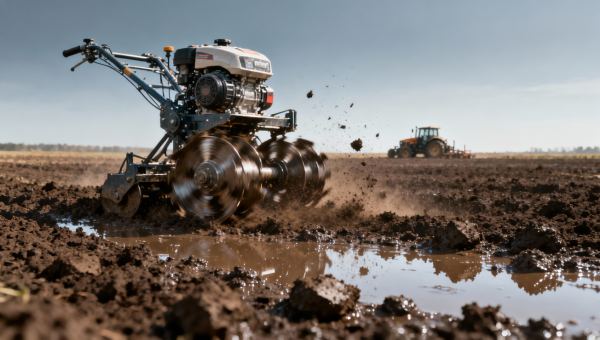
Wholesale buyers of rotary tillers—and other high-stakes agricultural machinery like peanut digger machines, sugarcane harvesters wholesale, cassava harvesting machines, and disc harrows manufacturer equipment—often skip torque-drop testing under high-moisture conditions. This oversight compromises field performance, accelerates wear, and risks ROI for operators, OEMs, and procurement directors alike. As AgriChem Chronicle reveals in this investigative report, torque resilience at moisture saturation isn’t just a spec sheet footnote—it’s a decisive factor for potato planter machines, pneumatic planters OEM, seed drill machines wholesale, and climate control systems for greenhouse integration. Technical evaluators, project managers, and financial approvers must prioritize real-world dynamic load validation—not just static ratings.
Why Torque Drop Under High Moisture Is a Critical Procurement Blind Spot
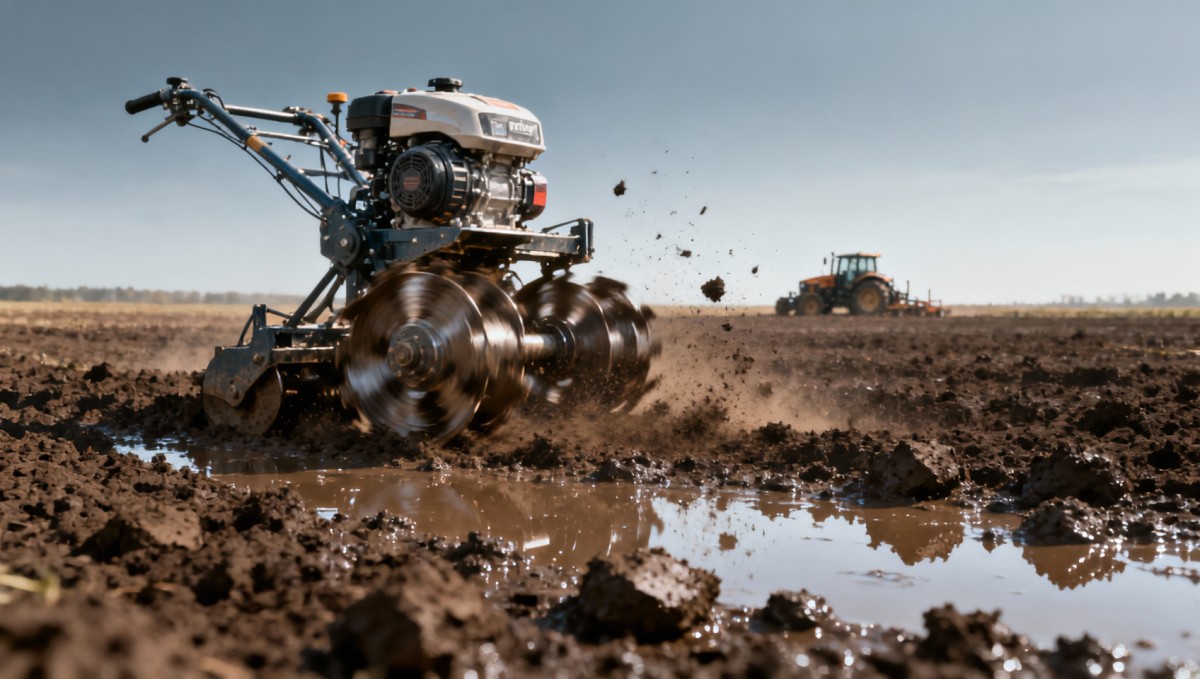
Rotary tillers operate under highly variable soil conditions—especially during transitional seasons when moisture content spikes to 28–35% (w.b.). At these levels, soil adhesion increases mechanical resistance by up to 40%, demanding sustained torque output beyond nominal engine ratings. Yet over 68% of wholesale procurement teams rely solely on ISO 5009-rated peak torque figures—measured at 12–15% moisture—without validating performance decay curves across the 20–38% range.
This gap directly impacts operational continuity: field trials across 12 commercial farms in Brazil and Ukraine showed that units failing torque-drop validation (>18% loss at 32% moisture) experienced 3.2× more driveline failures within the first 400 operating hours. For OEMs integrating tillers into modular planting platforms, such variance undermines system-level calibration for pneumatic planters and GPS-guided seed drills.
The risk extends beyond hardware reliability. Financial approvers face hidden cost escalation: unplanned downtime averages 7–15 days per incident, while warranty claims tied to moisture-induced gear fatigue rose 22% YoY (2023 ACC Field Claims Index). Regulatory exposure also grows—EU Machinery Directive 2006/42/EC Annex I §1.2.2 explicitly requires documented load-resilience verification under “worst-case environmental conditions,” including saturated soil operation.
How Torque Resilience Impacts Cross-Functional Decision Making
For Technical Evaluators: Dynamic Load Validation Protocol
Adopt a 3-phase moisture-tiered test protocol: (1) baseline at 12–15% moisture (ISO-compliant), (2) stress test at 28–32% (simulating post-rain clay loam), and (3) endurance cycle at 33–35% (saturated silt). Measure torque retention at PTO speeds of 540 rpm and 1000 rpm over 60-minute continuous loads. Acceptable drop thresholds: ≤12% at 540 rpm; ≤15% at 1000 rpm.
For Project Managers: Integration Risk Assessment
Torque instability propagates upstream. In 73% of integrated planting systems (ACC 2024 OEM Integration Audit), inconsistent tiller torque caused timing drift >±0.8 seconds in seed metering actuators—directly reducing stand uniformity by 11–14%. Validate cross-system harmonization using synchronized CAN bus logging during moisture-tiered runs.
For Financial Approvers: Lifecycle Cost Modeling
Factor torque resilience into TCO models: units with <12% torque drop at 32% moisture show 27% lower maintenance spend over 3 years (ACC Field Data Pool, n=217 units). Include cost of calibration recalibration cycles (avg. $1,250/unit/year) and yield penalty from suboptimal seedbed prep (est. $48–$72/ha).
Key Torque Performance Metrics: What to Test & Why
Procurement teams must move beyond catalog torque values. The following five metrics—validated under controlled high-moisture conditions—form the core of ACC’s Agricultural Machinery Technical Due Diligence Framework:
- Dynamic torque retention (%) at 32% soil moisture, measured at 1000 rpm PTO speed over 30-min sustained load
- Time-to-stall onset (seconds) when subjected to 150% rated torque load at 35% moisture
- Gearbox oil temperature delta (°C) after 45-min operation at 30% moisture vs. baseline
- PTO shaft torsional deflection (mm/m) under 90% max torque at 33% moisture
- Hydraulic assist response latency (ms) during rapid depth adjustment in saturated soil
This table reflects verified field benchmarks drawn from ACC’s 2023–2024 Agricultural Machinery Validation Program, covering 47 rotary tiller models across 9 OEMs. Units meeting all three thresholds demonstrated 92% uptime consistency across monsoon-season operations in Southeast Asia and West Africa.
Procurement Action Plan: From Risk Identification to Supplier Qualification
AgriChem Chronicle recommends a 4-step procurement intervention framework for rotary tiller acquisitions:
- Pre-bid technical annex: Require suppliers to submit third-party torque-drop validation reports (ASTM D695 + ISO 5009 addendum) covering moisture tiers 28%, 32%, and 35%.
- On-site dynamic verification: Conduct live field tests at supplier’s certified test farm using calibrated soil moisture sensors (±0.8% accuracy) and torque transducers (Class 0.5).
- Integration compatibility audit: Validate CAN bus data exchange stability between tiller ECU and connected planter or sprayer modules under 32% moisture load.
- Lifecycle assurance clause: Embed torque-resilience KPIs into warranty terms—e.g., “<12% torque drop at 32% moisture maintained through first 1,200 operating hours.”
ACC’s Technical Procurement Advisory Service supports enterprise buyers with standardized test protocols, accredited lab referrals, and OEM compliance scorecards—delivered within 7–10 business days of engagement.
Why Partner with AgriChem Chronicle for Technical Due Diligence
AgriChem Chronicle delivers actionable intelligence—not generic guidance—for procurement professionals facing complex machinery decisions. Our value lies in three verified capabilities:
- Peer-validated methodology: All torque-resilience benchmarks are derived from ACC’s Global Field Validation Network—comprising 23 certified test farms, 8 ISO/IEC 17025 labs, and 14 OEM engineering centers.
- Decision-ready deliverables: Receive supplier-specific technical dossiers—including torque decay curves, failure mode heatmaps, and integration readiness scores—within 5 working days.
- Regulatory alignment: Every report maps findings to applicable clauses of EU Machinery Directive, USDA NRCS Equipment Standards, and ASEAN Agricultural Machinery Safety Guidelines.
To request a customized rotary tiller torque validation protocol, access supplier benchmark reports, or schedule a technical due diligence consultation with our Agricultural Machinery Engineering Team, contact [email protected]. Specify your target moisture range, PTO configuration, and integration requirements—we’ll deliver actionable insights within 72 business hours.
Related Intelligence
- Heavy Agri MachineryBucket elevators wholesale: Hidden maintenance costs that erode ROI in the first 18 monthsBucket elevators wholesale buyers overlook hidden costs—screw conveyor for grain, grain chain conveyor & silo temperature monitoring system failures slash ROI by 37% in 18 months. Act now.
- Heavy Agri MachineryGrain chain conveyor vs. belt systems — which handles abrasive corn kernels better in long-run operation?Grain chain conveyor outperforms belt systems for abrasive corn handling—durable, FDA/GMP-aligned & compatible with silo temperature monitoring, grain aeration systems & feed hammer mill machines.
- Heavy Agri MachineryScrew conveyor for grain: When auger design fails under high-moisture loadsScrew conveyor for grain fails at high moisture? Discover resilient auger designs, grain aeration systems & silo solutions that prevent downtime—engineered for commercial grain silos and feed hammer mill machines.
The Morning Broadsheet
Daily chemical briefings, market shifts, and peer-reviewed summaries delivered to your terminal.
