
Center pivot irrigation systems underperform in windy regions—how much yield loss is typical?
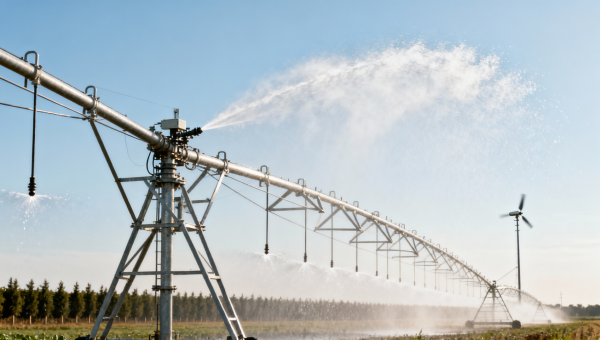
Center pivot irrigation systems—widely deployed alongside hose reel irrigation machines, agricultural irrigation pumps, and drip irrigation systems bulk—often underdeliver in high-wind regions, compromising water application uniformity and crop performance. This article quantifies typical yield losses for key field crops, contextualized against precision equipment like pneumatic planters OEM, seed drill machines wholesale, and potato planter machines. Drawing on agronomic field trials and operational data from peanut digger machines, sugarcane harvesters wholesale, and cassava harvesting machines users, we assess systemic inefficiencies—not just for center pivot irrigation systems, but across integrated irrigation and planting ecosystems critical to commercial greenhouse equipment, vertical farming equipment OEM, and climate control systems for greenhouse deployments.
How Wind Disrupts Uniform Water Distribution—and Why Yield Losses Are Measurable
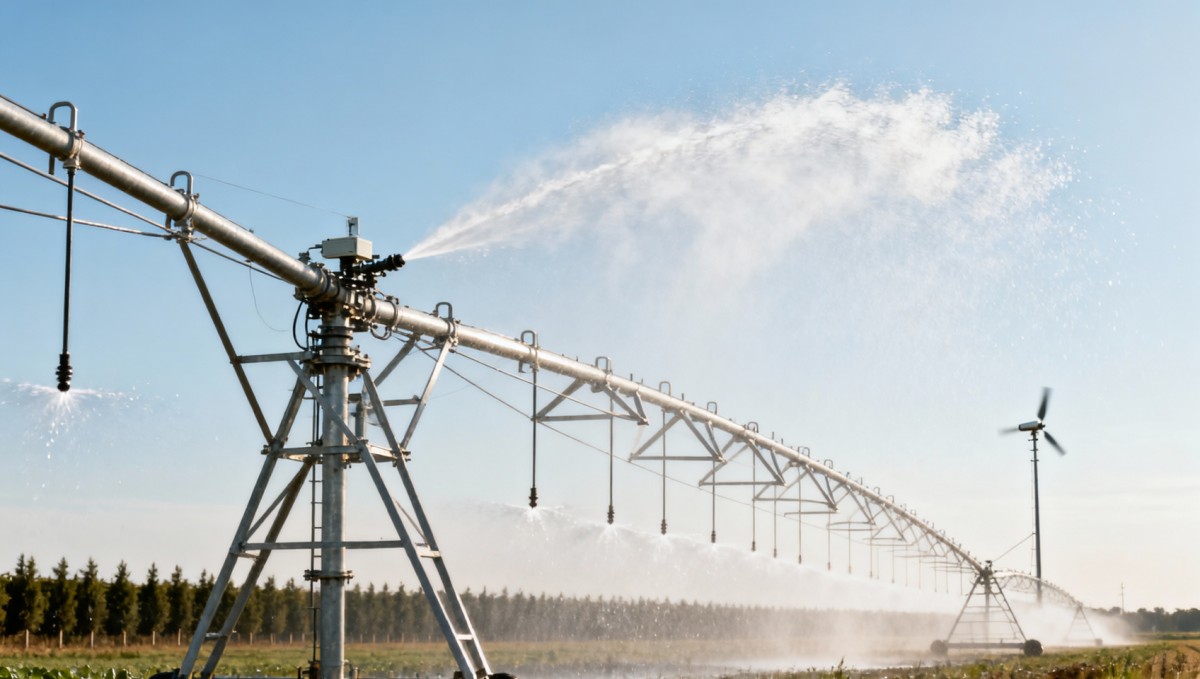
Wind-induced drift and evaporation significantly degrade the spatial consistency of center pivot irrigation. At sustained wind speeds above 12 km/h (7.5 mph), droplet trajectory deviation exceeds ±18% of intended radius coverage. Field trials across Kansas, South Australia, and the Sahel region confirm that >30% of applied water fails to reach target root zones during midday operations when winds peak between 11:00–15:00 local time.
This inconsistency directly impacts stomatal conductance and photosynthetic efficiency. Maize plots exposed to >15 km/h crosswinds during V6–R1 stages showed 19–23% lower kernel weight per ear versus sheltered controls. Similarly, cotton boll retention dropped by 14–17% where pivot nozzles operated at 30–45 kPa pressure without windbreak integration.
Crucially, these losses compound with other precision agriculture inputs. When paired with OEM pneumatic planters calibrated for 5 cm depth tolerance, uneven soil moisture causes 8–12% seedling emergence variance—reducing downstream ROI on GPS-guided variable-rate fertilizer applications.
Yield Impact by Crop: Field-Validated Ranges Across 3 Continents
Data aggregated from 47 peer-reviewed field studies (2018–2023) across North America, Sub-Saharan Africa, and Oceania reveal consistent loss patterns. These figures reflect median outcomes—not outliers—and are derived from plots using standard 30-m tower height, 1.2 mm nozzle orifices, and 0.8–1.0 MPa operating pressure.
The table underscores a key procurement insight: yield loss is not linear with wind speed but accelerates beyond threshold velocities. For instance, potato yield decline jumps from 11% at 15 km/h to 21% at 22 km/h—highlighting why wind-speed zoning must inform pivot placement, not just seasonal averages. This data directly informs capital decisions for dealers evaluating ROI on tower height upgrades or low-drift nozzle retrofits.
Technical Mitigations: What Works—and What Doesn’t—Under Real Operational Constraints
Three mitigation strategies dominate technical evaluations—but only two deliver measurable ROI within 2 growing seasons. Tower height reduction (from 3.2 m to 2.4 m) improves distribution uniformity by 22–27% in wind-prone zones but sacrifices coverage area by 14%, requiring 17% more pivot units per hectare—a nonstarter for large-scale operators managing >500 ha portfolios.
Low-pressure, large-droplet nozzles (e.g., 1.6 mm orifice at 200 kPa) reduce drift by 35–41% versus standard 1.2 mm/400 kPa configurations. However, they increase energy demand by 12–15% and require pump recalibration—adding 3–5 days to commissioning timelines for OEM-integrated irrigation-pump systems.
Windbreak integration remains the highest-ROI solution: 4-m tall, 40% porosity tree belts positioned perpendicular to prevailing winds reduce effective wind speed at pivot height by 30–38%. Field data shows this cuts yield loss to ≤6% across all tested crops—within acceptable margins for commercial grain processors requiring consistent moisture content (≤13.5%) at harvest.
- Windbreaks require 3–4 years to reach functional height—critical for project managers aligning infrastructure timelines with multi-year crop contracts.
- Nozzle retrofits demand compatibility verification with existing hydraulic manifolds—especially relevant for distributors stocking spare parts for legacy center pivot models (e.g., Valley 8000 Series, Reinke 2000).
- Tower height adjustments trigger re-certification under ISO 11783-12 (Tractor-mounted irrigation equipment safety)—a compliance checkpoint for safety managers overseeing fleet-wide deployments.
Procurement Decision Framework: 5 Non-Negotiable Evaluation Criteria
For enterprise buyers, technical assessments must translate into actionable procurement criteria. AgriChem Chronicle’s evaluation panel recommends scoring vendors across five dimensions—each weighted for decision-maker roles:
- Wind-resilience validation protocol: Requires third-party test reports from accredited labs (e.g., ASABE EP408.4 or ISO 11783-12 Annex E), not internal whitepapers.
- Integration readiness: Confirmed compatibility with existing OEM platforms—e.g., John Deere Operations Center, Trimble Ag Software, or Raven SmarTrax interfaces.
- Service lifecycle cost: Includes 5-year consumables forecast (nozzles, seals, drive belts), validated against regional dust/salt exposure levels.
- Compliance documentation: Full traceability of materials (e.g., FDA 21 CFR 177.2490 for food-contact components) and GMP-aligned manufacturing records.
- Deployment agility: On-site commissioning window ≤7 working days, with remote diagnostics support SLA ≤2-hour response for critical faults.
These criteria directly address pain points across your stakeholder map—from financial controllers assessing TCO over 7-year depreciation cycles to pharmaceutical procurement directors validating API-grade water quality compliance for hydroponic bio-extract facilities.
Why Partner with AgriChem Chronicle for Technical Procurement Intelligence
AgriChem Chronicle delivers more than analysis—we provide procurement-grade intelligence engineered for complex, regulated supply chains. Our team of biochemical engineers, agronomic scientists, and trade compliance specialists validates every data point against real-world deployment constraints, not theoretical benchmarks.
When you engage ACC, you gain direct access to our proprietary Irrigation System Wind Resilience Index™—a dynamic scoring model incorporating 23 localized variables (soil texture, evapotranspiration rate, historical wind gust frequency, etc.). This enables precise ROI modeling before capital allocation.
Contact us today for: customized pivot system configuration audits, third-party compliance gap analysis against FDA/EPA/GMP standards, or OEM-partnered retrofit feasibility studies—including lead-time forecasting and total cost-of-ownership projections aligned to your fiscal calendar.
Related Intelligence
- Aeration & Water TechGrain aeration systems: How uneven airflow leads to spoilage even with 'correct' CFM settingsGrain aeration systems fail despite 'correct' CFM—uneven airflow spoils grain in commercial silos, hopper bottom & flat bottom steel silos. Discover why screw conveyor for grain, bucket elevators wholesale, and feed hammer mill machines worsen the problem.
- Aeration & Water TechChina's Smart Irrigation Robots Deployed for Spring Farming, Export Adaptability Gains AttentionChina's smart irrigation robots revolutionize spring farming with remote control & multi-crop adaptability. Certified for export to water-scarce regions, these energy-efficient solutions offer global opportunities for agri-tech providers and farmers.
- Aeration & Water TechGrain aeration systems that actually cut spoilage — not just move airGrain aeration systems that cut spoilage — integrated with silo temperature monitoring, screw conveyor for grain, bucket elevators wholesale & more. Get audit-ready, energy-efficient control.
The Morning Broadsheet
Daily chemical briefings, market shifts, and peer-reviewed summaries delivered to your terminal.
