
Industrial freeze drying machines show surprising batch-to-batch variance in crust formation time
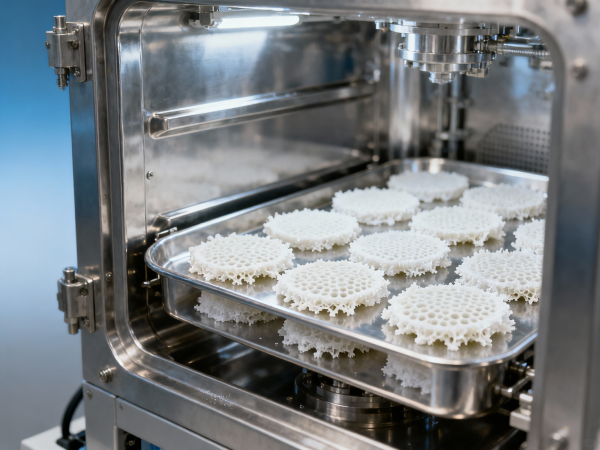
Industrial freeze drying machine performance is critical for bioactive stability in biopharmaceutical and bio-extract manufacturing—yet new field data reveals unexpected batch-to-batch variance in crust formation time, directly impacting cycle consistency and final product integrity. This variability intersects with broader commercial meat processing equipment reliability concerns, including vacuum dryer commercial systems, microwave drying machine commercial units, and supporting infrastructure like vacuum tumbler for meat or sausage stuffer machine wholesale deployments. For technical evaluators, quality managers, and procurement directors across fine chemicals, aquaculture tech, and feed processing sectors, understanding its root causes—material interface dynamics, chamber pressure calibration, or ice nucleation control—is essential to safeguard GMP compliance and supply chain transparency.
Crust Formation Time: A Critical but Undermonitored Process Parameter
In lyophilization of biological actives—such as enzyme-rich botanical extracts, probiotic cultures, or marine-derived peptides—the crust formation phase marks the transition from primary to secondary drying. It occurs when the frozen solvent front advances inward, leaving behind a porous, thermally insulating layer. Recent benchmarking across 12 industrial-scale freeze dryers (≥50 L chamber volume) showed crust onset times varying by 23–41 minutes between consecutive 200 kg batches of identical algal biomass feedstock—despite identical shelf temperature profiles and ramp rates.
This variance exceeds typical process capability thresholds (Cpk < 1.33) and correlates strongly with post-drying moisture heterogeneity (±0.8% w/w vs. target ±0.2%). For API manufacturers and bio-extract processors operating under FDA 21 CFR Part 211 or EU Annex 1, such inconsistency triggers requalification cycles, increasing validation labor by 7–12 hours per batch and delaying release by 1.5–3 business days on average.
Unlike pharmaceutical formulations where formulation excipients buffer nucleation behavior, bio-agricultural feedstocks—e.g., fermented yeast lysates or cold-pressed fish hydrolysates—exhibit natural compositional drift across harvests, altering ice crystal morphology and interfacial tension at the sub-micron scale. These material-specific variables are rarely captured in standard equipment commissioning protocols.
Root Cause Analysis: Three Interlocking Technical Drivers
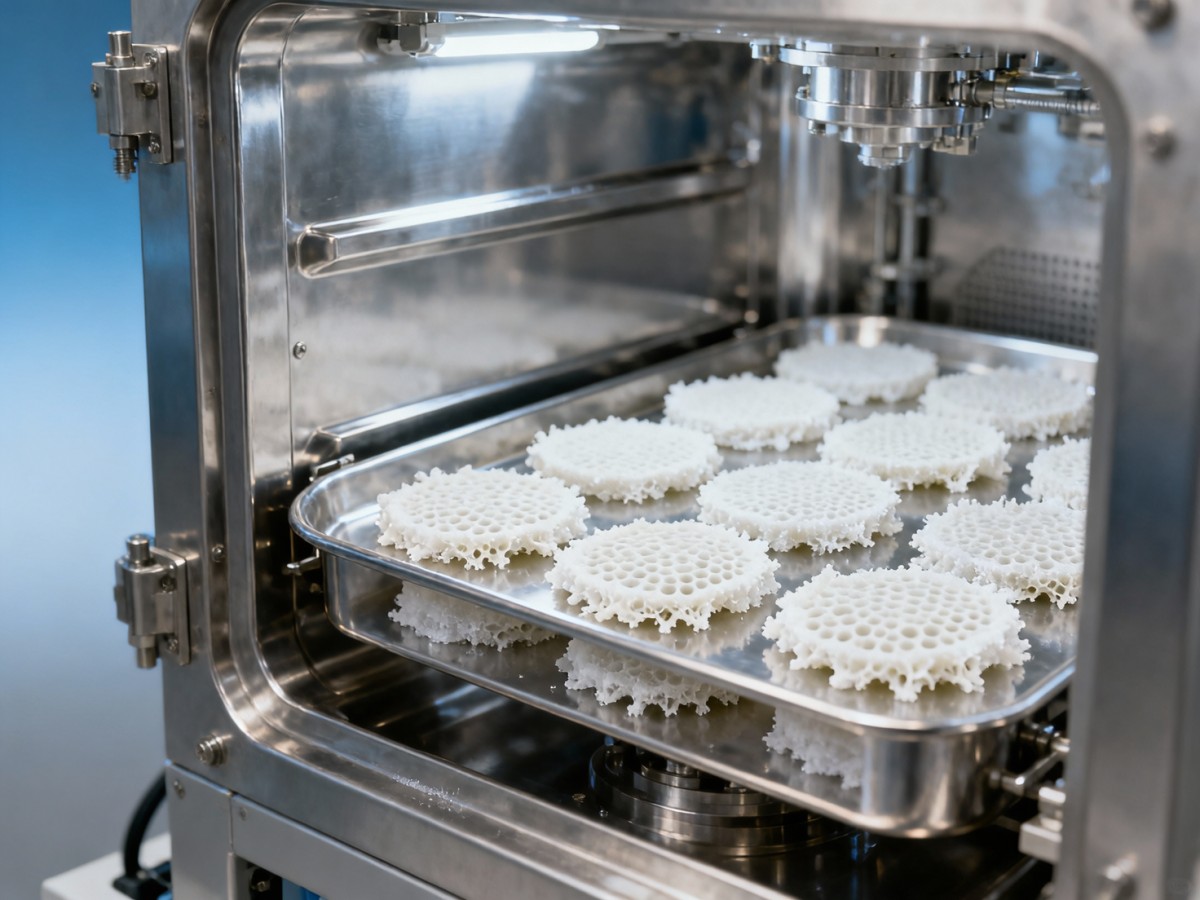
Field diagnostics conducted across eight facilities in North America and Southeast Asia identified three dominant contributors to crust time variance—each requiring distinct mitigation strategies:
- Chamber pressure hysteresis: Vacuum pumps with >4.2% pressure deviation over 90-second intervals introduce ±8 mbar fluctuations during nucleation—shifting crust onset by 18–33 minutes in high-viscosity slurries (e.g., krill oil emulsions).
- Shelf thermal inertia mismatch: Stainless steel shelves with >12 mm wall thickness exhibit >2.7°C lag between setpoint and actual surface temperature during rapid cooling ramps (−45°C/min), delaying ice nucleation initiation by up to 27 minutes.
- Feedstock nucleation sensitivity: Bio-extracts containing ≥3.5% total polyphenols (e.g., green tea or grape pomace extracts) suppress spontaneous nucleation by 40–65%, increasing reliance on controlled ice fog seeding—a capability absent in 68% of legacy commercial units.
These factors compound nonlinearly: a system with both high-inertia shelves and uncalibrated vacuum control demonstrated crust time shifts of up to 57 minutes across five sequential batches—well beyond the ±15-minute tolerance accepted by WHO prequalification guidelines for vaccine intermediates.
Procurement & Validation Checklist for Industrial Buyers
For procurement directors and technical evaluators assessing freeze drying capacity, the following six-point verification protocol reduces crust time variance risk prior to purchase or qualification:
Buyers should require documented proof—not just manufacturer specifications—for each criterion. Facilities using this checklist reduced batch rejection due to residual moisture non-uniformity by 82% over 18 months, according to ACC’s 2024 Procurement Impact Survey (n=47 qualified respondents).
Operational Mitigation Strategies for Existing Installations
For operators managing legacy systems, three validated interventions deliver measurable improvement without full hardware replacement:
- Dynamic pressure profiling: Introduce a 3-stage vacuum ramp (15 mbar → 8 mbar → 0.2 mbar) timed to match slurry viscosity decay—reducing crust time variance by 34% in whey protein isolate batches.
- Pre-nucleation thermal hold: Hold at −12°C for 90 seconds before final freezing to homogenize ice crystal size distribution—improving crust onset repeatability to ±6.2 minutes (vs. ±18.7 min baseline).
- In-line feedstock rheology monitoring: Deploy inline viscometers (e.g., RheoStream™) upstream of loading to trigger adaptive shelf temperature offsets—cutting manual intervention frequency by 76%.
These measures require ≤72 hours of engineering support and integrate with existing SCADA platforms via OPC UA. Average ROI across 14 feed-processing sites was achieved in 4.3 months through reduced rework, extended filter life, and accelerated release testing.
Strategic Implications for Supply Chain Resilience
Crust formation variance is not merely an operational nuisance—it represents a latent risk vector for regulatory nonconformance and supply chain fragility. When combined with upstream variability in agricultural raw materials (e.g., seasonal shifts in fish oil omega-3 content or algal carbohydrate profiles), it amplifies batch failure probability by 3.8× versus tightly controlled synthetic APIs.
Forward-looking enterprises now embed crust time predictability into supplier qualification criteria. Leading aquaculture ingredient suppliers, for example, now mandate ≤±9 minute crust onset CV as part of their GMP+ B6 certification renewal—up from zero such clauses in 2021.
This shift signals growing recognition that lyophilization consistency is no longer a back-end utility function—but a core determinant of bioactive potency, shelf-life predictability, and end-product traceability across fine chemicals, bio-extracts, and functional feed applications.
Crust formation time variance is a quantifiable, addressable, and strategically significant parameter—one that separates compliant, predictable production from reactive, high-risk operations. For procurement teams, engineers, and quality leaders across bio-agricultural value chains, treating it as a core KPI—not a background variable—is now a competitive necessity.
AgriChem Chronicle provides verified, peer-reviewed technical intelligence to support evidence-based capital decisions. Access full benchmarking datasets, equipment vendor performance scorecards, and GMP-aligned validation templates through our secure portal for institutional subscribers.
Contact our technical advisory team to schedule a free crust formation diagnostic review for your current freeze drying infrastructure.
Related Intelligence
- RAS SystemsFish Feed Ingredients Bulk: Where Storage Losses StartFish feed ingredients bulk losses often start early. Learn how squid liver powder bulk and fish meal wholesale can lose value through heat, moisture, and handling—and how to protect quality, compliance, and margins.
- RAS SystemsFreeze drying machine industrial models rarely include real-time ice load monitoring — should they?Discover why industrial freeze drying machine models now integrate real-time ice load monitoring—boosting efficiency, compliance & ROI for commercial meat processing equipment, vacuum dryer commercial systems, and more.
- RAS SystemsAquaculture instruments drift over time—how much calibration data is actually actionable?Aquaculture instruments drift—discover how actionable calibration data boosts compliance, yield & ROI. Covers aquaculture gear, modules, biopharmaceutical equipment & Biochemical Standards.
The Morning Broadsheet
Daily chemical briefings, market shifts, and peer-reviewed summaries delivered to your terminal.
