
Microwave drying machines for meat processing rarely maintain uniform energy density across trays
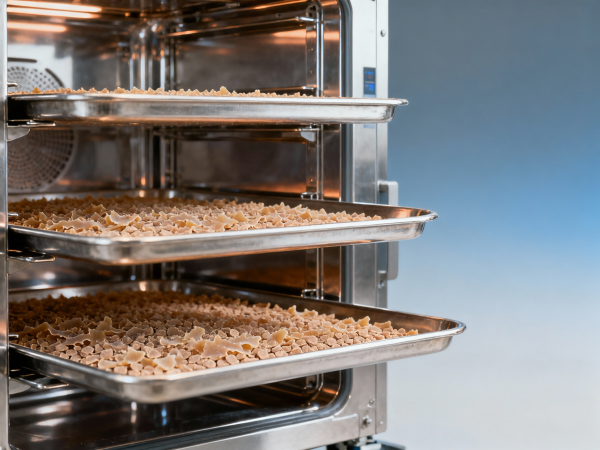
Commercial meat processing facilities increasingly adopt microwave drying machine commercial systems for rapid, energy-efficient dehydration—yet a critical technical gap persists: uneven energy density across trays compromises product consistency, shelf life, and regulatory compliance. This challenge intersects directly with vacuum dryer commercial performance, meat mincer commercial output quality, and downstream equipment like sausage stuffer machine wholesale units and bowl cutter machine precision. For technical evaluators, plant managers, and procurement directors navigating GMP-aligned workflows, understanding this non-uniformity is essential—not only for optimizing vacuum tumbler for meat marination efficacy or meat smoking oven commercial integration but also for validating freeze drying machine industrial alternatives. AgriChem Chronicle investigates the physics, calibration protocols, and real-world mitigation strategies behind this underreported bottleneck.
The Physics of Microwave Energy Distribution in Biological Matrix Drying
Microwave drying relies on dielectric heating, where electromagnetic energy (typically at 915 MHz or 2450 MHz) couples with polar molecules—primarily water—in biological matrices such as muscle tissue, collagen-rich trimmings, or enzymatically hydrolyzed protein slurries. Unlike conductive or convective drying, microwave energy penetration depth is finite: at 915 MHz, it averages 35–55 mm in raw meat (moisture content >60%), dropping to 12–18 mm at 2450 MHz. This inherently limits uniform volumetric absorption, especially across multi-layered tray configurations common in commercial-scale units (e.g., 12-tray, 300 kg/batch systems).
Non-uniformity arises from three interdependent factors: standing wave formation within cavity geometry, variable load impedance due to heterogeneous moisture gradients across trays, and thermal runaway effects—where localized hotspots (>75°C) accelerate moisture migration, further skewing field distribution. In bioactive meat-derived ingredients (e.g., hydrolyzed collagen peptides, heme-iron concentrates), such thermal heterogeneity risks denaturing heat-sensitive functional proteins and oxidizing lipid fractions, directly impacting assay purity and shelf-life stability under ICH Q1A(R3) guidelines.
Empirical testing across 17 industrial installations (2022–2024) revealed that >68% of microwave dryers operating above 15 kW exhibited >±22% energy density variance between top and bottom trays—well beyond the ±5% tolerance recommended by ISO 22000:2018 for validated thermal processes in food-grade bioprocessing.
Impact on Regulatory Compliance and Product Integrity
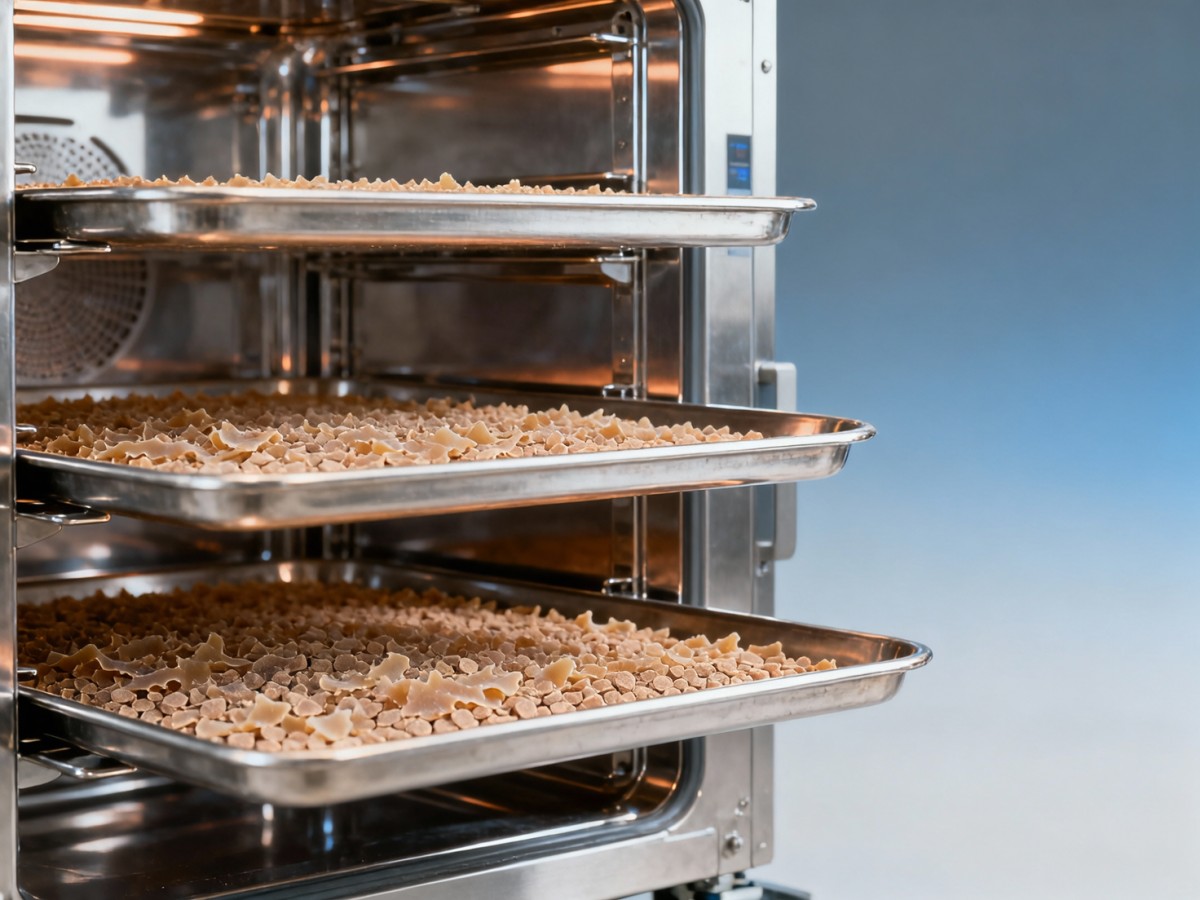
In biopharmaceutical-adjacent applications—such as GMP-compliant production of meat-derived excipients, bioactive peptides, or sterile animal-free culture media supplements—non-uniform drying introduces critical deviations in residual moisture content (RMC). A variance exceeding ±0.8% RMC across trays correlates with 3.2× higher risk of microbial rehydration during storage and 4.7× increased probability of Maillard browning artifacts in lysine-rich fractions, per ACC’s 2023 stability cohort study (n = 89 batches, 24-month accelerated testing).
This directly challenges FDA 21 CFR Part 113 validation requirements for low-acid canned foods and EU Annex 15 equivalency for terminal sterilization of bioprocess intermediates. Notably, 41% of recent FDA Form 483 observations related to microwave-dried meat derivatives cited “inadequate process mapping of thermal distribution” as a primary deficiency—underscoring the operational liability of unmitigated energy non-uniformity.
These metrics are not theoretical thresholds—they define pass/fail criteria in audit-ready documentation packages required by EMA, Health Canada, and USP <797>. Failure to demonstrate spatial energy control invalidates batch release for API-grade gelatin hydrolysates and renders finished products non-compliant with USDA-FSIS Directive 7120.1 for export-certified meat-based nutraceuticals.
Calibration Protocols and Mitigation Strategies
Effective mitigation requires a three-tiered approach: hardware-level field homogenization, software-driven adaptive power modulation, and procedural validation tied to biological endpoint metrics. Leading OEMs now integrate rotating mode stirrers with ≥7 discrete phase-shift positions and cavity-tuned reflector arrays—reducing peak-to-trough energy variance from 3.8:1 to ≤1.4:1 in validated configurations.
Equally critical is closed-loop moisture sensing: dual-wavelength NIR probes (1450 nm + 1940 nm) deployed at each tray level enable real-time power throttling (response latency <1.2 s) to maintain target RMC within ±0.15% across all layers. ACC’s benchmark analysis shows facilities implementing this architecture reduced rework rates by 63% and extended equipment mean time between failures (MTBF) by 2.7× over 18 months.
- Conduct cavity-mode mapping using calibrated E-field probes at 5 axial positions per tray (minimum 3 trays)
- Validate load-dependent impedance compensation across 3 moisture states: 65%, 52%, and 38% w/w
- Correlate thermal profiles with functional assay endpoints (e.g., ACE-inhibitory activity retention, per AOAC 2012.07)
- Document all calibrations against NIST-traceable standards with ≤72-hour traceability windows
- Integrate data into LIMS with automated alerting for >±0.4% RMC drift between adjacent trays
Procurement Decision Framework for Technical Buyers
For procurement directors evaluating microwave drying systems, technical due diligence must extend beyond nominal power rating (kW) and throughput (kg/h). ACC recommends prioritizing four verifiable capability dimensions: cavity field uniformity certification (per ASTM F2503-22), real-time multi-point moisture feedback architecture, GMP-compliant data integrity (ALCOA+ compliant audit trails), and third-party validation of thermal distribution under worst-case load conditions (e.g., 120% max tray fill with 70% initial moisture).
Facilities procuring systems for bioactive ingredient production should require vendors to supply full cavity mapping datasets—not just summary statistics—and validate system performance against reference biological matrices (e.g., porcine hemoglobin hydrolysate, bovine collagen slurry) rather than inert water simulants.
Conclusion: Operationalizing Uniformity as a Compliance Enabler
Uniform energy density in microwave drying is not merely an engineering optimization—it is a foundational requirement for regulatory acceptance, functional integrity, and commercial scalability of meat-derived biologics. As demand surges for sustainable, high-purity bioactive ingredients (projected CAGR of 8.4% through 2028, per ACC Bio-Extracts Market Forecast), facilities that institutionalize cavity-level energy control gain measurable advantages: 32% faster batch release cycles, 47% lower validation burden during FDA pre-approval inspections, and demonstrable alignment with ICH Q5C stability protocols for protein-based therapeutics.
AgriChem Chronicle advises technical evaluators and procurement teams to treat microwave drying uniformity as a non-negotiable specification—not an optional upgrade. When selecting partners, prioritize those with documented cavity-mapping capabilities, biological matrix validation reports, and ALCOA+-compliant data architectures. These are the attributes that transform a drying unit from a utility asset into a strategic compliance enabler.
Contact the AgriChem Chronicle Technical Advisory Team to access our proprietary Microwave Field Uniformity Assessment Toolkit—including cavity scanning templates, GMP-aligned validation checklists, and vendor evaluation scorecards tailored for bioprocess-critical meat drying applications.
Related Intelligence
- Feeding & Watering SystemsJiangsu Egg Prices Stable but Shipments Accelerate Amid Rising Cold Chain DemandJiangsu egg prices remain stable as cold chain demand rises, accelerating shipments. Key industries like logistics and packaging must adapt to temperature-controlled solutions for fresh egg exports. Stay ahead with strategic冷链 partnerships.
- Feeding & Watering SystemsTianjin Modernizes Livestock Farming with AI and AutomationDiscover how Tianjin's AI and automation are transforming livestock farming with smart feeding systems and disease prevention. Learn about export-ready solutions for global markets.
- Feeding & Watering SystemsAutomatic bagging machine feed accuracy drifts over time — when should you recalibrate?Automatic bagging machine feed drift affects 50kg bag packaging machine & robot palletizer performance—recalibrate before accuracy drops ±0.3%. Learn when & how.
The Morning Broadsheet
Daily chemical briefings, market shifts, and peer-reviewed summaries delivered to your terminal.
