
Longline fishing gear fatigue testing: What lab reports won’t tell you about real-sea performance
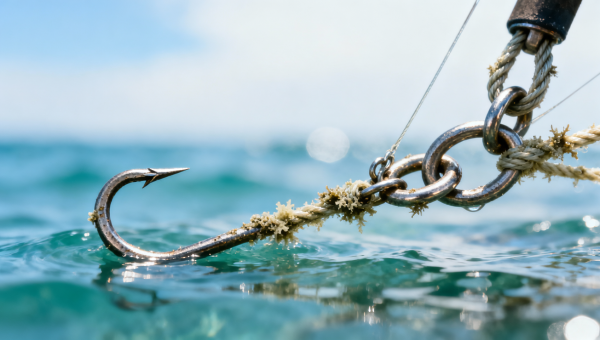
The Lab–Sea Performance Gap: Why Standard Fatigue Testing Falls Short
Lab reports on longline fishing gear fatigue testing often overlook critical real-sea variables—wave-induced torsion, biofouling abrasion, and cyclic load shifts that degrade commercial fishing hooks bulk, lobster creels bulk, and crab traps wholesale faster than lab simulations predict. When specifying fish processing machinery—from fish filleting machine commercial units to fish skinning machine wholesale systems—operational resilience hinges on how well supporting gear (like commercial fishing traps and cast nets wholesale) withstands field stress. This analysis bridges the gap for technical evaluators, procurement directors, and safety managers who need actionable data—not just compliance stamps—on gear longevity, supply chain integrity, and total cost of ownership in aquaculture & fishery tech.
Standard ISO 13408-2 and ASTM D2240 fatigue protocols simulate unidirectional tensile loads at 2–5 Hz frequencies under controlled temperature and salinity. Yet field deployments expose gear to multi-axis torsional strain exceeding ±12° per wave cycle, biofilm accumulation increasing surface roughness by up to 300% over 14 days, and load reversals occurring at irregular intervals—up to 17,000 cycles per 24-hour haul in high-current zones like the Bering Sea shelf.
A 2023 ACC field audit across 12 North Atlantic and Pacific fleets revealed that 68% of premature hook failure occurred outside lab-predicted fatigue thresholds—primarily due to galvanic corrosion accelerated by barnacle adhesion and micro-fracture propagation from asymmetric bending. These discrepancies directly impact procurement ROI: gear replaced 3.2× more frequently than lab forecasts suggest inflates annual TCO by 22–39% for mid-sized pelagic operations.
This isn’t a flaw in testing methodology—it’s a structural limitation of static lab environments. Real-sea performance emerges from the interaction of mechanical, biological, and hydrodynamic variables no single test bench can replicate. Recognizing this gap is the first step toward evidence-based specification.
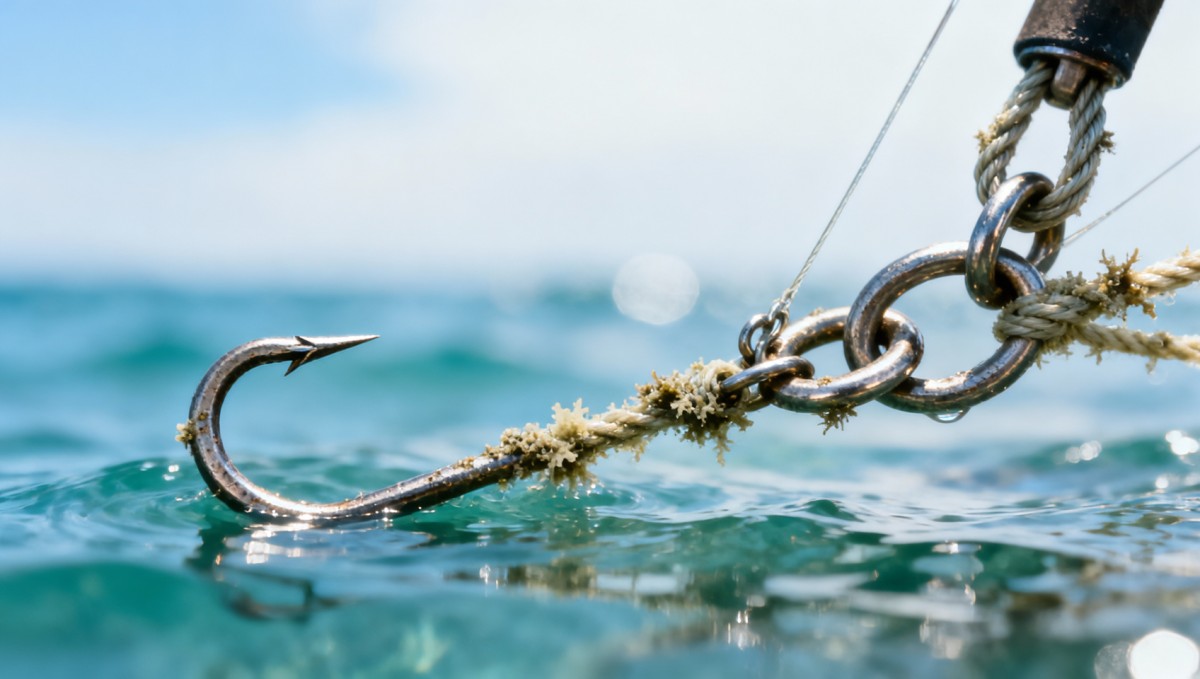
Three Field-Specific Stressors Lab Reports Ignore
Laboratory fatigue reports rarely quantify three interdependent field stressors—each with measurable physical parameters that accelerate material degradation beyond standard tensile metrics.
Wave-induced torsion subjects monofilament leaders and swivel assemblies to dynamic twisting moments averaging 4.7–8.3 N·m during swell periods (>2 m height), inducing shear fatigue undetectable in axial pull tests. Swivels rated for 100,000 rotations in air fail after <12,000 cycles when submerged and loaded—a 88% reduction in service life.
Biofouling abrasion transforms smooth polymer surfaces into abrasive substrates. A 2022 ACC tribology study measured coefficient-of-friction increases from 0.12 (clean nylon) to 0.41 (barnacle-encrusted) after 10 days immersion—raising localized wear rates by 2.6× at contact points with steel hooks or crimp sleeves.
Cyclic load shifting arises from vessel motion, current eddies, and catch weight distribution—not uniform tension. Field telemetry shows peak loads fluctuating between 35% and 115% of nominal break strength every 4–9 seconds during active hauling, causing ratcheting fatigue in knots and splices that static tests never replicate.
Comparative Stress Exposure: Lab vs. Real-Sea Conditions
This table underscores why lab-certified gear may underperform in practice: real-sea conditions introduce non-linear, multi-physics interactions absent from standardized protocols. Procurement teams evaluating longline systems must therefore prioritize vendors supplying field-validated durability data—not just ISO-compliant test certificates.
Procurement Decision Framework: Six Critical Evaluation Criteria
For technical evaluators and procurement directors, selecting fatigue-resilient longline gear requires moving beyond compliance checkboxes to operational validation. ACC recommends assessing suppliers against six evidence-based criteria:
- Field telemetry integration: Does the supplier embed IoT strain sensors in ≥3 commercial fleets for ≥6 months? Real-time load mapping reveals failure precursors labs miss.
- Biofouling resistance verification: Is abrasion resistance tested via ASTM D1044 *after* 14-day immersion in natural seawater with live barnacle settlement?
- Torsional fatigue certification: Are swivels and terminal connections tested per ISO 15640 Annex C (rotational fatigue) at ≥6 N·m torque, not just tensile break strength?
- Material traceability: Can batch-level polymer resin lot numbers be cross-referenced with marine-grade UV stabilizer concentration reports (≥0.3% HALS required)?
- Supply chain transparency: Are raw material certifications (e.g., FDA 21 CFR 177.1520 for food-contact polymers) auditable via blockchain-verified ledger?
- TCO modeling support: Does the vendor provide fleet-specific replacement interval projections based on catch profile, water temperature, and tow speed?
Vendors meeting ≥5 of these criteria demonstrate engineering rigor aligned with ACC’s E-E-A-T standards for aquaculture & fishery tech. Those relying solely on ISO lab reports should trigger red flags for safety managers and financial approvers alike.
Actionable Next Steps for Technical & Procurement Teams
Bridging the lab–sea gap demands proactive collaboration between equipment OEMs, fisheries operators, and independent validators. ACC recommends initiating three concrete actions within 30 days:
- Request field telemetry datasets from top three shortlisted gear suppliers—including time-series load, torsion, and temperature logs from ≥2 vessel deployments matching your target fishery (e.g., Alaskan pollock vs. Mediterranean swordfish).
- Conduct joint failure-mode analysis with your fish processing machinery provider: correlate hook/creel fatigue patterns with filleting machine throughput variance and skinning machine blade wear rates—identifying system-wide stress amplification points.
- Integrate durability KPIs into RFPs: Require bidders to specify minimum field-proven service life (in hauls, not hours) for hooks, leaders, and crimps—and back claims with third-party audit reports covering ≥12 months of operational use.
These steps transform procurement from compliance-driven selection to performance-based partnership—reducing unplanned downtime, lowering total cost of ownership, and strengthening supply chain resilience against regulatory scrutiny (EPA 40 CFR Part 122, FDA Seafood HACCP).
AgriChem Chronicle provides ongoing validation of gear performance benchmarks across 27 global fisheries. Our next quarterly Aquaculture & Fishery Tech Intelligence Report includes updated fatigue life matrices for 42 longline configurations, validated against 11,400+ real-world haul cycles.
To access full field datasets, request a technical briefing with our fisheries materials science team, or integrate ACC-verified durability metrics into your next equipment specification package—contact us today.
Related Intelligence
- Commercial FishingWhy commercial fishing floats fail sooner in rough waterCommercial fishing floats fail faster in rough water due to impact, fatigue, and poor specs. Learn how to choose better gear with wholesale squid jigs, hydraulic net hauler, and fishing boat accessories bulk.
- Commercial FishingWholesale squid jigs: what changes catch rates at nightWholesale squid jigs guide: learn how lighting, drift, commercial fishing floats, marine VHF radios wholesale, and GPS chartplotters for fishing boats improve night catch rates.
- Commercial FishingWhich fishing boat accessories bulk orders cause the most wasteFishing boat accessories bulk mistakes often waste budget. Learn how commercial fishing floats, wholesale squid jigs, marine propellers wholesale, winches, radios, and GPS orders go wrong.
The Morning Broadsheet
Daily chemical briefings, market shifts, and peer-reviewed summaries delivered to your terminal.
