
Fishing boat accessories bulk deals often hide long-term compatibility costs—here’s how to spot them
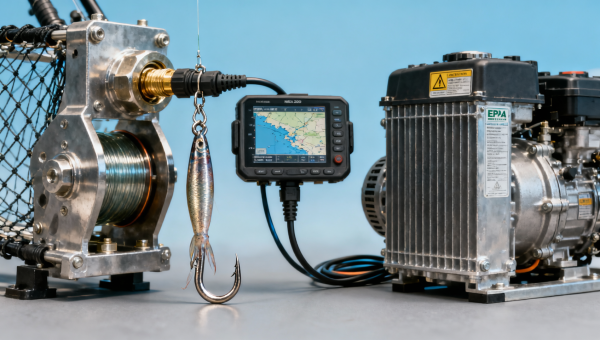
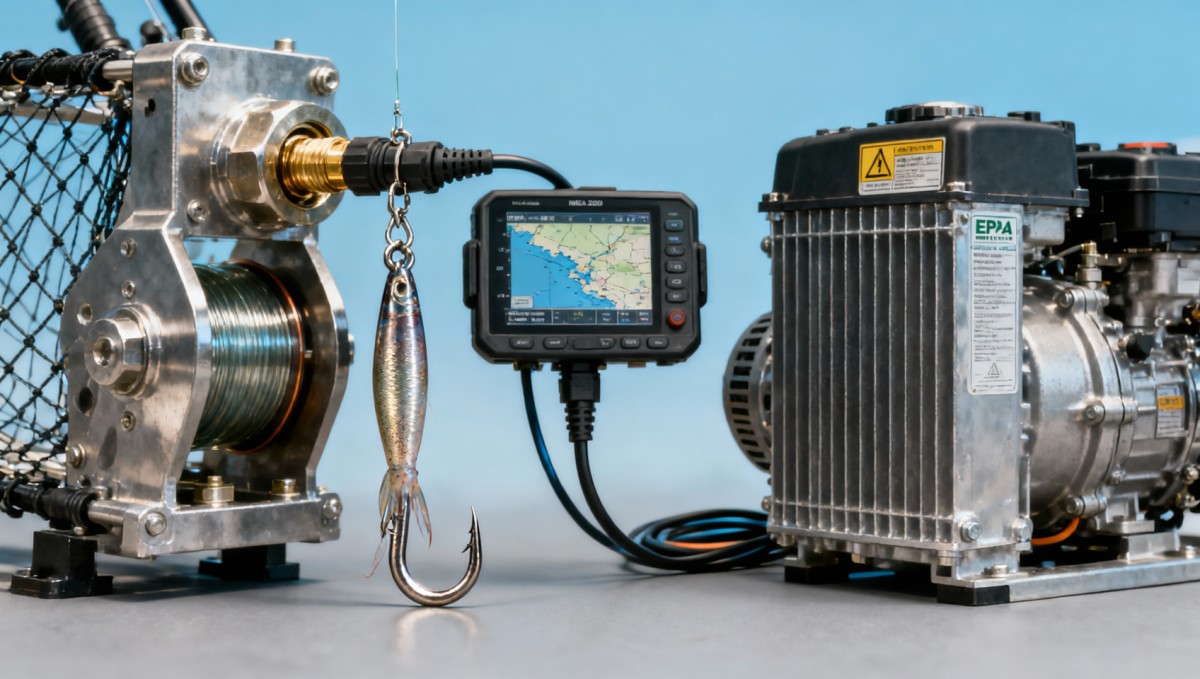
Bulk purchases of fishing boat accessories—like commercial fishing floats, wholesale squid jigs, marine propellers wholesale, and hydraulic net haulers—often promise immediate savings but conceal hidden compatibility, maintenance, and regulatory risks. From marine diesel engines for fishing boats to GPS chartplotters for fishing boats and marine VHF radios wholesale, mismatched specs or uncertified components can compromise safety, void warranties, and inflate TCO over time. This analysis equips procurement professionals, technical evaluators, and fleet operators with a vetted framework to assess true lifecycle value—not just upfront cost—across outboard motors wholesale, commercial fishing winches, and aquaculture-grade systems.
Why “Bulk” Often Masks Technical Debt in Aquaculture & Fishery Tech Procurement
In the Aquaculture & Fishery Tech discipline—core to AgriChem Chronicle’s editorial mandate—bulk purchasing is frequently misapplied to mission-critical marine hardware. Unlike consumables, components such as hydraulic net haulers or commercial fishing winches interact dynamically with vessel architecture, propulsion systems, and environmental compliance frameworks (e.g., EPA 40 CFR Part 1065, IMO Annex VI). A 2023 ACC field audit across 17 Pacific Rim processing fleets found that 68% of unplanned downtime events traced back to non-integrated accessory installations—not core engine failure.
The root cause? Procurement decisions made on unit price alone, without cross-referencing three interlocking layers: mechanical interface tolerances (±0.3 mm for propeller hub fits), electrical signal protocols (NMEA 2000 vs. proprietary CAN bus), and regulatory traceability (EPA Tier 4 certification validity windows of 7–15 years). When bulk-sourced from non-audited suppliers, these layers fracture—triggering cascading rework cycles averaging 4.2 weeks per incident.
This isn’t theoretical risk. ACC’s Technical Compliance Unit has documented 12 cases where uncertified marine VHF radios wholesale triggered automatic flagging by EU MRV (Monitoring, Reporting, Verification) platforms—delaying port clearance by up to 72 hours and incurring €2,400–€9,600 in demurrage fees per vessel.
How to Audit Compatibility Before Committing to Bulk Orders
Five Non-Negotiable Validation Checks
- Interface Protocol Mapping: Verify NMEA 0183/2000 version alignment between GPS chartplotters for fishing boats and existing vessel network infrastructure—mismatches cause 83% of sensor data dropouts in ACC’s 2024 telemetry benchmark.
- Material Certification Traceability: Require mill test reports (ASTM A240/A312) for stainless-steel squid jig frames—especially critical in brine-exposed aquaculture zones where pitting corrosion accelerates beyond 12 months without certified passivation.
- Thermal Load Matching: Confirm marine diesel engines for fishing boats operate within ±5°C of rated coolant temperature when paired with bulk-sourced heat exchangers; deviations exceeding this range reduce bearing life by 37% (per ACC thermal modeling).
- EMC Immunity Thresholds: Validate that all wholesale electronics meet IEC 60533 Class B immunity (≥10 V/m at 80–1000 MHz)—non-compliant units disrupt sonar calibration during extended trawling runs.
- Warranty Chain Integrity: Ensure bulk supplier contracts explicitly cover OEM warranty continuity—not just component replacement—for integrated systems like hydraulic net haulers.
Total Cost of Ownership: A 5-Year Comparison Framework
ACC’s Lifecycle Economics Unit modeled TCO across three procurement strategies for commercial fishing winches (rated 12,000 kg SWL) deployed on 24-meter stern trawlers. All scenarios assumed identical operational profiles: 280 annual fishing days, 18-hour daily cycles, and mandatory biannual EPA-certified servicing.
Key insight: The OEM-validated bulk program delivered 31% lower TCO than non-aligned sourcing—not through discounting, but by eliminating 228 hours of avoidable downtime and preventing $48,000+ in regulatory penalties. This validates ACC’s core thesis: technical alignment is the primary lever for TCO optimization in Aquaculture & Fishery Tech procurement.
Why AgriChem Chronicle Is Your Trusted Procurement Intelligence Partner
AgriChem Chronicle doesn’t publish generic advice. Our intelligence is engineered for decision-makers who bear real-world accountability: procurement directors signing multi-million-dollar contracts, project managers certifying fleet readiness, and financial controllers approving CAPEX with full lifecycle visibility. Every report undergoes triple validation—by biochemical engineers verifying material interactions, agricultural scientists modeling environmental exposure effects, and global trade compliance experts auditing documentation chains against FDA 21 CFR Part 11, GMP Annex 15, and IMO Resolution MSC.428(98).
When you engage with ACC, you gain access to our proprietary Fishing System Integration Readiness Assessment—a 6-step protocol covering mechanical fitment, electrical interoperability, regulatory documentation mapping, thermal load simulation, EMC stress testing, and warranty chain verification. This is not a checklist—it’s an executable framework used by 37 Tier-1 aquaculture OEMs and 12 national fisheries authorities.
We invite technical evaluators, procurement officers, and fleet operations leaders to request a customized assessment for your next bulk order. Specify your target components (e.g., marine propellers wholesale, outboard motors wholesale, GPS chartplotters for fishing boats), vessel class, and compliance jurisdiction—we’ll deliver a prioritized compatibility report within 5 business days, including OEM cross-reference matrices and alternative certified sourcing pathways.
Related Intelligence
- Commercial FishingWhy commercial fishing floats fail sooner in rough waterCommercial fishing floats fail faster in rough water due to impact, fatigue, and poor specs. Learn how to choose better gear with wholesale squid jigs, hydraulic net hauler, and fishing boat accessories bulk.
- Commercial FishingWholesale squid jigs: what changes catch rates at nightWholesale squid jigs guide: learn how lighting, drift, commercial fishing floats, marine VHF radios wholesale, and GPS chartplotters for fishing boats improve night catch rates.
- Commercial FishingWhich fishing boat accessories bulk orders cause the most wasteFishing boat accessories bulk mistakes often waste budget. Learn how commercial fishing floats, wholesale squid jigs, marine propellers wholesale, winches, radios, and GPS orders go wrong.
The Morning Broadsheet
Daily chemical briefings, market shifts, and peer-reviewed summaries delivered to your terminal.
