
Wholesale lawn mowers: the tradeoff between price and lifespan
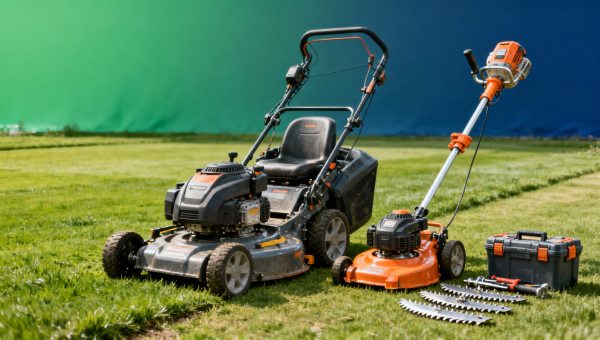
For buyers comparing wholesale lawn mowers, the real question is not just upfront cost but how price shapes service life, maintenance cycles, and total ownership value. From riding ride on mowers to brush cutters wholesale and stump grinders commercial, procurement teams must balance durability, operator safety, parts support, and fleet efficiency before committing capital.
In commercial landscaping, municipal grounds care, estate maintenance, and agricultural property management, mower purchasing is rarely a one-time equipment decision. It is a multi-year asset strategy tied to labor productivity, downtime exposure, fuel use, service planning, and residual value. A lower purchase price can look attractive in a quarterly budget review, yet it may create higher cost per operating hour within 18–36 months.
For distributors, project managers, technical evaluators, operators, and finance approvers, the practical task is to identify where savings are real and where they simply defer expense. The best wholesale lawn mowers are not always the cheapest units on a quotation sheet. They are the machines that match terrain, duty cycle, operator skill level, and support infrastructure with the right durability profile.
Why Price Alone Is a Weak Buying Metric
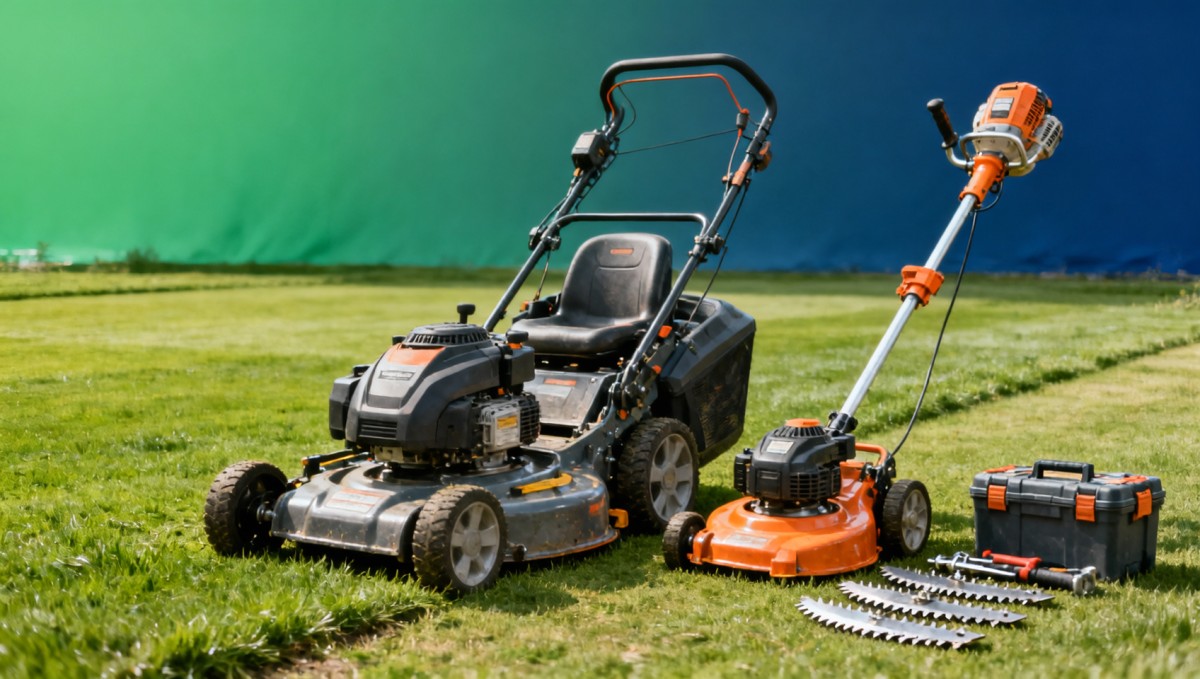
In wholesale procurement, headline price often hides the variables that most strongly influence lifespan. Two machines with a 15% difference in purchase cost may show a 40% difference in deck wear, spindle life, hydraulic reliability, or frame fatigue after 1,200 to 1,800 operating hours. This is especially relevant for commercial mowing fleets working 5–6 days per week during peak season.
Budget models usually focus on acquisition cost, but field performance is shaped by duty intensity. A mower used on flat, dry turf for 12 hours per week has a different wear profile than one cutting mixed terrain, roadside edges, or semi-rough growth for 30–40 hours per week. The same wholesale lawn mower can therefore deliver 3 years in one operation and 6 years in another.
This is why professional buyers compare cost per season, not simply cost per unit. Engine displacement, deck thickness, blade system, transmission type, and service access all influence long-term value. For brush cutters wholesale and stump grinders commercial equipment, this principle becomes even more critical because shock loading and abrasive conditions accelerate wear.
A low-cost mower may still be the correct choice for rental fleets, short-cycle resale, or low-hour properties. However, for institutions managing campuses, parks, orchards, or contractor fleets, the evaluation should extend to a 3-year and 5-year ownership window.
Core cost layers beyond purchase price
- Preventive maintenance intervals, including oil, filters, belts, blades, and greasing every 50–100 hours.
- Repair frequency for high-stress components such as spindles, pulleys, wheel motors, and hydrostatic drives.
- Operator efficiency, where a stronger commercial deck or wider cut may reduce labor hours by 10%–25% per site.
- Downtime cost, especially when one failed machine disrupts route planning, crew allocation, or seasonal service contracts.
The comparison below illustrates how procurement teams can reframe value when reviewing wholesale lawn mowers across different pricing bands.
The key takeaway is straightforward: the cheapest unit may be economical only when annual hours stay low and support demands remain minimal. Once usage intensity rises, lifespan and uptime usually outweigh the initial discount.
How to Evaluate Lifespan in Wholesale Lawn Mowers
Lifespan should be measured through component integrity rather than marketing language. Buyers should inspect the parts most exposed to heat, vibration, impact, and contamination. On ride on mowers, the critical areas are typically the engine, transmission, cutting deck, spindle assembly, frame welds, caster forks, and operator platform. On brush cutters wholesale units, gearbox durability and shaft protection deserve equal attention.
A practical commercial benchmark is to estimate expected life in operating hours, not just years. For example, a machine running 800 hours annually reaches 2,400 hours in 3 seasons. If deck corrosion, spindle looseness, or hydraulic weakness commonly appears before that point, the lower purchase price may no longer be favorable. For lower-intensity properties, an expected life range of 1,200–1,800 hours may still be acceptable.
Material quality matters more than appearance. A fabricated steel deck in the 7-gauge to 10-gauge range generally offers better commercial durability than lighter stamped designs in demanding environments. Reinforced anti-scalp wheels, sealed bearings, and serviceable spindle housings also extend usable life, particularly where mowing frequency exceeds 2–3 passes per week.
Supportability is another lifespan factor that procurement teams often undervalue. If common replacement parts need 3–5 weeks of lead time during peak season, the machine’s functional lifespan is effectively shortened by downtime. A mower that can be serviced within 48–72 hours often generates greater fleet value than a cheaper model with inconsistent parts access.
Technical checkpoints for pre-purchase review
Structural and mechanical review
- Check deck shell thickness, reinforcement around spindle mounts, and weld continuity on high-stress frame sections.
- Confirm whether spindle bearings are sealed, greaseable, or fully replaceable as service kits.
- Review transmission rating against slope use, towing limits, and weekly duty hours.
Serviceability review
- Assess access to belts, filters, blades, battery, and hydraulic service points within routine 50-hour maintenance windows.
- Verify regional parts stocking, service manuals, and response times for commercial accounts.
- Ask whether operators can perform daily checks in under 10 minutes without tool-heavy disassembly.
The table below can help technical evaluators and procurement teams compare expected lifespan factors across common equipment categories.
Across all three categories, longer service life depends on component rating, maintenance access, and parts continuity. Buyers who validate these points early are less likely to mistake a low quote for a low-cost asset.
Matching Equipment Price to Operating Conditions
The right budget level depends on the work environment. A wholesale lawn mower used on sports turf, orchard lanes, roadside verges, or institutional campuses experiences very different strain. Terrain irregularity, debris exposure, moisture, slope angle, transport frequency, and operator turnover all affect the price-to-lifespan balance.
For example, a contractor maintaining 20–40 urban sites per week needs machines that can tolerate frequent loading, curb transitions, and varied operators. In that context, stronger caster assemblies, more robust deck reinforcement, and standardized parts may justify a 12%–20% premium. The increase in uptime and lower service disruption can offset the initial spend within 1–2 seasons.
By contrast, a rural estate or agricultural holding with lower mowing frequency may prioritize simpler mechanical systems and moderate purchase cost. If annual use stays below 300–400 hours, a mid-tier commercial platform may provide the best balance between reliability and capital discipline. Over-specification can tie up cash without proportionate operational gain.
This is also where distributors and project managers should separate turf mowers from adjacent equipment. Brush cutters wholesale products suit edging, embankments, and overgrowth control, while stump grinders commercial units handle post-clearing residue. Trying to force one machine to do all tasks usually accelerates wear and raises safety risks.
A simple selection framework
- Define annual operating hours by site type, not by total fleet average.
- Map terrain conditions: flat turf, mixed landscape, rough vegetation, slopes, or debris-heavy zones.
- Estimate downtime tolerance. If one machine failure stops a 3–5 person crew, buy for uptime first.
- Evaluate service infrastructure within your region, including consumables and common replacement parts.
- Review operator skill level and training needs, especially for hydrostatic and high-output machines.
Common mismatch risks
- Buying residential-grade features into commercial duty cycles above 25 hours per week.
- Selecting the widest deck possible without checking gate access, trailer layout, or slope stability.
- Ignoring consumable replacement cost when using abrasive or woody cutting conditions.
When price aligns with workload rather than assumptions, the fleet becomes easier to maintain, easier to forecast, and easier to scale. That matters to both finance teams and operators because it reduces unplanned spending while protecting service output.
Procurement Criteria for Buyers, Engineers, and Finance Teams
A sound purchase process should combine technical review, commercial review, and operational review. Procurement teams often benefit from a weighted scorecard that ranks wholesale lawn mowers across 5–7 criteria instead of treating price as the dominant metric. This is particularly useful for multi-site enterprises, dealer networks, and public or institutional tenders.
Technical evaluators should confirm service intervals, rated component quality, and safety controls. Finance approvers should review lifecycle cost, not just invoice total. Quality and safety personnel should examine guarding, vibration exposure, braking behavior, and emergency shutoff access where relevant. Operators should be included early because poor ergonomics can reduce real productivity even when specifications look acceptable on paper.
In many fleet environments, a 5% saving on purchase price can be erased by one major in-season breakdown, especially if it disrupts labor plans across several contracts. Conversely, a moderately higher-priced unit with standardized blades, filters, and spindle kits may lower inventory complexity and speed workshop turnaround.
Decision quality improves when all stakeholders use the same procurement language: operating hours, maintenance interval, failure impact, service lead time, and residual value. This creates a better basis for comparing ride on mowers, brush cutters wholesale lines, and stump grinders commercial platforms under one asset policy.
Suggested decision matrix
The following matrix can be adapted for dealer selection, fleet renewal, or project-based purchasing.
A matrix like this helps finance and operations teams defend a purchase decision with practical evidence. It also improves supplier conversations because the discussion shifts from discount alone to operational fit and lifecycle return.
Maintenance, Downtime, and the Real Cost of Short Lifespan
Maintenance strategy determines whether a mower reaches its expected service life. Even strong commercial equipment can underperform if daily inspection, blade balancing, belt tension review, and scheduled lubrication are neglected. In many fleets, preventable failures start with small issues that were ignored for 2–4 weeks during peak workload.
Downtime has a compound effect. One failed unit can trigger rental substitution, overtime labor, delayed site completion, or missed contractual windows. For a contractor running several crews, losing a mower for 3 business days during the growing season can cost more than the difference between entry-level and mid-tier equipment. This is why lifespan should be tied to service planning from the moment of purchase.
Preventive maintenance scheduling is especially important when fleets include ride on mowers, brush cutters wholesale machines, and stump grinders commercial units. These categories use different wear parts and face different load patterns. Standardized inspection checklists every 25 hours, plus deeper service reviews every 100 hours, help reduce failure clustering during high-demand periods.
For quality control and safety managers, maintenance records also support traceability. A clear log of blade changes, spindle replacement, belt inspection, and safety guard checks lowers operational risk and improves accountability across multiple operators or branches.
Recommended service priorities
- Daily: fluid level checks, tire condition, blade damage review, and visible fastener inspection.
- Every 25–50 hours: clean cooling areas, inspect belts, grease points where applicable, and verify deck level.
- Every 100 hours: change engine oil and filters where specified, inspect spindles, review hydro drive behavior, and check vibration sources.
- Seasonally: evaluate deck corrosion, frame cracks, battery health, storage conditions, and consumables inventory.
Signs that a low-cost purchase is becoming expensive
- Repeated spindle or belt replacement before one full season is complete.
- Parts delays longer than 7–10 days for common wear items.
- Frequent operator complaints about vibration, uneven cut quality, or poor hillside control.
The most efficient fleets do not simply buy better machines; they protect machine life through routine care, documented inspection, and realistic duty assignment. That is how price and lifespan become manageable variables instead of recurring surprises.
FAQ for Commercial Buyers and Distributors
How should buyers compare wholesale lawn mowers from different suppliers?
Use a 4-part review: structural durability, maintenance interval, parts support, and operating fit. Ask for service schedules, wear part availability, and recommended annual hour ranges. If one supplier offers a lower price but cannot support spindles, belts, filters, or blades within a few business days, the lower quote may not be stronger in practice.
What operating hour range usually justifies spending more?
A higher-spec commercial unit often becomes easier to justify when annual use exceeds roughly 500–700 hours, when terrain is mixed, or when downtime affects crew productivity. At lower annual usage, especially below 300–400 hours, a mid-tier platform may be sufficient if parts and service access are dependable.
Are brush cutters wholesale and stump grinders commercial equipment evaluated the same way?
The ownership logic is similar, but the wear profile is different. Brush cutters face vibration, shaft wear, and gearbox stress. Stump grinders deal with abrasive load, cutter tooth consumption, and impact-heavy work. Buyers should compare service parts cost, maintenance skill requirements, and protection against debris ingress, not just list price.
Which mistakes shorten lifespan most often?
The most common mistakes are under-specifying machines for commercial duty, skipping 25-hour to 100-hour maintenance steps, using dull or imbalanced blades, and assigning equipment to unsuitable terrain. Storage also matters. Moisture exposure, dirty cooling systems, and neglected lubrication can shorten service life significantly over a 2–3 year period.
For B2B buyers, the tradeoff between price and lifespan is best managed through lifecycle thinking. The right wholesale lawn mowers are the ones that align with annual hours, terrain conditions, maintenance capacity, and parts support, while protecting operator safety and route productivity. Whether you are sourcing ride on mowers, brush cutters wholesale, or stump grinders commercial, a structured evaluation will reduce hidden costs and improve fleet reliability over the long term.
If your organization is comparing suppliers, reviewing technical specifications, or planning a fleet upgrade, now is the time to assess more than the quoted price. Contact us to discuss procurement criteria, request a tailored equipment comparison, or learn more about commercial mowing solutions that fit your operating conditions and budget priorities.
Related Intelligence
- Heavy Agri MachineryIndia Launches AD Review on Chinese Tractors, Tariff May Rise to 28.5%India's AD review on Chinese tractors may raise tariffs to 28.5% — critical insights for exporters, importers & agri-machinery stakeholders.
- Heavy Agri MachineryIndia Launches Anti-Dumping Review on Chinese TractorsIndia's anti-dumping review on Chinese tractors (≥50HP, smart hydraulic suspension) may raise duties to 22.5–28.5%. Exporters, CKD assemblers & suppliers: act now to assess risk and compliance.
- Heavy Agri MachineryIndia Launches Anti-Dumping Review on Chinese Heavy Agri MachineryIndia's anti-dumping sunset review on Chinese heavy agri machinery — tractors & precision seeders — proposes duty hike to 28.5%. Act now to assess impact & prepare defense.
The Morning Broadsheet
Daily chemical briefings, market shifts, and peer-reviewed summaries delivered to your terminal.
