
Which Tractor Implement Parts Are Worth Stocking
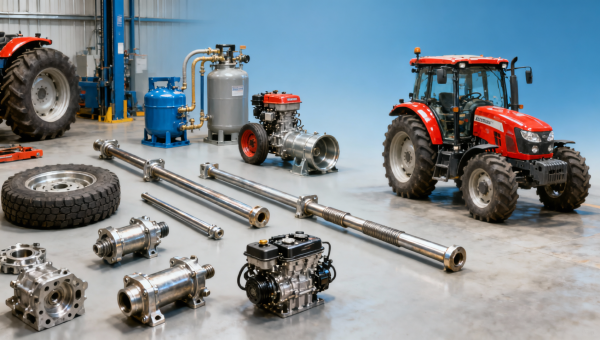
For buyers, engineers, and distributors evaluating uptime and inventory efficiency, knowing which tractor implement parts are worth stocking is a strategic advantage. From pto drive shafts bulk and tractor implement parts to agricultural tires wholesale, solar water pumps agricultural, submersible deep well pumps, and agricultural diesel engines, the right spare-part mix can reduce downtime, control costs, and support faster field service across diverse farming operations.
Which tractor implement parts should be stocked first?
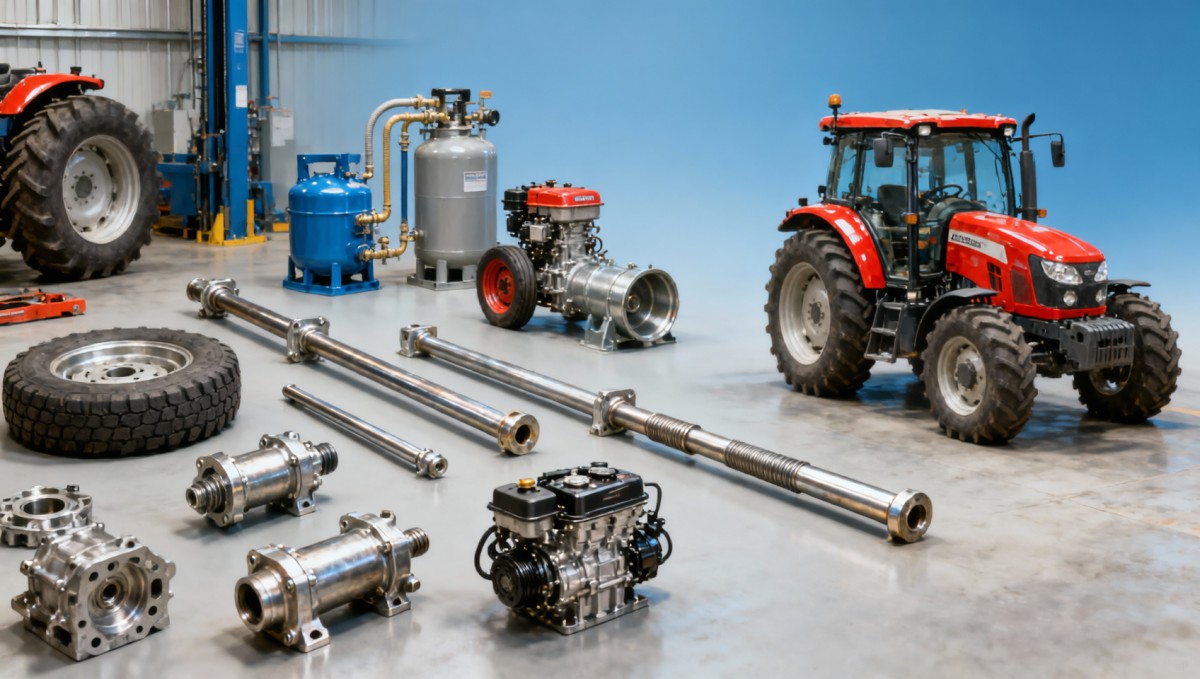
Not every spare part deserves the same shelf space. In mixed farming operations, the best-stocked items are usually the components with high wear frequency, broad equipment compatibility, and direct impact on field uptime. For procurement teams, this means focusing less on low-turn specialty items and more on the 3 core stocking groups: drivetrain parts, ground-contact parts, and fluid or power-system parts.
For example, pto drive shafts bulk purchases often make sense for dealers, repair workshops, and fleet operators because PTO failures stop multiple implement types at once, from rotary cutters to sprayers and seeders. Likewise, agricultural tires wholesale programs can support both planned replacement cycles and emergency service demand, especially during peak planting and harvest windows that may last 2–8 weeks depending on region and crop.
A practical stocking strategy also depends on service geography. If your customers operate in remote areas, keeping submersible deep well pumps, solar water pumps agricultural systems, and agricultural diesel engines in partial spare-kit form can shorten service response from several days to same-day troubleshooting. This matters when irrigation downtime threatens crop uniformity, livestock hydration, or chemical dosing schedules.
AgriChem Chronicle follows these decisions through the lens of supply-chain visibility and equipment lifecycle risk. For technical evaluators and financial approvers alike, the key question is not simply what breaks, but what causes the highest operating disruption when it breaks. That distinction improves inventory turns and prevents capital from being trapped in slow-moving stock.
The highest-priority spare categories in most farm support networks
The categories below usually justify first-line stocking because they affect multiple machine families and are exposed to wear, misalignment, impact, heat, or contamination. In most cases, a 30–90 day rolling review is more useful than annual-only planning.
- PTO and driveline items: pto drive shafts bulk, yokes, guards, crosses, clutches, and splined couplings for implements that transmit rotational power.
- Tires and wheel-end parts: agricultural tires wholesale, tubes where applicable, hubs, bearings, seals, and rim hardware for trailers, spreaders, and tillage equipment.
- Pump system parts: impellers, seals, control boxes, cable joints, strainers, and pressure accessories for solar water pumps agricultural and submersible deep well pumps.
- Engine support parts: filters, belts, hoses, injectors, starters, and cooling components for agricultural diesel engines used in irrigation, mobile power, and auxiliary drives.
How to rank inventory by business impact
A simple ranking method uses 4 checks: failure frequency, lead-time risk, compatibility range, and downtime cost. A part that fails every season, takes 2–6 weeks to replace, fits several implement models, and can stop a full workstream is usually worth stocking ahead of niche castings or low-failure housings.
This approach helps distributors avoid a common mistake: overinvesting in expensive assemblies while understocking low-cost items that actually drive emergency callouts. In many service businesses, seals, guards, bearings, and couplings create more repeat demand than complete assemblies.
How do pto drive shafts, tires, pumps, and engines compare as stocking priorities?
Stocking decisions become clearer when parts are compared by failure pattern, urgency, storage complexity, and capital intensity. The goal is not to treat all tractor implement parts equally, but to separate routine service stock from strategic backup stock. That is especially important for distributors balancing seasonal demand, warehouse space, and budget approvals.
The table below summarizes how common categories behave in B2B farm service environments. It is intended for buyers, project managers, and dealership planners who need a more disciplined basis for inventory discussion.
The comparison shows why tractor implement parts inventory should be layered. Fast-turn repair components support immediate service revenue, while complete high-value assemblies should be stocked only where demand history, criticality, or contract obligations justify it. A mixed strategy often delivers better cash efficiency than a one-size-fits-all warehouse policy.
For many distributors, pto drive shafts bulk and agricultural tires wholesale create stronger stocking logic than complete engines because they serve more customers, move faster, and solve urgent breakdowns. Pumps sit in between: they become high priority in irrigation-intensive territories, fishery support sites, or remote farms with limited utility access.
When complete assemblies are justified
Complete assemblies deserve stock when one of 3 conditions applies. First, the replacement lead time is regularly longer than the acceptable downtime window. Second, the installed base is large enough to create repeat demand. Third, service contracts require defined response times such as 24–72 hours.
If none of those conditions apply, repair kits and service components often produce a better inventory return. This is where disciplined market intelligence becomes valuable: stocking should follow operating conditions and installed equipment patterns, not assumptions carried over from another region.
What technical checks matter before ordering tractor implement parts?
Technical evaluation protects both uptime and procurement credibility. A spare part is only useful if it fits the application, meets the operating load, and can be installed without unsafe modification. In tractor implement parts purchasing, the most expensive error is often not unit price but mismatch. Rework, delayed installation, and emergency freight quickly multiply total cost.
Buyers should begin with 5 technical checks: dimensional fit, power or load rating, environmental suitability, interface compatibility, and maintenance access. These checks apply whether the item is a PTO shaft, an agricultural diesel engine service component, or a replacement seal kit for submersible deep well pumps.
For pto drive shafts bulk procurement, spline profile, collapsed and extended length, guard type, and torque class should be validated before order release. For agricultural tires wholesale, key checks include size designation, load range, tread application, inflation practice, and expected transport speed. For pumps, head, flow range, motor match, cable configuration, and water condition all affect reliability.
In regulated or quality-sensitive sectors, documentation matters as much as hardware. Technical teams increasingly ask for material specifications, inspection records, batch traceability where relevant, and operating manuals. ACC’s editorial emphasis on transparent sourcing and compliance-oriented evaluation reflects this reality across agriculture, processing, and industrial support environments.
A practical parameter checklist for cross-functional review
The next table helps engineering, procurement, quality, and finance teams review parts using the same framework. It reduces ambiguity during supplier comparison and supports faster approval cycles, especially when multiple departments must sign off.
This checklist is especially useful when approvals involve 4–6 stakeholders. It turns subjective language like “should fit” into reviewable criteria. That is critical for project managers handling site deadlines and for quality teams trying to reduce undocumented substitutions.
Documentation and compliance points worth asking for
While exact requirements differ by market and product type, buyers commonly request dimensional drawings, material declarations where relevant, basic inspection reports, operating instructions, and packaging identification. Where electrical or environmental interfaces apply, ask for the applicable conformity documents and installation guidance rather than assuming global equivalence.
- Confirm whether the part is a direct replacement, an adapted replacement, or a service alternative.
- Check if field installation requires special tools, alignment steps, or technician certification.
- Review storage conditions for 6–12 months where rubber, seals, electronics, or tires are involved.
- Ask for lead-time ranges such as stocked, 7–15 days, or 3–6 weeks rather than a single generic promise.
How can buyers balance cost, risk, and inventory turns?
The best inventory plan is rarely the cheapest per unit. It is the one that lowers total service disruption while keeping working capital under control. For financial approvers, that means measuring more than purchase price. Emergency freight, missed field windows, technician idle time, and crop-loss exposure can outweigh nominal savings from understocking critical tractor implement parts.
A practical model divides inventory into 3 bands. Band A includes high-use, low-to-mid value service parts that should remain continuously available. Band B includes moderate-demand items reviewed every month or quarter. Band C includes complete assemblies or niche parts that are ordered against forecast, project, or service contract demand. This structure often works well for mixed portfolios involving pto drive shafts bulk, agricultural tires wholesale, and pump-related components.
Replacement strategy also matters. In some cases, keeping repair kits rather than full assemblies reduces stock value without increasing risk. For instance, controller modules, seals, couplings, filters, and hose sets can solve many solar water pumps agricultural and agricultural diesel engines service events without requiring full unit replacement. The same logic applies to driveline cross kits and guards in PTO maintenance.
Procurement teams should also set reorder points around real operating cycles. A region with two heavy crop seasons per year may need different stocking thresholds than a year-round irrigation service market. Reviewing demand every 30, 60, or 90 days is usually more effective than static annual assumptions.
A simple decision framework for procurement and finance
- Identify the top 10–20 parts by downtime impact, not only by annual consumption volume.
- Separate emergency-use parts from forecastable replacement parts to avoid overbuying complete units.
- Assign a lead-time band such as in stock, 7–15 days, or 2–6 weeks for every critical category.
- Review carrying risk for aging-sensitive items including tires, elastomers, lubricated assemblies, and electronics.
- Create alternate-source plans for categories exposed to seasonal spikes, trade disruption, or specification drift.
Common mistakes that increase hidden cost
One frequent mistake is buying only on unit price and ignoring fit verification. Another is holding too many low-turn complete assemblies while lacking low-cost parts needed for 24-hour field repair. A third is failing to align warehouse stock with actual installed base. If 70% of your service calls involve common shaft sizes or recurring irrigation control issues, inventory should reflect that reality.
These errors are not only operational. They also slow budget approval because finance teams lose confidence in stocking logic. A documented inventory rationale, supported by demand history and technical criteria, makes it easier to secure purchasing approval and reduce disputes between procurement, maintenance, and site operations.
FAQ: what do technical buyers and distributors ask most often?
The questions below reflect common search intent from information researchers, evaluators, and B2B purchasing teams. They also address the practical concerns that tend to delay ordering decisions.
How do I know whether pto drive shafts bulk purchasing is justified?
Bulk purchasing is usually justified when you service multiple implement types, maintain a dealer network, or face repeated seasonal demand. If the same spline profiles and shaft ranges appear across a meaningful share of your installed base, keeping standardized shaft options and repair kits can reduce emergency buying. Review usage over at least 2 seasons or 6–12 months before committing to larger volume bands.
Are agricultural tires wholesale programs only for large distributors?
No. They can also suit regional service companies, plantation operators, contractor fleets, and integrated farm groups. The key is application concentration. If your operation repeatedly uses the same 5–10 sizes across trailers, sprayers, loaders, or implements, wholesale planning may improve availability and freight efficiency. Storage discipline is still essential, especially for aging-sensitive rubber products.
When should I stock complete submersible deep well pumps instead of spare parts only?
Stock complete units when water supply continuity is mission-critical and replacement lead time is longer than the acceptable outage period. This often applies in remote irrigation sites, livestock watering systems, or aquaculture-related infrastructure. If downtime tolerance is less than 24–72 hours, complete backup units may be justified. Where outage tolerance is longer, seals, controls, and cables may cover most service cases.
What should buyers check before ordering agricultural diesel engines?
Confirm the power requirement, mounting arrangement, cooling configuration, fuel-system compatibility, and local regulatory considerations. Also review serviceability: access to filters, belts, starting components, and routine maintenance points can affect lifecycle cost more than the quoted engine price. For irregular demand, many buyers stock service parts and order complete engines against confirmed need.
Why work with a specialist intelligence platform before making stocking decisions?
In complex agricultural and industrial supply chains, good buying decisions depend on more than catalog browsing. Teams need technical clarity, sourcing visibility, and realistic market context. AgriChem Chronicle supports that process by connecting equipment categories, supply risk, compliance awareness, and application-specific evaluation across agricultural machinery, processing infrastructure, and adjacent primary industries.
For procurement managers, ACC helps frame better questions before RFQ release. For technical evaluators, it supports clearer comparison between component options and service strategies. For decision-makers and finance reviewers, it provides a more credible basis for balancing uptime, lead-time risk, and inventory exposure. This is particularly relevant when assessing tractor implement parts alongside related support systems such as solar water pumps agricultural, submersible deep well pumps, and agricultural diesel engines.
If your team is reviewing which parts to stock, what parameters to lock, or how to structure a distributor-ready spare strategy, the most productive next step is a targeted consultation. Share your operating scenario, installed base, service territory, and expected response window. From there, the discussion can focus on 6 practical items: parameter confirmation, stocking mix, compatibility screening, lead-time expectations, documentation needs, and quotation planning.
You can contact us to discuss pto drive shafts bulk programs, tractor implement parts prioritization, agricultural tires wholesale planning, pump-system spare kits, agricultural diesel engines support parts, custom stocking recommendations, sample evaluation options, and supplier comparison criteria. That makes the conversation useful from the first exchange rather than generic.
Related Intelligence
- Heavy Agri MachineryIndia Launches Anti-Dumping Review on Chinese TractorsIndia's anti-dumping review on Chinese tractors may raise duties from 22.3% to 28.5% — critical for exporters, distributors & supply chain teams. Act now.
- Heavy Agri MachineryIndia Launches AD Review on Chinese Tractors, Tariff May Rise to 28.5%India's AD review on Chinese tractors may raise tariffs to 28.5% — critical insights for exporters, importers & agri-machinery stakeholders.
- Heavy Agri MachineryIndia Launches Anti-Dumping Review on Chinese TractorsIndia's anti-dumping review on Chinese tractors (≥50HP, smart hydraulic suspension) may raise duties to 22.5–28.5%. Exporters, CKD assemblers & suppliers: act now to assess risk and compliance.
The Morning Broadsheet
Daily chemical briefings, market shifts, and peer-reviewed summaries delivered to your terminal.
