
What Size Commercial Bone Crusher Fits Daily Throughput?
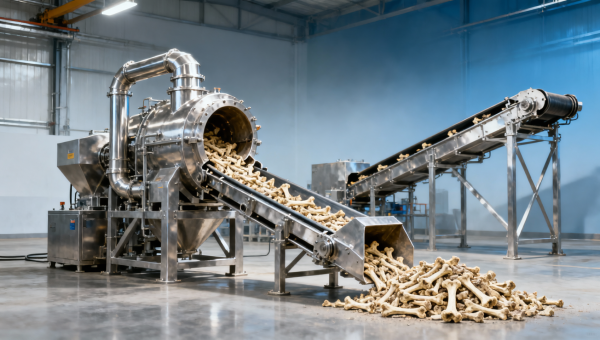
Selecting the right commercial bone crusher starts with one question: how much material must it handle every day without compromising safety, particle consistency, or downstream efficiency? For buyers comparing rendering plant equipment, blood meal processing plant systems, or commercial abattoir equipment, capacity sizing affects throughput, labor, energy use, and compliance. This guide explains how to match crusher size to daily production needs with practical evaluation criteria.
If you need a short answer first, the correct commercial bone crusher size is usually not chosen by the machine’s advertised hourly capacity alone. It should be sized against your real daily throughput, peak loading hours, bone type, target output size, upstream feed rhythm, and downstream process bottlenecks. In practice, many facilities should select a unit with a 15% to 30% capacity buffer above their calculated peak requirement rather than simply matching nominal tonnage on paper.
How to Size a Commercial Bone Crusher Based on Daily Throughput
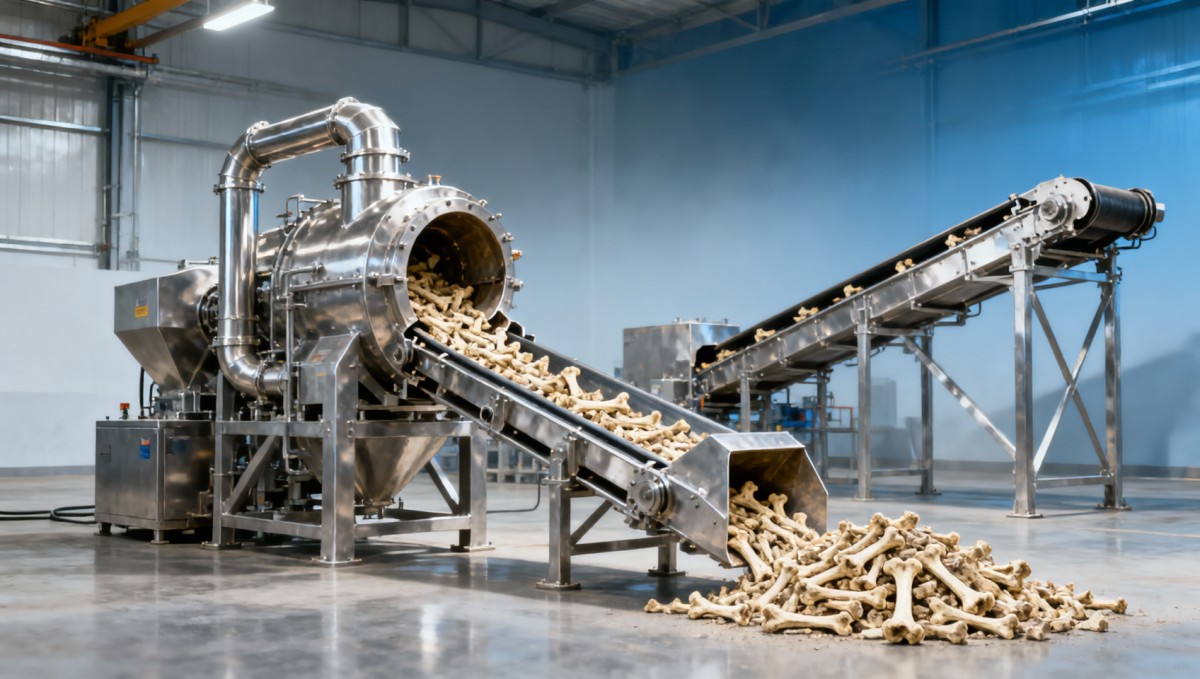
The core buying question is not “What is the biggest machine available?” but “What machine can process our actual daily volume reliably under plant conditions?” That distinction matters because bone crushing capacity changes significantly depending on raw material hardness, moisture, bone dimensions, contamination, and feed uniformity.
A practical sizing method looks like this:
- Calculate daily feed volume in tons or kilograms.
- Determine actual operating hours per day, not total shift hours. Exclude cleaning, stoppages, maintenance checks, material changeovers, and operator breaks.
- Convert daily throughput into required hourly throughput.
- Add a peak-load safety margin, typically 15% to 30%.
- Check whether the crusher can maintain the required output particle size at that throughput.
- Verify compatibility with conveyors, cookers, dryers, rendering lines, or meal processing equipment.
Basic formula:
Required crusher capacity per hour = Daily throughput ÷ Effective operating hours per day
Example:
If a plant handles 24 tons of bone material per day and the crusher runs effectively for 6 hours, the baseline required capacity is 4 tons per hour. If feed surges are common, applying a 25% buffer raises the target machine capacity to about 5 tons per hour.
This is why a bone crusher rated exactly at 4 tons per hour may still be undersized in real use.
What Buyers Should Evaluate Before Choosing a Capacity Range
For procurement teams, operators, and technical evaluators, the most important issue is not just volume. It is whether the machine can sustain that volume without causing instability elsewhere in the process.
Before choosing a capacity range, evaluate these factors:
1. Type of bone material
Fresh animal bones, frozen bones, mixed slaughter waste, poultry frames, cattle bones, and fish bones behave very differently in a crusher. Denser and larger bones require more torque, slower feed control, and often a heavier-duty crushing chamber.
2. Input size and uniformity
If raw bones arrive in irregular sizes, the crusher may experience inconsistent loading. Large oversized pieces can reduce effective throughput even when the machine’s rated capacity seems sufficient.
3. Required output particle size
Finer crushing generally lowers throughput. If downstream rendering, drying, extraction, or meal production requires a smaller and more uniform particle size, capacity assumptions must be adjusted accordingly.
4. Feeding method
Manual feeding, hopper feeding, screw conveyors, and belt conveyors all influence steady-state output. A well-sized crusher can still underperform if feeding is uneven or interrupted.
5. Duty cycle
Some facilities need intermittent crushing, while others require continuous industrial operation. For continuous-duty environments such as commercial abattoir equipment lines or rendering systems, motor rating, bearing design, shaft durability, and thermal management matter as much as nameplate capacity.
6. Cleaning and sanitation requirements
In regulated food-adjacent and by-product processing operations, sanitation downtime directly affects effective capacity. Equipment that is harder to clean may reduce actual daily output, even if its theoretical hourly rating is higher.
Typical Capacity Bands and When They Fit
While exact specifications vary by manufacturer, commercial bone crusher sizing is often evaluated in practical capacity bands rather than abstract model numbers.
Small commercial units: up to about 1 ton/hour
These are usually suitable for small butcheries, pilot processing lines, specialty pet food operations, or low-volume by-product recovery. They are not ideal for facilities with sustained industrial loading or large-bone input.
Medium commercial units: about 1 to 3 tons/hour
This range often fits regional slaughterhouses, medium rendering plants, and feed ingredient processors. It can offer a useful balance of footprint, energy use, and processing capability when daily throughput is moderate and feed is reasonably controlled.
Large industrial units: about 3 to 8 tons/hour
These machines are commonly considered for integrated rendering plant equipment setups, high-volume blood meal processing plant lines, and export-oriented meat processing operations. They are better suited to continuous operation and heavier bone fractions.
Heavy-duty systems: 8 tons/hour and above
These are typically selected by large industrial processors with high daily tonnage, multiple slaughter lines, or centralized by-product treatment operations. Selection in this range should include detailed line engineering, not just standalone machine comparison.
The right choice depends on your effective production window. A 2-ton/hour machine may be sufficient for 12 tons per day if the plant truly has 8 to 10 effective crushing hours. The same machine may be too small if crushing must be completed in 4 to 5 hours because of line scheduling.
Why Nameplate Capacity Alone Often Leads to Oversizing or Undersizing
One of the most common purchasing mistakes is relying solely on brochure capacity. A machine promoted at a certain tons-per-hour figure is usually tested under controlled conditions. Real operating conditions are rarely that stable.
Undersizing risks include:
- Production bottlenecks during peak slaughter periods
- Higher labor input due to repeated feeding interruptions
- Overheating and accelerated wear
- Inconsistent particle size for downstream rendering or meal processing
- Unplanned downtime and maintenance cost spikes
Oversizing risks include:
- Higher capital expenditure than necessary
- Inefficient energy consumption at partial load
- Larger installation footprint
- Potential mismatch with upstream and downstream equipment
- Longer return on investment
The best decision usually comes from matching crusher size to the plant’s bottleneck logic. If your cooker, dryer, or separator already limits line throughput, purchasing a significantly larger crusher may not improve total daily output.
How Different Stakeholders Should Judge the Right Crusher Size
Different readers in the buying process evaluate commercial bone crusher capacity through different lenses. A stronger procurement decision addresses all of them.
For operators and plant users
Focus on feed consistency, jam resistance, cleaning access, knife or tooth wear, ease of maintenance, and whether the machine can keep pace during the busiest hours without constant intervention.
For technical evaluators and engineers
Check motor power, torque reserve, shaft speed, crushing chamber design, metallurgy, bearing protection, control integration, overload protection, vibration profile, and compatibility with the rest of the processing line.
For procurement teams
Compare not only purchase price but also throughput stability, spare parts availability, lead time, warranty scope, and expected wear-part replacement cost.
For quality and safety managers
Review guarding, emergency stop layout, sanitation design, contamination control, and whether the crushing process supports consistent downstream quality targets.
For financial approvers and decision-makers
The key issue is not simply machine size but cost per ton processed over time. A slightly larger, more robust unit may generate better economics if it lowers labor pressure, avoids stoppages, and supports future capacity growth.
Questions to Ask Suppliers Before Finalizing a Purchase
To avoid buying on incomplete assumptions, ask suppliers questions that translate capacity claims into plant reality:
- What material type was used to determine rated throughput?
- What is the maximum recommended input bone size?
- What output particle size is achievable at full load?
- Can the machine handle frozen or mixed bone fractions?
- What is the expected capacity reduction under non-uniform feeding?
- What wear parts require regular replacement, and at what interval?
- How does the machine perform in continuous-duty operation?
- What overload or anti-jam protection is included?
- Can the system integrate with our existing rendering plant equipment or blood meal processing plant line?
- What installation utilities, floor loading, and maintenance clearance are required?
Requesting application-specific test data or customer references from similar facilities is often more useful than comparing catalog specifications alone.
A Simple Rule of Thumb for Initial Screening
For early-stage budgeting or supplier shortlisting, this rule of thumb is useful:
Choose a commercial bone crusher whose practical hourly capacity exceeds your calculated peak hourly demand by at least 15% to 30%, provided it also meets your required output size and sanitation standards.
This approach helps absorb feed variation, shift disruptions, and moderate production growth without immediately forcing another equipment upgrade.
Still, the rule only works as a first filter. Final sizing should be based on actual material characteristics, production scheduling, and full line integration.
Conclusion
The right commercial bone crusher size is the one that reliably supports your real daily throughput, not the one with the biggest advertised tonnage. To choose correctly, start with effective operating hours, convert daily volume into true hourly demand, account for peak loading, and then check material type, output size, and line compatibility.
For most industrial buyers evaluating rendering plant equipment, commercial abattoir equipment, or blood meal processing plant systems, the smartest decision is a balanced one: enough capacity to handle real-world surges and continuous operation, but not so much that capital cost and energy use outpace actual plant needs. When sizing is done properly, the crusher becomes a throughput stabilizer rather than a hidden bottleneck.
Related Intelligence
- Heavy Agri MachineryIndia Launches Anti-Dumping Review on Chinese Heavy Agri MachineryIndia's anti-dumping sunset review on Chinese heavy agri machinery — tractors & precision seeders — proposes duty hike to 28.5%. Act now to assess impact & prepare defense.
- Heavy Agri MachineryIndia Launches Anti-Dumping Review on Chinese Agri MachineryIndia's anti-dumping review on Chinese agri machinery (tractors & precision seeders) begins April 2026 — exporters, importers & assemblers must act now to mitigate tariff risks up to 28.5%.
- Heavy Agri MachineryIs an enclosed belt conveyor safer?Enclosed belt conveyor safety explained: reduce dust, spillage, and exposure while integrating with feed grading sieve, feed pellet cooler, and magnetic separator for feed.
The Morning Broadsheet
Daily chemical briefings, market shifts, and peer-reviewed summaries delivered to your terminal.
