
Pig Slaughtering Equipment That Bottlenecks Line Speed
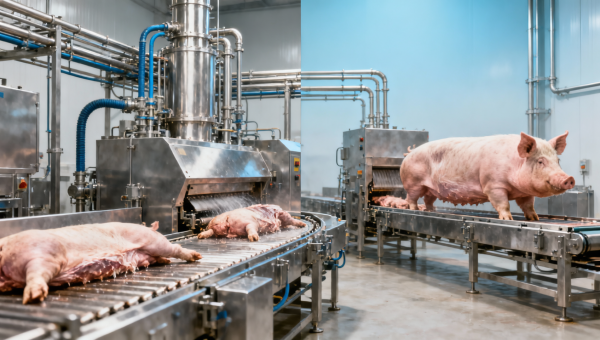
In modern meat processing, pig slaughtering equipment often determines whether a facility can sustain output, compliance, and margin targets. From commercial abattoir equipment and cattle slaughtering line integration to poultry slaughterhouse equipment, rendering plant equipment, and downstream systems such as commercial bone crusher, feather meal machine, and blood meal processing plant, every bottleneck affects throughput, safety, and procurement decisions.
Where pig slaughtering equipment usually bottlenecks line speed
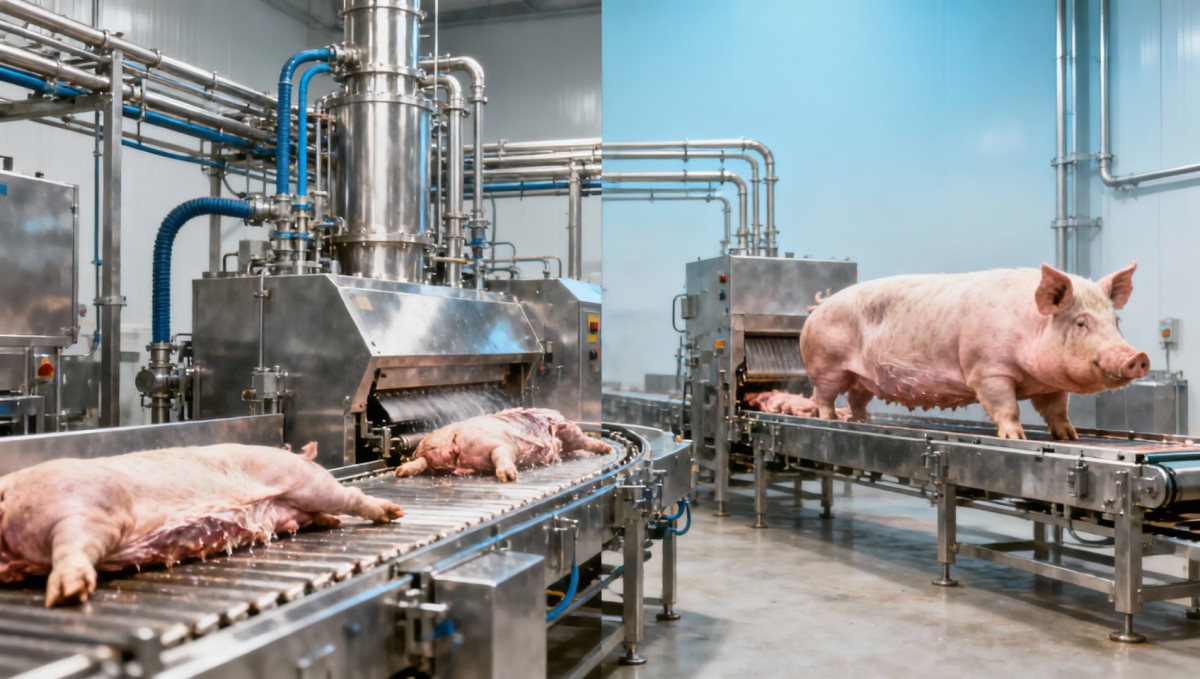
A pig slaughter line rarely slows down because of one machine alone. In most facilities, bottlenecks appear at transfer points, hygiene-critical stations, and yield-sensitive processes. Common pressure points include stunning and hoisting synchronization, scalding and dehairing capacity, evisceration rhythm, carcass splitting, viscera inspection, and the handoff to rendering plant equipment. If one section runs 10% slower than upstream capacity, the whole line can lose scheduling stability within a single shift.
For operators, the issue is often not peak speed on a brochure, but stable speed over 6–10 continuous operating hours. A line rated for a high hourly figure may still underperform when cleaning cycles, blade changes, conveyor gaps, or off-spec carcasses are introduced. Technical evaluators therefore need to review the entire process chain, not only the core pig slaughtering equipment.
Procurement teams also face a wider integration problem. A plant may process pigs, cattle in separate zones, and by-products through commercial bone crusher, feather meal machine, or blood meal processing plant systems. When line balancing is poor, the bottleneck can move downstream. This is especially relevant in integrated abattoirs where material handling, wastewater load, and by-product recovery affect both cost and compliance.
AgriChem Chronicle follows these issues from a supply chain and technical review perspective. For institutional buyers and engineering teams, the central question is simple: which station constrains throughput first under real operating conditions, and what evidence confirms it before capital approval?
The 5 stations most often limiting throughput
In mixed-capacity facilities, bottlenecks usually cluster around a short list of stations. Reviewing them in sequence reduces the risk of buying oversized equipment for one zone while leaving another zone underconfigured.
- Stunning and bleeding transfer: line gaps of even 15–30 seconds can disrupt shackling rhythm and increase labor intervention.
- Scalding and dehairing: tank dwell time and dehairing consistency often define practical line speed more than nominal conveyor rate.
- Evisceration and inspection: manual inspection windows, organ separation, and sanitary handling commonly slow high-volume lines.
- Splitting and trimming: carcass variability creates recurring stoppages if saws, guides, or operator spacing are poorly matched.
- By-product handling: rendering plant equipment, bone reduction, and blood collection can back up the main line if storage or transfer capacity is too low.
These stations should be analyzed against actual shift output, sanitation intervals, and rework frequency. A line can appear balanced during a 30-minute test but lose efficiency over a 2–3 shift production cycle.
How to identify the real constraint before buying or upgrading
Many buyers start with rated capacity, but rated capacity alone does not isolate a bottleneck. A better approach is to compare design speed, effective shift throughput, sanitation downtime, labor dependency, and reject or rework frequency. This creates a practical view of pig slaughtering equipment performance under commercial conditions.
For project managers and finance approvers, the useful benchmark is not only heads per hour, but recoverable output per shift. If a dehairing unit nominally supports the target rate but causes frequent manual correction, the hidden cost shows up in labor hours, utility use, and delayed chilling entry. In large facilities, a 2–4 minute disruption repeated several times per shift becomes a meaningful cost center.
ACC generally advises evaluation teams to map at least 3 layers: process sequence, sanitation sequence, and maintenance sequence. When these three maps are reviewed together, the true capacity limit is easier to see. This is particularly important where poultry slaughterhouse equipment, cattle slaughtering line systems, and pig slaughtering equipment share utilities, floor logistics, or by-product channels.
The table below helps cross-check where line speed is most often lost and which signals should trigger a deeper technical review before procurement.
This comparison shows why line speed should be measured as system continuity, not only machine output. In practical procurement reviews, bottlenecks are usually revealed by inconsistency, operator dependency, or sanitation conflict rather than by a single dramatic breakdown.
A 4-step audit used in pre-procurement reviews
Before issuing an RFQ, teams can run a short audit to improve specification quality and reduce redesign risk. This is useful for greenfield plants and for brownfield upgrades where only one section is being replaced.
- Record actual throughput by 30-minute interval across one full operating day, including washdown interruptions and shift changes.
- Measure queue buildup at each transfer point, especially before scalding, evisceration, chilling entry, and by-product discharge.
- Classify stops into 3 groups: mechanical, sanitation, and operator-dependent. This helps isolate the correct upgrade target.
- Check downstream support equipment such as commercial bone crusher, blood collection, and rendering transfer, because these often cap practical output.
A disciplined audit usually gives procurement and finance teams a stronger basis for budget approval than a vendor capacity claim alone.
Which technical parameters matter most for stable slaughter line performance
When technical evaluation teams compare pig slaughtering equipment, they should focus on parameters that affect continuity, hygiene, and recoverability. In practice, 6 items matter more than generic speed claims: throughput matching, carcass size range, utility demand, sanitation access, wear-part replacement interval, and integration with inspection or by-product systems.
A good specification should express ranges, not isolated numbers. For example, conveyance rate should be tied to carcass spacing, scalding should be tied to dwell time and temperature band, and cutting or splitting stations should be tied to blade service intervals. This level of detail helps project owners compare offers on a like-for-like basis.
In integrated meat processing operations, parameter reviews should also include how pig slaughtering equipment interfaces with commercial abattoir equipment used in adjacent lines. Shared boilers, water systems, compressed air, waste streams, and chilling zones can each create hidden constraints if utility planning is weak.
The next table summarizes practical evaluation dimensions that buyers can use during supplier review, technical clarification, and factory acceptance planning.
For procurement teams, this parameter table is useful because it converts technical language into decision checkpoints. It also helps finance reviewers see why a lower purchase price may still result in higher operating cost if sanitation time, spare-part frequency, or integration complexity are underestimated.
How standards and compliance shape equipment selection
Compliance is not only a legal issue; it directly affects line speed. Equipment that is difficult to inspect, clean, or document can slow release times and increase nonconformance risk. Depending on market destination and facility type, buyers often review food safety plans, sanitary design expectations, wastewater handling, and traceability requirements alongside machine specifications.
Where facilities operate across regulated export markets, teams may also compare documentation quality, weld finish consistency, material suitability, and maintenance traceability. Similar to regulated procurement in APIs or feed processing, documentation discipline supports faster technical approval and lower project friction.
ACC’s editorial strength is particularly relevant here because industrial buyers increasingly need one source that connects machinery performance, compliance language, and supply chain transparency. That combined view is often missing in generic equipment listings.
Procurement guide: how buyers, operators, and finance teams should compare options
A practical procurement process for pig slaughtering equipment should balance 5 decision layers: output target, plant layout, compliance burden, operating labor, and downstream utilization. If one of these is ignored, the selected system may meet initial budget but fail to deliver usable line speed after installation.
For users and operators, ergonomics and access matter more than catalog language suggests. If routine cleaning takes 20–40 minutes longer than planned, or if manual correction is needed every hour, a line with acceptable capex may still become a daily operational bottleneck. This is why operator interviews should be included in technical review.
For corporate decision makers and project owners, the most useful comparison is often total implementation risk. That includes lead time, installation readiness, commissioning complexity, spare-part availability, and whether existing rendering plant equipment or blood meal processing plant systems can absorb the added volume without secondary investment.
The checklist below can be used during vendor clarification meetings to prevent under-specified purchases.
7 questions procurement should ask before order confirmation
- What is the effective hourly throughput after cleaning pauses, shift changes, and typical operator adjustments?
- Which carcass weight and size range is the system designed to handle without repeated manual correction?
- How many maintenance points require daily, weekly, or monthly attention, and what tools are needed?
- Can the equipment integrate with existing commercial abattoir equipment, conveyors, chillers, and by-product transfer lines?
- What utilities are required during peak load, startup, and washdown phases?
- What documentation supports sanitary inspection, spare-part coding, and commissioning validation?
- Does higher main-line speed require parallel upgrades to commercial bone crusher, feather meal machine, or blood handling systems?
For many buyers, the final question is decisive. A main-line upgrade that forces unplanned investment downstream can significantly change project economics.
Cost thinking: upgrade one station or redesign the line?
There is no universal answer. If one station causes most delay events and adjacent systems still have 15%–25% spare capacity, a targeted upgrade may be enough. If multiple stations are already operating close to practical limits, piecemeal replacement can create recurring stoppages and duplicated installation cost.
This is where a publication platform like AgriChem Chronicle adds value for industrial buyers. ACC is positioned to connect market intelligence, machinery review, compliance expectations, and cross-sector process knowledge from feed, biochemical, and primary processing industries. That broader lens helps procurement teams avoid narrow decisions based only on initial price.
FAQ: common buyer concerns about pig slaughtering equipment bottlenecks
The questions below reflect typical search intent from researchers, users, engineering teams, and purchasing managers comparing pig slaughtering equipment, poultry slaughterhouse equipment, and integrated abattoir systems.
How do I know whether the bottleneck is the machine or the workflow?
Track stoppages over at least 3 production days and classify each event by source. If delays are concentrated around transfer timing, operator waiting, sanitation release, or downstream congestion, workflow may be the main constraint. If delays come from repeated resets, wear-part issues, or unstable process control at one station, the machine or its specification may be the dominant bottleneck.
What delivery cycle is common for slaughter line equipment?
For standard sections, buyers often plan in weeks rather than days, and integrated projects can require longer because layout confirmation, utility checks, and commissioning plans must align. A realistic review should include 3 stages: technical clarification, production and logistics, and installation or startup support. Buyers should also ask whether spare parts are shipped with the main order or separately.
Can downstream equipment really reduce pig slaughter line speed?
Yes. When rendering plant equipment, commercial bone crusher systems, or blood meal processing plant units cannot absorb the generated by-product volume, operators often slow the main line to prevent overflow, hygiene risk, or storage backlog. This is common in plants that upgrade front-end slaughter capacity without rechecking by-product handling rates.
What is the most common procurement mistake?
The most common mistake is buying by headline speed instead of balanced system output. Close behind are ignoring cleaning time, underestimating operator dependency, and failing to compare utility demand with existing infrastructure. In regulated processing environments, incomplete documentation can also delay acceptance even when the machine itself is mechanically sound.
Why consult AgriChem Chronicle when evaluating bottlenecks and suppliers
For industrial buyers, the challenge is rarely a lack of product listings. The real challenge is separating useful technical evidence from generic sales language. AgriChem Chronicle supports that decision process by focusing on primary industries and fine chemicals through a rigorously technical editorial lens. That matters when machinery, compliance, and supply-chain transparency all affect procurement outcomes.
ACC’s coverage is especially relevant to teams working across agricultural and primary processing sectors, where slaughter systems, feed inputs, biochemical handling, and regulated documentation intersect. This broader industrial perspective helps readers compare pig slaughtering equipment in context, not in isolation. It is valuable for researchers validating specifications, operators reviewing usability, and finance teams testing project assumptions.
If you are assessing a line-speed bottleneck, ACC can help frame the right discussions around parameter confirmation, process matching, downstream capacity, documentation expectations, and supplier comparison. That includes evaluating whether a targeted station upgrade is enough or whether the full process chain, from slaughter line to rendering and recovery, needs redesign.
Contact us to discuss throughput targets, line balancing, product selection logic, expected delivery stages, utility matching, sanitary design concerns, certification-related documentation, or quotation comparison. For procurement teams and project leaders, these are the details that turn a nominally faster line into a commercially reliable one.
Related Intelligence
- Heavy Agri MachineryIndia Launches Anti-Dumping Review on Chinese Heavy Agri MachineryIndia's anti-dumping sunset review on Chinese heavy agri machinery — tractors & precision seeders — proposes duty hike to 28.5%. Act now to assess impact & prepare defense.
- Heavy Agri MachineryIndia Launches Anti-Dumping Review on Chinese Agri MachineryIndia's anti-dumping review on Chinese agri machinery (tractors & precision seeders) begins April 2026 — exporters, importers & assemblers must act now to mitigate tariff risks up to 28.5%.
- Heavy Agri MachineryIs an enclosed belt conveyor safer?Enclosed belt conveyor safety explained: reduce dust, spillage, and exposure while integrating with feed grading sieve, feed pellet cooler, and magnetic separator for feed.
The Morning Broadsheet
Daily chemical briefings, market shifts, and peer-reviewed summaries delivered to your terminal.
