
Cattle Slaughtering Line Choices That Affect Carcass Yield
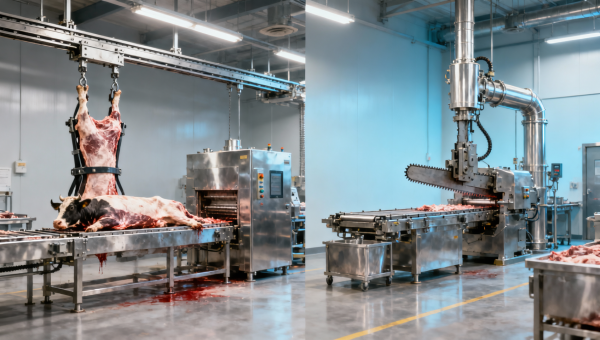
Selecting a cattle slaughtering line is not just a capacity decision—it directly shapes carcass yield, hygiene control, labor efficiency, and downstream profitability. For buyers comparing pig slaughtering equipment, poultry slaughterhouse equipment, commercial abattoir equipment, or rendering plant equipment such as feather meal machine, blood meal processing plant, and commercial bone crusher systems, the right line configuration determines both operational performance and long-term return.
For most buyers and technical evaluators, the key answer is straightforward: carcass yield is affected less by headline throughput alone and more by how the slaughtering line handles stunning, bleeding, hide removal, evisceration, splitting, trimming, and by-product transfer with consistency. A line that looks efficient on paper can still reduce sellable yield if it increases bruising, contamination, trimming loss, operator variability, or downtime. That is why equipment selection should be tied to yield preservation, hygiene performance, labor structure, and total process integration—not only to hourly head count.
Which cattle slaughtering line choices have the biggest impact on carcass yield?
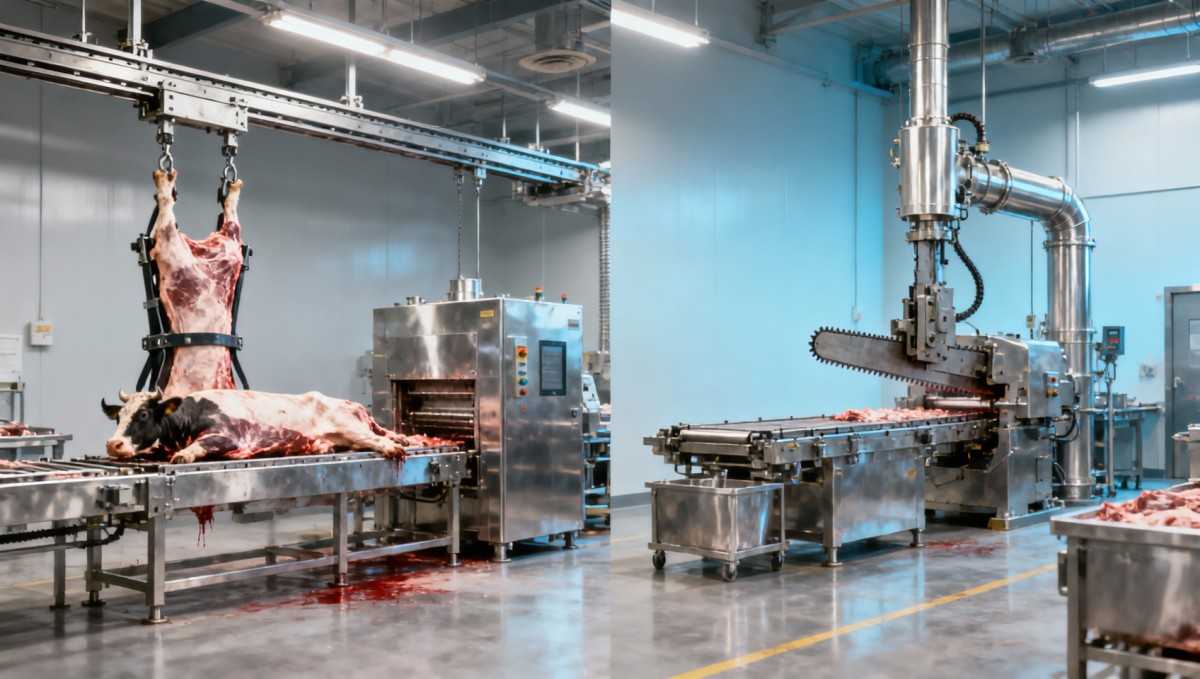
When users search for cattle slaughtering line choices that affect carcass yield, they are usually trying to evaluate which equipment decisions genuinely improve saleable meat output and which ones create hidden loss. In practical terms, the biggest yield drivers are usually these:
- Stunning method and restraint design: Poor animal handling raises stress, bruising risk, and carcass defects.
- Bleeding efficiency: Incomplete or inconsistent bleeding can affect meat quality and downstream hygiene.
- Hide removal system: Incorrect hide pull direction, poor tension control, or excessive manual correction can increase damage and contamination.
- Evisceration accuracy: Rupture of viscera leads to contamination, rework, and trim loss.
- Carcass splitting precision: Misalignment increases bone dust, asymmetry, and unnecessary value loss.
- Rail and transfer layout: Poor line flow increases handling damage and labor inefficiency.
- By-product separation and rendering interface: A weak connection between slaughter and rendering plant equipment can reduce recovery value from blood, bone, and offal.
For procurement teams, the implication is clear: the “best” line is not the one with the most automation by default, but the one that delivers the highest consistent yield under your operating conditions, labor skill level, hygiene requirements, and product mix.
Why throughput alone is a poor buying metric
Many slaughterhouse investment discussions begin with line speed. That is understandable, but incomplete. A line rated for high throughput may underperform financially if it causes:
- Higher carcass condemnation or rework
- More trim loss due to poor cut accuracy
- Longer washdowns because of difficult-to-clean design
- Frequent stoppages at bottleneck stations
- Excessive dependence on highly skilled labor
- Weak synchronization with chilling, deboning, and rendering sections
For enterprise decision-makers and financial approvers, this means yield should be evaluated as a system-level performance outcome. A lower nominal-speed line with better process control may produce better net returns than a faster line with unstable results.
A useful purchasing question is not “How many cattle per hour can this line handle?” but rather “At what staffing level, contamination rate, trim loss rate, downtime rate, and final carcass quality can this line operate over a full production week?”
How stunning, bleeding, and handling decisions influence yield before dressing even begins
Yield losses often start before hide removal or evisceration. Animal handling equipment and pre-slaughter design influence bruising, stress, and consistency. For operators and safety managers, this is a critical early control point.
Key considerations include:
- Race and restrainer design: Should reduce slipping, impact injury, and hesitation.
- Stunning system suitability: Must match animal size variation and local welfare requirements.
- Bleeding station layout: Should allow adequate drainage time without creating congestion.
- Hoisting and transfer stability: Poor transitions can damage carcasses and slow the line.
In real operations, bruising and handling defects may not always appear in equipment brochures, but they directly affect downgraded carcasses, trim loss, and quality claims. A technically advanced line still needs proper ergonomic access, predictable animal movement, and repeatable operator actions.
Hide removal and dehiding systems: one of the most important yield protection points
Among all cattle slaughtering line choices, hide removal equipment is one of the most decisive for preserving carcass yield and hygiene. Poor dehiding does not just create visual defects; it can lead to knife overuse, fat removal, tissue tearing, and contamination transfer from hide to meat surface.
Buyers should assess:
- Hide puller type and direction of pull
- Tension control and speed stability
- Compatibility with cattle size range
- Manual intervention frequency
- Cleaning access and sanitation design
For technical assessment teams, a valuable comparison method is to request site data or trial evidence showing:
- Average trim loss before and after installation
- Contamination incidents linked to dehiding
- Operator count required per station
- Line stoppages caused by hide removal issues
If a supplier cannot explain how its dehiding system protects both hygiene and saleable tissue, the yield risk is usually higher than expected.
Evisceration and splitting accuracy: where hidden losses accumulate
In many plants, the most expensive losses are not dramatic failures but small, repeated inefficiencies during evisceration and splitting. These include punctures, contamination, over-trimming, asymmetrical splitting, and slow corrective work.
This is especially relevant for quality control teams and project managers because these stations combine food safety risk with value loss.
Important evaluation points include:
- Tool guidance and workstation ergonomics
- Carcass positioning consistency
- Saw alignment and vibration control
- Bone dust management
- Ease of inspection and rework handling
A precise splitting process matters because poor symmetry can affect downstream chilling, grading, cutting efficiency, and even customer acceptance. Likewise, evisceration systems should be judged not only on speed, but on whether they reduce contamination events and preserve usable product.
How line automation should be matched to labor skill, not just budget
Automation can improve consistency, but not every plant benefits equally from the same automation level. For some facilities, semi-automatic systems offer the best balance between yield protection and capital cost. For others, especially those facing labor shortages or strict export-grade requirements, higher automation may be justified.
The right question is: what level of automation reduces operator variability at the stations most responsible for yield loss?
Examples:
- If manual dehiding causes frequent tissue loss, automated hide pulling may deliver strong returns.
- If evisceration quality depends on a few highly skilled operators, guided systems may lower contamination risk.
- If splitting accuracy varies by shift, alignment-assisted saw systems may improve recoverable value.
However, over-automation can become a burden if spare parts, maintenance skills, or sanitation procedures are not available locally. Procurement decisions should therefore balance automation benefit with maintainability, training demand, and service support.
Why slaughter line integration with rendering equipment also affects profitability
Carcass yield is not the only value metric. In a modern commercial abattoir, total return also depends on how efficiently by-products are collected, transferred, and processed. This is where integration with rendering plant equipment becomes commercially important.
For plants handling multiple species or planning broader processing expansion, related systems such as pig slaughtering equipment, poultry slaughterhouse equipment, blood meal processing plant, commercial bone crusher, and even a feather meal machine in mixed rendering operations may influence facility design logic, utility planning, and by-product recovery strategy.
In cattle processing, buyers should assess whether the slaughter line supports:
- Clean blood collection for value recovery
- Fast separation of edible and inedible streams
- Efficient transfer of bone, fat, and offal to rendering
- Reduced cross-contamination between slaughter and by-product zones
- Scalable utility connections for future expansion
Even if the main buying objective is carcass yield, a poorly integrated line can reduce total plant margin by losing recoverable by-product value or creating sanitation and logistics problems.
What buyers should ask suppliers before choosing a cattle slaughtering line
To make a sound technical and commercial decision, buyers should ask suppliers for evidence tied to operating outcomes, not just configuration lists.
Useful supplier questions include:
- What carcass yield preservation features are built into each key station?
- How does the line reduce bruising, contamination, and trim loss?
- What is the expected labor requirement by station and by throughput band?
- How does the equipment perform across different cattle sizes and breeds?
- Which stations are most maintenance-sensitive?
- How long does cleaning and sanitation typically take?
- Can the line integrate with current chilling, deboning, and rendering systems?
- What operator training is required to achieve stated performance?
- Are there reference plants with measurable yield data?
- What spare parts and local technical support are available?
For project leaders, it is also wise to require a layout review covering line balance, worker movement, inspection points, drainage, product segregation, and room for future upgrades.
A practical framework for comparing slaughter line options
Instead of evaluating equipment only by price or capacity, use a weighted comparison model. This helps technical teams, procurement personnel, and executives align around measurable criteria.
Typical evaluation categories:
- Yield protection: bruising control, trimming loss, cut precision
- Food safety and hygiene: contamination prevention, cleanability, material finish
- Labor efficiency: staffing requirement, ergonomics, training dependency
- Operational reliability: downtime risk, maintenance complexity, spare parts
- Process integration: chilling, deboning, rendering, utilities, waste handling
- Compliance and audit readiness: welfare, sanitation, traceability, local regulations
- Financial performance: capital cost, operating cost, yield gain, payback period
This approach is especially effective for multidisciplinary buying groups where finance, operations, quality, engineering, and management may each define “best value” differently.
Conclusion: the best line is the one that protects value at every step
Choosing a cattle slaughtering line is ultimately a value-preservation decision. The line choices that affect carcass yield most are usually the ones that improve consistency in handling, bleeding, dehiding, evisceration, splitting, hygiene control, and by-product flow. Plants that focus only on throughput often overlook the hidden causes of lost saleable meat, contamination, labor inefficiency, and poor downstream integration.
For serious buyers, the smartest approach is to compare line options by their real effect on yield, hygiene, labor structure, recoverable by-product value, and total operating return. When these factors are assessed together, it becomes much easier to identify which slaughtering line configuration supports long-term profitability rather than just short-term capacity targets.
Related Intelligence
- Heavy Agri MachineryIndia Launches Anti-Dumping Review on Chinese Heavy Agri MachineryIndia's anti-dumping sunset review on Chinese heavy agri machinery — tractors & precision seeders — proposes duty hike to 28.5%. Act now to assess impact & prepare defense.
- Heavy Agri MachineryIndia Launches Anti-Dumping Review on Chinese Agri MachineryIndia's anti-dumping review on Chinese agri machinery (tractors & precision seeders) begins April 2026 — exporters, importers & assemblers must act now to mitigate tariff risks up to 28.5%.
- Heavy Agri MachineryIs an enclosed belt conveyor safer?Enclosed belt conveyor safety explained: reduce dust, spillage, and exposure while integrating with feed grading sieve, feed pellet cooler, and magnetic separator for feed.
The Morning Broadsheet
Daily chemical briefings, market shifts, and peer-reviewed summaries delivered to your terminal.
