
Is an enclosed belt conveyor safer?
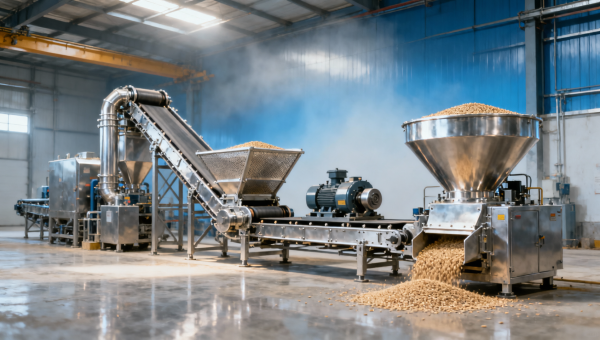
In modern feed and grain handling, an enclosed belt conveyor is often viewed as a safer alternative because it helps reduce dust, spillage, and operator exposure while supporting cleaner integration with equipment such as a feed grading sieve, feed pellet cooler, magnetic separator for feed, and grain pre cleaner machine. For buyers, operators, and project managers, understanding its real safety value is essential before investing.
The short answer is yes: an enclosed belt conveyor is generally safer than an open conveyor in many feed, grain, and bulk material applications. Its safety advantage comes from better containment of dust and product, lower housekeeping burden, reduced accidental contact with moving materials, and easier environmental control. However, “safer” does not mean “risk-free.” Actual safety depends on conveyor design, access control, ventilation, explosion protection, maintenance practices, and how well the system fits the material being handled.
For procurement teams, plant operators, EHS managers, and project leaders, the right question is not simply whether an enclosed belt conveyor is safer in theory. The more useful question is: under what operating conditions does it deliver measurable safety improvements, and what design details make the difference?
What safety problems can an enclosed belt conveyor actually reduce?
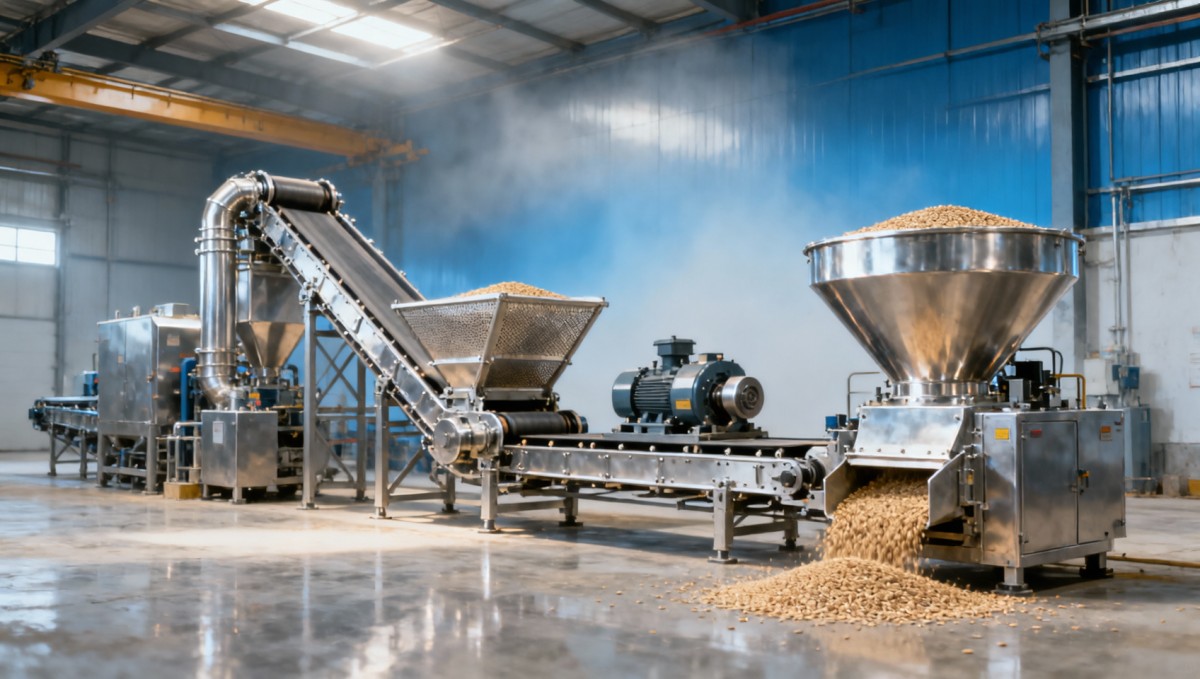
An enclosed belt conveyor can reduce several of the most common hazards found in bulk feed and grain handling systems.
Dust exposure and dust accumulation: In grain and feed processing, airborne dust is not only a cleanliness issue; it is a respiratory hazard and, in some environments, a combustion or explosion risk. By enclosing the carrying path, transfer zones, and return sections where appropriate, the system helps limit dust escape. This is especially relevant when material passes through a grain pre cleaner machine, magnetic separator for feed, feed grading sieve, or feed pellet cooler, where fines can be generated or released.
Spillage and slip hazards: Open conveyors often allow product loss at loading points, discharge points, and along the belt edge. Spilled grain or feed creates slip risks, sanitation issues, pest attraction, and labor-intensive cleanup. Enclosure improves containment and reduces the amount of loose product around walkways and service areas.
Operator exposure to moving material: While guarding is still required, enclosure adds another physical barrier between workers and the conveyed product stream. This is useful in facilities where operators work close to line equipment during monitoring, bagging, inspection, or maintenance coordination.
Cross-contamination risk: In facilities handling multiple feed formulations or sensitive ingredients, enclosed transfer can support cleaner segregation. That matters for quality control personnel as much as safety managers, particularly where contamination may trigger rework, recalls, or audit issues.
Weather and environmental interference: In outdoor or semi-open installations, enclosure also protects material flow from wind, rain, and external contamination. Stable material handling conditions can reduce upset events that indirectly create unsafe interventions by operators.
Is it always safer than an open conveyor? Not automatically.
An enclosed belt conveyor is usually safer when properly engineered and maintained, but poor design can introduce new risks.
Hidden dust buildup: If the enclosure traps dust without proper extraction, inspection access, or cleaning design, combustible dust can accumulate out of sight. A system that looks clean externally may still have an internal housekeeping problem.
Difficult maintenance access: If covers, inspection doors, or service panels are poorly arranged, technicians may bypass safe procedures just to inspect belt tracking, idlers, or build-up. A safer conveyor should reduce unsafe access, not encourage it.
Confined internal hazards: Enclosure can conceal belt misalignment, overheating bearings, material carryback, or blockages until they become serious. This is why good monitoring and inspection planning matter.
Inadequate guarding assumptions: An enclosure is not a substitute for guarding rotating components, emergency stops, lockout/tagout procedures, and anti-runback provisions where needed. Buyers should avoid assuming that “enclosed” automatically means “fully compliant.”
So the realistic conclusion is this: enclosed systems usually improve baseline safety, but only if they are paired with the right controls and operational discipline.
What design features matter most for safety performance?
If decision-makers want to judge whether an enclosed belt conveyor will truly improve site safety, they should focus on specific design elements rather than marketing claims.
Dust control strategy: Ask whether the conveyor relies only on enclosure or whether it also incorporates dust-tight transfer points, extraction ports, filtration interfaces, or pressure management. In dusty feed and grain environments, enclosure alone may not be enough.
Inspection and maintenance access: Safe access doors, removable covers, sight windows, and strategically placed service points are essential. Maintenance should be possible without excessive exposure to pinch points or awkward manual handling.
Belt tracking and spill control: A poorly tracked belt inside an enclosed space can still generate spillage, friction, and shutdowns. Look for effective tracking design, skirt sealing at load zones, and provisions for carryback management.
Fire and explosion risk controls: For combustible dust applications, buyers should evaluate spark detection, explosion venting or suppression where applicable, grounding, static control, bearing temperature monitoring, and compliance with relevant local standards.
Emergency stop and isolation provisions: An enclosed conveyor should still include accessible emergency stop systems, interlocks where appropriate, and clearly planned lockout/tagout points.
Material suitability: Some materials are more cohesive, abrasive, oily, or heat-sensitive than others. The conveyor should be matched to bulk density, particle size, moisture content, and temperature, especially where it interfaces with a feed pellet cooler or upstream cleaning equipment.
How does it affect operations, cleaning, and plant-wide risk?
For operators and project managers, safety is closely tied to daily usability. A conveyor that reduces cleanup time, line interruption, and manual intervention often delivers the most meaningful practical safety gains.
Less housekeeping labor: Reduced dust and spillage mean fewer manual cleanup tasks around transfer points and conveyor corridors. That lowers routine exposure to slips, repetitive handling, and stop-start interventions.
Cleaner equipment integration: In a line that includes a grain pre cleaner machine, magnetic separator for feed, feed grading sieve, and feed pellet cooler, enclosed conveying supports a more controlled product path. That can reduce contamination complaints and improve overall process hygiene.
More stable operation: Better containment often means fewer unplanned stoppages caused by product loss, external contamination, or material disturbance. Stability has a direct safety value because emergency interventions tend to create the highest-risk situations.
Better audit readiness: For facilities subject to food safety, feed safety, environmental, or occupational safety reviews, enclosed transport can support better housekeeping records and more professional line presentation. That does not replace compliance, but it can strengthen it.
What should buyers and engineers ask before investing?
Whether you are a procurement manager, OEM partner, distributor, or plant decision-maker, use a practical evaluation checklist.
1. What exact hazard are we trying to reduce?
Is the main concern dust, spillage, contamination, operator exposure, weather protection, or a combination of these?
2. What material are we handling?
Feed mash, pellets, grain, powders, and additives behave differently. Material characteristics determine enclosure, sealing, and cleaning needs.
3. How will the conveyor connect with the rest of the line?
The safety value depends heavily on transfer design around equipment such as a magnetic separator for feed or a feed grading sieve.
4. How easy is it to inspect and maintain safely?
If service tasks require frequent cover removal, climbing, or awkward access, the design may create avoidable risk.
5. What standards or internal safety requirements apply?
This may include dust hazard analysis, electrical classification, food/feed hygiene expectations, guarding rules, and site-specific EHS protocols.
6. What is the total cost impact?
A safer conveyor should be evaluated not only on purchase price but also on cleanup savings, product loss reduction, downtime avoidance, labor efficiency, and compliance support.
When is an enclosed belt conveyor the right choice?
It is often the right choice when a facility handles dusty, valuable, contamination-sensitive, or weather-exposed bulk materials and wants a cleaner, more controlled transfer method.
It is especially suitable when:
- Dust control is a major operational or regulatory concern
- Spillage is causing cleanup cost and slip risk
- The line must integrate cleanly with feed and grain processing equipment
- Product segregation or hygiene matters
- The site wants to reduce operator exposure around transfer points
- Outdoor routing requires protection from environmental conditions
It may be less ideal, or require more careful engineering, when the material is highly sticky, access for cleaning is frequent, or the plant lacks the maintenance discipline needed to inspect enclosed equipment properly.
Final assessment
An enclosed belt conveyor is generally safer than an open alternative in feed, grain, and similar bulk material operations because it improves containment, reduces dust and spillage, and supports a cleaner, more controlled process environment. For many facilities, that translates into lower housekeeping risk, reduced operator exposure, and better integration with systems such as a grain pre cleaner machine, feed grading sieve, feed pellet cooler, and magnetic separator for feed.
But the real safety benefit depends on execution. Buyers should judge enclosed conveyor systems by dust management, maintenance access, inspection visibility, emergency protections, and fit with the material and process line. When selected with those factors in mind, an enclosed belt conveyor is not just a cleaner option—it is often a smarter and safer investment.
Related Intelligence
- Heavy Agri MachineryIndia Launches Anti-Dumping Review on Chinese Agri MachineryIndia's anti-dumping review on Chinese agri machinery (tractors & precision seeders) begins April 2026 — exporters, importers & assemblers must act now to mitigate tariff risks up to 28.5%.
- Heavy Agri MachineryIs an enclosed belt conveyor safer?Enclosed belt conveyor safety explained: reduce dust, spillage, and exposure while integrating with feed grading sieve, feed pellet cooler, and magnetic separator for feed.
- Heavy Agri MachineryIndia Extends Anti-Dumping Review on Chinese Tractors, SeedersIndia extends anti-dumping review on Chinese tractors and seeders—impacting exporters, OEMs, and agri-supply chains. Act now to navigate tariffs, compliance, and sourcing shifts.
The Morning Broadsheet
Daily chemical briefings, market shifts, and peer-reviewed summaries delivered to your terminal.
