

The Authority in Global Agricultural Chemistry & Bio-Resources
How to shortlist Agri & Forestry machinery manufacturers
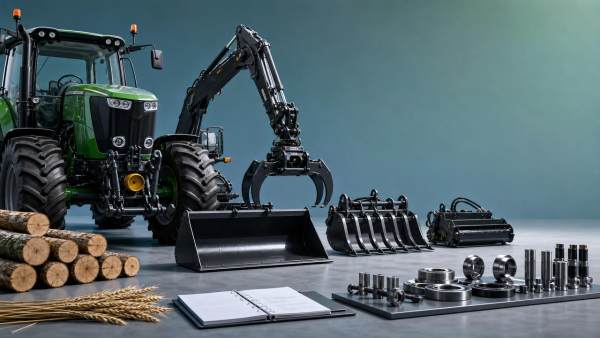
Shortlisting Agri & Forestry machinery manufacturers demands more than comparing product catalogs or price points. For procurement teams, the real challenge lies in verifying technical capability, regulatory compliance, production consistency, and long-term supply reliability. This guide outlines the key criteria and practical evaluation steps buyers can use to identify qualified manufacturers and reduce sourcing risk in a competitive global market.
For most buyers, the core search intent behind “How to shortlist Agri & Forestry machinery manufacturers” is practical and commercial: they want a reliable way to reduce a long list of suppliers into a defensible shortlist for RFQ, audit, or pilot order. They are not looking for generic definitions of farm equipment. They need a framework that helps them compare manufacturers on quality, capability, risk, and fit.
Procurement professionals in this sector usually care about five questions first: Can the manufacturer build to required specifications? Can it deliver consistently at scale? Does it meet relevant safety and regulatory expectations? Will after-sales support hold up in the field? And is the supplier financially and operationally stable enough for a multi-year relationship?
The most useful content, therefore, is not broad market commentary but a structured evaluation method. Buyers benefit from practical criteria, red flags, document checklists, supplier scoring logic, and advice on when to prioritize OEM capability, customization, service network, or total cost of ownership. That is where this article will focus.
Start with the real procurement goal, not the broad supplier list
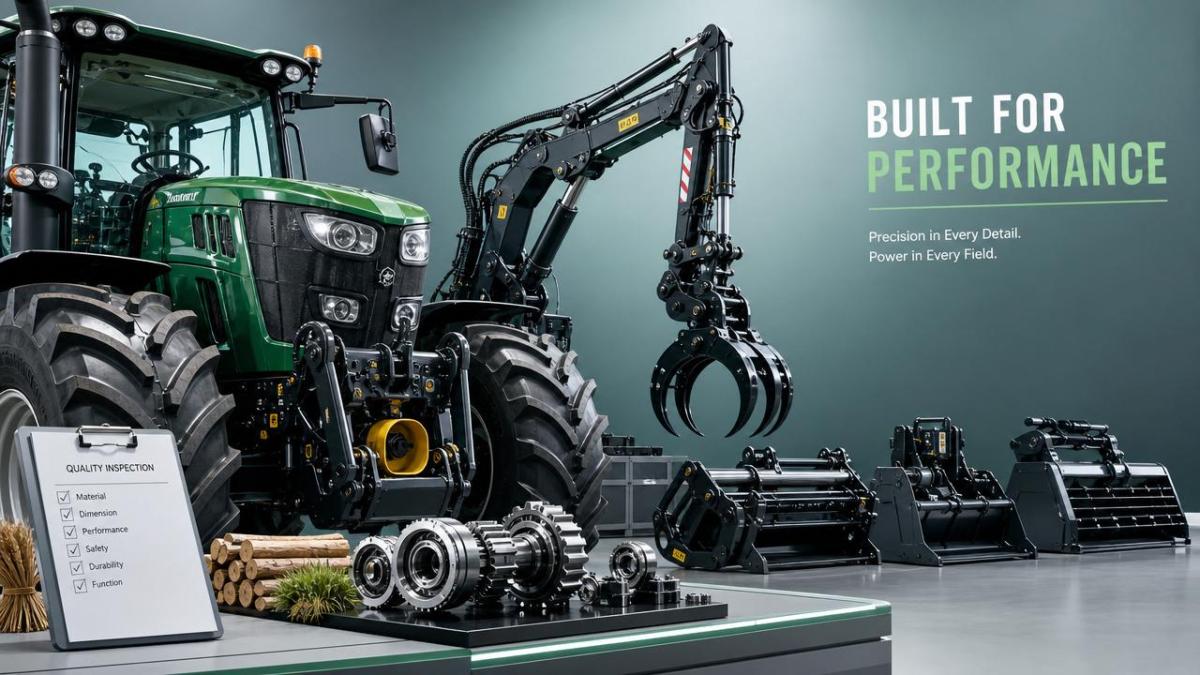
The biggest mistake in shortlisting Agri & Forestry machinery manufacturers is beginning with supplier discovery instead of internal alignment. Before comparing manufacturers, procurement teams should define what the shortlist is supposed to achieve. Is the goal to source standard tractors, harvesters, forestry loaders, mulchers, irrigation-linked machinery, or specialized attachments? Is the purchase for a single site, multiple regions, or contract farming operations?
A shortlist only works when it reflects the operating reality of the end user. A forestry contractor working in steep terrain has different needs from a grain processor seeking bulk material handling equipment. Likewise, a large agricultural enterprise may prioritize fleet uptime, telematics integration, and spare parts access, while a distributor may focus on branding flexibility, documentation, and private-label manufacturing.
At this stage, procurement should collect input from engineering, operations, maintenance, HSE, finance, and regional users. That cross-functional input allows buyers to define mandatory criteria versus preferred criteria. Without this step, the shortlist can become skewed toward attractive brochures, familiar brands, or the lowest quoted price.
A practical internal brief should include machine type, expected annual usage, target markets, terrain or crop conditions, required standards, service expectations, budget range, localization needs, and project timeline. Once these are clear, it becomes far easier to remove suppliers that are not a realistic fit.
Define the non-negotiable technical and operational requirements
Buyers should next create a requirement matrix that separates “must-have” from “nice-to-have.” For Agri & Forestry machinery manufacturers, technical fit is the first hard filter. A supplier may look credible overall but still be unsuitable if its design platform cannot meet engine requirements, hydraulic performance, attachment compatibility, payload capacity, emission rules, or site-specific durability needs.
For agricultural machinery, common technical criteria include horsepower range, fuel efficiency, implement compatibility, transmission type, precision farming integration, and operator safety features. For forestry machinery, extra scrutiny often applies to structural strength, terrain handling, cabin protection, lifting systems, winch performance, and guarding against harsh operating conditions.
Operational requirements matter just as much. Procurement teams should ask whether the manufacturer can support local voltage or fuel conditions, language-specific interfaces, spare parts lead times, training packages, and regional service availability. Machinery that performs well in factory tests but lacks field support can create more downtime than a technically modest but well-supported alternative.
This is why experienced buyers score manufacturers on “application suitability” rather than broad product range alone. A supplier with fewer models but deeper expertise in one equipment class may be a better shortlist candidate than a giant catalog manufacturer with limited specialization in the required application.
Check manufacturing capability beyond brochures and websites
One of the most important steps in shortlisting Agri & Forestry machinery manufacturers is verifying whether the supplier truly manufactures what it claims. In global sourcing, many companies present themselves as manufacturers while functioning mainly as assemblers, traders, or export intermediaries. That does not automatically disqualify them, but procurement must know the difference.
Key questions include: Does the company design core components in-house? Which processes are internalized, such as welding, machining, painting, assembly, testing, and quality inspection? What is outsourced? How many production lines are dedicated to the relevant machinery category? What is the monthly or annual output capacity for comparable products?
A serious manufacturer should be able to provide factory details, equipment lists, process flow, quality checkpoints, and production photos or videos tied to actual orders. During supplier assessment, buyers should look for evidence of process control, not just facility size. A large workshop is less meaningful than documented welding standards, calibrated test benches, traceable components, and disciplined final inspection routines.
If the purchase is strategic or high value, a factory audit is ideal. If an in-person audit is not feasible, request a live virtual walkthrough focused on production stages, warehouse management, incoming material control, and finished goods testing. Structured verification helps procurement avoid suppliers whose marketing strength exceeds their manufacturing depth.
Evaluate quality systems and product consistency
In this market, a good prototype is not enough. Procurement teams need confidence that a manufacturer can deliver the same quality repeatedly across batches, seasons, and export destinations. That makes quality management systems a central shortlist criterion.
Ask for relevant certifications, but do not stop there. ISO 9001 may indicate baseline quality management, yet it does not prove the supplier consistently builds field-ready machinery. Buyers should also review inspection records, non-conformance handling, component traceability, pre-delivery testing procedures, and corrective action processes. For machinery sold into regulated or safety-sensitive markets, product-specific compliance documentation may be just as important as general factory certifications.
It is also wise to assess the supplier’s component sourcing strategy. Many machinery failures are caused not by the OEM’s frame or structure but by inconsistent hydraulic parts, bearings, electronics, harnesses, or engines sourced from unstable vendors. Ask which components are sourced from approved brands, whether alternatives are used by market, and how substitutions are controlled.
Field failure data, warranty claim rates, and average service response times can reveal more than polished QA presentations. A manufacturer that openly shares its failure analysis process and product improvement history often deserves more trust than one that claims to have no quality issues at all.
Assess compliance, safety, and export readiness
Procurement teams should not treat compliance as a final-stage paperwork issue. It belongs in the shortlist stage because non-compliant manufacturers can waste months of sourcing effort. Depending on destination market and machine category, relevant considerations may include CE marking, EPA or equivalent emissions compliance, operator safety standards, noise limits, guarding requirements, and documentation for customs and local registration.
Export readiness also matters. Some manufacturers produce acceptable machinery for domestic markets but struggle with export packaging, multilingual manuals, serial traceability, certificate handling, or country-specific technical files. These gaps can delay commissioning and raise legal or operational risk for the buyer.
For forestry and heavy agricultural equipment, safety documentation should be reviewed carefully. This includes risk assessments, operator manuals, maintenance instructions, labeling, and emergency shutdown or protective system information where applicable. In many procurement environments, weak safety documentation is an early warning sign of broader process immaturity.
Ask suppliers which countries they currently serve, what standards they regularly meet, and whether they have experience passing third-party inspections. A manufacturer that already exports to demanding jurisdictions usually presents lower implementation risk than one entering international supply for the first time.
Measure after-sales support and lifecycle value, not just purchase price
Many sourcing errors happen because the shortlist is built around ex-works price rather than lifecycle cost. For machinery used in agriculture and forestry, downtime can be far more expensive than the initial purchase savings. During harvest windows or remote forestry operations, even a small parts delay can disrupt labor schedules, transport planning, and customer commitments.
This is why buyers should evaluate the supplier’s after-sales system early. Key factors include spare parts stocking strategy, parts identification accuracy, technical training, troubleshooting responsiveness, warranty policy, digital support tools, and service partner coverage in target regions. If the equipment is complex, software diagnostics and remote support capability may also be critical.
Total cost of ownership should include fuel consumption, wear part life, maintenance intervals, repair complexity, expected resale value, operator productivity, and machine uptime. Two manufacturers may offer similar upfront pricing but differ substantially in long-term operating cost. Procurement should ask for reference maintenance schedules and recommended critical spares lists before finalizing the shortlist.
Where possible, speak directly with current users in similar operating environments. A reference call about actual uptime, parts delivery, and warranty behavior often provides clearer insight than any formal supplier presentation.
Use a structured scoring model to compare manufacturers fairly
Once buyer requirements and supplier evidence are collected, a weighted scorecard helps convert subjective impressions into a defensible shortlist. This is especially useful when multiple stakeholders are involved and the purchase will later need management approval or audit review.
A practical scorecard for Agri & Forestry machinery manufacturers can include the following categories: technical fit, manufacturing capability, quality systems, compliance readiness, delivery performance, customization ability, after-sales support, financial stability, communication quality, and total cost of ownership. Weightings should reflect business risk. For example, for remote forestry deployment, service support may deserve a higher weight than small price differences.
Use a simple numerical scale, such as 1 to 5, and define what each score means. Require evidence for high scores. If a supplier claims strong customization capability, ask for prior case examples, engineering drawings, and change control procedures. If it claims strong delivery reliability, ask for historical OTIF data and lead-time commitments.
The goal is not to make procurement mechanical. It is to prevent critical decisions from being driven by personality, brand familiarity, or the most responsive salesperson. A good scorecard highlights which manufacturers are acceptable, which deserve further audit, and which should be excluded despite attractive offers.
Watch for common red flags during supplier shortlisting
Certain warning signs repeatedly appear when buyers evaluate machinery suppliers. The first is inconsistency between marketing claims and technical detail. If a company advertises extensive manufacturing capability but cannot provide clear process information, bill-of-material logic, or test documentation, caution is warranted.
A second red flag is unusually broad product coverage without visible specialization. While diversified groups exist, many suppliers that claim to build every type of agricultural and forestry machine are actually aggregating products from multiple unknown workshops. This can create major quality variation across product lines.
Third, vague answers on component origin, certification scope, lead times, or warranty responsibility should not be ignored. Reliable manufacturers usually answer difficult questions directly, even when the answer is not perfect. Evasive communication often signals future operational problems.
Other concerns include frequent company name changes, poor document control, reluctance to support audits, weak English-language technical communication for export programs, and pricing that is dramatically below market without a clear reason. In industrial sourcing, the cheapest quote can become the most expensive outcome.
Build a shortlist that is small, evidence-based, and decision-ready
The final shortlist should not be a long directory. It should be a focused set of the most credible candidates, usually three to five manufacturers, each with a clear rationale for inclusion. Every shortlisted supplier should meet the non-negotiable criteria and present a realistic path to pilot order, trial deployment, or formal RFQ.
Document the reason each supplier passed. For example, one may offer the strongest technical match, another the best global service footprint, and a third the best balance of cost and customization. This level of clarity helps internal stakeholders understand trade-offs and prevents the process from restarting when opinions differ later.
It is also useful to define the next gate before shortlisting ends. That next step may be a factory audit, sample unit inspection, engineering review, commercial negotiation, or field trial. A shortlist without a decision path is only an organized list. A strong shortlist moves the sourcing program toward validation and award.
For procurement teams working in today’s volatile supply environment, the most resilient approach is to shortlist manufacturers based on proven capability, not assumptions. The buyers who do this well are not simply finding suppliers; they are building lower-risk machinery supply partnerships.
Conclusion
Shortlisting Agri & Forestry machinery manufacturers is fundamentally a risk-filtering exercise. The best procurement outcomes come from starting with internal use requirements, validating technical fit, checking real manufacturing depth, reviewing quality and compliance systems, and comparing suppliers through lifecycle value rather than price alone.
For buyers, the right shortlist is not the one with the most famous names or the cheapest quotes. It is the one built on evidence, operational relevance, and long-term support confidence. When procurement uses a structured evaluation process, it becomes far easier to identify manufacturers that can deliver reliable machinery, stable supply, and stronger returns over the life of the equipment.
Related Intelligence
- Heavy Agri MachineryHow to shortlist Agri & Forestry machinery manufacturersAgri & Forestry machinery manufacturers: learn how to shortlist reliable suppliers by comparing capability, compliance, service, and delivery strength for smarter, lower-risk sourcing.
- Heavy Agri MachineryWhy onion grading machine accuracy changes during peak seasonOnion grading machine accuracy can shift during peak season due to higher throughput, dust, crop variability, and sensor drift. Learn the causes and smart fixes to protect quality.
- Heavy Agri MachineryHow to read Agri & Forestry machinery specifications betterAgri & Forestry machinery specifications explained clearly: learn how to compare power, hydraulics, weight, safety, and compliance to choose equipment smarter and avoid costly mistakes.
The Morning Broadsheet
Daily chemical briefings, market shifts, and peer-reviewed summaries delivered to your terminal.
