

The Authority in Global Agricultural Chemistry & Bio-Resources
Agri and forestry projects stall when machinery sizing is wrong
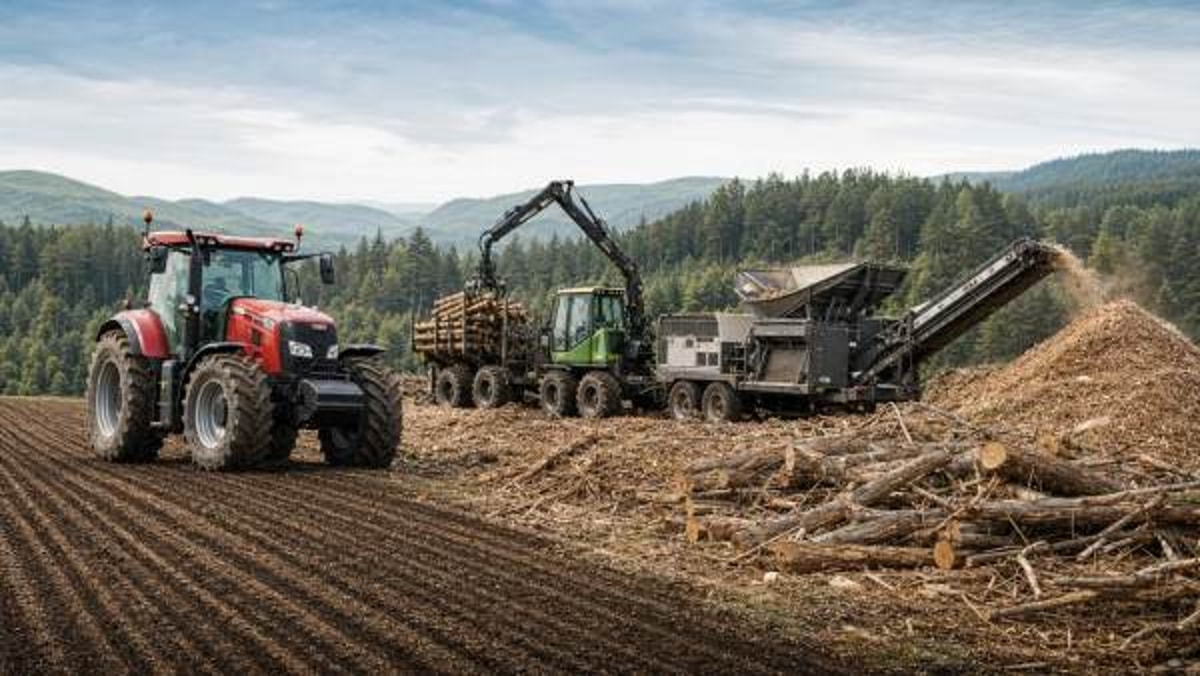
In Agri & Forestry projects, machinery sizing errors rarely stay minor—they trigger delays, inflate fuel and labor costs, and compromise output across the entire operation. For project managers and engineering leads, getting capacity, terrain fit, and processing volume right at the planning stage is essential to keeping timelines, budgets, and performance targets on track.
Why Agri & Forestry machinery sizing becomes a project risk so quickly
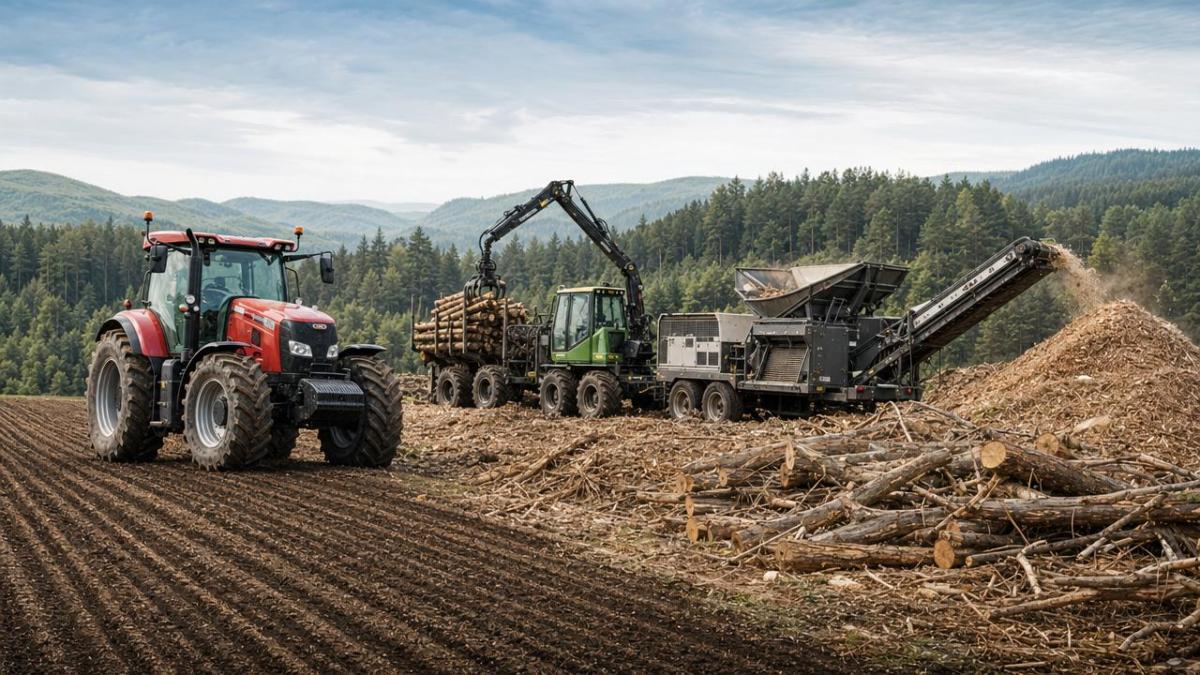
In Agri & Forestry operations, machinery is not an isolated asset purchase. It is a timing tool, a cost center, a logistics node, and often a compliance factor. When a machine is undersized, throughput falls below plan. When it is oversized, transport, fuel burn, soil impact, and idle capital rise. Either mistake creates friction across land preparation, harvesting, hauling, chipping, drying, storage, or downstream processing.
Project managers usually face this problem under pressure: seasonal deadlines are fixed, labor is variable, terrain is inconsistent, and procurement windows are narrow. A tractor, harvester, forwarder, skidder, chipper, sprayer, or dryer may look adequate on paper, but real project conditions expose the mismatch fast. That is why Agri & Forestry machinery sizing should be treated as a project planning discipline, not only an equipment specification exercise.
- Capacity mismatch delays critical path activities such as planting windows, thinning schedules, timber extraction, or post-harvest handling.
- Poor terrain fit causes lower traction, higher slippage, more downtime, and faster wear on tires, tracks, hydraulics, and driveline components.
- Incorrect machine pairing creates bottlenecks between field equipment, transport units, and processing lines.
- Overcapacity ties up budget that may be needed for spare parts, service support, operator training, or temporary backup units.
Where wrong sizing hurts most: field, forest, and processing scenarios
The impact of incorrect sizing varies by application. In broad-acre agriculture, a planter or sprayer with insufficient effective field capacity can miss ideal weather windows. In forestry, a machine that is too heavy for wet ground may damage access routes and reduce extraction efficiency. In primary processing, a chipper or dryer that exceeds upstream feed rate sits idle, while one that falls short creates inventory pileup and downstream delays.
For project leaders overseeing mixed Agri & Forestry assets, the key is to size by system flow rather than by single-machine headline output. A nominally high-capacity unit is not truly productive if loading time, travel distance, moisture variability, or discharge constraints reduce net hourly performance.
The table below helps translate common Agri & Forestry project conditions into typical sizing risks and planning priorities.
Across these scenarios, the recurring lesson is that machinery sizing in Agri & Forestry should be based on real cycle time and process integration. Capacity claims from brochures are useful, but they are not enough for project control.
What project managers should calculate before issuing RFQs
Start with net throughput, not nameplate output
A frequent error in Agri & Forestry procurement is to use manufacturer maximum output as the design basis. Project teams should instead estimate net throughput under expected conditions: turning losses, travel distance, refueling, operator changeover, moisture content, material variability, loading delays, and maintenance stops. Net throughput is what protects the schedule.
Review terrain, infrastructure, and support equipment together
Machine sizing cannot be separated from access roads, bridge limits, headland space, trailer compatibility, loading systems, and fuel logistics. For example, a larger harvester may appear efficient, but if transport units cannot clear grain or biomass fast enough, the gain disappears. Likewise, a heavy forestry machine may need route reinforcement that was never budgeted.
Use a practical pre-RFQ checklist
- Define required daily and weekly output, including peak periods rather than seasonal averages alone.
- Document terrain factors such as slope, soil bearing capacity, stoniness, row spacing, stump density, and moisture conditions.
- Map the full equipment chain: primary machine, support vehicles, loading method, processing interface, and storage or dispatch point.
- Estimate downtime tolerance and identify whether redundancy or rental backup is required during critical windows.
- Check regional service availability, spare parts lead times, and operator skill requirements before final selection.
Agri & Forestry sizing criteria that matter more than brochure horsepower
Horsepower and payload remain important, but they should not dominate the decision. Many project overruns happen because secondary criteria were ignored during selection. In Agri & Forestry work, usable productivity is shaped by interaction between machine power, attachment match, hydraulic performance, traction, ground pressure, and serviceability.
The following parameter guide highlights the decision areas that usually deserve more attention during sizing review.
This framework is especially useful when several suppliers look similar at first glance. It pushes the evaluation toward operational fit instead of headline specifications alone, which is where many Agri & Forestry procurement mistakes begin.
How to compare undersized, right-sized, and oversized machinery
Decision-makers often think the safest option is to buy bigger. In reality, both undersizing and oversizing can reduce project value. Right-sizing means matching machine capability to output target, field conditions, transport support, and budgeted utilization rate. It is a balancing exercise rather than a race to maximum capacity.
For Agri & Forestry projects, the comparison below is a useful way to present trade-offs internally to finance, operations, and procurement teams.
In many reviews, right-sizing also improves total cost of ownership because the machine spends less time waiting, less time overloaded, and more time operating inside its intended performance band.
Procurement guide: questions engineering leads should ask suppliers
A good RFQ for Agri & Forestry machinery does more than request price and delivery. It forces suppliers to respond to the operating context. That is how project teams reduce ambiguity before contract award.
- What throughput assumptions support the quoted machine capacity, and are those assumptions based on dry, wet, flat, sloped, or mixed conditions?
- What support equipment is required to achieve the stated output, including loading units, trailers, fuel supply, and operator count?
- What are the expected service intervals and the likely impact on uptime during planting, harvesting, or extraction peaks?
- Which wear parts drive lifecycle cost, and what are the typical replenishment lead times in the project region?
- Can the supplier provide configuration options for tires, tracks, headers, rotors, knives, screens, pumps, or attachments suited to the stated material and terrain?
These questions improve comparability between offers. They also expose whether a supplier understands the practical realities of Agri & Forestry work or is relying on idealized performance claims.
Compliance, documentation, and project assurance in regulated supply chains
In many primary industry projects, machinery decisions now sit inside a broader governance framework. Environmental permits, operator safety procedures, emissions expectations, fuel handling rules, and traceable procurement practices all influence the final decision. Where Agri & Forestry equipment feeds into regulated biomass, feed, food, or chemical-adjacent processing environments, documentation quality matters almost as much as hardware suitability.
This is where an intelligence-led evaluation approach becomes valuable. AgriChem Chronicle supports technical decision-making by connecting machinery analysis with supply chain transparency, cross-sector market context, and practical compliance awareness. For project managers, that means better visibility into not only what a machine can do, but how it fits procurement scrutiny, operational reporting, and long-term sourcing strategy.
- Check whether operating manuals, maintenance documentation, and safety instructions are complete for the intended jurisdiction and workforce.
- Confirm that supplier statements on emissions, environmental performance, and use limitations are documented and internally reviewable.
- Where machinery supports downstream regulated processes, align equipment data with site validation and audit readiness requirements.
Common mistakes in Agri & Forestry machinery sizing
Using annual averages instead of peak loads
Machines are often purchased against average acreage, annual tonnage, or seasonal yield. But projects fail during peaks. Sizing should reflect the busiest and most weather-sensitive periods, not only annual totals.
Ignoring chain bottlenecks
A larger field machine does not solve a small hauling fleet, limited unloading point, or constrained storage system. Agri & Forestry output is only as strong as the weakest link in the chain.
Equating higher power with better project performance
More power can improve resilience, but only when matched with traction, attachment, operator skill, and support logistics. Otherwise, the project simply carries more capital cost and more complexity.
FAQ for project managers evaluating Agri & Forestry equipment
How do I know whether a machine is undersized for the project?
Start by comparing required net daily output with realistic operating hours and expected cycle losses. If the machine must run near maximum load continuously just to meet baseline schedule, it is probably undersized. Repeated reliance on overtime, backup hires, or deferred maintenance is another warning sign.
Which Agri & Forestry projects are most sensitive to sizing errors?
Projects with short weather windows, difficult access, high moisture variability, or linked processing stages are especially sensitive. Examples include planting campaigns, timber extraction in wet seasons, biomass supply chains, and post-harvest systems where intake surges must be managed without quality loss.
Should we buy for current demand or future expansion?
Only buy beyond current need if growth is credible, support systems can absorb the extra capacity, and utilization will remain reasonable. Otherwise, modular scaling, attachment upgrades, or staged procurement often protect cash flow better than immediate oversizing.
What documents should I request before final supplier approval?
Request technical specifications tied to operating assumptions, maintenance schedules, wear part lists, transport dimensions, recommended site conditions, and available configuration options. For more regulated projects, also request environmental and safety documentation relevant to your jurisdiction and operating method.
Why choose us for Agri & Forestry project intelligence and next-step evaluation
AgriChem Chronicle is built for decision-makers who cannot afford vague equipment advice. Our editorial strength sits at the intersection of agricultural machinery, forestry operations, primary processing, and regulated industrial supply chains. That cross-disciplinary perspective helps project managers test machinery sizing against real output needs, procurement risk, documentation requirements, and downstream operational fit.
If you are reviewing an Agri & Forestry project, you can engage with ACC for practical guidance on parameter confirmation, machinery selection logic, supplier comparison structure, delivery timeline questions, configuration trade-offs, and compliance-sensitive documentation checkpoints. This is especially useful when your team must align engineering, procurement, operations, and finance before issuing or awarding an RFQ.
Contact us when you need a clearer basis for capacity validation, terrain-fit assessment, processing line matching, cost-risk comparison, supplier due diligence framing, or a more defensible shortlist for internal approval. In complex Agri & Forestry projects, the right decision is rarely the biggest machine—it is the machine that keeps the whole system moving.
Related Intelligence
- Heavy Agri Machinery2026 Foshan Tanzhou Auto Expo: Smart Driving & Green Manufacturing Focus2026 Foshan Tanzhou Auto Expo highlights smart driving & green manufacturing—featuring electric agri-vehicles, steer-by-wire, and low-carbon coating tech. Discover next-gen solutions for OEMs and Tier 1 suppliers.
- Heavy Agri MachineryAgri and Forestry machinery manufacturers with realistic lead timesAgri & Forestry machinery manufacturers with realistic lead times help buyers reduce delays, verify capacity, and improve sourcing confidence. Learn how to choose reliable suppliers.
- Heavy Agri MachineryWhich Agri and Forestry machinery specifications get overlookedAgri & Forestry machinery specifications often hide the biggest risks. Discover the overlooked specs that impact uptime, safety, compliance, and long-term operating cost.
The Morning Broadsheet
Daily chemical briefings, market shifts, and peer-reviewed summaries delivered to your terminal.
