

The Authority in Global Agricultural Chemistry & Bio-Resources
Agri & Forestry Machinery Specifications That Matter Most
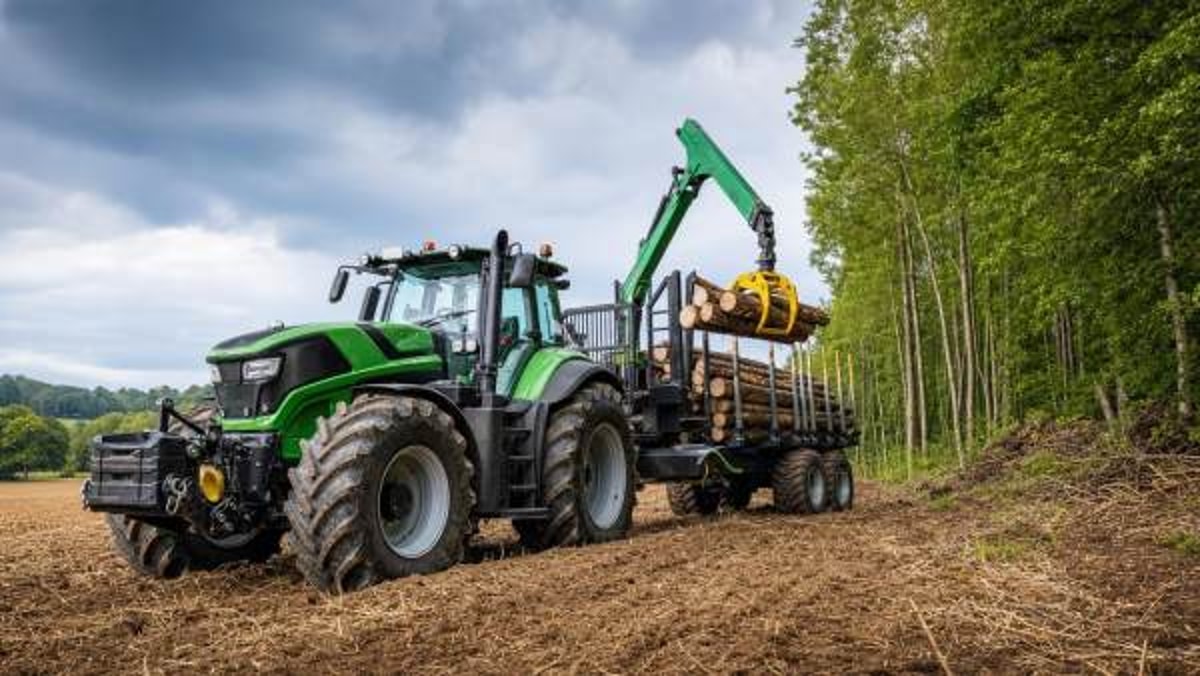
For technical evaluators, understanding which Agri & Forestry machinery specifications truly affect uptime, compliance, fuel efficiency, and long-term operating cost is essential. This article highlights the Agri & Forestry machinery specifications that matter most, helping procurement and engineering teams compare equipment with greater accuracy, reduce performance risk, and make data-driven decisions in increasingly demanding agricultural and forestry operations.
Why do Agri & Forestry machinery specifications matter more than brochure claims?
Technical evaluators are rarely misled by headline horsepower alone, yet many procurement discussions still start with oversized performance claims instead of verified operating data. In practice, Agri & Forestry machinery specifications determine whether a tractor, harvester, forwarder, sprayer, mulcher, chipper, or loader will maintain output under real field pressure. A machine may look competitive on paper, but if cooling capacity, hydraulic flow, axle load rating, PTO performance, emissions certification, or service interval data are weak, uptime suffers quickly.
The most useful specifications are those that connect directly to measurable outcomes: work rate per hour, liters of fuel consumed per hectare, downtime frequency, part wear cycle, and operator safety in varying terrain. For forestry equipment, slope tolerance, frame strength, guarding, and traction system design can be as important as engine output. For agricultural equipment, precision control compatibility, implement matching, compaction risk, and maintenance accessibility often decide total value more than purchase price.
This is why serious evaluation goes beyond marketing vocabulary such as “high efficiency” or “heavy duty.” Technical teams need testable Agri & Forestry machinery specifications supported by standards, load curves, operational envelopes, and documented warranty conditions. When these details are present, comparison becomes objective rather than impression-based.
Which Agri & Forestry machinery specifications should be checked first during technical evaluation?
A practical first review should focus on the specifications most likely to influence machine suitability in the target operating environment. Rather than checking every line equally, evaluators should rank specifications by risk impact. The following categories usually deserve early review:
- Engine performance: rated power, torque curve, torque rise, fuel consumption under load, and compliance with local emissions rules.
- Hydraulic system: flow rate, pressure, number of remote valves, load-sensing capability, and hydraulic oil cooling performance.
- Transmission and traction: gear ranges, CVT or powershift behavior, creep speed capability, differential lock, ground pressure, tire or track options, and traction in wet or sloped conditions.
- Structural and load data: operating weight, front and rear axle limits, lift capacity, drawbar rating, frame design, and rollover protection.
- Attachment compatibility: PTO speed, hitch category, coupler standard, implement control interfaces, ISOBUS compatibility, and electrical outputs.
- Serviceability: filter access, diagnostic system, lubrication intervals, part commonality, and expected maintenance hours.
These Agri & Forestry machinery specifications form the initial screening layer because they reveal whether the machine can physically, mechanically, and digitally integrate into the intended operation. A machine that passes this first filter is worth deeper lifecycle analysis. One that fails here usually creates hidden retrofit, training, and spare-parts costs later.
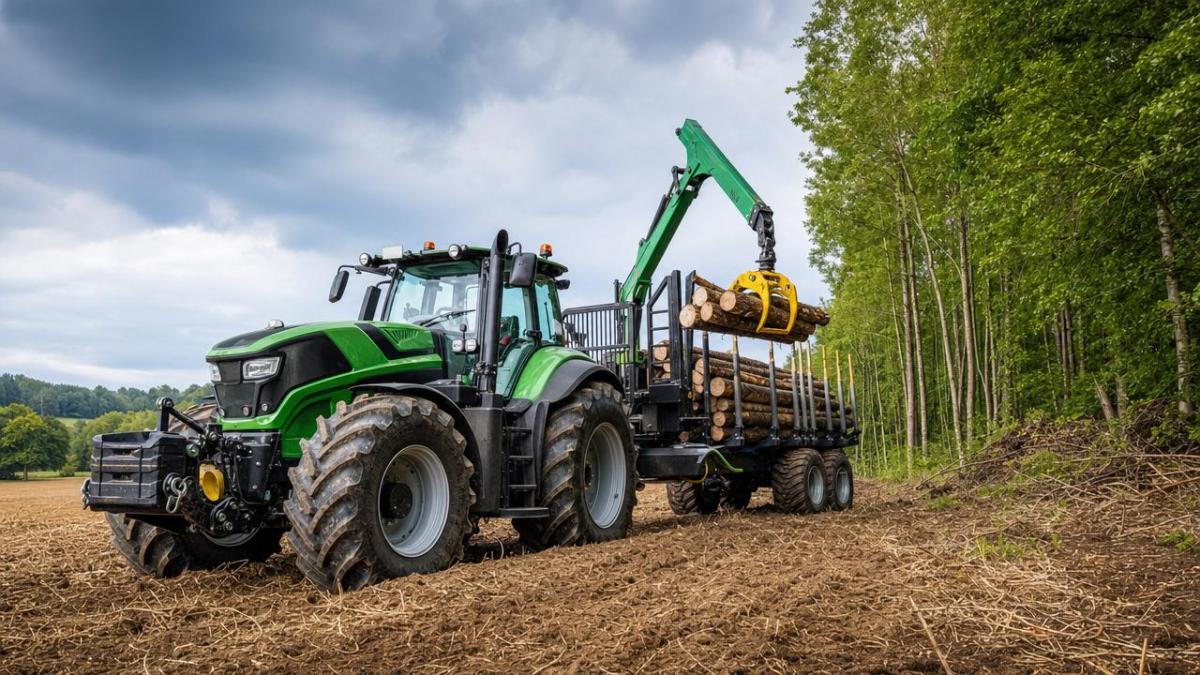
How should technical evaluators compare engine, hydraulic, and transmission specifications without oversimplifying?
This is where many comparisons become misleading. A higher engine power rating does not automatically mean higher usable output. Evaluators should ask at what RPM the rated power is achieved, how much torque is available in the working band, and how the engine performs during transient loading. In tillage, chipping, logging extraction, and heavy spraying, stable torque under varying resistance can matter more than peak horsepower.
Hydraulic specifications also need context. A machine may advertise high flow, but if pressure stability drops with simultaneous functions, actual implement performance may lag. For example, a forestry crane or agricultural loader often needs combined lift, swing, and extension movements. In those cases, load-sensing hydraulics, pump response time, and thermal control can be more important than a single maximum flow number.
Transmission data should be interpreted through the job profile. In row-crop operations, smooth speed matching and fuel-efficient field transport may be key. In forestry extraction, low-speed tractive effort, hill control, and robustness under repeated shock loads are often decisive. Technical evaluators should therefore compare transmission type, ratio spread, shuttle response, braking behavior, and traction management systems as a package rather than as isolated specifications.
The best approach is to align each machine’s Agri & Forestry machinery specifications with a documented duty cycle: load level, terrain type, expected attachment, average workday length, climate, and operator skill range. This prevents overbuying features that add cost without improving productivity and avoids under-specifying equipment that will fail under peak demand.
What role do compliance, safety, and environmental specifications play in equipment selection?
For technical evaluators, compliance specifications are not administrative footnotes. They directly affect deployment legality, insurance acceptance, resale value, and operating continuity. Emissions stage certification, noise output, braking standards, lighting systems, guarding, ROPS/FOPS certification, and operator exposure controls all deserve formal review. In some markets, failure to match current environmental requirements can delay registration or limit where machinery may operate.
Safety specifications are especially critical in forestry, where rollover risk, falling object exposure, and difficult ground conditions are common. Evaluators should verify cabin protection ratings, emergency egress design, visibility, camera systems, fire suppression options, and guarding around moving components. In agriculture, chemical handling equipment such as sprayers may require special attention to tank materials, nozzle control systems, drift mitigation features, and operator isolation.
Environmental specifications increasingly influence procurement decisions as well. Fuel burn per operating hour, DEF or AdBlue consumption, hydraulic oil leakage controls, soil compaction footprint, and low-drift application technology all affect sustainability metrics and compliance reporting. For organizations supplying regulated food, biomass, or industrial raw material chains, these Agri & Forestry machinery specifications can support broader ESG and audit requirements.
Which hidden specifications have the biggest impact on uptime and total cost of ownership?
Some of the most valuable Agri & Forestry machinery specifications are buried deep in technical sheets or service manuals rather than highlighted in sales material. These include cooling system reserve capacity, filtration efficiency, harness sealing, bearing protection, hose routing, and expected life of wear components under abrasive conditions. For mulchers, harvesters, and chippers, rotor balance, knife material, and access time for wear-part replacement can heavily influence operating cost.
Service interval structure is another major factor. Two machines with similar output may differ sharply in maintenance hours per 500 operating hours. If one requires frequent fluid changes, difficult-access filters, proprietary diagnostic tools, or long lead-time consumables, the lower purchase price may disappear quickly. Technical evaluators should request planned maintenance schedules, standard service kit lists, and typical spare-part consumption for normal and severe-duty use.
Digital support specifications are also becoming decisive. Remote diagnostics, telematics reliability, software update policy, error code transparency, and cybersecurity compatibility influence response time when failures occur. In modern fleets, uptime depends not only on mechanical durability but also on whether service teams can detect faults early and intervene before failure escalates.
What common mistakes do buyers make when reviewing Agri & Forestry machinery specifications?
One common mistake is evaluating machines by isolated headline numbers. A buyer may choose the highest horsepower unit while ignoring ballast requirement, turning radius, hydraulic matching, or implement compatibility. Another mistake is failing to distinguish between standard configuration and optional specification. Many performance claims rely on upgraded packages that are not included in the base quotation.
A third mistake is comparing specifications generated under different test conditions. Fuel consumption, lift capacity, and productivity rates should be validated against consistent methods. Without standardized test context, side-by-side comparison becomes unreliable. Evaluators should ask whether the data come from laboratory tests, field demonstrations, customer averages, or manufacturer calculations.
Another frequent issue is underestimating local support realities. Even well-designed machinery can become a high-risk asset if regional parts coverage, technician availability, and warranty responsiveness are weak. Technical evaluation should therefore treat support infrastructure as part of the effective specification package. A machine’s value is not just what it can do when new, but how reliably it can be kept working during peak season.
Is there a simple comparison framework for high-value specification review?
Yes. A structured screening table helps technical evaluators prioritize what matters before conducting demonstrations or requesting commercial revisions. The table below summarizes a practical FAQ-style comparison lens for Agri & Forestry machinery specifications.
Before purchase or pilot deployment, what should technical teams confirm first?
Before advancing to final supplier selection, technical teams should validate five points. First, confirm that the quoted machine configuration exactly matches the reviewed Agri & Forestry machinery specifications, including optional hydraulics, tire or track setup, guarding packages, and software licenses. Second, request operating data from conditions similar to your own terrain, crop profile, timber density, haul distance, or working season. Third, verify parts availability, field-service coverage, and escalation procedures during peak operating windows.
Fourth, assess integration requirements. This includes telematics platforms, precision agriculture systems, fleet management tools, and attachment control protocols. Fifth, document acceptance criteria before the machine arrives: fuel-use thresholds, output targets, fault response time, and required training support. These steps turn specification review into a practical implementation plan rather than a paper exercise.
If you need to confirm a specific solution, parameter set, evaluation direction, lead time, budget range, or cooperation model, the best first questions are straightforward: Which operating conditions define the workload? Which Agri & Forestry machinery specifications are mandatory versus preferred? What compliance rules apply in the destination market? What maintenance resources exist locally? And what proof of performance can the supplier provide under comparable field conditions? Clear answers to those questions usually separate technically suitable equipment from merely attractive quotations.
Related Intelligence
- Heavy Agri Machinery2026 China Bike Show Adds Smart Agri-Two-Wheelers ZoneSmart Agri-Two-Wheelers take center stage at the 2026 China Bike Show — discover new export opportunities, EN15194-compliant e-sprayers & transport bikes.
- Heavy Agri Machinery2026 Foshan Tanzhou Auto Show Hosts Smart Farm Machinery Export ForumSmart farm machinery exporters: Join the 2026 Foshan Tanzhou Auto Show’s Export Forum for ASEAN & Latin America market access, compliance insights, and matchmaking.
- Heavy Agri MachineryHow to Vet Agri & Forestry Machinery ManufacturersAgri & Forestry machinery manufacturers should be vetted for quality, compliance, parts support, and channel fit. Discover a practical guide to choose reliable partners with confidence.
The Morning Broadsheet
Daily chemical briefings, market shifts, and peer-reviewed summaries delivered to your terminal.
