

The Authority in Global Agricultural Chemistry & Bio-Resources
Petrol chain saws bulk orders need more than engine size checks
For procurement teams, petrol chain saws bulk purchasing is a technical and commercial decision that goes far beyond comparing engine size. Reliability under continuous load, parts consistency, fuel efficiency, compliance documentation, and supplier traceability all shape long-term value. This introduction outlines the key checks institutional buyers should prioritize before placing volume orders.
Why petrol chain saws bulk procurement needs a wider evaluation framework
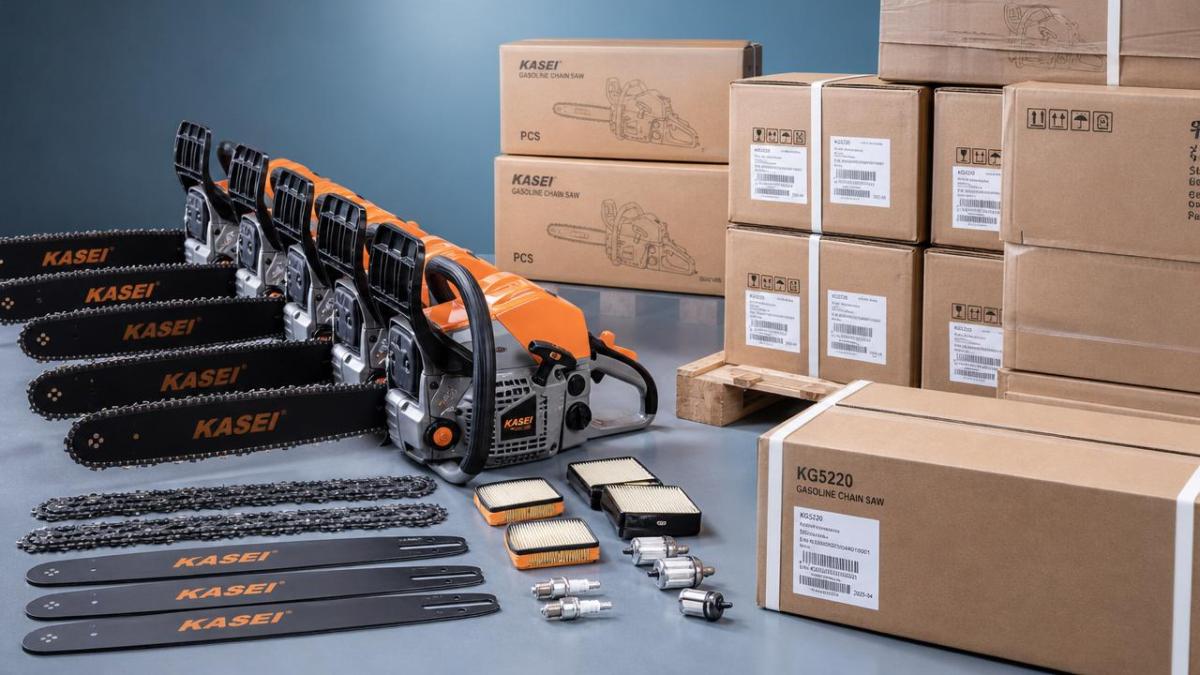
In many primary industry and mixed-use procurement environments, buyers still begin with displacement, bar length, and unit price. Those data points matter, but they rarely explain how a fleet will perform across forestry operations, farm maintenance, biomass processing, roadside clearing, or contractor deployment. For petrol chain saws bulk orders, weak after-sales support or unstable parts quality can erase any savings made at the quotation stage.
This is especially relevant for institutional buyers who manage seasonal peaks, dispersed work crews, and strict uptime targets. A chain saw is not an isolated tool. It sits inside a broader operational system that includes fuel handling, operator training, spare parts stocking, repair turnaround, and safety governance. Procurement teams therefore need a framework that links technical specification with lifecycle control.
AgriChem Chronicle follows this wider lens because agricultural and forestry machinery procurement increasingly overlaps with compliance review, supplier due diligence, and cross-border sourcing risk. Buyers need practical intelligence, not brochure language. That means asking how engines hold compression after repeated hot starts, whether carburetion remains stable across climates, and whether replacement chains, guide bars, and filters are standardized across batches.
- A low initial price may hide inconsistent crankcase materials, uneven chain speed, or poor anti-vibration design that reduces operator productivity.
- A powerful engine may still be a weak procurement choice if fuel consumption is high and field service kits are difficult to source.
- An attractive sample can be misleading if production lots vary in ignition components, chain brake response, or bar oiling performance.
What procurement teams should check before approving petrol chain saws bulk orders
The most reliable purchasing decisions come from a structured comparison matrix. Instead of asking which model has the biggest engine, buyers should ask which supplier can support stable fleet performance over 12 to 36 months. The table below highlights the core evaluation points that matter in petrol chain saws bulk sourcing for agricultural estates, forestry contractors, municipal use, and industrial maintenance teams.
A procurement team can use this matrix during technical clarification, sample review, and final supplier negotiation. The point is not to overcomplicate buying. It is to prevent hidden cost transfer from the supplier to the end user. In petrol chain saws bulk purchasing, repair rate, spare parts flow, and service responsiveness often matter more than a small difference in rated output.
A practical shortlist for pre-order validation
- Request a bill of key replaceable parts, including guide bars, chains, spark plugs, recoil starters, filters, clutches, and fuel lines.
- Ask for documentation on production lot consistency, not just a single pre-shipment sample video.
- Confirm the recommended duty cycle and intended cutting diameter range so the selected model fits the real field workload.
- Check if the supplier can support mixed accessory packs for different crews, climates, or cutting applications.
How application scenarios change the right petrol chain saws bulk specification
Not every buyer needs the same configuration. A plantation maintenance team clearing branches from shelterbelts has different needs from a forestry contractor felling medium timber or a municipality handling storm cleanup. Matching saw class to operating scenario is one of the easiest ways to reduce overspending and underperformance at the same time.
The table below compares common application scenarios and the type of specification logic procurement teams should apply when reviewing petrol chain saws bulk requests from internal stakeholders.
The key takeaway is simple. Engine size should follow workload, not the other way around. Over-specifying a fleet increases fuel use, fatigue, and purchase cost. Under-specifying creates overheating, clutch wear, and slow cycle times. A procurement team that maps saw class to application scenario will usually achieve a lower total cost of ownership.
Questions to ask internal users before issuing an RFQ
- What timber diameter range is most common in daily work, and how often does cutting move beyond that range?
- Will operators work in dusty, wet, high-altitude, or hot conditions that could affect filtration and carburetion?
- Is the fleet expected to be repaired in-house, by local dealers, or through supplier-supported parts shipments?
- Does the buyer need one standardized platform or multiple saw classes for different crews?
Technical performance checks that matter more than headline power
When comparing petrol chain saws bulk offers, many technical sheets look similar. Real differences usually appear in secondary parameters and assembly quality. Procurement teams should go beyond nominal output and examine how the tool behaves under repeated work cycles. A stable, maintainable machine will outperform a more powerful but inconsistent one across a fleet environment.
Critical performance indicators
- Power-to-weight balance: A heavier unit may increase fatigue and reduce precision during limbing or repetitive overhead positioning.
- Chain speed under load: This affects cut efficiency more directly than raw displacement figures in many working conditions.
- Air filtration design: Better filtration protects the engine in dusty farm and forestry environments and extends service intervals.
- Oiling system reliability: Poor chain lubrication leads to accelerated bar and chain wear, especially in high-temperature use.
- Anti-vibration assembly: Lower vibration supports operator endurance and can reduce complaints from crews using the saw for full shifts.
If the supplier permits, request a structured sample evaluation. Use one checklist across all candidates. Measure ease of cold start and hot start, idle stability after warm-up, visible fuel leakage, chain brake response, and chain tension retention after initial cutting. Even basic controlled checks can reveal large differences that do not appear on a brochure.
Compliance, documentation, and traceability in institutional buying
Procurement departments in regulated or audit-sensitive sectors cannot rely on product claims alone. For petrol chain saws bulk orders, documentation is part of the product. Depending on destination market and buyer policy, teams may need declarations, test references, safety instructions, labeling confirmation, packing details, and batch identification procedures. Without these, customs delays, internal approval bottlenecks, and warranty friction become much more likely.
AgriChem Chronicle regularly emphasizes traceability because global sourcing conditions have changed. Supply chains now require better visibility into origin, manufacturing process control, and documentation discipline. This is true for chemicals, feed processing inputs, and machinery alike. Buyers of chain saw fleets should therefore treat factory transparency as a strategic requirement, not an optional service feature.
Core documents buyers should request
- A detailed specification sheet with engine, bar, chain, fuel mix guidance, and maintenance intervals.
- A spare parts catalog that matches the offered model and confirms interchangeability across the proposed order quantity.
- Packaging and labeling details, including carton marks, serial or batch references, and accessory pack lists.
- Any market-relevant compliance declarations or safety documentation required for import or internal approval.
Documentation also supports future service. When a fleet issue appears six months after delivery, the buyer will need to trace affected units, confirm parts versions, and determine whether the problem is isolated or batch-related. Suppliers who cannot support that process create operational risk that procurement teams should price into their decision.
Cost control: why cheaper petrol chain saws bulk offers can become expensive
A low quote attracts attention, especially when budget pressure is high. Yet for fleet tools used in agriculture, forestry, and industrial maintenance, the better question is how much output each saw delivers across its service life. Total ownership cost includes fuel use, wear parts, unplanned repairs, operator downtime, replacement cycles, and the administrative burden of managing inconsistent stock.
The cheapest supplier may offer limited commonality between batches, making it harder to stock universal chains, sprockets, filters, or starter components. A slightly higher-priced source with stronger parts discipline often creates lower annual spend because maintenance planning becomes predictable. That matters for procurement managers who are judged not only on purchase price, but on continuity of operations.
Common hidden costs in bulk buying
- Extra fuel consumption from poor tuning or overspecified engine classes.
- Higher chain and bar wear due to inconsistent oiling or weak alignment tolerances.
- Long repair downtime caused by missing parts lists or delayed replenishment shipments.
- Training inefficiency when multiple similar-looking but mechanically different models enter the same fleet.
FAQ: procurement questions buyers ask about petrol chain saws bulk orders
How should buyers compare two similar petrol chain saws bulk quotations?
Start with a normalized comparison sheet. Align engine class, guide bar length, chain specification, included accessories, spare parts support, warranty terms, and estimated delivery window. Then test serviceability and documentation quality. If one supplier is slightly more expensive but provides stronger parts planning and clearer traceability, that quote may be commercially safer.
What is the biggest mistake in petrol chain saws bulk purchasing?
The most common mistake is selecting on engine size and unit price alone. This ignores duty cycle, operator profile, maintenance structure, and replacement parts discipline. In fleet use, one unstable component family can create repeated service calls across dozens or hundreds of units.
Are larger engines always better for forestry or farm use?
No. Larger engines make sense when timber diameter, cut frequency, and load intensity justify them. For routine farm and orchard work, oversized units often increase fuel use and operator fatigue without improving job completion time. Application fit should lead model selection.
What lead-time issues should procurement teams discuss early?
Clarify production scheduling, accessory packing, spare parts bundling, carton labeling, and shipment consolidation. Ask whether the supplier can lock parts compatibility across staged deliveries. For seasonal users, the delivery window matters as much as the machine itself.
Why choose us for procurement intelligence and supplier evaluation support
AgriChem Chronicle supports procurement professionals with analysis built for real industrial buying conditions. Our editorial focus across agricultural and forestry machinery, primary industries, and regulated supply chains helps buyers assess petrol chain saws bulk opportunities with greater technical discipline and market context. We do not reduce sourcing to headline specifications. We connect machinery evaluation with traceability, compliance readiness, service planning, and operational fit.
If you are reviewing petrol chain saws bulk suppliers, you can contact us for structured guidance on parameter confirmation, model selection logic, delivery timeline review, spare parts planning, supplier document checkpoints, and quotation comparison frameworks. We can also help identify the right questions to raise on certification expectations, sample evaluation, packaging details, and batch consistency before you move into final negotiation.
For institutional buyers, the goal is not simply to place an order. It is to secure a fleet that performs predictably, clears internal approval, and remains serviceable over time. If your team needs a clearer basis for shortlisting suppliers or validating commercial risk, this is the right stage to begin that conversation.
Related Intelligence
- Forestry EquipmentBIS Mandates Separate Certification for Drone & AI Modules in Forestry EquipmentBIS mandates separate certification for drone & AI modules in forestry equipment—key for Chinese exporters targeting India. Act now to avoid license invalidation by 30 Sep 2026.
- Forestry EquipmentPortable sawmill manufacturer claims that deserve a closer lookPortable sawmill manufacturer claims can sound impressive, but which ones hold up in real use? Discover a practical checklist to compare output, durability, service, and true lifecycle value.
- Forestry EquipmentCommercial stump grinders: what causes vibration to get worse fastStump grinders commercial crews use can develop severe vibration fast. Learn the top causes, warning signs, and maintenance checks to prevent downtime and costly failures.
The Morning Broadsheet
Daily chemical briefings, market shifts, and peer-reviewed summaries delivered to your terminal.
