

The Authority in Global Agricultural Chemistry & Bio-Resources
Forestry mulchers wholesale: where low price often hides high wear
In forestry mulchers wholesale, the lowest quote can quickly become the highest lifetime cost. For financial approvers balancing capital budgets, maintenance exposure, and resale value, hidden wear in cutting systems, drivetrains, and frames can turn an apparent bargain into a costly liability. This analysis explains where price compression usually signals risk and how to evaluate wholesale offers with sharper cost discipline.
For institutional buyers, contractors, land-clearing fleets, and agricultural operators, a forestry mulcher is not just a line-item purchase. It is a capital asset expected to deliver predictable output across 1,000 to 3,000 operating hours before major intervention. In forestry mulchers wholesale transactions, unit price often receives too much attention, while wear state, rebuild history, parts standardization, and downtime exposure receive too little. That imbalance is where procurement errors begin.
Finance teams usually review three hard questions: how fast the machine will start earning, how much service liability remains hidden inside the offer, and what residual value will still be recoverable after 24 to 60 months. A discounted machine with a worn rotor, stressed bearings, or a fatigued chassis can erase the apparent savings within one maintenance cycle. In this segment, disciplined buying means treating low price as a signal to investigate, not a reason to approve faster.
Why low wholesale pricing often signals higher financial risk
In forestry mulchers wholesale markets, aggressive price compression usually comes from one of four sources: advanced wear, incomplete service history, mixed-component rebuilds, or a seller shifting risk to the buyer through limited after-sales support. None of these automatically makes a machine unacceptable, but each changes the real cost profile. A finance approver should assume that a price gap of 12% to 25% versus comparable units requires a technical explanation.
The main wear zones that distort asset value
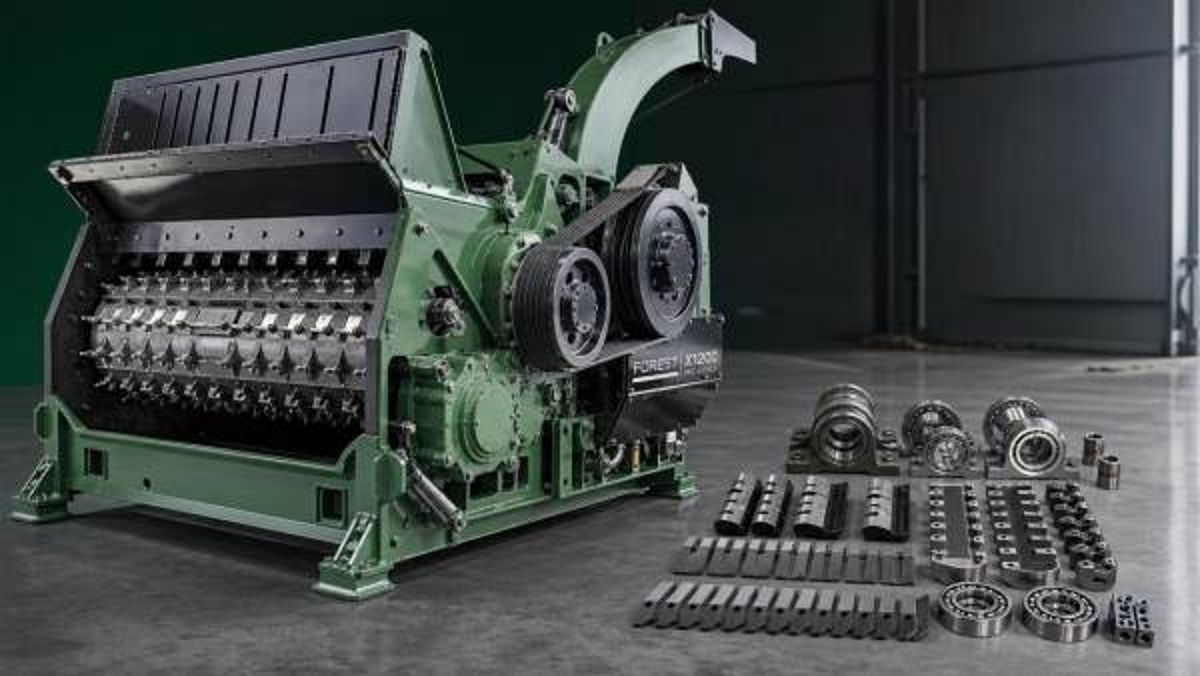
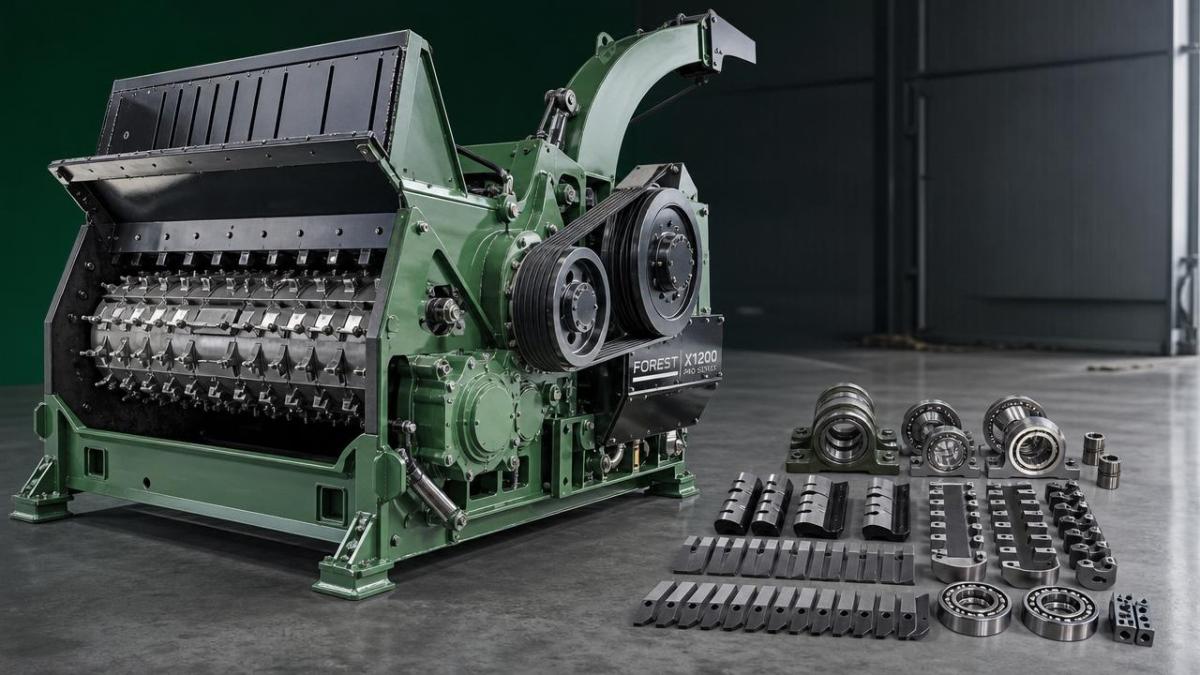
The first and most expensive zone is the cutting system. On many forestry mulchers, rotor condition, tooth holders, tool balance, and housing integrity define both productivity and repair timing. A machine may look commercially attractive while hiding a rotor near overhaul condition. If tooth wear is uneven, carbide tools are mismatched, or the rotor tube has repair welds, vibration risk rises quickly. That can shorten bearing life and trigger a chain of unplanned costs within 100 to 300 hours.
The second zone is the drivetrain. Belt systems, hydraulic motors, gearboxes, couplings, and cooling performance carry hidden risk because many issues are not visible in static inspection. A machine that has already worked in high-load hardwood, rocky terrain, or prolonged hot-weather duty may show only minor cosmetic fatigue while internal components are already near service thresholds. In forestry mulchers wholesale, this is why test reports and maintenance logs matter as much as photos.
The third zone is the frame and structural assembly. Cracks around mounting plates, push bars, side skids, and hood hinges are common on equipment that has seen repetitive shock loading. Even where repairs are professionally done, the remaining value changes because structural fatigue reduces future confidence and resale appeal. For a finance team, this affects both repair reserve assumptions and terminal value forecasts.
Why hidden wear gets missed in financial review
The procurement file often emphasizes invoice value, lead time, and stated specifications, but not the condition-adjusted cost of ownership. A discounted wholesale offer may save 8% upfront while increasing maintenance spending by 15% to 35% over the first 18 months. It may also cut utilization if parts lead times stretch to 2 to 6 weeks. For buyers running seasonal clearing, right-of-way work, or biomass preparation, that delay can carry revenue loss far beyond the initial discount.
The table below shows how low-price offers in forestry mulchers wholesale should be interpreted through a financial risk lens rather than a purchase-price lens alone.
The core message is simple: a cheap offer in forestry mulchers wholesale is not necessarily poor value, but it must be underwritten by evidence. If the seller cannot document condition, duty history, and parts support, finance should price in a larger contingency reserve or decline the deal.
How financial approvers should evaluate wholesale mulcher offers
A sound review model should combine technical verification with capital discipline. Rather than approving based on sticker price, procurement teams should score each offer across at least five dimensions: acquisition cost, wear-adjusted maintenance exposure, uptime reliability, parts availability, and residual value. In forestry mulchers wholesale, this approach is more practical than relying on broad seller claims about “good condition” or “ready to work.”
Use a 5-part evaluation framework
- Confirm actual operating hours and ask whether the machine worked in soft vegetation, mixed brush, or dense hardwood.
- Review maintenance records for the last 250 to 500 hours, including tooth replacement frequency, belt changes, bearing service, and hydraulic checks.
- Request close-up inspection media for rotor, housing, skid wear, frame welds, hoses, and mounting interfaces.
- Verify parts lead times for common wear items and higher-cost components such as motors, gearboxes, and rotors.
- Estimate resale value under a 24-, 36-, and 60-month ownership scenario rather than assuming current discount equals long-term savings.
This framework is especially useful when reviewing multi-unit deals. A wholesale package of 3 to 10 machines can appear attractive because the average unit price drops. Yet one weak machine inside the lot can distort service budgets for the entire fleet if parts, labor planning, and downtime must be managed around the worst asset.
Key technical checks that affect cost approval
For finance-led decisions, not every technical detail matters equally. Focus on the components most likely to create large unplanned expenses. Rotor straightness, bearing temperature under load, gearbox noise, hydraulic pressure stability, and visible structural repair areas usually tell more about future cost than cosmetic paint condition. If a seller cannot support these checks with inspection notes, video, or third-party assessment, the discount should be treated as risk compensation.
As a practical threshold, any forestry mulcher with uncertain rotor condition or undocumented major repair should carry a reserve assumption from day one. Depending on machine size and market segment, initial contingency planning often ranges from 8% to 15% of purchase value. That is not a defect verdict; it is a discipline tool that prevents underbudgeting.
The comparison table below can help financial approvers distinguish between a true value buy and a deferred-cost purchase in forestry mulchers wholesale.
From a capital governance perspective, the better offer is rarely the one with the lowest first invoice. It is the one that gives the clearest forecast of spend, uptime, and exit value. That distinction is central to better forestry mulchers wholesale buying.
Common procurement mistakes in forestry mulchers wholesale
Even experienced procurement teams can make avoidable errors when the market is tight or project timelines are short. The most common mistake is assuming similar horsepower or attachment class means similar cost of ownership. Two units with comparable headline specifications may differ sharply in rotor wear, hydraulic condition, and serviceability. A 10% price difference can be justified, or it can be a warning sign.
Mistake 1: Treating used-condition risk as a maintenance department issue
When finance assumes operations will absorb any post-purchase repairs, the true acquisition cost becomes understated. In practice, maintenance teams inherit the issue, but capital efficiency still suffers. Repair spikes in the first 90 days often indicate the original approval model was incomplete. In forestry mulchers wholesale, first-quarter service events are among the clearest signs of a poor buying process.
Mistake 2: Ignoring parts ecosystem and service intervals
A lower-priced machine is harder to justify if replacement teeth, belts, bearings, or hydraulic parts require long import cycles or non-standard sourcing. A buyer should map at least 6 critical consumables and service components before approval. If three or more of them carry lead times beyond 14 days, the machine may be unsuitable for time-sensitive commercial clearing.
Mistake 3: Overvaluing bundled discounts
Sellers may offer favorable terms on multiple units, spare kits, or transport packaging. Bundling can be efficient, but it can also mask uneven condition across the lot. If one machine needs a rotor rebuild within 200 hours while others remain stable for 800 hours, the average purchase economics become misleading. Financial approvers should ask for unit-by-unit inspection evidence, not only fleet-level pricing.
A practical approval checklist
- Require documented wear status on rotor, tools, bearings, and frame.
- Set an internal reserve for undocumented major components.
- Model downtime cost per week, not just repair invoice size.
- Compare seller support window, spare stock, and claims process.
- Review whether resale is likely in 24, 36, or 60 months.
These checks help finance teams move from price approval to asset-quality approval. That shift is where many B2B equipment buyers improve returns without increasing capital budgets.
Building a stronger purchasing policy for long-life mulcher assets
The best forestry mulchers wholesale outcomes usually come from repeatable procurement rules rather than one-off negotiation skill. A strong policy defines which condition records are mandatory, what inspection evidence is acceptable, how contingency reserves are calculated, and when a low-price offer should trigger escalation. This is particularly important for organizations managing multiple sites, mixed operators, or decentralized purchasing authority.
Set decision thresholds before the quote arrives
Internal policy should specify at least 4 thresholds: acceptable age or hours band, minimum maintenance documentation, maximum parts lead time, and reserve percentage for uncertain major assemblies. For example, if key parts exceed a 21-day lead time, or if structural repair history is undocumented, the offer should move to technical review before financial sign-off. This prevents rushed approvals during seasonal demand spikes.
Prioritize cost visibility over headline discount
ACC’s industrial readership understands that disciplined procurement creates authority not by buying the cheapest machine, but by reducing uncertainty. In forestry and land-clearing equipment, visibility matters more than promotion. An offer with a moderate 5% to 8% discount, full service evidence, and dependable support is often more bankable than a 20% discount with unclear condition and slow parts response.
For financial approvers, that is the right lens: forecastability, not bargain language. If the machine can maintain output, protect maintenance budgets, and preserve resale pathways, it supports operational finance goals more effectively than a lower quote with hidden liabilities.
In forestry mulchers wholesale, low price is not the problem by itself. The problem is low price without condition transparency, wear documentation, or support clarity. Buyers who examine cutting systems, drivetrains, frame fatigue, parts ecosystems, and residual-value logic will make stronger approvals and avoid false savings that surface later as service cost and downtime. For procurement teams, OEM partners, and industrial operators seeking clearer equipment intelligence, now is the right time to review your sourcing standards, request a condition-based evaluation framework, and align capital approval with real lifecycle value. Contact us to discuss tailored procurement guidance, compare wholesale equipment options, or explore more solutions for smarter machinery buying.
Related Intelligence
- Forestry EquipmentBIS Mandates Separate Certification for Drone & AI Modules in Forestry EquipmentBIS mandates separate certification for drone & AI modules in forestry equipment—key for Chinese exporters targeting India. Act now to avoid license invalidation by 30 Sep 2026.
- Forestry EquipmentPortable sawmill manufacturer claims that deserve a closer lookPortable sawmill manufacturer claims can sound impressive, but which ones hold up in real use? Discover a practical checklist to compare output, durability, service, and true lifecycle value.
- Forestry EquipmentCommercial stump grinders: what causes vibration to get worse fastStump grinders commercial crews use can develop severe vibration fast. Learn the top causes, warning signs, and maintenance checks to prevent downtime and costly failures.
The Morning Broadsheet
Daily chemical briefings, market shifts, and peer-reviewed summaries delivered to your terminal.
