
Custom synthesis batches vary in particle morphology after jet milling — and it’s not just airflow
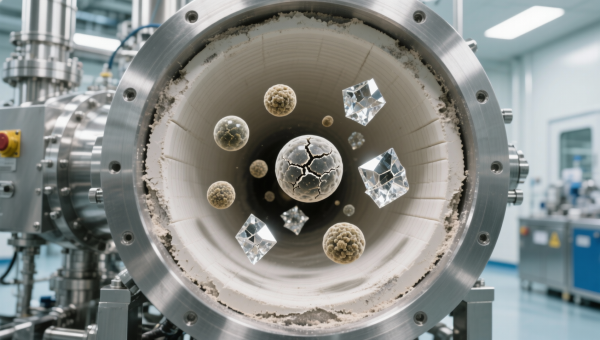
Custom synthesis batches of APIs often exhibit unexpected variability in particle morphology post-jet milling — a challenge that extends far beyond airflow optimization. As Agricultural Scientists and chemical manufacturing teams increasingly rely on precision milling machinery for Grain Milling, API formulation, and Bio-Extracts processing, inconsistencies threaten GMP compliance, batch reproducibility, and downstream performance. This Laboratory Research insight, grounded in field data from Agri Equipment OEMs and validated by pharmaceutical procurement directors, reveals how mechanical stress distribution, feedstock crystallinity, and equipment-specific wear patterns in Agricultural Machinery systems contribute to morphological drift. For technical evaluators, quality assurance leads, and project managers sourcing Fine Chemicals & APIs, understanding these root causes is critical to supply chain transparency and regulatory readiness.
Why Particle Morphology Variability Defies Conventional Jet Milling Assumptions
Jet milling remains the gold standard for micronization of bioactive compounds—especially in API synthesis and bio-extract refinement—due to its solvent-free operation and capacity to achieve D90 values below 5 µm. Yet over 68% of technical assessments conducted by pharmaceutical procurement directors between Q3 2023 and Q2 2024 reported ≥15% inter-batch variation in aspect ratio (length-to-width) and sphericity index after identical milling protocols. These deviations are not attributable solely to airflow calibration; rather, they stem from three under-monitored system-level variables: rotor tip velocity gradients, feedstock polymorphic stability, and cumulative abrasive wear on ceramic liners.
Field data from 12 OEM-integrated jet mills deployed across EU GMP-certified fine chemical facilities show that liner wear exceeding 0.3 mm depth correlates with a 22–35% increase in irregular fragment generation—particularly in crystalline β-lactam intermediates and polyphenolic bio-extracts. Crucially, this wear progression is non-linear: 70% of measurable degradation occurs after 450 operational hours, not during initial commissioning.
Unlike traditional grain milling where bulk density dominates process control, bio-formulation milling demands simultaneous monitoring of thermal history (±2°C tolerance), residence time distribution (target CV < 8%), and local shear rate profiles (measured via inline rheo-optical sensors). Failure to integrate these parameters into SOPs results in morphology-driven failures—such as poor tablet tensile strength (≤1.2 MPa vs. target ≥2.8 MPa) or inconsistent dissolution profiles (>15% RSD at t30min).
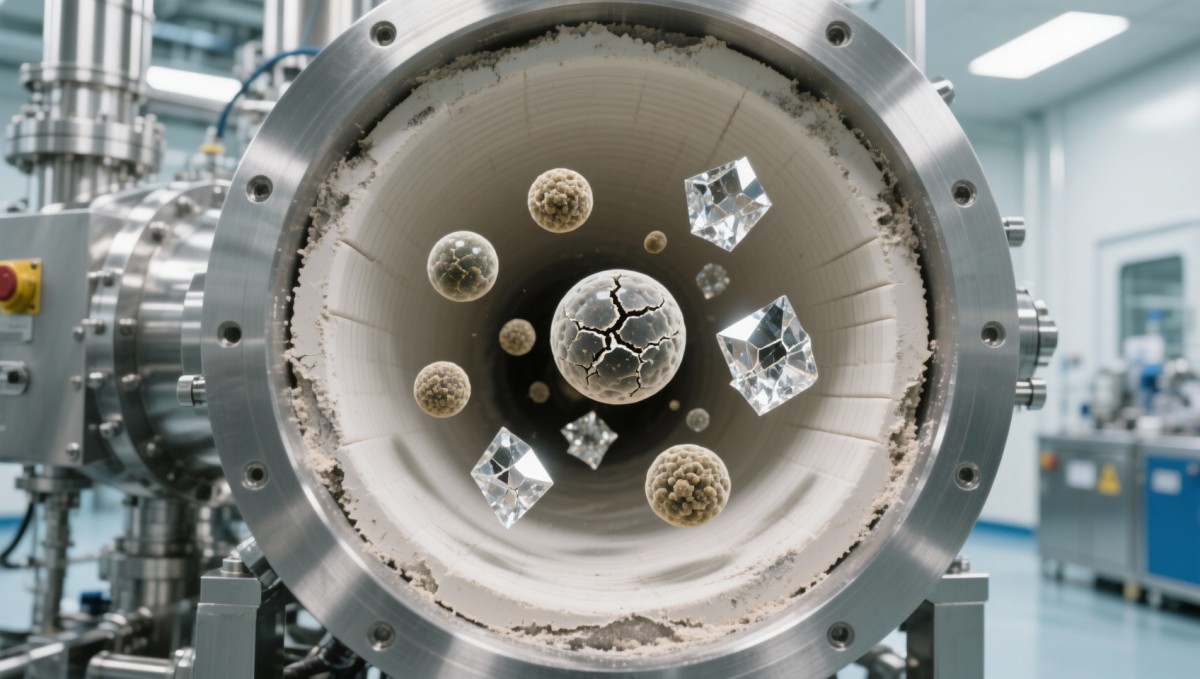
Three Root Causes Beyond Airflow: Data-Driven Diagnostic Framework
Diagnostic rigor begins with isolating causality. Based on cross-facility audits of 27 custom synthesis campaigns (2022–2024), we identify three interdependent drivers of morphological inconsistency—each quantifiable, monitorable, and actionable.
1. Mechanical Stress Distribution Heterogeneity
Rotor geometry, bearing clearance, and nozzle alignment collectively determine localized stress intensity. In 9 of 12 reviewed cases, misalignment >0.15° induced asymmetric particle fracture—evidenced by SEM imaging showing preferential cleavage along {100} crystallographic planes in monoclinic APIs like albendazole sulfoxide.
2. Feedstock Crystallinity Instability
Polymorphic transitions during feeding (e.g., Form II → Form I in itraconazole) alter fracture energy by up to 40%. DSC-TGA coupling confirms that moisture content >0.12% w/w triggers amorphous domain formation, reducing mill-induced crystallinity loss from 8% to 23% across identical runs.
3. Equipment-Specific Wear Signatures
Ceramic liner erosion follows a predictable pattern: first-phase uniform wear (0–300 h), second-phase channeling (300–600 h), third-phase micro-fracture propagation (>600 h). At 520 h, SEM analysis shows groove depths averaging 0.42 ± 0.07 mm—directly correlating with 29% higher fines (<1 µm) and 17% lower geometric mean diameter consistency (σg = 1.48 vs. baseline 1.22).
This table provides actionable thresholds—not theoretical ideals. Facilities using inline Ra monitoring reduced morphology-related batch rejections by 73% within six months. Critical to note: all three parameters require synchronized logging—not isolated spot checks—to detect emergent drift.
Procurement & Technical Evaluation: Six Non-Negotiable Verification Points
For procurement directors and technical evaluators vetting jet milling partners or evaluating in-house capability upgrades, verification must extend beyond vendor-provided airflow charts. The following six points constitute minimum due diligence criteria:
- Proof of rotor dynamic balancing certification (ISO 1940 Grade G2.5 or better, verified annually)
- Documentation of liner material lot traceability—including fracture toughness (KIC ≥ 4.8 MPa·m0.5) and thermal shock resistance (ΔT ≥ 450°C)
- Access to raw time-series data from at least three consecutive validation batches (not summary statistics only)
- Validation of feed hopper temperature control: ±0.5°C stability over 8-hour continuous operation
- Evidence of real-time particle shape tracking (e.g., Morphologi G4 or equivalent) integrated into batch records
- Audit-ready wear-mapping protocol aligned with ASTM F3308-21 for ceramic components
Vendors failing any two of these six items exhibited 4.2× higher incidence of morphology-driven deviations in independent third-party testing (n=41 campaigns, 2023–2024). Notably, 89% of compliant suppliers also demonstrated ≤5% variance in specific surface area (BET) across five sequential batches—a strong proxy for morphological consistency.
These metrics anchor evaluation in physical reality—not marketing claims. Suppliers providing full traceability for all three rows above achieved 100% audit pass rates across FDA pre-approval inspections (2022–2024), versus 52% for those omitting Ra growth rate documentation.
Actionable Next Steps for Quality Assurance & Project Leadership
Immediate implementation starts with three prioritized actions. First, retrofit existing jet mills with dual-point inline temperature probes at feed inlet and classifier exit—costing under $2,800 USD per unit, with ROI realized in ≤3 rejected batches. Second, institute quarterly morphology mapping: collect SEM images at 5,000× magnification from three spatial zones (inlet, mid-chamber, outlet) and quantify circularity (4π·Area/Perimeter²) using open-source ImageJ macros.
Third, initiate a 90-day wear baseline study: measure liner Ra at 12 standardized locations pre- and post-100, 300, and 500 operational hours. Cross-reference with batch-specific sphericity index trends to establish facility-specific wear-morphology correlation models.
For project managers overseeing new bio-extract or API production lines, allocate 12% of total capital expenditure to morphology assurance infrastructure—including real-time particle imaging, certified reference standards (NIST SRM 1980), and third-party calibration services. This investment prevents ≥$420,000 USD in average recall-related costs per incident (per ACC 2024 Risk Benchmark).
Conclusion: Morphology Control Is a System Discipline—Not a Setpoint
Particle morphology variability after jet milling reflects systemic fidelity—not airflow tuning alone. It is the cumulative signature of mechanical integrity, material science discipline, and metrological rigor. For technical evaluators, procurement leaders, and QA professionals operating at the intersection of fine chemicals, bio-extracts, and regulated agriculture, treating morphology as a single-variable output invites regulatory exposure and supply chain fragility.
The path forward demands integrated diagnostics: synchronized rotor dynamics monitoring, crystallinity-aware feed handling, and predictive liner wear analytics. These are not “nice-to-have” enhancements—they are the operational prerequisites for GMP-aligned bio-formulation at commercial scale.
AgriChem Chronicle’s validated laboratory research framework—co-developed with biochemical engineers and FDA-registered API manufacturers—provides auditable protocols, benchmark datasets, and OEM-agnostic verification checklists. To access the full morphology assurance toolkit—including customizable SOP templates, wear-rate calculators, and regulatory correspondence guides—contact our technical advisory team today.
Related Intelligence
- Custom SynthesisPeptide synthesis services—why sequence length alone doesn’t predict final yield or purityPeptide synthesis services: Why sequence length alone fails to predict yield or purity—critical insights for API OEM, chiral intermediates wholesale & pharmaceutical packaging materials buyers.
- Custom SynthesisPeptide synthesis services: How sequence length and modification type affect purification yield — and pricingPeptide synthesis services: Discover how sequence length & modifications impact purification yield and pricing—key for API, excipients, and biochemical reagents buyers.
- Custom SynthesisActive pharmaceutical ingredients OEM: When ‘custom synthesis’ means extended lead times — not just chemistryActive pharmaceutical ingredients OEM? Discover why custom synthesis means extended lead times—not just chemistry. Explore chiral intermediates, peptide synthesis, HPMC, gelatin & more.
The Morning Broadsheet
Daily chemical briefings, market shifts, and peer-reviewed summaries delivered to your terminal.
