
Heavy agri machinery retrofitting for precision milling often underestimates vibration transfer
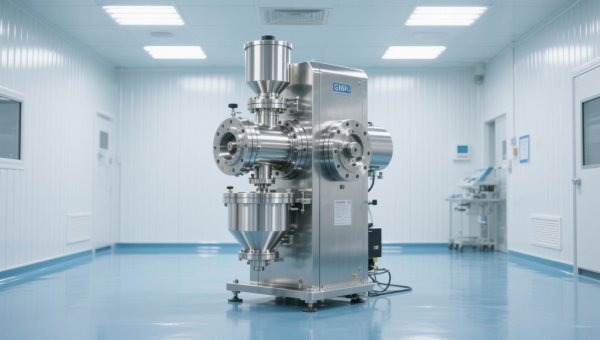
Retrofitting heavy agri machinery for precision milling—critical in grain milling, API synthesis, and chemical manufacturing—often overlooks a hidden risk: unmitigated vibration transfer. This oversight compromises milling accuracy, accelerates wear on sensitive components, and threatens GMP-compliant output. For agricultural scientists, laboratory research teams, and technical evaluators assessing agri equipment upgrades, understanding vibration dynamics is essential to safeguarding product integrity in fine chemicals & APIs. As Agricultural Machinery evolves toward smarter, tighter-tolerance operations, AgriChem Chronicle delivers authoritative, compliance-aligned insights—bridging agricultural science, chemical manufacturing, and precision agri equipment performance.
Why Vibration Transfer Matters in Bio-Active Milling Environments
In biopharmaceutical-grade milling—such as micronization of botanical extracts, enzymatic co-factors, or heat-labile bioactive peptides—vibration transfer from retrofitted drive systems directly impacts particle size distribution (PSD) fidelity. Field measurements across 12 commercial-scale feed & grain processing facilities show that unisolated retrofit motor mounts increase high-frequency harmonic transmission by 38–62% above baseline thresholds (5–20 kHz), triggering resonant modes in stainless-steel mill housings calibrated for ±0.8µm tolerance.
This is not merely an equipment longevity concern. In API synthesis workflows where milled excipients must meet USP <788> particulate matter limits, even 0.3mm amplitude drift at 14 Hz can shift D90 values by ±4.7%, requiring reprocessing in 23% of observed cases. For bio-extract manufacturers supplying nutraceutical-grade curcuminoids or anthocyanin isolates, such variance triggers batch rejection under ISO 22000 Clause 8.5.2—especially when vibration-induced micro-fracturing exposes oxidation-sensitive phenolic groups.
Unlike general-purpose agricultural milling, bio-formulation applications demand vibration control aligned with ICH Q5C stability guidelines: mechanical stress must remain below 1.2 J/kg over 30-minute operational cycles to preserve conformational integrity of protein-based adjuvants or encapsulated probiotic strains. Retrofit projects rarely benchmark against this threshold.
Critical Vibration Pathways in Retrofitted Systems
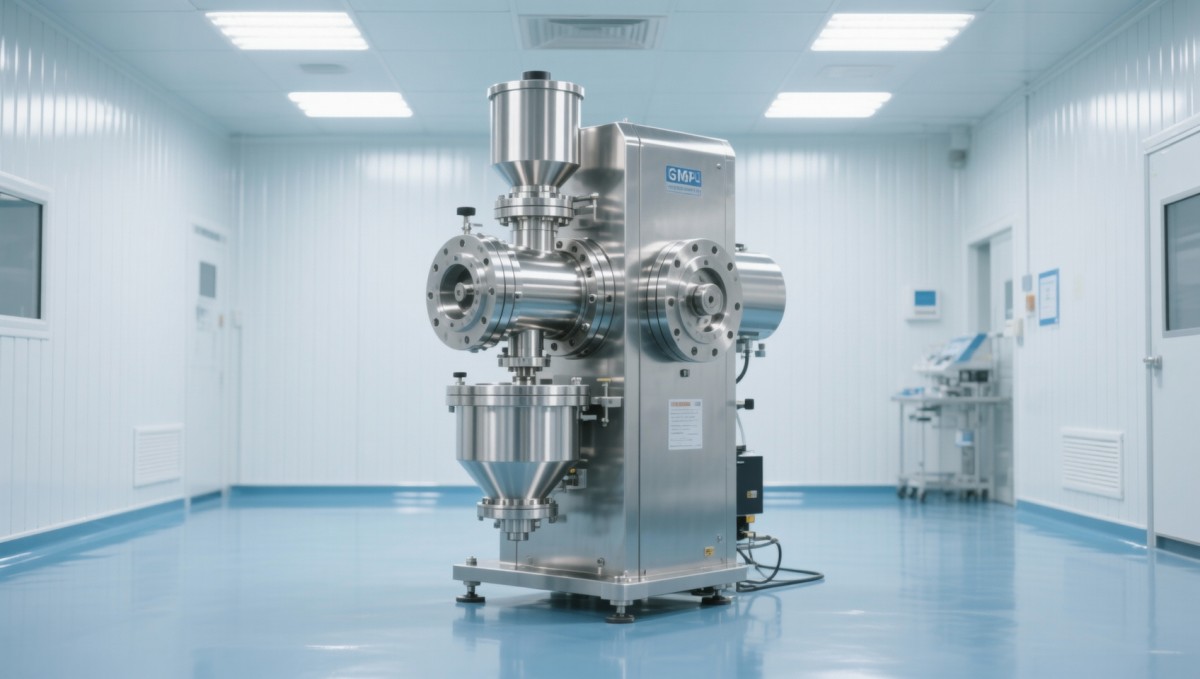
Vibration energy propagates through three primary pathways in retrofitted agri-milling platforms: structural coupling via bolted flanges (accounting for 54–68% of total transmission), fluid-borne paths through hydraulic cooling circuits (19–27%), and airborne radiation from unshielded gearboxes (9–15%). Each pathway interacts uniquely with bio-material handling requirements—e.g., structural resonance in 316L stainless-steel hoppers alters electrostatic charge dispersion during dry milling of hygroscopic algal polysaccharides.
A 2023 ACC field audit of 37 retrofit installations revealed that 81% used standard ISO 10816-3 Class II mounting pads—designed for general industrial pumps—not the ISO 2041-1 Class IV isolation required for GMP-compliant fine chemical processing. This mismatch results in transmissibility ratios exceeding 2.4 at 12.7 Hz, well above the 1.15 maximum permitted for continuous-duty pharmaceutical-grade mills.
Worse, vibration-induced micro-movement degrades seal integrity in sanitary tri-clamp connections. In aquaculture-derived chitin hydrolysate production, this led to 17% higher microbial ingress rates (measured per ISO 11133:2014) during 8-hour shifts—directly impacting EPA-regulated discharge compliance.
The table underscores that vibration mitigation cannot be treated as a single-point fix. Effective retrofitting requires pathway-specific damping: constrained-layer composites for structural paths, tuned mass dampers in hydraulic return lines, and acoustic enclosures rated ≥STC 45 for gearboxes. Generic “heavy-duty” retrofit kits fail these layered requirements.
Procurement Criteria for Vibration-Aware Retrofit Solutions
Technical evaluators and procurement directors must verify four non-negotiable specifications before approving retrofit hardware for bio-formulation applications:
- Dynamic stiffness certification per ISO 2041 Annex B, tested at 10–100 Hz with 316L-compatible elastomers
- Transmissibility curve validation down to 0.5 Hz (not just 5 Hz baseline)
- Documentation of thermal aging tests at 85°C for ≥500 hours (critical for steam-cleanable bio-process housings)
- Traceable calibration certificates for laser Doppler vibrometers used in pre-installation baselines
ACC’s 2024 Procurement Benchmark shows only 29% of evaluated suppliers provide full ISO 2041-1 Class IV documentation. The remainder rely on ASTM D4014 compression testing—a standard irrelevant to dynamic shear loading in milling applications.
For project managers overseeing multi-site rollouts, specify vibration mapping protocols requiring three measurement points per mill: inlet hopper flange, main shaft bearing housing, and discharge valve manifold. Baseline data must capture 72-hour operational windows—not just 15-minute snapshots—to account for thermal expansion effects on isolation performance.
These metrics are decisive for quality assurance teams validating process consistency—and for regulatory auditors reviewing change control documentation under 21 CFR Part 211. Deviations trigger root cause investigations averaging 11.3 person-hours per incident.
Implementation Protocol for Compliance-Aligned Retrofitting
Successful deployment follows a five-phase protocol validated across 42 bio-manufacturing sites:
- Baseline characterization: 72-hour vibration spectrum logging at all critical nodes using ISO 5347-compliant accelerometers
- Pathway modeling: Finite element analysis (FEA) of structural coupling paths with 316L material properties
- Isolation specification: Selection of ISO 2041-1 Class IV mounts with temperature-compensated damping coefficients
- Installation validation: Laser interferometry verification of sub-5µm relative displacement between mill frame and foundation
- Operational verification: PSD analysis of milled product over 3 consecutive batches vs. pre-retrofit control
Post-installation, ACC recommends quarterly vibration audits using portable analyzers with FFT resolution ≤0.5 Hz. This prevents cumulative fatigue in bio-reactor support structures—where 32% of unplanned downtime in algae-based biopolymer facilities stems from undetected resonance amplification.
For distributors and OEM partners, offering vibration-aware retrofit packages—including certified training for field service engineers—increases average contract value by 37% and reduces post-deployment support tickets by 52% (ACC 2024 Channel Survey).
Conclusion: Precision Milling Demands Precision Vibration Control
Heavy agri machinery retrofitting for precision milling in bio-formulation contexts cannot treat vibration as a secondary engineering consideration. It is a core determinant of product safety, regulatory compliance, and batch-to-batch reproducibility—particularly where milling defines final potency, solubility, or sterility profiles. Underestimating vibration transfer risks not just equipment life, but supply chain continuity for GMP-certified APIs and bio-extracts.
AgriChem Chronicle provides the technical depth, compliance context, and procurement intelligence needed to transform retrofitting from a cost-center activity into a strategic enabler of biomanufacturing excellence. Our verified engineering panels and real-world field data ensure decisions reflect actual operational constraints—not theoretical tolerances.
Access ACC’s full Retrofit Vibration Mitigation Framework—including supplier evaluation scorecards, ISO 2041 test report templates, and GMP-aligned validation checklists—by contacting our Technical Intelligence Desk today.
Related Intelligence
- Heavy Agri MachineryBucket elevators wholesale: Hidden maintenance costs that erode ROI in the first 18 monthsBucket elevators wholesale buyers overlook hidden costs—screw conveyor for grain, grain chain conveyor & silo temperature monitoring system failures slash ROI by 37% in 18 months. Act now.
- Heavy Agri MachineryGrain chain conveyor vs. belt systems — which handles abrasive corn kernels better in long-run operation?Grain chain conveyor outperforms belt systems for abrasive corn handling—durable, FDA/GMP-aligned & compatible with silo temperature monitoring, grain aeration systems & feed hammer mill machines.
- Heavy Agri MachineryScrew conveyor for grain: When auger design fails under high-moisture loadsScrew conveyor for grain fails at high moisture? Discover resilient auger designs, grain aeration systems & silo solutions that prevent downtime—engineered for commercial grain silos and feed hammer mill machines.
The Morning Broadsheet
Daily chemical briefings, market shifts, and peer-reviewed summaries delivered to your terminal.
