
U.S. Soybean Exports to China Plunge 48.5%, China Diversifies Oilseed Imports
Introduction
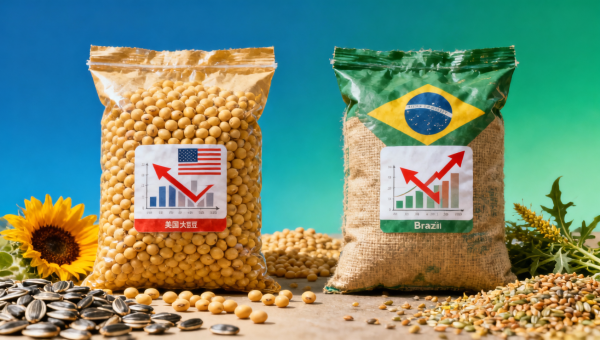
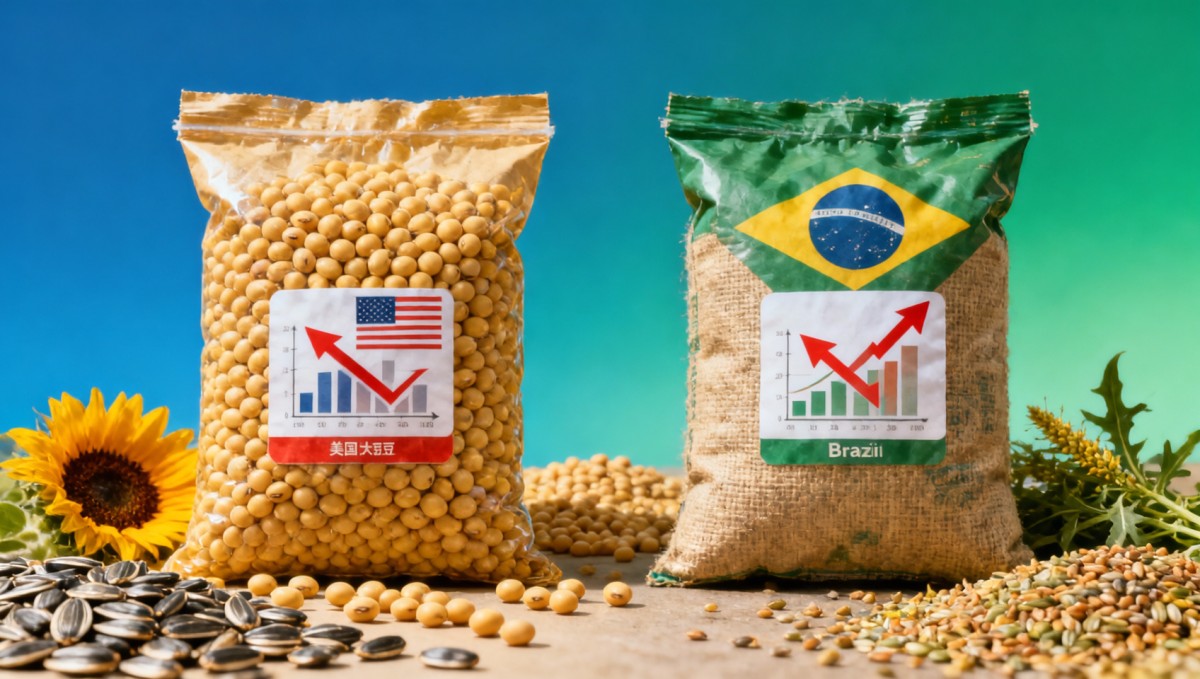
Recent data from the U.S. Department of Agriculture reveals a sharp 48.5% decline in soybean exports to China for the 2025/26 marketing year, totaling only 11.38 million metric tons. This significant drop underscores China's accelerated diversification of oilseed imports, with increased purchases from Brazil, Argentina, Russia, and the Black Sea region, alongside alternative oilseeds like rapeseed, sunflower seeds, and palm kernels. The shift is poised to reshape global oilseed trade flows, impacting overseas crushing capacity utilization, soybean meal export prices, and raw material pricing dynamics for Chinese buyers. This development warrants close attention from agricultural traders, oilseed processors, feed manufacturers, and vegetable oil distributors.
Event Overview
The U.S. Department of Agriculture's latest report confirms a dramatic year-on-year contraction in American soybean shipments to China during the current 2025/26 marketing year. China's import portfolio now shows marked increases in Brazilian and Argentine soybeans, complemented by strategic procurement from emerging suppliers including Russia and Black Sea region exporters. Parallel expansion in alternative oilseed imports (rapeseed up 32%, sunflower seeds 18% year-to-date) indicates a structural adjustment in China's protein meal and vegetable oil supply chains.
Impact on Key Industries
Agricultural Commodity Traders
Traditional U.S. soybean exporters face shrinking market share in China, their largest destination. The 48.5% shipment decline directly impacts revenue streams and necessitates rapid portfolio rebalancing toward alternative markets or crops. Contractual obligations with U.S. growers may require renegotiation given China's reduced offtake.
Oilseed Processing Sector
Global crushing margins face downward pressure as China's diversified sourcing alters regional supply-demand balances. South American processors gain advantage while U.S. facilities see reduced capacity utilization. The industry must monitor China's evolving quality specifications for non-U.S. origin oilseeds.
Feed Manufacturing Industry
Chinese feed mills' increasing use of alternative protein meals (rapeseed, sunflower) may decrease global soybean meal benchmark relevance. International feed additive suppliers should anticipate formulation changes in China's livestock sector.
Vegetable Oil Distribution Chains
China's broader oilseed mix will rebalance global vegetable oil trade flows. Palm oil suppliers should prepare for potential demand shifts as China's domestic oil production profiles change.
Strategic Considerations for Market Participants
Monitor Supply Chain Reconfigurations
Track China's emerging trade corridors for Russian and Black Sea region oilseeds, including logistics infrastructure developments and quality standardization processes.
Reassess Pricing Mechanisms
With China reducing dependence on U.S. benchmarks, market participants should evaluate alternative price discovery tools reflecting Brazil/Argentina/Russia origin differentials.
Adjust Risk Management Protocols
Heightened volatility in regional basis levels necessitates revised hedging strategies, particularly for cross-commodity exposure in rapeseed and sunflower markets.
Engage in New Market Development
Suppliers should proactively cultivate relationships with Chinese importers of alternative oilseeds, understanding evolving quality preferences and shipment timing requirements.
Industry Perspective
Analysis suggests this represents more than temporary trade flow disruption. China's systematic import diversification reflects long-term food security strategy, likely sustaining beyond current market conditions. The shift carries implications for:
- Global oilseed breeding programs (demand for region-specific varieties)
- Agricultural trade finance products (new origin risk assessment)
- Commodity shipping route optimization
Market participants should view this as a structural change requiring operational adjustments rather than a cyclical fluctuation.
Conclusion
The dramatic contraction in U.S. soybean exports to China signals a pivotal moment in global agricultural trade patterns. While the immediate impact manifests in reduced U.S. farm exports and processing margins, the broader implications involve reconfiguration of protein meal supply chains and vegetable oil markets worldwide. Industry stakeholders should approach this transition as a multi-year realignment, prioritizing supply chain flexibility and market intelligence capabilities to navigate evolving procurement geographies.
Information Sources
Primary data: U.S. Department of Agriculture official reports
Supplemental trade flow analysis: China Customs statistics
Ongoing monitoring required for:
- China's monthly oilseed import mix updates
- Black Sea region export capacity developments
- Alternative protein meal adoption rates in Chinese feed formulations
Related Intelligence
- AgrochemicalsEU REACH Adds 5 New SVHCs, Including Agrochem Intermediates & Natural Preservative PrecursorsEU REACH adds 5 new SVHCs including agrochemical intermediates & natural preservative precursors. Learn how this impacts exporters of botanical products & organic pesticides. Act now to avoid EU market risks.
- AgrochemicalsEU REACH Adds 5 New SVHCs, Including Pharma & Agrochem IntermediatesEU REACH adds 5 new SVHCs including key agrochemical & pharma intermediates. Learn how 2-chloro-5-methylpyridine and DMAC regulations impact your supply chain before Oct 2026 compliance deadline.
- AgrochemicalsU.S. Soybean Exports to China Plunge 48.5%, China Shifts to Brazil/ArgentinaU.S. soybean exports to China plummet 48.5% as China shifts to Brazil/Argentina sources. Discover how this trade realignment impacts global markets and key industries. Learn strategic adaptation tips for businesses.
The Morning Broadsheet
Daily chemical briefings, market shifts, and peer-reviewed summaries delivered to your terminal.
