
The Authority in Global Agricultural Chemistry & Bio-Resources
How to verify an agrochemicals manufacturer before ordering
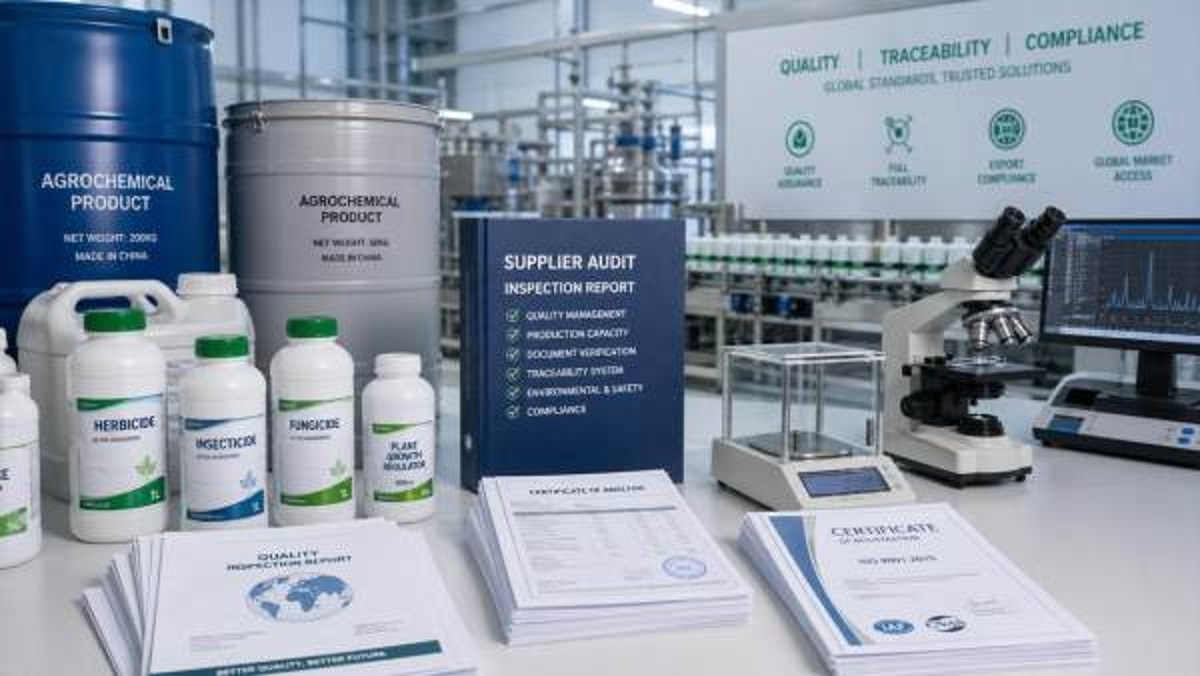
Choosing an agrochemicals manufacturer is no longer just a price decision—it is a risk management exercise that affects product quality, regulatory compliance, and long-term supply stability. Before placing an order, procurement teams must verify licenses, production standards, audit records, and export capability to avoid costly disruptions. This guide outlines how to assess an agrochemicals manufacturer with the rigor institutional buyers expect.
For most buyers, the real search intent behind “how to verify an agrochemicals manufacturer before ordering” is practical and urgent: how to reduce supplier risk before money, reputation, and downstream operations are exposed. Procurement teams are not looking for generic advice. They want a clear method to determine whether a supplier is legitimate, technically capable, compliant, and able to deliver consistently at commercial scale.
That means the central question is not simply whether a company can produce an agrochemical. It is whether that specific manufacturer can produce the right formulation, under the right controls, with the right documentation, and ship it legally and reliably into the target market. A supplier that looks competitive on price but fails on registration support, batch consistency, or export readiness can create much higher total cost than a slightly more expensive but verified producer.
What procurement teams should verify first
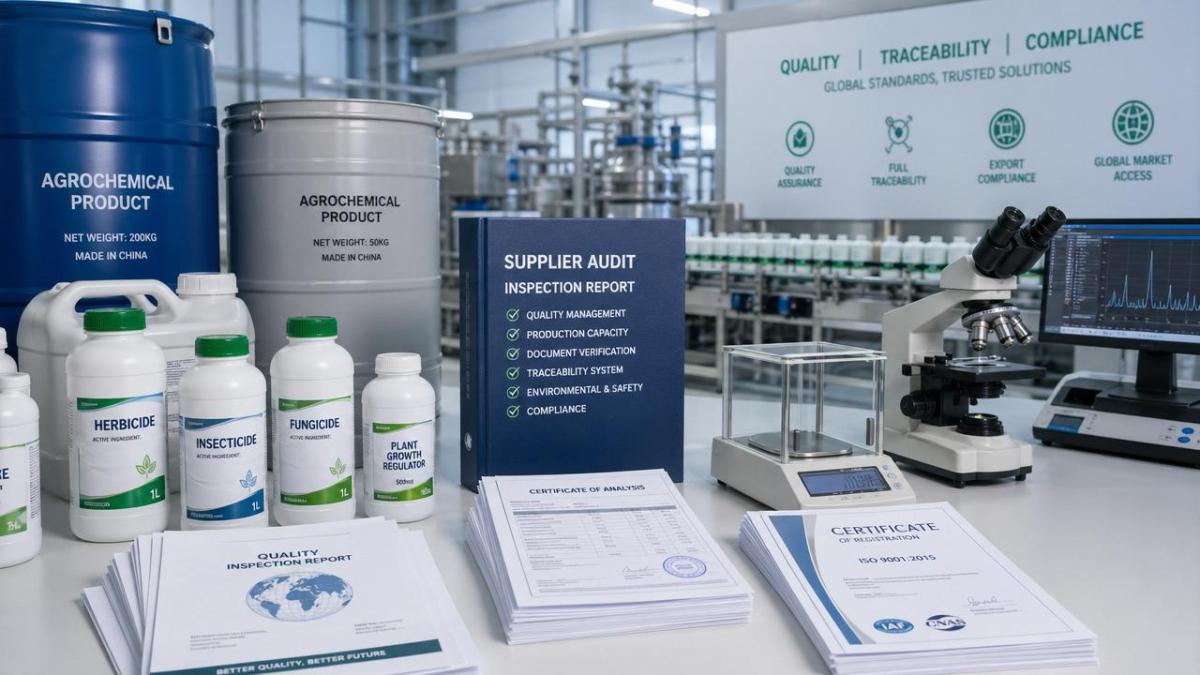
Before reviewing brochures, samples, or pricing sheets, start with the basic verification layer. Confirm that the company is a real operating manufacturer rather than a trading company presenting itself as one. This distinction matters because trading intermediaries may still be useful in some sourcing strategies, but they should not be evaluated as if they control production, quality systems, and plant capacity directly.
At minimum, ask for the legal company name, registered address, manufacturing site address, business registration number, export license status, and product-specific manufacturing permissions. In regulated chemical sectors, a legitimate agrochemicals manufacturer should be able to provide these documents quickly and in a consistent format. Delays, discrepancies in company names, or incomplete records are often early warning signs.
Buyers should also verify whether the products under discussion are technical-grade active ingredients, intermediates, or finished formulations. The manufacturer may be strong in one category but weak in another. A producer with robust synthesis capabilities may outsource formulation. A formulation specialist may depend on external active ingredient suppliers. If you do not map this structure early, you may misunderstand where the real supply risk sits.
Another first-step check is whether the supplier has prior experience serving your destination market. Exporting agrochemicals is not just about shipping product. It involves labeling, packaging, customs documentation, dangerous goods handling where applicable, and support for local registration or compliance files. A manufacturer that has never shipped to your region may still be viable, but the burden of verification should be higher.
How to confirm the manufacturer is legitimate, compliant, and production-capable
Once initial identity checks are complete, move to operational legitimacy. Procurement professionals should verify three things in parallel: legal compliance, manufacturing capability, and quality system maturity. Looking at only one of these can produce a false sense of security. A legally registered company may still have weak process control, while a technically strong plant may lack documentation discipline for export markets.
Start with licenses and certifications, but do not treat certificates alone as proof of reliability. Review manufacturing permits, environmental approvals, hazardous chemical handling permissions where relevant, and quality certifications such as ISO frameworks if applicable. In some markets, buyers may also request evidence of adherence to REACH-related obligations, EPA-linked documentation pathways, or other destination-specific compliance standards. The precise documents depend on the chemistry and end market, but the logic is universal: the supplier must be authorized to make, store, and export what it claims to sell.
Next, assess whether the company actually controls production. Ask for a plant overview that includes number of production lines, reactor sizes, formulation equipment, packaging lines, warehousing conditions, and annual capacity by product. Serious manufacturers can usually provide a plant profile, process flow summary, and capacity statement. If the supplier speaks vaguely about “strong capacity” but cannot define batch size, lead time, or bottleneck stages, procurement should be cautious.
Batch traceability is another critical marker. A credible agrochemicals manufacturer should be able to explain how raw materials are approved, how batches are coded, how in-process quality checks are performed, and how non-conforming product is handled. This is especially important when buying products for crop systems where efficacy, residue levels, stability, and field performance are commercially sensitive.
Ask direct questions about production planning. Can the manufacturer guarantee the same formulation recipe across repeated orders? Are key raw materials sourced from approved suppliers or from spot markets? What is the backup plan if a precursor becomes unavailable? How often is equipment cleaned and validated between products? These questions reveal whether the supplier is operating a controlled manufacturing system or merely reacting to short-term commercial opportunities.
What documents and records should you request before placing an order
Documentation review is where many procurement teams separate credible suppliers from risky ones. Request a structured document pack rather than collecting files casually over email. At a minimum, this should include company registration records, manufacturing licenses, product specifications, certificates of analysis for recent batches, safety data sheets, quality manuals or quality summaries, and export references if available.
For formulated agrochemicals, ask for formulation composition ranges where disclosure is commercially possible, shelf-life data, storage recommendations, packaging specifications, and compatibility guidance. If the product must support registration in your market, determine early whether the manufacturer can provide technical dossiers, impurity profiles, method validation data, and other supporting records required by regulators or local partners.
Recent batch records matter more than polished marketing claims. Review multiple certificates of analysis across different production dates. Are the results tightly controlled or suspiciously identical? Do tested parameters align with your specification, not just the supplier’s internal standard? Variability patterns can reveal whether the process is mature or unstable.
Audit reports are especially valuable. If the manufacturer has undergone third-party audits, customer audits, or compliance inspections, request summaries or corrective action records where confidentiality allows. A perfect record is not always realistic, but a transparent manufacturer should be able to explain findings, timelines, and improvements. Suppliers that refuse all discussion of audits may not have a quality culture that supports institutional buyers.
Also ask for shipping documents from prior exports, such as redacted bills of lading, packing lists, or certificates used for customs clearance. These can help verify that the company has practical export experience for agrochemical goods. A manufacturer may be technically strong but operationally weak in international documentation, which can still cause delays and unexpected costs.
Why a factory audit matters more than a sample alone
One of the most common procurement mistakes is over-relying on samples. A compliant sample is useful, but it does not verify the full manufacturing system behind it. Samples can be specially prepared under ideal conditions, while large commercial batches may show different impurity profiles, physical properties, or packaging consistency. For that reason, supplier verification should never stop at lab approval.
A factory audit—whether conducted in person or by a qualified third party—helps confirm whether the site can consistently reproduce the approved quality. During an audit, buyers should observe raw material storage, process segregation, equipment condition, lab capability, calibration practices, packaging controls, waste handling, and recordkeeping discipline. The goal is not only to inspect the plant visually but to test the alignment between documents, physical operations, and management answers.
Pay close attention to the laboratory. Can the site test the properties it claims to control, or is it outsourcing critical analysis? Is there evidence of retained samples, calibration records, reference standards, and method control? A capable QC lab is often one of the strongest indicators that an agrochemicals manufacturer can maintain repeatable quality over time.
Interviewing operations and quality personnel is equally important. Their answers should be specific, consistent, and technically credible. If sales representatives promise one thing while plant staff describe another process entirely, that gap should be investigated. In many supplier failures, the issue is not fraud in the narrow sense, but internal misalignment between commercial promises and operational reality.
If an on-site visit is not possible before the first order, consider a staged approach: desktop document review, live video verification of facilities, third-party audit, pilot order, and intensified incoming inspection. The less direct visibility you have, the more safeguards you should build into the first transaction.
How to assess quality consistency, scale reliability, and supply chain resilience
Even a legitimate and compliant manufacturer can still be a poor supply partner if it cannot deliver stable quality at the required volume. Procurement teams should therefore evaluate operational reliability, not just legal validity. This includes capacity realism, production scheduling discipline, raw material security, and contingency planning.
Ask for actual lead times by product, not generic promises. A supplier may quote 15 days for one SKU but 45 days for another due to campaign manufacturing, shared reactors, or seasonal bottlenecks. Clarify minimum order quantity, normal batch size, safety stock policy, and peak-season constraints. Buyers in crop input markets know that missing the application window can destroy commercial value even if the product arrives eventually.
Raw material sourcing deserves deeper scrutiny than many teams give it. A manufacturer that depends on a single precursor source, or that switches suppliers frequently based on price, may struggle to keep impurity profiles stable. Ask whether critical inputs are dual-sourced, how incoming raw materials are qualified, and whether there are long-term contracts with upstream partners. Strong upstream control supports downstream consistency.
It is also wise to understand the manufacturer’s customer mix. If a plant is overloaded with opportunistic spot business, your order may be deprioritized during tight supply periods. If one or two major customers absorb most capacity, smaller buyers may face allocation risk. Reliable manufacturers should be able to discuss capacity planning in a way that reassures procurement about supply continuity.
Finally, review complaint handling and recall readiness. What happens if a shipment fails specification or arrives with packaging damage? Is there a formal corrective action process? How quickly can replacement stock be arranged? The right agrochemicals manufacturer is not just one that avoids problems, but one that can manage them transparently and professionally if they occur.
Commercial checks that protect procurement after technical approval
After technical and compliance verification, buyers still need to close several commercial-risk gaps. Confirm payment terms, Incoterms, insurance responsibilities, packaging durability, and document obligations before issuing a purchase order. Too many sourcing problems arise not from chemistry, but from undefined commercial assumptions between buyer and supplier.
Check whether the quotation reflects the exact grade, concentration, packaging type, labeling format, and testing standard you approved. Misalignment at this stage can lead to disputes that are difficult to resolve once goods are in transit. Your purchase contract should reference the specification, certificate requirements, inspection rights, claims timeline, and liability framework clearly.
For new suppliers, a pilot order is often the most disciplined next step. Keep the first commercial order limited enough to manage risk, but large enough to test real production, packaging, documentation, and logistics performance. Review not only product quality, but also responsiveness, deviation handling, and shipment accuracy. This gives procurement a practical evidence base for future volume commitments.
It is also useful to score the supplier across weighted criteria rather than relying on informal impressions. For example, procurement may assign percentages to regulatory compliance, documentation quality, audit result, production capability, export experience, pricing, and communication responsiveness. A scoring model helps procurement teams justify decisions internally and compare multiple agrochemicals manufacturer candidates on a consistent basis.
A practical verification checklist before you order
For buyers who need a concise working framework, the verification process can be simplified into a sequence. First, verify legal identity and manufacturing status. Second, confirm product-specific licenses and export readiness. Third, review technical documentation, recent batch data, and quality systems. Fourth, validate plant capability through audit or third-party inspection. Fifth, assess supply continuity, lead time realism, and upstream raw material controls. Sixth, run a pilot order with strict incoming inspection and document review.
If any of these steps produce major inconsistencies, pause the sourcing process. Procurement pressure, pricing urgency, or seasonal demand should not override unresolved supplier-risk signals. In agrochemicals, failures often emerge only after the order is placed—during registration support, customs clearance, batch release, or field use—when correction is far more expensive.
The strongest buyers treat supplier verification as an investment in continuity, not as an administrative burden. A verified manufacturer can reduce quality disputes, improve planning confidence, support market compliance, and strengthen long-term cost control. In contrast, an unverified low-cost source can create hidden costs through rework, delayed shipments, rejected goods, lost application windows, and reputational damage.
Conclusion
To verify an agrochemicals manufacturer before ordering, procurement teams should look beyond certificates and price sheets. The real test is whether the supplier can prove legal legitimacy, controlled production, consistent quality, export competence, and reliable delivery under commercial conditions. That requires document review, operational questioning, audit evidence, and a disciplined first-order strategy.
In practical terms, the best supplier is rarely the one with the lowest headline price. It is the one that can withstand scrutiny across compliance, manufacturing, documentation, and supply resilience. When procurement applies that standard, supplier selection becomes not just a sourcing decision, but a structured form of risk control that protects both business performance and downstream market obligations.
Related Intelligence
- AgrochemicalsBulk technical grade pesticides and the compliance gap to watchBulk technical grade pesticides demand more than price and assay checks. Learn where compliance gaps start, which documents matter most, and how to reduce sourcing risk before formulation.
- AgrochemicalsWholesale NPK fertilizers: what changes total application costWholesale NPK fertilizers affect more than unit price. Learn how nutrient concentration, logistics, quality, and compliance shape total application cost and smarter budget approvals.
- AgrochemicalsGlyphosate herbicide wholesale and the risk of uneven supplyGlyphosate herbicide wholesale is facing uneven supply, regulatory shifts, and freight risk. Learn how enterprise buyers can secure reliable sourcing and reduce procurement disruption.
The Morning Broadsheet
Daily chemical briefings, market shifts, and peer-reviewed summaries delivered to your terminal.
