
Agricultural Plastic Mulch Film Thickness Changes More Than Cost
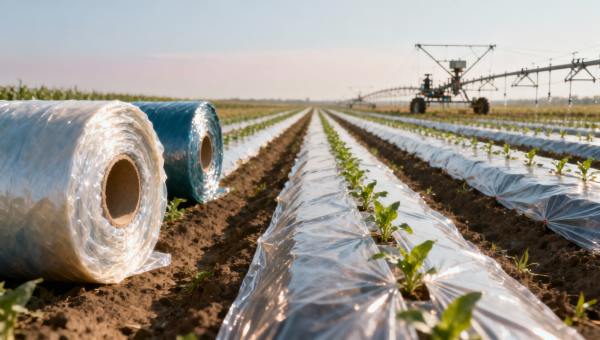
In modern farm planning, agricultural plastic mulch film is not just a line-item expense—its thickness can directly influence crop protection, installation efficiency, durability, and total field performance. For buyers comparing agricultural plastic mulch film alongside solar water pumps agricultural systems, submersible deep well pumps, and wholesale water pumps for farming, understanding how thickness changes more than cost is essential for smarter technical and procurement decisions.
Why agricultural plastic mulch film thickness changes field results, not just purchase price
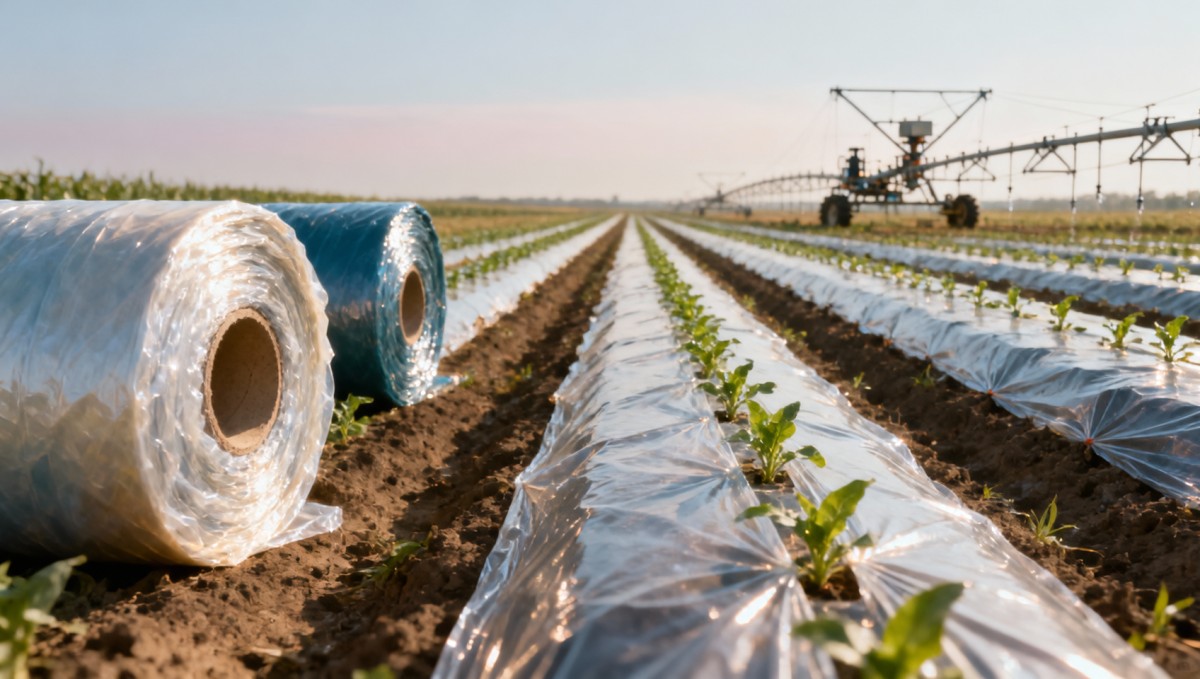
For information researchers and technical evaluators, the first mistake is treating agricultural plastic mulch film as a commodity with only one decision variable: price per roll. In reality, film thickness affects at least 4 operational dimensions at the same time: tensile stability during laying, resistance to puncture, heat and moisture behavior around the crop row, and expected service life in the field. A thinner film may lower upfront spend, but it can increase replacement frequency, installation loss, and crop exposure risk.
In open-field vegetables, berries, seedling rows, and orchard strip management, common commercial thickness ranges often fall between 0.008 mm and 0.03 mm, depending on crop cycle, climate stress, and machine installation conditions. A short-cycle crop of 60–90 days may tolerate a lighter film when soil is well-prepared and wind load is limited. A longer cycle of 120–180 days usually requires stronger puncture resistance and more stable edge anchoring. That difference can change total project economics more than the listed roll price suggests.
Procurement teams also need to consider the interaction between mulch film and other farm systems. When a site already relies on solar water pumps agricultural layouts, submersible deep well pumps, or wholesale water pumps for farming, irrigation frequency and soil moisture variation can alter how the film performs. Excessive wet-dry cycling may weaken edge fixation in lighter films, while heavier films may better preserve bed integrity where repeated irrigation events occur every 2–5 days.
This is where an industry-focused journal such as AgriChem Chronicle adds value. ACC’s editorial strength lies in connecting material behavior, machinery conditions, compliance expectations, and commercial risk into a single decision framework. For buyers, that means moving from “Which film is cheaper?” to “Which thickness is operationally correct for my crop cycle, installation method, and procurement risk profile?”
What thickness actually influences in day-to-day operations
Field performance is rarely determined by one property alone. Thickness acts as a proxy for several practical outcomes, but only when considered together with resin quality, elongation behavior, UV package, and installation technique. A 10-micron difference can be commercially meaningful when the film is exposed to mechanical laying, sharp residue, or abrupt day-night temperature shifts of 10°C–25°C.
- Thinner film generally reduces roll weight and transport burden, which may help smaller crews and faster manual handling.
- Medium thickness often improves compatibility with standard laying equipment and lowers tear risk during installation.
- Higher thickness can improve endurance under longer crop cycles, stronger wind exposure, and repeated irrigation schedules.
- Incorrect thickness can raise hidden loss rates through early rupture, uneven soil cover, and extra labor for field repair.
For financial approvers, the key takeaway is simple: cost per kilogram or cost per roll is not the same as cost per usable hectare. For project managers, the better metric is whether the chosen agricultural plastic mulch film can hold performance consistently across the full implementation window, from installation day to crop completion.
How to compare thickness options in procurement and technical review
A structured comparison helps procurement personnel, business reviewers, and distributors avoid oversimplified decisions. Rather than asking whether a thicker agricultural plastic mulch film is always better, the better question is which thickness range fits the project’s duration, field condition, and labor model. The table below summarizes typical decision logic used in agricultural materials sourcing.
The comparison shows why thickness should be evaluated as part of total deployment conditions. A procurement team that buys the lightest film for a 5–6 month production cycle may save on invoice value, yet lose that advantage through field damage, relaying labor, and crop inconsistency. A thicker option may also be excessive in highly controlled beds with a 70-day crop and low mechanical stress.
Key technical checkpoints before approving a thickness range
Technical assessment should not stop at nominal thickness. Quality control and safety personnel should request a specification sheet covering dimensional tolerance, roll length consistency, puncture behavior, UV resistance strategy, and storage guidance. Even within the same nominal range, production control quality can vary enough to affect field reliability.
A 5-point review checklist for B2B buyers
- Confirm crop duration in days and expected removal timing.
- Review soil preparation quality, residue level, and stone exposure.
- Check whether the film will be laid manually or by machine over 1–3 installation passes.
- Map irrigation frequency, especially where solar water pumps agricultural systems create regular moisture cycling.
- Request packing, storage, and transit details to avoid deformation or edge damage before use.
For distributors and resellers, this checklist also improves customer communication. Instead of promoting one generic agricultural plastic mulch film, sales teams can guide end users by crop type, field stress level, and installation method. That reduces return disputes and strengthens account credibility.
Where hidden cost appears: installation loss, downtime, replacement, and field coordination
The phrase “thickness changes more than cost” becomes most visible after delivery. In B2B farm projects, the real expense is not only the material purchase but also the labor schedule, equipment coordination, water management, and crop timing linked to that material. A film that fails early can disrupt a multi-input program involving irrigation hardware, fertilizer planning, and harvest scheduling.
Consider a project manager coordinating bed preparation, laying, irrigation commissioning, and transplanting within a 7–15 day window. If the chosen agricultural plastic mulch film tears repeatedly during machine laying, the crew may lose installation pace, delay transplanting, and create uneven moisture retention across blocks. When submersible deep well pumps or wholesale water pumps for farming are already staged for the next step, one weak material decision can cascade into broader resource inefficiency.
This cost logic matters to finance teams because failure cost is often distributed across multiple budget lines. It appears as additional labor, extra field passes, damaged seedlings, lost water-use efficiency, or more supervisory time. In other words, the invoice difference between two thickness options may be visible immediately, while the operational loss emerges across 3–5 separate functions over the season.
ACC regularly frames these cross-functional decisions in a way that suits institutional buyers and industrial operators. Instead of isolating materials from machinery and compliance, the journal helps readers understand supply chain choices as integrated operating systems. That perspective is especially valuable when buyers compare mulch film with other agricultural infrastructure investments under the same capital review cycle.
A practical cost comparison for budgeting and approval
The next table can be used during internal review meetings to explain why agricultural plastic mulch film thickness should be discussed in total-cost terms, not just line-item procurement terms.
A well-managed budget discussion should connect these cost factors to crop revenue protection, not just material pricing. That is especially important for larger farms, contractor-led projects, and distributor portfolios serving multiple crop profiles across different climate bands.
What procurement, quality, and compliance teams should verify before placing an order
For commercial buyers, choosing agricultural plastic mulch film is also a documentation exercise. Thickness suitability means little if the shipment lacks consistency, traceable production information, or practical handling guidance. Quality control personnel should verify whether the supplier provides basic lot identification, dimensional data, storage recommendations, and material descriptions aligned with the intended agricultural use.
Compliance review is particularly relevant when the project sits inside a regulated or audited agricultural supply chain. While mulch film itself does not automatically fall under the same framework as GMP-regulated APIs or FDA-governed pharmaceutical inputs, professional buyers increasingly apply similar discipline across all sourced materials: specification control, supplier transparency, and documented performance expectations. That broader approach reduces avoidable procurement disputes.
In cross-border transactions, delivery terms also deserve early confirmation. Typical lead times may range from 2–4 weeks for standard specifications and longer for customized width, color, or packaging configurations. Project leaders should align purchase timing with field readiness, customs clearance risk, and seasonal weather windows. A technically correct thickness arriving late can still become a commercially poor decision.
AgriChem Chronicle is positioned for this kind of decision support because its readership already spans agronomy, industrial procurement, and compliance-sensitive sectors. The publication’s strength is not promoting one-size-fits-all material advice, but helping readers establish a rigorous, evidence-led comparison process that stands up to operational, commercial, and audit scrutiny.
A 6-item order verification list
- Nominal thickness range and acceptable tolerance stated on the order.
- Roll length, width, core type, and packing method clearly specified.
- Expected crop cycle and installation method noted for supplier alignment.
- Storage conditions confirmed, including protection from heat and direct sunlight before use.
- Inspection method agreed for receipt, including count, visible damage, and labeling consistency.
- Delivery schedule checked against the 1–2 week field preparation and planting plan.
These checkpoints are useful not only for direct buyers but also for dealers, distributors, and agents who need to protect downstream account satisfaction. A clearer order specification reduces misunderstanding and strengthens after-sales communication.
Common misconceptions, field questions, and better decision paths
Many buyers enter the market with assumptions that seem efficient but produce costly mistakes. The first is believing that the thickest agricultural plastic mulch film is always the safest choice. It may improve robustness, but it can also add freight, handling burden, and unnecessary material cost for short-cycle crops. The second is assuming that all films with the same nominal thickness behave the same way, which ignores formulation, process control, and installation context.
Another frequent misconception is separating mulch film decisions from irrigation planning. In real agricultural operations, bed moisture, irrigation intervals, and mechanical traffic interact continuously. Farms using solar water pumps agricultural systems or submersible deep well pumps often run planned watering cycles that affect soil firmness and edge stability. That means thickness should be chosen with the water management plan in mind, not after it.
For business evaluators and finance approvers, the most reliable path is to compare options using 3 layers: field condition, crop duration, and failure consequence. If all three factors are mild, a lighter film may be justified. If two or more are demanding, a medium or heavier range is often easier to defend from both technical and commercial perspectives.
Below are practical questions often raised during sourcing and project planning. Each answer is designed to support real procurement discussions rather than generic product promotion.
How do I choose agricultural plastic mulch film for different crop cycles?
Start with the expected exposure period. For roughly 60–90 day cycles in prepared fields, lighter specifications may be commercially reasonable if installation conditions are controlled. For 120–180 day cycles, repeated irrigation, wind exposure, or rough beds, more robust thickness ranges deserve stronger consideration. Always match the film to the field stress profile, not only the crop name.
What matters more: thickness or material quality?
They should be reviewed together. Thickness alone does not guarantee predictable performance. Buyers should verify consistency, packaging condition, and specification clarity. A poorly controlled film with a higher nominal thickness can still perform worse than a well-produced medium-range option under normal field conditions.
When is a lower-cost film actually a false economy?
Related Intelligence
- AgrochemicalsEU CBAM Carbon Tariff Fully Enforced from April 1, 2026EU CBAM Carbon Tariff fully enforced from April 1, 2026 — mandatory quarterly carbon reporting for agrochemicals, APIs & chemical exports to the EU. Act now!
- AgrochemicalsWhy Agricultural Plastic Mulch Film Fails Before HarvestAgricultural plastic mulch film fails early from UV, soil chemistry, and installation errors. Learn how solar water pumps agricultural systems and smart sourcing reduce crop loss.
- AgrochemicalsAgricultural Plastic Mulch Film Thickness Changes More Than CostAgricultural plastic mulch film thickness impacts durability, installation, and crop protection more than cost. Learn how it works with solar water pumps agricultural systems for smarter farm buying.
The Morning Broadsheet
Daily chemical briefings, market shifts, and peer-reviewed summaries delivered to your terminal.
