
Why Agricultural Plastic Mulch Film Fails Before Harvest
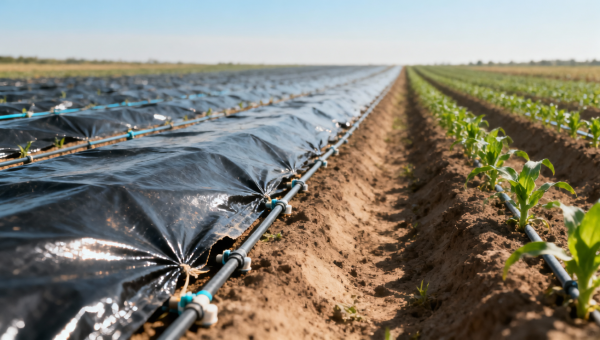
Agricultural plastic mulch film often fails before harvest due to a mix of UV stress, poor resin quality, soil chemistry, installation errors, and climate extremes. For buyers and technical evaluators comparing agricultural plastic mulch film alongside systems like solar water pumps agricultural and submersible deep well pumps, understanding these failure points is essential to reducing field losses, controlling costs, and improving crop protection performance.
Why does agricultural plastic mulch film fail months before harvest?
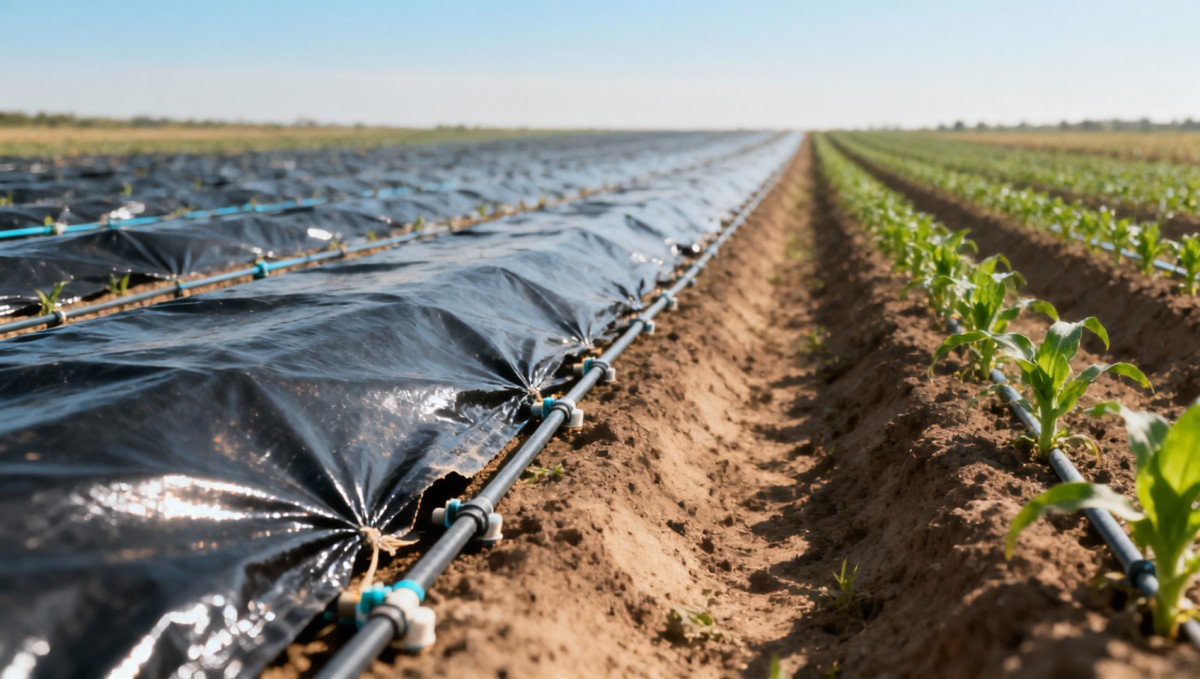
Early failure rarely comes from a single defect. In field conditions, agricultural plastic mulch film is exposed to a multi-factor stress environment for 60–180 days, depending on crop cycle, planting date, and local climate. When buyers review film performance, they should not focus only on thickness in microns. Resin formulation, UV stabilization package, installation tension, soil pH, and irrigation chemistry often decide whether the film survives to harvest or tears apart in the middle of the season.
For technical assessment teams, the most common failure patterns are embrittlement, transverse cracking, edge splitting, pinhole development, and premature fragmentation. These symptoms may appear after only 3–6 weeks in hot and high-radiation regions, or later in the season after repeated wind loading and temperature cycling. A film that looks acceptable at delivery can still fail because the formulation was designed for short-cycle vegetables rather than 90–150 day commercial crop use.
Procurement departments also face a familiar problem: two rolls of agricultural plastic mulch film may look similar, yet their field life can differ significantly. Lower-cost film may use recycled or inconsistent base resin, uneven additive dispersion, or insufficient UV inhibitors. In B2B agriculture, this creates hidden losses that are much larger than the initial unit price difference, especially when labor for re-laying film, crop exposure, and irrigation inefficiency are included in the total operating cost.
From an intelligence and sourcing perspective, AgriChem Chronicle helps industrial buyers interpret these variables through a cross-disciplinary lens. The same due diligence used in fine chemicals, machinery procurement, and regulated supply chains also applies here: verify material consistency, validate intended service life, examine environmental exposure assumptions, and compare supplier claims against practical field conditions rather than brochure language.
Five field-level causes procurement teams should separate
- UV degradation: inadequate stabilizers can cause brittleness under high summer radiation, especially in exposed beds with 8–12 hours of direct sunlight.
- Mechanical stress: over-tension during laying, wind flap at unsecured edges, and puncture from stones or machinery all reduce film life.
- Chemical attack: fertilizer concentration, fumigants, sulfur compounds, and alkaline or saline soil conditions can accelerate cracking.
- Thermal cycling: repeated day-night swings, often 15°C–25°C or more in exposed fields, increase stress around perforations and buried edges.
- Material inconsistency: uneven thickness profile or resin contamination creates weak zones that fail before the rest of the sheet.
This breakdown matters because each cause leads to a different corrective action. A buyer dealing with UV embrittlement needs a better stabilization package, while a buyer dealing with edge tearing may need a revised laying method and stronger anchoring geometry. Treating all failures as “poor quality film” often results in repeated procurement mistakes.
Which technical factors matter most when evaluating mulch film durability?
Technical evaluators should structure review around 4 core groups: base polymer quality, additive system, physical dimensions, and field compatibility. Agricultural plastic mulch film for short-cycle lettuce, tomato nurseries, or early vegetable use may not be appropriate for longer-duration melon, pepper, or orchard-row applications. Matching the film to the crop duration and exposure profile is more reliable than using a generic specification.
Thickness is important, but not sufficient on its own. Typical commercial ranges may run from about 8–50 microns depending on region and crop, yet a thicker film with poor additive dispersion can still fail earlier than a slightly thinner, better-engineered film. Likewise, color choice affects heat management and weed suppression, which indirectly changes stress levels. Black film, transparent film, and reflective variants do not behave the same under identical agronomic conditions.
In practical B2B sourcing, the question is not just “How strong is the film?” but “How long can the film maintain functional integrity under actual use?” Functional integrity includes keeping weeds down, preserving moisture, limiting soil crusting, maintaining bed temperature, and surviving installation and field traffic. A film that remains present but is heavily cracked by week 10 may already have failed commercially.
The table below helps procurement, QA, and project teams compare the main technical variables that influence premature failure risk before harvest.
A useful interpretation rule is this: if the supplier cannot explain the expected exposure window, chemical resistance assumptions, and installation requirements in practical terms, the risk of mismatch is high. For financial approvers, this means the lowest bid can quickly become the highest total-loss option once field replacement and crop impact are counted.
How installation conditions change technical performance
Even a well-made agricultural plastic mulch film can fail under poor laying conditions. Installation speed, bed preparation, anchoring depth, and hole punching technique all influence durability. In many operations, film is laid at field speeds that prioritize labor efficiency, but excessive tension during installation stretches the polymer and reduces its tolerance to later thermal contraction.
Bed surface preparation should remove sharp stones, hard stalk residue, and protrusions before laying. A common field-control target is to inspect at least 3–5 sample bed sections per block before full deployment. This simple step often identifies puncture risks that would otherwise be misdiagnosed later as poor film quality. For project managers, such checks are inexpensive compared with emergency rework after weather exposure.
Where mulch film is paired with irrigation infrastructure such as drip lines, solar water pumps agricultural systems, or submersible deep well pumps, flow uniformity also matters. Over-irrigation can create localized pooling, while under-buried drip lines may rub the film from below. Integrated system review is therefore better than evaluating the film in isolation.
A practical 4-point inspection before field deployment
- Confirm crop cycle duration and expected field exposure window, such as 70–90 days or 120–150 days.
- Review soil condition, fertilizer concentration, and any fumigation or treatment history from the previous 2–4 weeks.
- Check roll labeling, batch traceability, and storage condition before unrolling in full sunlight.
- Run a short pilot lay on one section to observe tension, edge burial stability, and puncture sensitivity.
These steps are especially relevant for distributors and agents who need fewer post-sale complaints. They also support QA teams that must document why a given agricultural plastic mulch film was approved for one application and rejected for another.
How should buyers compare mulch film options instead of buying on price alone?
A professional sourcing decision should compare service life, field risk, labor burden, and replacement exposure. In many agricultural purchasing environments, the visible price difference per roll is small, but the cost of failure is operationally large. That gap matters most for finance teams, procurement managers, and commercial evaluators who must justify why a mid-priced film may deliver better overall cost control than the cheapest alternative.
The comparison should also include crop value and site accessibility. For high-value horticulture, greenhouse-adjacent fields, or projects with limited labor availability, film replacement during the season can create disproportionate disruption. In contrast, for very short-cycle crops, buyers may rationally accept a simpler specification if the exposure period is tightly limited and installation control is strong.
The following comparison table organizes the decision in a way that is easier for cross-functional approval. It can be used in discussions between agronomy, procurement, finance, and operations teams.
This comparison shows why price-only buying is incomplete. A short-cycle economy film may be entirely appropriate in one region and unsuitable in another. The right answer depends on exposure duration, weather volatility, agronomic value per hectare, and the cost of interruption. That is why technical and commercial review should happen together rather than in separate silos.
What should a procurement checklist include?
- Expected field life in days, not only generic statements like “seasonal use.”
- Crop type, sowing-to-harvest duration, and whether the film must remain intact for 8, 12, or 20 weeks.
- Soil chemistry summary, including saline, alkaline, or treated conditions that may affect polymer stability.
- Batch traceability and storage requirements before installation, especially under warm warehouse conditions.
- Replacement labor cost, downtime exposure, and field access difficulty if in-season re-laying becomes necessary.
For distributors and resellers, this checklist also supports better customer segmentation. The same agricultural plastic mulch film should not be promoted identically to a small vegetable grower and a large industrial farming operator. Different users tolerate different risk levels, and that affects the correct sales recommendation.
What compliance, quality control, and supply-chain checks reduce failure risk?
While mulch film procurement is not identical to sourcing APIs or regulated chemical intermediates, the discipline of compliant supply-chain review is still highly relevant. Buyers should ask for consistent product documentation, basic material descriptions, intended-use limitations, and batch-level identification. This is especially important in international sourcing, where identical commercial descriptions may mask major differences in formulation and manufacturing control.
Quality control teams should define 3 layers of review: pre-purchase document check, incoming roll inspection, and in-field verification after installation. Pre-purchase review covers declared thickness, roll size, application notes, and storage recommendations. Incoming inspection checks packaging integrity, visible defects, labeling consistency, and sample measurement. In-field verification confirms that the chosen film performs as expected under local mechanical and climatic conditions within the first 7–14 days after laying.
In complex agricultural supply chains, transparency on raw material source, conversion process, and shipment condition is valuable. This is where AgriChem Chronicle provides a practical advantage for institutional buyers and project stakeholders. Our editorial and market intelligence framework is built for industries where technical claims, trade compliance, and operational performance must be evaluated together rather than separately.
The table below outlines a workable quality and compliance review model that procurement and safety teams can adapt to their own approval workflow.
A structured review process turns isolated complaints into usable procurement intelligence. Over 2–3 crop cycles, this often reveals whether the main problem is film specification, installation discipline, or environmental mismatch. Without that feedback loop, many organizations keep changing suppliers when the root cause is actually poor application control.
Common misconceptions that increase purchasing risk
“Higher thickness always means better durability”
Not necessarily. Thickness helps, but formulation quality, UV package, and thickness uniformity are just as important. A non-uniform film can fail at thin spots even when its nominal average looks adequate on paper.
“If the film survived installation, it will survive the season”
Installation survival only proves short-term handling tolerance. Many failures emerge later from cumulative heat, sunlight, chemical exposure, and wind loading. A reliable evaluation period includes early observation plus mid-season checks.
“All agricultural plastic mulch film works the same in all regions”
Regional climate matters. High-UV, arid, coastal saline, and temperature-variable zones each place different stress on the material. A film that performs well in one geography may underperform in another without any manufacturing defect.
FAQ and next-step guidance for buyers, engineers, and distributors
The final decision on agricultural plastic mulch film should combine agronomic fit, technical verification, commercial comparison, and supply-chain confidence. For most organizations, the best results come from a 3-step approach: define exposure conditions, shortlist suitable film classes, then validate with documentation and a limited field pilot before scaling up.
This approach is especially useful for project managers and financial approvers who need a defendable basis for decision-making. It also helps distributors reduce returns and helps quality teams document why one product class was approved over another. In short, buying smarter means framing the film as part of a working system, not just a plastic consumable.
Below are several frequent questions that appear during sourcing, evaluation, and project planning.
How do I know whether early tearing is a material problem or an installation problem?
Look at the failure pattern. Edge pullout, puncture over stones, and stretch-related splits near anchors often indicate installation or bed preparation issues. Brittle cracking across wider exposed areas after several weeks points more toward UV or formulation mismatch. A 7–14 day site review after laying can usually identify which path is more likely.
What should buyers ask suppliers before placing a commercial order?
Ask for intended application range, expected field-life window, storage conditions, batch traceability, and any limitations related to soil treatment or climate. Also confirm whether the film is suitable for the planned crop cycle, especially if exposure may exceed 90 days. These questions are more useful than asking only for thickness and price.
When should alternative mulch options be considered?
Alternative systems should be evaluated when disposal cost, retrieval labor, or sustainability targets become commercially significant. They should also be considered where repeated failure occurs despite proper installation and appropriate film selection. However, alternatives still require local testing because biodegradation rate and functional life depend heavily on soil and climate conditions.
Why choose AgriChem Chronicle for decision support and supplier-facing visibility?
AgriChem Chronicle is built for industrial readers who need more than generic agricultural commentary. Our coverage connects field performance, material science, procurement logic, regulatory awareness, and supply-chain transparency across agriculture, biochemicals, machinery, and primary processing. That makes our platform useful both for buyers seeking clear technical intelligence and for qualified manufacturers that need to present credible, specification-driven capabilities to serious institutional audiences.
If you are assessing agricultural plastic mulch film, related irrigation systems, or broader primary-industry inputs, contact us to discuss parameter confirmation, product selection logic, expected delivery cycle, application-specific documentation, certification questions, sample evaluation pathways, and quote-oriented communication. For manufacturers and solution providers, ACC also offers an authoritative publishing environment to position validated capabilities in front of agronomists, procurement directors, and industrial project teams making high-value buying decisions.
Related Intelligence
- AgrochemicalsEU CBAM Carbon Tariff Fully Enforced from April 1, 2026EU CBAM Carbon Tariff fully enforced from April 1, 2026 — mandatory quarterly carbon reporting for agrochemicals, APIs & chemical exports to the EU. Act now!
- AgrochemicalsWhy Agricultural Plastic Mulch Film Fails Before HarvestAgricultural plastic mulch film fails early from UV, soil chemistry, and installation errors. Learn how solar water pumps agricultural systems and smart sourcing reduce crop loss.
- AgrochemicalsAgricultural Plastic Mulch Film Thickness Changes More Than CostAgricultural plastic mulch film thickness impacts durability, installation, and crop protection more than cost. Learn how it works with solar water pumps agricultural systems for smarter farm buying.
The Morning Broadsheet
Daily chemical briefings, market shifts, and peer-reviewed summaries delivered to your terminal.
