

The Authority in Global Agricultural Chemistry & Bio-Resources
Wholesale oxalic acid grades: which differences matter in production
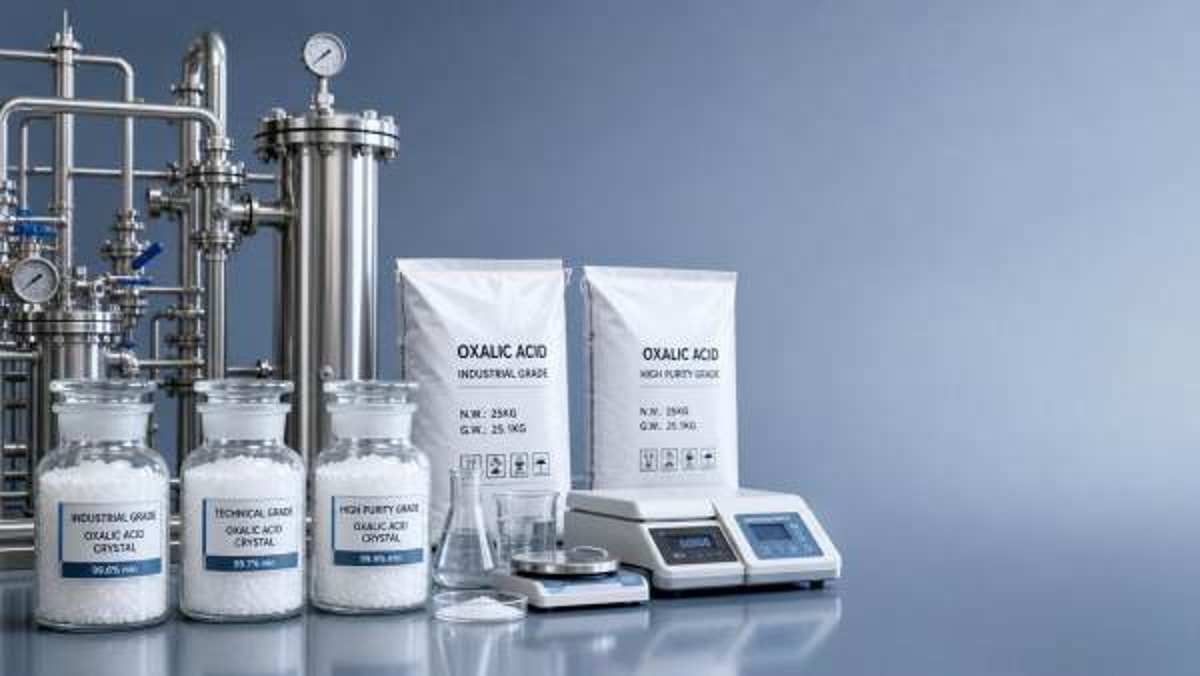
In wholesale oxalic acid sourcing, grade differences can directly affect reaction efficiency, equipment compatibility, impurity control, and regulatory compliance. For technical evaluators, understanding how industrial, technical, and high-purity grades perform in real production settings is essential to reducing risk and optimizing cost. This article examines which specifications truly matter and how to match the right grade to your process requirements.
Which wholesale oxalic acid grade differences actually affect production?
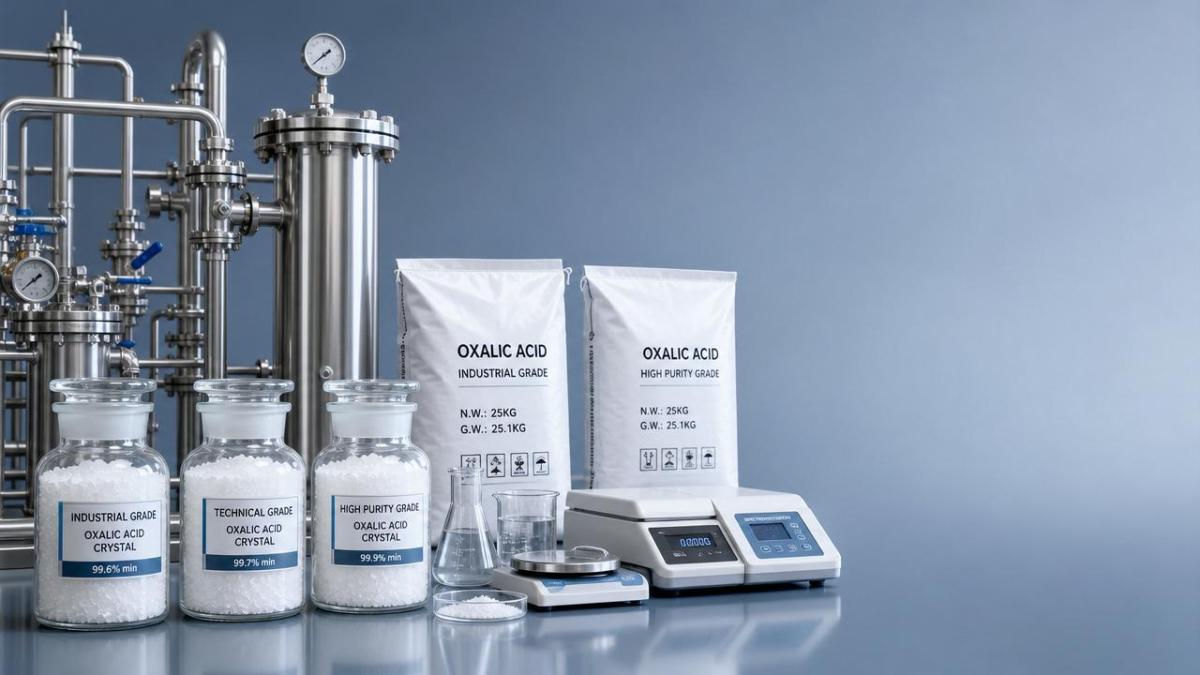
For most buyers, the term wholesale oxalic acid seems straightforward until a production issue appears: filter blockage, metal corrosion, off-color output, unstable pH behavior, or a failed quality audit. At that point, grade selection stops being a pricing exercise and becomes a process control issue. Technical evaluators need to separate commercial labels from operational consequences.
Oxalic acid is widely used as a reducing agent, cleaning chemical, bleaching aid, metal treatment component, rare earth processing reagent, and intermediate in selected fine chemical operations. In each of these uses, the same molecule can behave differently in practice because purity profile, moisture level, insoluble residue, sulfate content, heavy metals, particle form, and packaging integrity all influence plant performance.
In the ACC editorial perspective, the most important question is not “What is the highest purity available?” but “Which specification limits process risk at the lowest acceptable total cost?” That framing matters across agricultural chemistry, bio-extract processing, feed operations, primary processing plants, and fine chemical production where raw material variability can disrupt validated workflows.
- Industrial users often prioritize descaling efficiency, handling practicality, and cost per effective batch rather than headline purity alone.
- Fine chemical and biochemical users focus more on trace impurities, residue after dissolution, and contamination pathways into downstream formulations.
- Export-oriented manufacturers must also consider whether the chosen wholesale oxalic acid grade supports documentation needed for audits, import review, and customer technical approval.
The core grade categories buyers usually compare
Although supplier terminology varies, technical review generally centers on three broad categories: industrial grade, technical grade, and high-purity grade. The names are not always standardized globally, so evaluators should rely on certificate details instead of category names alone.
The table below summarizes how wholesale oxalic acid grades are typically differentiated in production-focused purchasing reviews.
This comparison shows why technical evaluators should not treat grade names as decision endpoints. The same wholesale oxalic acid labeled “technical” by two suppliers may differ materially in iron content, insoluble matter, or lot-to-lot stability.
What specifications matter more than the grade label?
When reviewing a specification sheet, teams often focus first on assay. Assay matters, but it is rarely the only critical number. In many production settings, impurity pattern is more important than nominal purity because downstream reactions and equipment surfaces respond to specific contaminants, not just the main active percentage.
Priority parameters for technical evaluation
- Assay or main content: Indicates active oxalic acid level, but should be interpreted alongside moisture and crystal form.
- Insoluble matter: Highly relevant where filtration, nozzle performance, transparent solution preparation, or surface finish quality are important.
- Sulfate, chloride, and ash: These can influence corrosion behavior, unwanted side reactions, and residue after processing.
- Iron and heavy metals: Critical for bleaching, color-sensitive products, catalyst-sensitive reactions, and quality-controlled biochemical systems.
- Particle size and form: Affects dissolution rate, dusting, manual handling, and feeder performance in large-scale lines.
- Packaging barrier performance: Important because oxalic acid can cake or degrade handling quality if exposed to moisture during storage and transport.
For wholesale oxalic acid in regulated or semi-regulated supply chains, documentation quality should be treated as a specification in itself. A clean certificate of analysis, consistent lot coding, proper safety documentation, and traceable origin are often as important as the laboratory numbers.
The next table helps technical evaluators rank specification items based on operational impact rather than habit.
A disciplined review of these items usually prevents two common failures: buying a cheaper grade that increases process loss, or paying for ultra-high purity when the line does not benefit from it.
How should technical evaluators match wholesale oxalic acid to application scenarios?
Grade selection should start from use-case sensitivity. In primary industries and fine chemicals, oxalic acid can touch metal surfaces, organic intermediates, water systems, filters, dosing pumps, and compliance records. Each touchpoint changes the acceptable impurity window.
Scenario 1: Cleaning, descaling, and metal surface treatment
In utility cleaning or metal surface preparation, industrial or technical grade wholesale oxalic acid is often sufficient if dissolution is reliable and residues remain manageable. Here, the key evaluation points are corrosion compatibility, residue after rinsing, storage stability, and worker handling controls. A slightly lower assay may be acceptable if dosing can be adjusted and contamination risk is low.
Scenario 2: Fine chemical synthesis and intermediates
When oxalic acid participates in reaction chemistry or affects reaction environment, technical grade may be the minimum starting point. Trace metals, sulfate, and insoluble matter should receive more attention than price per ton. Small impurity shifts can alter color, yield, catalyst behavior, or filtration time, creating far larger losses than the raw material savings.
Scenario 3: Bio-extracts, ingredient processing, and quality-sensitive lines
In bio-extract or sensitive ingredient environments, high-purity wholesale oxalic acid may be justified where contamination control, clarity, or trace-metal management is essential. Technical evaluators should check whether the process truly needs tighter impurity limits or whether upstream water quality and downstream filtration are the bigger constraints.
Scenario 4: Export supply chains with customer audits
Sometimes the required grade is determined less by chemistry and more by customer acceptance. If downstream buyers request detailed documentation, change-control discipline, or alignment with internal approved-vendor programs, a supplier offering stronger traceability may be the better fit even at a higher initial price.
What procurement mistakes are most common in wholesale oxalic acid sourcing?
Technical evaluators frequently inherit purchasing assumptions that were built for commodity buying, not process reliability. That creates avoidable risk, especially when supply markets tighten or alternate suppliers enter the tender process with incomplete data.
- Choosing solely by assay and ignoring impurities that affect filtration, corrosion, or color.
- Assuming two suppliers use the same grade definitions when their internal standards differ.
- Skipping pilot verification because the product appears to be a standard bulk chemical.
- Underestimating packaging, storage, and moisture exposure risks in long transit routes.
- Not clarifying whether the process needs anhydrous basis, dihydrate form, or a specific dissolution profile.
- Treating compliance documents as an afterthought instead of part of prequalification.
A practical qualification sequence
A stronger sourcing workflow for wholesale oxalic acid usually includes five checkpoints.
- Define the process-critical limits, not only the desired grade label.
- Request a recent certificate of analysis with test methods and typical ranges.
- Run a small-scale trial under actual dissolution, dosing, and filtration conditions.
- Review packaging, lead time, and lot traceability as part of technical approval.
- Lock supplier change-notification expectations before commercial rollout.
How do compliance and documentation influence grade choice?
In global procurement, documentation quality can determine whether a material is easy to onboard or difficult to defend in audits. This is especially relevant where wholesale oxalic acid enters facilities connected to food-adjacent, feed-adjacent, biochemical, or pharmaceutical-adjacent operations, even if the material itself is not used as an API.
Technical evaluators should look for a coherent documentation package: safety data sheet, certificate of analysis, packaging specification, transport classification where applicable, lot traceability, and declared storage conditions. If customer contracts mention GMP-aligned environments, EPA-managed waste handling, FDA-adjacent documentation discipline, or internal environmental review, raw material approval becomes a cross-functional task.
ACC’s industry coverage is particularly useful in this zone because the decision is rarely only chemical. It sits at the intersection of plant engineering, regulatory expectations, trade documentation, and supplier communication. Buyers who understand that intersection usually make more resilient sourcing choices.
Is the lowest-cost wholesale oxalic acid really the most economical option?
Not always. For technical evaluators, total cost should include rework risk, wash time, filter changes, maintenance, slower dissolution, rejected output, and extra quality-control labor. A lower quoted price can become the more expensive option if impurity-related disruptions are frequent.
At the same time, premium grade inflation is also real. Some buyers move too quickly toward high-purity wholesale oxalic acid without demonstrating measurable process benefit. The right question is whether tighter specifications reduce overall production cost, not whether they sound safer in theory.
A simple cost-risk decision model
- Use lower-cost grades where process tolerance is wide, cleaning demand is high, and contamination consequences are limited.
- Move to tighter grades when product color, downstream purity, or equipment reliability is sensitive to trace contaminants.
- Maintain dual-source technical files when business continuity matters more than small unit-cost differences.
FAQ: what do technical evaluators ask most often about wholesale oxalic acid?
How do I choose between industrial and technical grade wholesale oxalic acid?
Start with impurity sensitivity, not naming conventions. If the application is mainly cleaning or descaling and the line tolerates moderate residue control, industrial grade may work. If the material enters synthesis, color-sensitive treatment, or equipment with tight filtration limits, technical grade is usually the safer starting point for qualification.
Which impurity is most often overlooked?
Insoluble matter is often underestimated. Buyers tend to discuss purity percentage first, but small amounts of insolubles can cause practical trouble in solution preparation, spraying, circulation systems, and polishing steps. Iron is another frequently overlooked item in applications where appearance or trace reactivity matters.
Should every buyer request a sample before placing a wholesale oxalic acid order?
For routine low-sensitivity applications, existing approved supply may not require repeated sampling every order. But for new suppliers, changed specifications, or quality-sensitive lines, a sample or pilot lot is strongly advisable. It is one of the most efficient ways to catch dissolution, residue, or compatibility issues before full-scale purchasing.
What should be included in a supplier technical review?
Review the certificate of analysis format, specification stability, packaging method, moisture protection, batch coding, storage guidance, and responsiveness to deviation questions. If your business faces export audits or regulated customer review, check how quickly the supplier can provide document updates and traceability support.
Why consult ACC when evaluating wholesale oxalic acid options?
AgriChem Chronicle supports decision-makers who operate where raw material purchasing, process engineering, and compliance obligations overlap. Our coverage is built for technical evaluators, procurement directors, and industrial operators who need more than a generic market summary. We focus on the decision logic behind grade selection, documentation risk, and application fit across fine chemicals, bio-processing, feed systems, and primary industries.
If your team is reviewing wholesale oxalic acid for a new line or requalifying an existing source, ACC can help you frame the right questions before a costly commitment. You can consult on parameter confirmation, grade comparison, impurity priorities, documentation expectations, delivery planning, sample support strategy, and supplier shortlist logic. That is especially valuable when internal teams must align engineering, quality, sourcing, and commercial targets under tight timelines.
Contact ACC if you need structured support for product selection, specification review, delivery-cycle assessment, supplier communication criteria, or application-specific risk mapping. A disciplined wholesale oxalic acid decision starts with the right technical filters, not just a competitive quote.
Related Intelligence
- APIs & IntermediatesFirst National SME Service Platforms for APIs & Intermediates AnnouncedFirst National SME Service Platforms for APIs & Intermediates launched—offering ICH Q5/Q7, REACH, green solvent & tax rebate support. Discover verified Chinese suppliers now.
- APIs & IntermediatesBulk formic acid handling mistakes that create avoidable downtimeBulk formic acid handling mistakes can trigger corrosion, leaks, and costly downtime. Learn the most common risks and practical fixes to improve reliability and prevent shutdowns.
- APIs & IntermediatesWholesale glacial acetic acid: packaging choices and freight tradeoffsWholesale glacial acetic acid buying starts with the right packaging and freight plan. Compare drums, IBCs, and ISO tanks to cut landed cost, reduce risk, and secure reliable bulk supply.
The Morning Broadsheet
Daily chemical briefings, market shifts, and peer-reviewed summaries delivered to your terminal.
