
The Authority in Global Agricultural Chemistry & Bio-Resources
Wholesale Boric Acid Grades and Where Misuse Starts
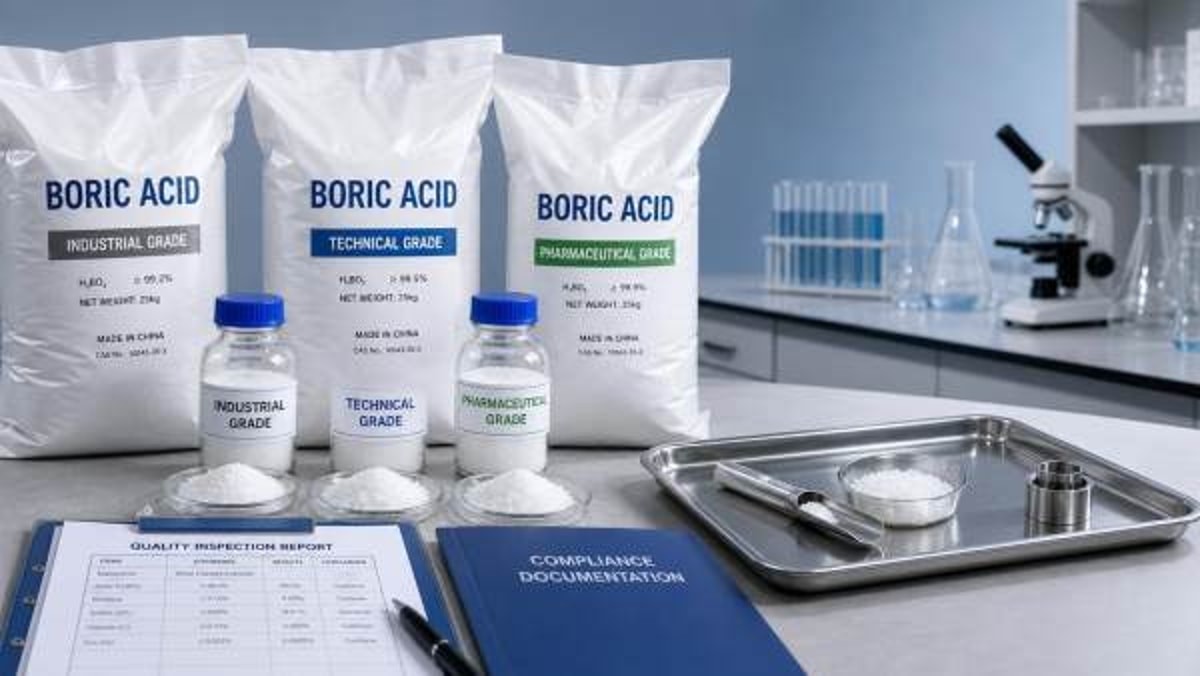
In wholesale boric acid procurement, the real risk often begins not with pricing or supply volume, but with grade confusion and downstream misuse. For quality control and safety managers, understanding how industrial, technical, and pharmaceutical grades differ is essential to preventing compliance failures, handling hazards, and costly application errors. This article examines where misuse starts, why specification discipline matters, and how buyers can strengthen risk controls across the supply chain.
Why wholesale boric acid is drawing closer scrutiny
A clear shift is taking place in the way industrial buyers evaluate wholesale boric acid. In the past, many purchasing teams treated boric acid as a relatively straightforward commodity used across glass, ceramics, wood treatment, agriculture, metallurgy, flame retardants, and selected chemical formulations. Today, that view is becoming harder to defend. Regulatory pressure, tighter end-use documentation, more fragmented global sourcing, and stronger internal audit expectations are changing how quality and safety teams assess the material.
The most important trend is not simply price volatility. It is the growing operational consequence of buying the wrong grade for the wrong downstream application. In many organizations, misuse begins long before the material reaches production. It starts when commercial descriptions such as “industrial,” “technical,” “refined,” or “high purity” are treated as interchangeable, even though those terms may not reflect harmonized specifications, impurity thresholds, or intended regulatory fit.
For quality control personnel and safety managers, this means wholesale boric acid procurement is no longer just a sourcing exercise. It has become a specification governance issue. The question is not only whether supply is available, but whether the purchased material is suitable, documented, traceable, and defensible for the actual use case.
The market signal: grade confusion is becoming a bigger business risk
One of the strongest signals in the current market is the widening gap between commercial listings and technical suitability. Online catalogs, trader sheets, and even some distributor offers can present wholesale boric acid with broad claims but limited clarity on particle size, assay range, moisture, heavy metal profile, packaging controls, or compliance references. When procurement teams move too quickly from quotation to purchase order, grade ambiguity becomes embedded in the supply chain.
This is especially relevant in cross-border trade, where naming conventions differ and documentation standards vary by supplier maturity. A material sold as “pharma grade” in one market may still require full verification against pharmacopeial standards, while “technical grade” may be acceptable in one industrial process but unsuitable in another due to impurity sensitivity or worker exposure conditions.
Where misuse usually starts in the chain
Misuse of wholesale boric acid rarely starts at the moment of application. It usually begins with a weak handoff between procurement, quality, operations, and safety functions. In many companies, the purchase request names the chemical but not the intended-use boundaries. That leaves buyers to focus on assay and cost while overlooking contamination sensitivity, process interaction, packaging integrity, or legal restrictions linked to a particular end market.
A second starting point is overreliance on supplier labels. “Industrial grade” is not a complete technical decision. It says very little about whether the material is appropriate for boron-sensitive formulations, water-treatment interactions, agricultural blending, or manufacturing environments where impurity carryover matters. The same concern applies to “high purity” claims that are unsupported by batch-level certificates or incomplete analytical methods.
A third failure point is substitution under supply pressure. When lead times extend or pricing changes sharply, teams may approve alternative wholesale boric acid offers without a structured change-control review. That shortcut may seem operationally convenient, but it is often where specification drift enters the plant.
Why the grade issue matters more now than before
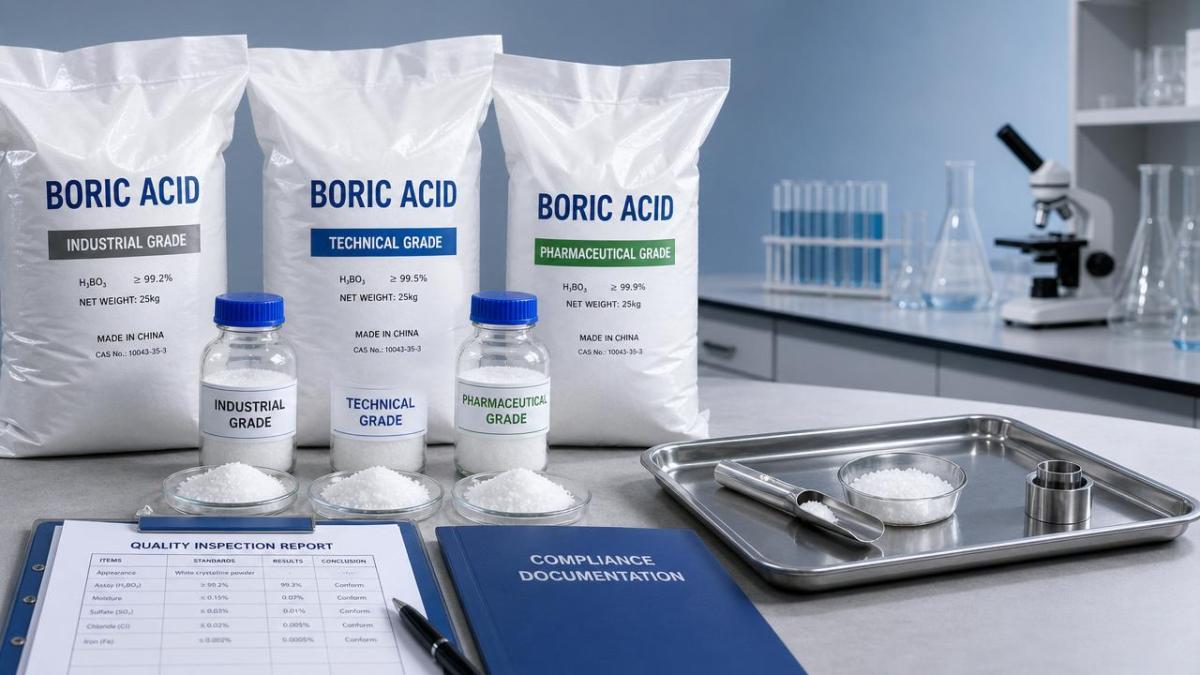
The grade issue is becoming more important because downstream consequences are expanding. In less sensitive uses, an unsuitable grade may only reduce process efficiency or increase rework. In more controlled environments, the same mismatch can trigger batch rejection, customer complaint, internal CAPA, or a broader audit response. Quality teams are increasingly expected to show that the chosen wholesale boric acid specification was not merely available, but technically justified.
Safety managers face a parallel shift. Misuse can change dust behavior, storage compatibility, labeling obligations, and worker handling procedures. If the material enters a use context that was not evaluated during approval, the existing risk assessment may no longer be valid. That is why grade clarity is not only a quality requirement but an EHS control point.
There is also a reputation dimension. In sectors where buyers must demonstrate disciplined sourcing practices, preventable confusion over wholesale boric acid grades can signal weak technical governance. That matters when customers, regulators, or institutional partners assess supplier reliability.
The main drivers behind this tighter environment
Several forces are pushing the market in this direction. First, supply chains are more distributed, so product descriptions travel further than laboratory truth. Second, more end users now operate under documented quality systems that require material qualification and traceability. Third, environmental and occupational safety expectations are tightening across many jurisdictions, making handling assumptions less acceptable. Fourth, technical customers are asking more detailed questions about contaminants, consistency, and packaging controls.
In practical terms, buyers of wholesale boric acid now need to evaluate more than chemistry alone. They must also assess document quality, supplier change notification practices, batch consistency, and whether the supplier understands the intended industrial application rather than simply offering a generic commodity.
Key drivers quality and safety teams should watch
- More use-case specific sourcing instead of broad commodity purchasing
- Greater demand for verified COA, SDS, and impurity disclosure
- Stronger internal scrutiny of supplier substitution and requalification
- Increasing need to align procurement language with operational reality
Who feels the impact most across the business
The impact of wholesale boric acid misuse is not evenly distributed. Quality control teams are often the first to detect a problem through nonconforming results, but the original cause may sit upstream in specification approval. Safety managers may discover that training, PPE assumptions, or storage procedures no longer fit the sourced material. Production teams absorb the disruption through downtime or reformulation. Procurement then faces the cost of emergency replacement, supplier escalation, or damaged trust.
What stronger specification discipline looks like
The best response is not to avoid wholesale boric acid from broad supplier markets. It is to create a sharper approval framework. Stronger specification discipline means defining the material by intended use, acceptable impurity profile, physical form, test method expectations, packaging controls, and change-management triggers. It also means separating commercial descriptions from internal acceptance criteria.
For example, if a plant can only tolerate certain contaminant levels or requires consistency in particle behavior, those points should appear in the purchasing and quality documents directly. If a supplied grade is acceptable only for one process but not another, that boundary must be visible to stores, production, and safety personnel. Misuse often persists because organizations approve wholesale boric acid at the company level when they should be approving it at the application level.
A practical trend-based checklist for upcoming decisions
Looking ahead, quality and safety managers should assess wholesale boric acid through a trend lens rather than a one-time purchase lens. The market is moving toward greater justification, more documentation, and closer alignment between sourcing and end use. That suggests a simple but important shift in internal decision-making.
How to judge future risk signals in wholesale boric acid sourcing
Over the next purchasing cycles, the most useful signals will not always come from market price charts. Quality and safety leaders should pay attention to softer but more revealing indicators: vague specification sheets, inconsistent COA formatting, missing intended-use discussion, unexplained changes in origin, sudden packaging differences, or suppliers unable to explain how their wholesale boric acid grade maps to a controlled application. These are often early warnings of future nonconformance.
The direction of travel is clear. Buyers are being asked to source with more technical intent. Suppliers are being asked to support claims with better documentation. Internal stakeholders are being asked to coordinate decisions that were once made in isolation. In that environment, the organizations that perform best will be those that treat wholesale boric acid not as a generic line item, but as a material whose suitability depends on context, discipline, and documented judgment.
Final judgment and action points for quality and safety teams
The biggest change in wholesale boric acid procurement is not the product itself but the level of scrutiny surrounding its grade, traceability, and application fit. Misuse starts where specification language is loose, where supplier claims go unchallenged, and where change control is weak. For quality control and safety managers, the response should center on tighter grade definitions, stronger supplier verification, and clearer internal restrictions tied to end use.
If your organization wants to judge how these trends affect its own business, start with five questions: Are your approved grades tied to specific applications? Do procurement documents mirror quality requirements? Can safety controls still be defended after supplier substitution? Are batch documents detailed enough to detect drift? And do all departments understand where wholesale boric acid can and cannot be used? The answers will usually show where misuse begins—and where prevention should begin too.
Related Intelligence
- APIs & IntermediatesWholesale Zinc Oxide Prices Vary for Reasons Beyond PurityWholesale zinc oxide prices vary by more than purity alone. Explore how process, specs, compliance, and freight impact cost to source smarter and reduce supply risk.
- APIs & IntermediatesWholesale Iron Oxides: Shade Consistency Is Harder Than It LooksWholesale iron oxides shade consistency is harder than it looks. Learn the hidden causes of batch variation, key QC checks, and smarter sourcing steps to reduce risk and protect product quality.
- APIs & IntermediatesBulk Phosphoric Acid Buying Mistakes That Delay ProductionBulk phosphoric acid buying mistakes can trigger delays, rejects, and higher costs. Learn how to compare specs, suppliers, and documents to protect production.
The Morning Broadsheet
Daily chemical briefings, market shifts, and peer-reviewed summaries delivered to your terminal.
