

The Authority in Global Agricultural Chemistry & Bio-Resources
Organic solvents wholesale: where hidden freight costs appear
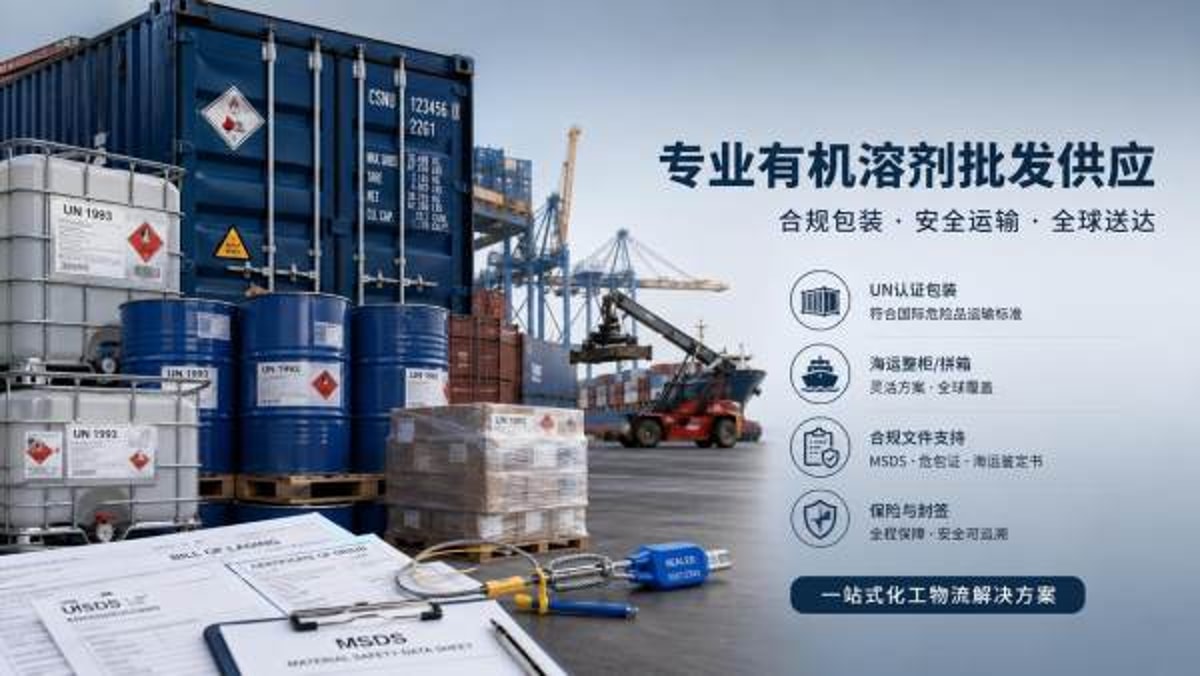
In organic solvents wholesale, the quoted unit price rarely tells the full story. For finance approvers, hidden freight costs can quietly erode margins through hazmat surcharges, port delays, packaging compliance, insurance premiums, and route restrictions. Understanding where these charges emerge is essential for evaluating supplier quotes accurately, controlling landed costs, and making procurement decisions that protect both budget discipline and supply continuity.
What hidden freight costs mean in organic solvents wholesale
In practical terms, hidden freight costs are charges that sit outside the headline product rate yet materially change the true landed cost of a shipment. In organic solvents wholesale, these extra costs appear more often than in ordinary bulk goods because many solvents are flammable, volatile, purity-sensitive, or regulated under dangerous goods frameworks. A supplier may appear competitive on a per-drum or per-ton basis, but the logistics profile can turn a low quote into a high-cost transaction once freight conditions are fully disclosed.
For financial approvers, this issue matters because freight variability directly affects budget certainty, cash planning, and gross margin integrity. A purchasing team may focus on product grade, lead time, or supply availability, while finance must assess whether the transaction is resilient against cost creep. In sectors covered by AgriChem Chronicle, including fine chemicals, bio-extracts, feed processing, and industrial agricultural inputs, transport complexity is often inseparable from product compliance and operational risk.
The most important point is that freight is not a single line item. In organic solvents wholesale, it is a layered structure of regulatory, operational, and risk-based charges. Some are predictable, such as hazardous cargo handling. Others emerge only after booking, inspection, route review, or customs intervention. This is why finance teams need a structured framework rather than relying on quote comparisons alone.
Why the industry pays close attention to landed cost accuracy
The supply chain for organic solvents has become more expensive and less forgiving. Carriers have tightened dangerous goods policies, ports have raised safety scrutiny, insurers price according to route and incident profile, and regulators increasingly enforce packaging and documentation standards. At the same time, buyers in pharmaceuticals, agrochemicals, coatings, extraction, and process manufacturing still expect dependable delivery and stable pricing.
This creates a mismatch between commercial expectations and logistics reality. A quote may be technically correct on the day issued, yet incomplete from a total-cost perspective. For example, a solvent shipment moving in isotanks may avoid some packaging costs but trigger cleaning, demurrage, and repositioning expenses. A drum shipment may look operationally simpler but invite palletization charges, special labels, limited-stack restrictions, and more expensive last-mile handling.
In organic solvents wholesale, landed cost accuracy has become a governance issue. It affects not only procurement efficiency but also audit readiness, supplier performance evaluation, and working-capital planning. Finance approvers who understand the freight architecture are better positioned to challenge incomplete quotations and prevent avoidable overruns.
Where hidden freight costs typically appear
The largest hidden charges in organic solvents wholesale usually emerge at the intersection of hazard classification, transport mode, packaging method, and route conditions. These costs may not be concealed intentionally; often they are contingent, fragmented across multiple service providers, or triggered only when shipment details are finalized.
Common cost layers behind a low headline quote
Hazmat surcharges are among the most visible examples. Many organic solvents fall under dangerous goods rules, so carriers may apply handling fees regardless of shipment size. A buyer comparing two suppliers may miss the fact that one has access to carrier contracts with lower dangerous goods premiums, while the other depends on spot market bookings.
Packaging compliance is another frequent source of hidden cost. Product that leaves the factory in standard drums may still require export-grade marking, specialized closures, inner liners, or additional documentation for multimodal transport. In organic solvents wholesale, these compliance upgrades are often non-negotiable because they protect not only cargo integrity but legal admissibility across jurisdictions.
The role of transport mode in cost visibility
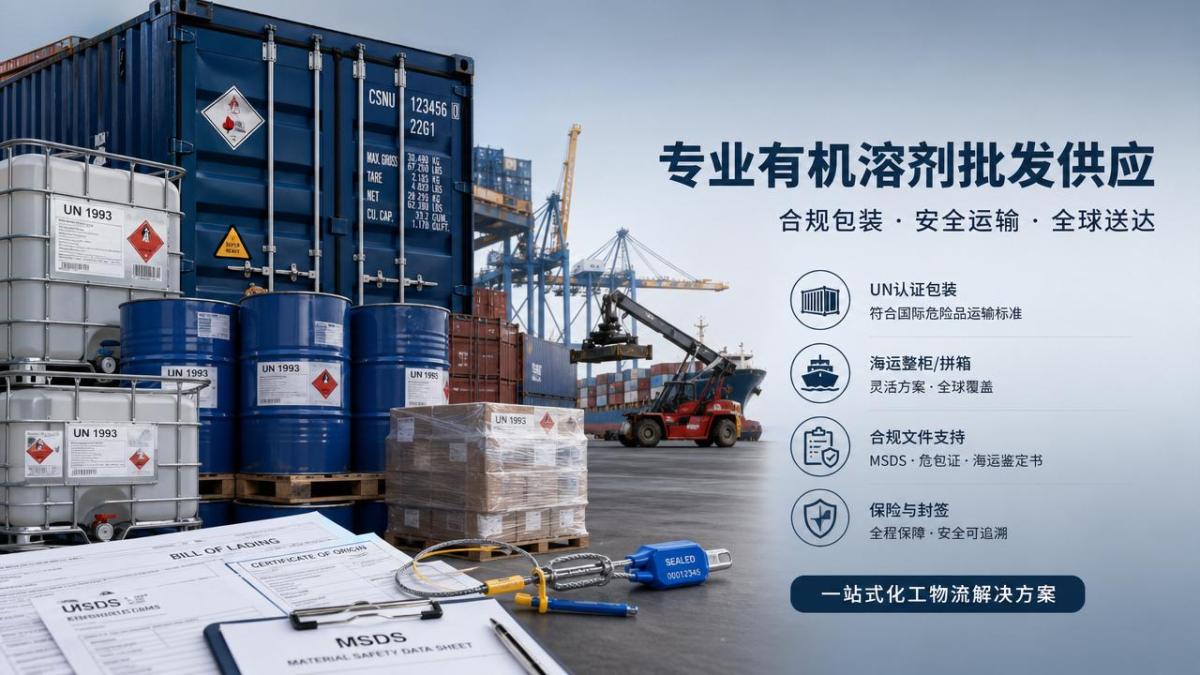
Freight opacity often begins with transport mode selection. Ocean freight, road haulage, rail, air cargo, and intermodal combinations each generate different cost profiles. In organic solvents wholesale, a seemingly cheaper mode may become more expensive after restrictions and handling requirements are accounted for.
Ocean freight is often chosen for volume economics, but it can involve dangerous cargo documentation fees, port segregation rules, terminal storage, and schedule disruption. Road transport may offer flexibility, yet regional tunnel rules, driver certification requirements, and local hazardous access limitations can add cost. Air freight is rarely preferred except for urgent or specialty situations because dangerous goods acceptance is stricter and significantly more expensive.
Finance approvers should therefore ask a basic but revealing question: is the quote based on the supplier’s preferred route, the buyer’s preferred route, or the only legally permissible route? The answer often explains why identical products show dramatically different landed costs.
Typical scenarios that create budget surprises
Not every shipment in organic solvents wholesale carries the same freight risk. Cost surprises tend to cluster around a few recurring scenarios that finance teams can monitor in advance.
Scenario-based risk overview
These scenarios show why a low ex-works or FOB price is not enough for approval. In organic solvents wholesale, cost exposure is often created after the commercial agreement, when the cargo enters real transport conditions. A disciplined review process should test those conditions before commitment.
Why this matters especially to finance approvers
Procurement teams typically focus on sourcing continuity and technical suitability. Finance approvers have a broader mandate: protect margin, preserve forecasting accuracy, and ensure contractual assumptions align with actual cash outflow. Hidden freight costs undermine all three.
First, they distort supplier comparison. A supplier with a higher product price but stronger logistics control may be cheaper on a landed basis than a low-price offer with fragmented freight responsibility. Second, they increase month-end variance. Charges such as detention, emergency relabeling, or route amendments often arrive after goods are shipped, complicating accrual discipline. Third, they raise operational risk. If a supplier repeatedly underestimates freight complexity, the issue is not merely cost; it may signal weak compliance management.
For readers in fine chemicals, agricultural processing, and bio-based industries, this is especially relevant because solvent movements often support time-sensitive production schedules. A delayed shipment can mean not only extra freight cost but idle labor, missed processing windows, or disrupted formulation output. Finance should evaluate those downstream consequences as part of total exposure.
Practical evaluation points before approving a quote
A sound approval process for organic solvents wholesale does not require finance to become a logistics operator. It requires asking the right questions in a repeatable way. The objective is to separate fixed price from contingent price and understand which party owns each risk.
- Confirm the Incoterm and identify exactly which freight elements are excluded from the quote.
- Request dangerous goods classification details and ask whether hazmat surcharges are fixed, estimated, or pass-through.
- Verify packaging specification, including UN approval, relabeling, palletization, and export preparation.
- Check whether insurance is included, what valuation basis applies, and whether special route risks alter premiums.
- Ask for assumptions on free time, storage, detention, tank return, and customs documentation amendments.
- Review destination constraints, especially for first-time lanes or restricted inland delivery points.
These controls improve quote transparency without slowing business unnecessarily. Over time, they also create a useful internal database of actual versus quoted freight outcomes, which strengthens future negotiations in organic solvents wholesale.
Building better supplier discussions around freight transparency
The most productive suppliers are not always those offering the lowest initial number; they are the ones able to explain freight assumptions clearly and document compliance pathways. In organic solvents wholesale, transparency is a performance indicator. It suggests the supplier understands route feasibility, packaging obligations, and documentation accuracy before cargo moves.
Finance approvers can encourage better behavior by asking for structured quotations that separate product cost, base freight, regulatory surcharges, packaging extras, and conditional accessorials. This reduces ambiguity and helps procurement compare suppliers on a normalized basis. It also supports stronger post-shipment review, because unplanned charges can be traced back to specific assumptions rather than absorbed as unexplained overhead.
For organizations operating in regulated and technically sensitive sectors, this level of discipline supports more than cost control. It contributes to supplier governance, internal compliance confidence, and better resilience in volatile transport markets.
A practical closing perspective
In organic solvents wholesale, hidden freight costs do not usually come from a single dramatic mistake. They emerge from small omissions across handling, compliance, routing, insurance, and delay exposure. That is why finance approvers should evaluate quotations as logistics-backed cost models rather than simple material prices.
A well-reviewed quote should show how the solvent will move, what regulatory conditions apply, which packaging standard is required, and who bears the cost if the plan changes. When those answers are visible early, landed cost becomes more predictable, supplier comparison becomes more accurate, and approval decisions become easier to defend.
For companies seeking stronger budget discipline in organic solvents wholesale, the next useful step is simple: require freight transparency at quote stage, record actual post-shipment cost deviations, and use that evidence to refine supplier evaluation. In a market shaped by regulation and route complexity, clarity is often the strongest cost-saving tool available.
Related Intelligence
- APIs & IntermediatesFine Chemicals GMP compliance gaps that delay qualificationFine Chemicals GMP compliance gaps can delay supplier qualification, slow audits, and raise risk. Learn the hidden issues buyers now flag—and how to avoid costly approval setbacks.
- APIs & IntermediatesHow Fine Chemicals API suppliers differ on audit readinessFine Chemicals API suppliers differ sharply on audit readiness. Discover how to assess documentation, traceability, validation, and change control to reduce compliance risk.
- APIs & IntermediatesPharmaceutical intermediates wholesale: spotting weak documentationPharmaceutical intermediates wholesale: learn how to spot weak documentation early, reduce compliance and quality risks, and screen suppliers with greater confidence.
The Morning Broadsheet
Daily chemical briefings, market shifts, and peer-reviewed summaries delivered to your terminal.
