

The Authority in Global Agricultural Chemistry & Bio-Resources
Pharmaceutical intermediates wholesale: spotting weak documentation
In pharmaceutical intermediates wholesale, weak documentation is often the earliest warning sign of hidden compliance, quality, and supply chain risks. For procurement teams managing regulated sourcing, identifying incomplete certificates, inconsistent batch records, and unverifiable audit trails is essential to avoiding costly disruptions and protecting long-term supplier integrity.
Why weak documentation matters in pharmaceutical intermediates wholesale
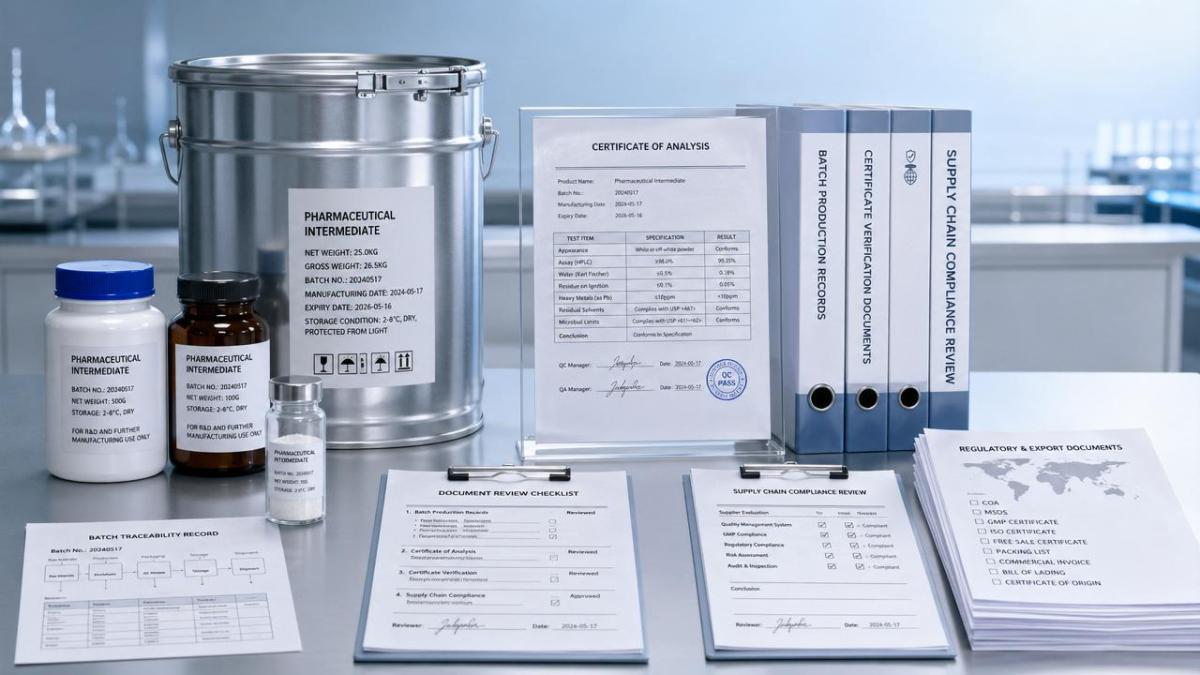
For procurement professionals, documentation is not paperwork to file away after a purchase order is issued. In pharmaceutical intermediates wholesale, it is the first operational filter for supplier credibility. When a supplier cannot present complete, consistent, and traceable records, the issue rarely stays confined to administration. It usually extends into manufacturing discipline, raw material control, deviation handling, logistics transparency, and regulatory readiness.
This matters even more in cross-border chemical sourcing, where intermediates may move through traders, toll manufacturers, warehouse hubs, and repackaging points before reaching the buyer. Every handoff creates risk. If the documents behind a batch are incomplete, procurement loses visibility into origin, process changes, storage conditions, and quality release logic. In practice, weak files today can become rejected material, customs delays, failed audits, or corrective action costs tomorrow.
AgriChem Chronicle tracks these issues closely because regulated sourcing now sits at the intersection of fine chemicals, trade compliance, and industrial supply chain management. For buyers of pharmaceutical intermediates wholesale, the question is no longer whether documentation should be checked. The real question is how early and how rigorously it should be checked before commercial terms are finalized.
- Incomplete records often indicate weak batch control, not just clerical oversight.
- Inconsistent data between certificates and shipping files can signal unauthorized process variation.
- Unverifiable signatures, dates, or test references reduce confidence in product release decisions.
- Poor traceability makes supplier qualification and future investigations slower and more expensive.
What procurement teams should review first before approving a supplier
Many procurement teams begin with price, MOQ, and lead time. Those metrics are important, but in pharmaceutical intermediates wholesale they should not come before documentation screening. A low-cost offer becomes expensive if the supplier cannot support qualification, technical review, or audit follow-up. The fastest way to reduce wasted sourcing cycles is to review a defined set of records before moving into detailed negotiations.
Core documentation checklist
The table below highlights the first-pass documentation checkpoints procurement teams should use when evaluating pharmaceutical intermediates wholesale suppliers, especially when sourcing for regulated or semi-regulated downstream manufacturing.
A supplier that can provide these records quickly, in a coherent format, and with consistent batch references usually has stronger internal controls. By contrast, repeated delays, conflicting versions, or evasive answers during document review should be treated as sourcing risk indicators rather than minor inconveniences.
A practical first-screen sequence
- Request the latest COA, specification, safety information, and packaging details for the exact intermediate under discussion.
- Check whether batch numbers, dates, and test references are aligned across all files.
- Ask for one historical batch example to assess consistency over time rather than reviewing a single polished sample.
- Escalate unusual gaps to quality or regulatory colleagues before moving to commercial onboarding.
How to distinguish minor paperwork gaps from serious compliance risk
Not every documentation issue means a supplier is unusable. Procurement needs a practical way to separate manageable deficiencies from structural weaknesses. A missing page can be corrected. A pattern of conflicting data cannot. The goal is not perfection at first contact. The goal is to identify whether the supplier operates with disciplined quality systems or reactive document assembly.
Risk-based comparison for documentation weaknesses
In pharmaceutical intermediates wholesale, the following comparison helps buyers prioritize follow-up actions instead of treating every issue the same way.
This framework is especially useful when procurement is under pressure to secure volume quickly. It creates a documented rationale for slowing down a risky supplier without relying on vague concerns. It also helps cross-functional teams agree on what must be corrected before onboarding can proceed.
Which documents reveal the most about supplier discipline
Some records tell you far more than others. In pharmaceutical intermediates wholesale, buyers often overemphasize polished marketing brochures and underemphasize operational files. The strongest signals usually come from documents that are difficult to fabricate consistently over time, such as batch-linked testing records, change declarations, deviation references, and packaging traceability information.
High-value records for deeper review
- Batch-specific COA history across multiple lots. Consistency between lots can reveal whether the process is stable or merely presented as stable.
- Change control statements covering synthesis route, equipment, critical solvent, and test method changes. These documents help procurement understand whether supply continuity could be disrupted without notice.
- Warehouse and packaging records showing container type, labeling format, and storage conditions. This is essential when moisture sensitivity, contamination risk, or relabeling risk is relevant.
- Audit response samples, if available through formal channels. Even a redacted corrective action structure can indicate whether the supplier manages findings systematically.
For buyers serving API manufacturers, CDMOs, or specialty chemical processors, these records also support internal approval workflows. Technical teams can assess whether a supplier’s process maturity aligns with downstream requirements, while procurement can judge how much operational friction is likely after the first shipment.
Standards, certifications, and what they do not automatically prove
In regulated sourcing, standards matter. References to GMP, FDA-related expectations, environmental rules, or export compliance can indicate that a supplier understands formal requirements. Still, procurement should avoid assuming that a claimed standard reference automatically resolves all risk. In pharmaceutical intermediates wholesale, the quality of supporting documentation is what turns a standards claim into something operationally useful.
Useful compliance questions for supplier review
- Is the product manufactured in a facility with documented quality procedures relevant to the intermediate category?
- Can the supplier explain which tests are routine release tests and which are periodic or customer-specific?
- Are document versions controlled, dated, and attributable to responsible personnel?
- Does the supplier maintain a process for notifying customers about specification or process changes?
This is where AgriChem Chronicle adds value for institutional buyers. ACC’s coverage sits close to the operational realities of fine chemicals, APIs, and internationally regulated industrial supply chains. That perspective helps procurement teams interpret documentation not just as isolated files, but as indicators of broader manufacturing and compliance behavior.
Procurement guide: how to build a safer review process for pharmaceutical intermediates wholesale
A strong sourcing process is repeatable. It should work whether the buyer is evaluating a new intermediate, qualifying an alternate supplier, or responding to an urgent shortage. The best procurement systems do not depend on individual memory. They use defined checkpoints, cross-functional review, and escalation criteria tied to documentation quality.
Recommended evaluation workflow
- Pre-qualification: collect legal entity information, manufacturing site identity, product scope, and baseline quality documents.
- Technical screen: review specifications, analytical methods, impurity controls, and storage or transport sensitivity.
- Traceability review: confirm batch numbering logic, site transparency, and the consistency of batch-linked files.
- Risk escalation: involve quality, regulatory, or supply chain compliance teams if records conflict or critical gaps remain unresolved.
- Commercial approval: negotiate pricing and lead time only after documentation risk reaches an acceptable level.
Selection priorities under different sourcing scenarios
Not every buying scenario has the same tolerance for documentation gaps. The table below shows how procurement priorities shift depending on the business context in pharmaceutical intermediates wholesale.
This scenario-based view keeps teams from overpaying for unnecessary controls in low-risk cases while avoiding under-review in high-risk situations. It also helps procurement communicate decisions clearly to finance, operations, and quality stakeholders.
Common misconceptions that increase supplier risk
Several recurring mistakes cause avoidable losses in pharmaceutical intermediates wholesale. Most are not caused by lack of effort. They happen because teams focus on visible commercial indicators and underestimate the predictive value of documentation quality.
Frequent sourcing errors
- Assuming a competitive quote offsets documentation weakness. In reality, missing records often create downstream sampling, quarantine, and investigation costs that erase price savings.
- Treating traders and manufacturers as documentation equals. Some traders are highly capable, but procurement still needs clear visibility into the actual production site and release controls.
- Accepting generic declarations without product-specific linkage. A statement about quality commitment is far less useful than a batch-linked and version-controlled record.
- Waiting until the final stage to involve technical reviewers. Early collaboration reduces rework and prevents late-stage supplier rejection.
FAQ: practical questions buyers ask about pharmaceutical intermediates wholesale
How can buyers identify weak documentation before placing a trial order?
Start by asking for a recent COA, specification sheet, packaging details, and one additional historical batch record set. Compare dates, signatures, batch references, and test descriptions. If the supplier cannot maintain consistency across basic files, the trial order may still arrive, but qualification and future scaling will likely become difficult.
Are missing certificates always a reason to reject a supplier?
Not always. The decision depends on what is missing and how the supplier responds. A delayed non-critical support file may be manageable. But absent batch-specific quality documents, unclear origin data, or unresolved inconsistencies in product release records should trigger a hold until the issue is clarified.
What matters more in pharmaceutical intermediates wholesale: price or traceability?
For regulated and quality-sensitive applications, traceability usually protects value better than the lowest quoted price. A supplier with stronger documentation may not always be the cheapest, but it often reduces the total cost of ownership by lowering the chances of rejection, delay, deviation review, and requalification work.
When should procurement escalate a document issue to quality or compliance teams?
Escalation is appropriate when there are conflicting specifications, unexplained COA results, missing site identity, unclear batch traceability, or signs that files were assembled retrospectively. These are not just documentation concerns. They may indicate deeper control weaknesses that need specialist review.
Why informed buyers turn to AgriChem Chronicle
Procurement teams operating in fine chemicals and regulated industrial sectors need more than product summaries. They need context that connects documentation quality, market structure, supply chain complexity, and compliance exposure. AgriChem Chronicle is built for that requirement. Its editorial focus across Fine Chemicals & APIs, bio-based inputs, and industrial processing creates a practical intelligence layer for buyers who must make defensible sourcing decisions under time pressure.
Because ACC draws on biochemical engineering, agricultural science, and trade compliance perspectives, buyers can use its analysis to sharpen supplier questions, benchmark documentation quality, and identify risk patterns earlier. For procurement leaders, that means fewer blind spots when comparing offers, validating capability claims, or planning alternate sourcing strategies.
Contact us for supplier screening, documentation review, and sourcing intelligence
If your team is assessing pharmaceutical intermediates wholesale suppliers and needs a clearer view of documentation risk, AgriChem Chronicle can support more informed decision-making. You can consult us on supplier screening criteria, specification review priorities, documentation completeness, likely qualification bottlenecks, and the trade-offs between faster onboarding and stronger compliance control.
Reach out if you need help comparing supplier document sets, clarifying certification expectations, reviewing batch traceability concerns, estimating qualification effort, understanding delivery-cycle implications, or preparing questions before requesting samples and quotations. For procurement teams facing tight timelines and high compliance exposure, early clarity is often the most cost-effective advantage.
Related Intelligence
- APIs & IntermediatesFine Chemicals GMP compliance gaps that delay qualificationFine Chemicals GMP compliance gaps can delay supplier qualification, slow audits, and raise risk. Learn the hidden issues buyers now flag—and how to avoid costly approval setbacks.
- APIs & IntermediatesHow Fine Chemicals API suppliers differ on audit readinessFine Chemicals API suppliers differ sharply on audit readiness. Discover how to assess documentation, traceability, validation, and change control to reduce compliance risk.
- APIs & IntermediatesPharmaceutical intermediates wholesale: spotting weak documentationPharmaceutical intermediates wholesale: learn how to spot weak documentation early, reduce compliance and quality risks, and screen suppliers with greater confidence.
The Morning Broadsheet
Daily chemical briefings, market shifts, and peer-reviewed summaries delivered to your terminal.
