
The Authority in Global Agricultural Chemistry & Bio-Resources
Industrial Grade Hydrochloric Acid Purity Levels Explained
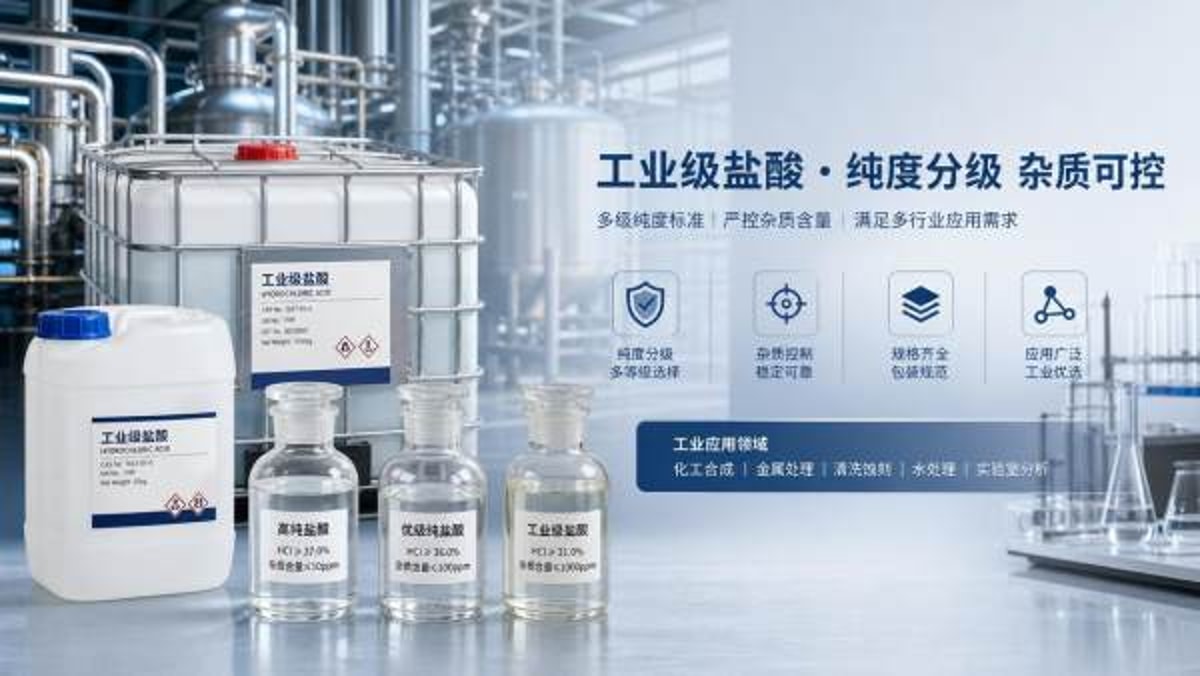
Understanding industrial grade hydrochloric acid starts with purity. For researchers, buyers, and compliance-focused professionals, even small variations in concentration and impurity profiles can affect processing efficiency, equipment compatibility, and regulatory outcomes. This introduction explains how industrial grade hydrochloric acid purity levels are classified, what they mean for different applications, and why informed sourcing decisions matter across modern chemical and primary industry supply chains.
What does industrial grade hydrochloric acid purity actually mean?
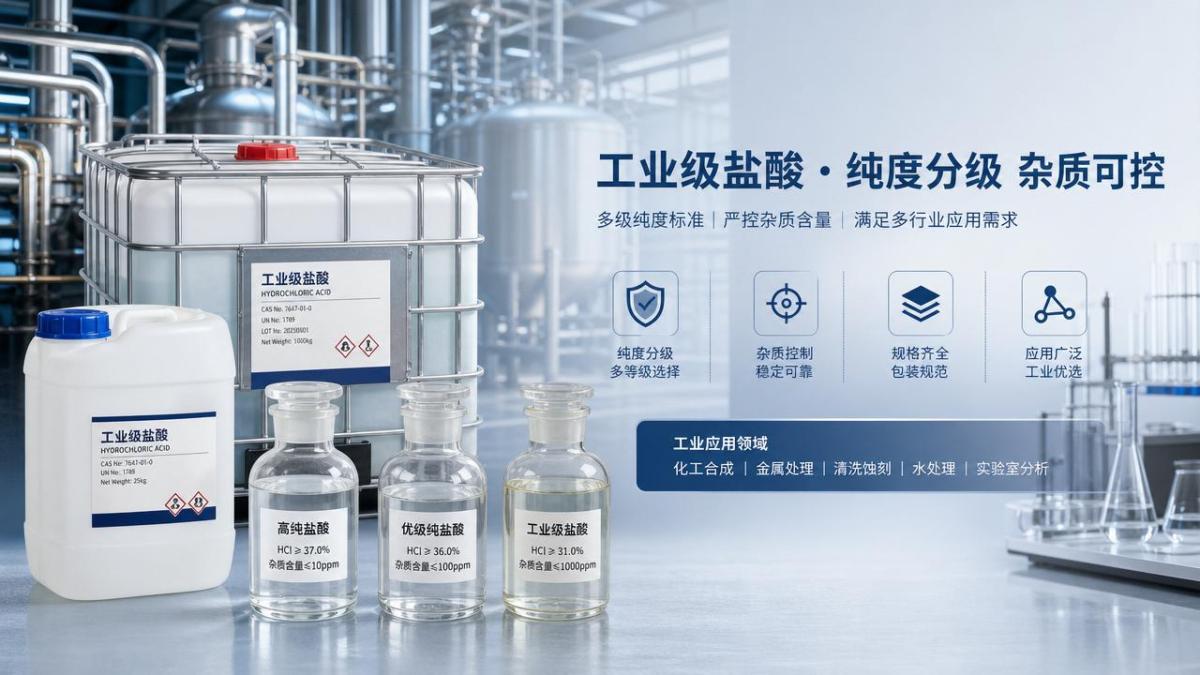
In practical procurement terms, industrial grade hydrochloric acid is not defined by a single universal purity number. Buyers usually evaluate it by hydrogen chloride concentration, residual metal content, free chlorine, sulfate, iron, organic contamination, and appearance. The right specification depends on the process, not just the label on the drum or tank truck.
For information researchers working across chemicals, agriculture, feed processing, bio-extracts, and primary manufacturing, this distinction matters. A material suitable for steel pickling may be unsuitable for pH control in sensitive ingredient processing, and a grade accepted in bulk cleaning service may not meet the internal quality expectations of a pharmaceutical intermediate plant.
Core parameters that shape purchasing decisions
- Concentration range: Common industrial supply often falls around 28% to 35% HCl, but acceptable variance should be confirmed against process design and dosing systems.
- Impurity profile: Iron, heavy metals, sulfate, and chlorinated by-products can affect catalysts, finished color, corrosion rate, and product consistency.
- Physical condition: Color, suspended matter, fuming behavior, and odor consistency can indicate storage quality and handling history.
- Packaging and logistics: IBCs, drums, ISO tanks, and bulk tanker supply each introduce different contamination and storage risks.
In many cross-industry buying environments, “higher purity” is not automatically the best commercial choice. The better question is whether the purity level is fit for process, compliant with downstream use, and stable across repeated deliveries.
How are purity levels commonly classified in real industrial use?
Because specification language differs by producer and region, buyers should compare industrial grade hydrochloric acid using functional categories rather than relying only on naming conventions. The table below summarizes how procurement teams often interpret purity levels in a working context.
This classification is useful because it links industrial grade hydrochloric acid purity to operational risk. It also helps researchers compare suppliers that use different product sheets but serve similar downstream industries.
Why concentration alone is not enough
A 33% hydrochloric acid solution from Supplier A and a 33% solution from Supplier B may perform very differently if iron, arsenic, sulfate, or suspended solids vary. In acid-sensitive manufacturing, impurity management often determines reject rate, maintenance frequency, and wastewater treatment burden more than headline concentration does.
Which industries care most about purity differences?
Across ACC’s editorial sectors, industrial grade hydrochloric acid is relevant in more places than many buyers expect. The same chemical can move through agricultural processing, fine chemical synthesis, equipment maintenance, mineral conditioning, and water treatment, yet each setting tolerates different impurity thresholds.
Application scenarios by sensitivity level
The table below shows how use case sensitivity changes the specification logic for industrial grade hydrochloric acid.
For cross-sector buyers, this is where specification discipline pays off. The same industrial grade hydrochloric acid can be commercially attractive in one process and operationally costly in another if the impurity pattern is mismatched.
How should buyers compare industrial grade hydrochloric acid offers?
Many sourcing teams compare only unit price per ton, but that approach can hide disposal costs, corrosion exposure, downtime risk, and non-conformance losses. A better evaluation model is to compare industrial grade hydrochloric acid offers across chemical, operational, and documentary dimensions.
A practical procurement checklist
- Confirm intended use. Is the acid going into synthesis, cleaning, pH correction, or equipment maintenance? The use determines which impurities matter.
- Request a recent certificate of analysis. Check concentration method, batch date, and whether impurity values are actual results or only specification limits.
- Review packaging history. Reused containers and inconsistent bulk transfer systems can change contamination risk.
- Match transport mode to urgency and scale. Tanker economics may look favorable but may not fit low-volume or multi-site operations.
- Check compatibility with storage materials such as PVC, FRP, lined steel, and dosing equipment seals.
- Validate compliance documents for local environmental handling, hazard communication, and downstream industry expectations.
Researchers and procurement analysts often need a neutral source to compare supplier claims with realistic industrial requirements. That is where a specialist journal such as AgriChem Chronicle adds value: by connecting specification language to actual operating conditions across fine chemicals, agricultural processing, and regulated primary industries.
Comparison points that change total cost
The table below helps teams assess more than headline price when reviewing industrial grade hydrochloric acid supply options.
A procurement team that adopts this broader comparison framework is more likely to avoid hidden costs such as extra neutralization demand, line fouling, rejected batches, or emergency resupply.
What standards and compliance questions should be reviewed?
Industrial grade hydrochloric acid is a hazardous chemical, so purity review should never be separated from compliance review. Even when a buyer is not purchasing pharmaceutical or food-contact material, the chain of custody, labeling accuracy, hazard communication, and environmental handling obligations still matter.
Key compliance topics for information researchers
- Safety Data Sheet alignment: Verify that concentration, hazard classification, and emergency response guidance match the delivered material.
- Transport declarations: Packaging group, UN information, and local dangerous goods requirements should be clear before shipment scheduling.
- Site handling requirements: Fume management, secondary containment, ventilation, and compatible transfer pumps should be checked against acid strength.
- Downstream regulated use: If the acid supports API, biotechnology, or controlled ingredient operations, documentation standards may need to be tighter than general industrial practice.
For companies operating in complex global supply chains, compliance is not a paperwork add-on. It is part of purity assurance, because poorly documented supply often correlates with weak process control and inconsistent quality outcomes.
Common mistakes when sourcing industrial grade hydrochloric acid
Several repeat errors appear across industrial procurement. These mistakes are especially common when a sourcing team buys hydrochloric acid as an auxiliary chemical rather than a strategic input.
Frequent misconceptions
- Assuming all 33% HCl is equivalent. It is not. Trace contamination can significantly affect reaction performance and equipment lifespan.
- Using one specification for all departments. Utilities, synthesis, and maintenance may need separate grade definitions and approval paths.
- Ignoring storage duration. Hydrochloric acid quality can be influenced by evaporation, contamination during transfer, and container compatibility over time.
- Overlooking wastewater implications. Lower-cost acid with more impurities may increase treatment complexity and disposal expense.
A disciplined sourcing process reduces these risks. It also produces cleaner internal communication between technical teams, purchasing, EH&S, and compliance staff.
FAQ: what do researchers and buyers ask most often?
How do I choose the right industrial grade hydrochloric acid for a mixed-use facility?
Start by separating applications into sensitivity tiers. General descaling and neutralization can often tolerate broader impurity ranges than reaction support or ingredient-related processing. If one site serves multiple functions, create at least two internal specifications rather than forcing one acid grade into every use case.
Which specification items matter most beyond concentration?
For most industrial investigations, prioritize iron, sulfate, heavy metals if relevant, appearance, and lot-to-lot consistency. Also review whether the supplier reports actual test values or only maximum allowed limits. That difference affects how confidently you can predict performance.
Is higher purity always worth the higher price?
No. The correct decision depends on process sensitivity and the cost of failure. In utility treatment or non-sensitive cleaning, a premium grade may not add enough value. In fine chemicals, bio-extract processing, or controlled intermediate manufacture, higher purity may lower total operating cost by reducing rejects and maintenance events.
What documents should I request before approving a supplier?
Request a current SDS, recent COA, packaging specification, transport information, storage recommendations, and traceability details for the shipment lot. If the acid supports regulated downstream use, ask whether additional quality documentation is available and how impurity trends are monitored.
Why informed market intelligence matters before you buy
In today’s primary industries and fine chemical supply chains, industrial grade hydrochloric acid sourcing is no longer a simple commodity decision. Volatile logistics, stricter environmental expectations, and tighter downstream quality demands mean that purity, documentation, and delivery resilience must be evaluated together.
AgriChem Chronicle supports information researchers by translating technical specification data into commercial decision value. Our coverage connects laboratory realities, procurement risk, compliance pressure, and market movement across agricultural processing, biochemical manufacturing, feed systems, and industrial production environments.
Why choose us for deeper sourcing insight
If you are evaluating industrial grade hydrochloric acid for a plant upgrade, supplier review, or cross-border procurement program, ACC can help you move beyond generic product sheets. Our editorial and market intelligence approach is designed for professionals who need clarity before making technical or commercial commitments.
- Parameter confirmation support: Understand which purity indicators matter for your exact application, not just the published concentration.
- Product selection guidance: Compare process grade options for fine chemicals, agricultural processing support, water systems, and maintenance operations.
- Delivery and packaging review: Assess drum, IBC, bulk, or tanker suitability against storage time, contamination risk, and site handling limits.
- Compliance discussion: Clarify documentation expectations, hazard communication, and regulated-use considerations before supplier onboarding.
- Quote and sourcing preparation: Build a sharper RFQ by defining impurity thresholds, batch consistency requirements, sample needs, and lead-time expectations.
For teams that need clearer benchmarks on industrial grade hydrochloric acid purity levels, practical supplier comparison, or specification framing for internal approval, contact AgriChem Chronicle with your application profile, target concentration, documentation requirements, expected delivery cycle, and sample evaluation needs.
Related Intelligence
- APIs & IntermediatesWholesale Zinc Oxide Prices Vary for Reasons Beyond PurityWholesale zinc oxide prices vary by more than purity alone. Explore how process, specs, compliance, and freight impact cost to source smarter and reduce supply risk.
- APIs & IntermediatesWholesale Iron Oxides: Shade Consistency Is Harder Than It LooksWholesale iron oxides shade consistency is harder than it looks. Learn the hidden causes of batch variation, key QC checks, and smarter sourcing steps to reduce risk and protect product quality.
- APIs & IntermediatesBulk Phosphoric Acid Buying Mistakes That Delay ProductionBulk phosphoric acid buying mistakes can trigger delays, rejects, and higher costs. Learn how to compare specs, suppliers, and documents to protect production.
The Morning Broadsheet
Daily chemical briefings, market shifts, and peer-reviewed summaries delivered to your terminal.
