

The Authority in Global Agricultural Chemistry & Bio-Resources
How to compare pharmaceutical packaging materials by barrier performance
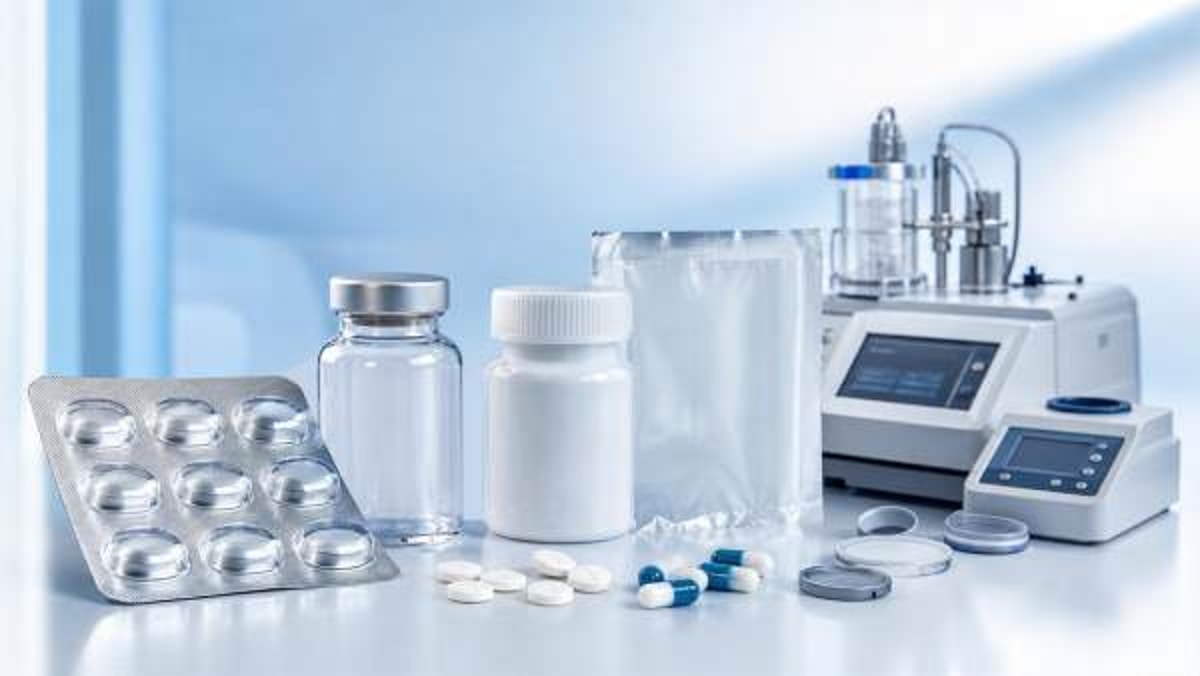
Selecting the right pharmaceutical packaging materials requires more than a basic cost comparison—it demands a clear understanding of barrier performance against moisture, oxygen, light, and volatile loss. For technical evaluators, a structured comparison can reveal how material choice affects product stability, compliance, shelf life, and supply chain reliability across different pharmaceutical applications.
Why a checklist-based comparison works better for technical evaluation
When comparing pharmaceutical packaging materials, the biggest risk is not choosing the most expensive or the cheapest option—it is choosing a material with the wrong barrier profile for the dosage form, fill environment, and distribution route. Technical evaluators usually work across multiple constraints at once: product sensitivity, regulatory expectations, machinability, sterilization compatibility, and total supply risk. A checklist approach prevents important variables from being hidden behind broad claims such as “high barrier” or “pharma grade.”
This is especially important in regulated sectors covered by AgriChem Chronicle readers, where procurement decisions often connect laboratory stability data with commercial packaging performance. In practice, barrier performance must be read as an application-specific requirement, not a standalone material property. The same blister film, bottle resin, foil laminate, or elastomer closure may perform well in one pharmaceutical product and fail in another because exposure limits differ.
Start with these five priority checks before comparing materials
Before building a side-by-side matrix of pharmaceutical packaging materials, confirm the critical exposure risks of the drug product itself. These five checks should be completed first because they determine which barrier tests actually matter.
- Identify the dominant degradation pathway: hydrolysis, oxidation, photolysis, aroma or solvent loss, or adsorption to contact surfaces.
- Define the dosage form and pack architecture: tablet blister, HDPE bottle, prefilled syringe, vial-closure system, sachet, stick pack, or strip pack.
- Map storage and distribution conditions, including temperature excursions, humidity, and freight duration.
- Confirm required shelf life and whether accelerated data correlate well with real-time data for the product family.
- Check whether sterilization, cold-chain handling, or child-resistant/senior-friendly design changes the packaging structure.
Without this baseline, teams often overvalue generic barrier numbers and undervalue system-level interactions such as closure fit, seal integrity, desiccant performance, and headspace control.
Core checklist for comparing barrier performance of pharmaceutical packaging materials
The following checklist helps technical evaluators compare pharmaceutical packaging materials in a way that reflects actual product protection rather than marketing labels. Use it as a qualification framework for suppliers, converters, and internal packaging development teams.
1. Moisture barrier: first priority for many solid and powder products
Water vapor transmission rate is often the first barrier metric to review for tablets, capsules, powders, and moisture-sensitive biologically active ingredients. Ask not only for the test value, but also for the conditions under which it was measured. A low transmission rate under one temperature-humidity combination may not remain low under tropical shipping conditions. For blister packs, compare PVC, PVDC-coated PVC, PCTFE laminates, and aluminum-based structures carefully. For bottles, assess resin permeability, wall thickness, induction seal performance, and desiccant integration.
2. Oxygen barrier: critical for oxidation-sensitive APIs and formulations
Oxygen transmission rate matters when active ingredients, excipients, or finished formulations are prone to oxidation. Amber color alone does not solve oxygen ingress. In many cases, the closure system contributes more risk than the primary bottle wall. Evaluate oxygen scavenging options, foil structures, multilayer films, and headspace management together. For parenterals and liquid products, oxygen ingress over time can also be influenced by stopper material and crimp consistency.
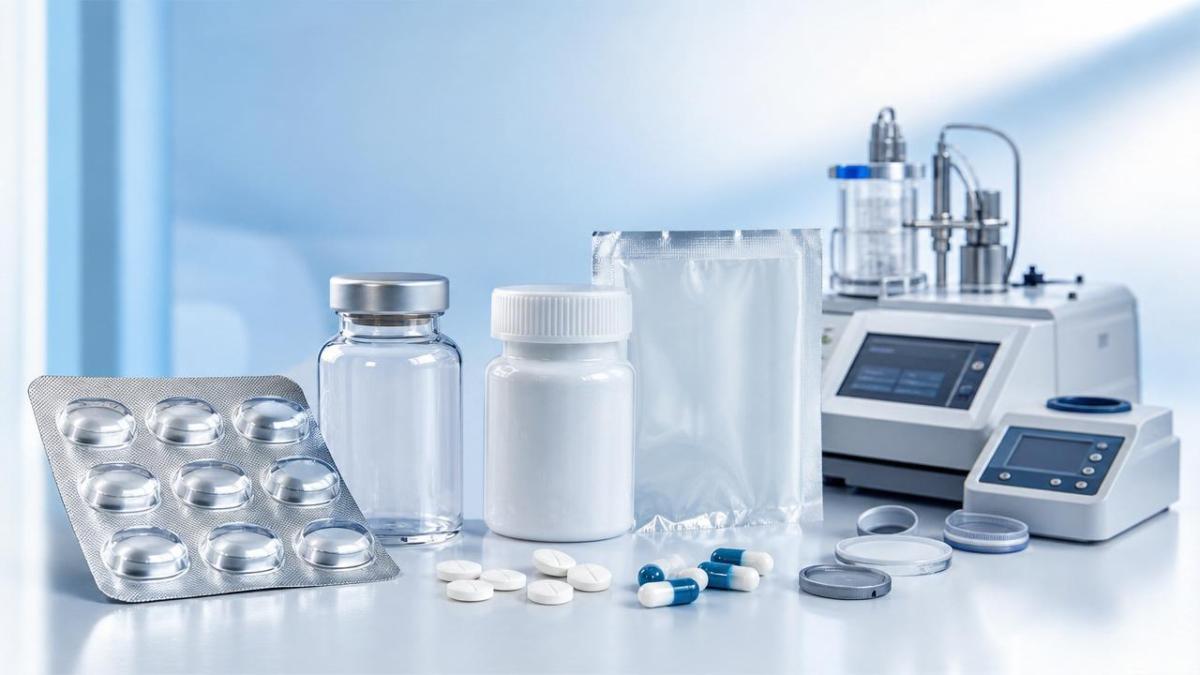
3. Light protection: match wavelength risk, not just package color
Many teams treat light barrier performance as a binary feature, yet photodegradation depends on wavelength sensitivity and exposure duration. Amber glass provides good protection in many cases, but not for all photolabile products. Technical evaluation should include spectral transmission data, not only visible appearance. Foil laminates, opaque polymers, and secondary cartons may be required when the formulation is highly light sensitive.
4. Volatile retention and aroma loss: often ignored in semi-solids and specialty formulations
Some pharmaceutical packaging materials protect against water and oxygen but still allow volatile excipients or residual solvents to migrate. This is especially relevant in transdermal systems, inhalation-related components, medicated gels, and extract-based formulations. Ask whether the material has been tested for volatile loss, sorption, and permeation over the intended shelf life.
5. Container-closure integrity: barrier claims fail if the seal fails
A high-performance substrate does not guarantee a high-performance pack. Seal channels, microleaks, weak crimping, poor torque control, and dimensional variation can erase the theoretical advantage of premium pharmaceutical packaging materials. Include seal integrity test methods, closure torque ranges, liner behavior, and leak-test validation in every comparison file.
Quick comparison guide by common material family
Use this simplified guide to frame discussions, but validate every option against the actual formulation, pack format, and test standard.
Adjust the comparison by dosage form and use case
A reliable review of pharmaceutical packaging materials should always be scenario-specific. Technical evaluators should apply different weighting to each criterion depending on the product type.
- Tablets and capsules: prioritize moisture barrier, count protection after first opening, desiccant strategy, and patient-use exposure during repeated access.
- Powders and granules: focus on humidity ingress, seal durability, and compatibility with high-speed filling.
- Liquids: review oxygen ingress, extractables and leachables, closure compression set, and light protection where applicable.
- Sterile injectables: evaluate the full container-closure system, including stopper permeability, crimp integrity, and sterilization impact on barrier properties.
- Highly potent or specialty products: include containment, migration risk, and supply continuity from qualified material sources.
Common oversights that distort barrier comparisons
Many material reviews fail because teams compare datasheet values without controlling for the rest of the packaging system. Watch for these frequent errors when reviewing pharmaceutical packaging materials.
- Using supplier test data generated under conditions that do not match the target climate zone or storage profile.
- Ignoring post-conversion changes, such as thermoforming stress, foil pinholing, or seal area distortion.
- Treating primary material performance as independent from caps, liners, induction seals, stoppers, or lidding foil.
- Failing to connect barrier selection with machinability, line speed, rejection rate, and downstream logistics cost.
- Overlooking regional compliance documentation, change-control discipline, and supplier traceability.
Execution checklist for supplier qualification and internal decision-making
If your organization is actively sourcing or requalifying pharmaceutical packaging materials, prepare a practical review file rather than relying on informal discussions. The strongest technical evaluations usually include the following items:
- Product sensitivity summary linked to stability risks and target shelf life.
- Required barrier metrics and test conditions, with acceptance thresholds.
- Container-closure integrity requirements and verification methods.
- Compatibility package covering extractables, leachables, sorption, and sterilization effects where relevant.
- Manufacturing fit review, including forming, sealing, filling, capping, and inspection performance.
- Regulatory document set, quality agreements, change notification terms, and supply continuity plans.
This process improves cross-functional alignment between R&D, quality, procurement, and operations. It also helps buyers avoid selecting a package that performs well in pilot testing but creates hidden risks at commercial scale.
Final decision guidance for technical evaluators
The best way to compare pharmaceutical packaging materials by barrier performance is to judge them as complete protection systems, not isolated substrates. Start with the product’s degradation mechanism, prioritize the barrier most likely to control stability loss, and verify that the full package—including closure and conversion quality—can hold that performance through manufacturing, storage, and distribution.
If your team needs to move to the next stage, the most useful topics to clarify with suppliers are these: exact barrier test conditions, application-specific stability references, closure-system performance, available compliance documents, change-control procedures, scale-up lead times, and cost differences between standard and high-barrier options. That information will give technical evaluators a stronger basis for ranking pharmaceutical packaging materials with confidence, accuracy, and procurement discipline.
Related Intelligence
- APIs & IntermediatesActive pharmaceutical ingredients OEM: where quality drift can startActive pharmaceutical ingredients OEM buyers: discover where quality drift starts, from process controls to supplier oversight, and use this practical checklist to reduce compliance and supply risk.
- APIs & IntermediatesWholesale excipients: how to judge consistency beyond COA dataWholesale excipients sourcing goes beyond a clean COA. Learn how to assess batch consistency, impurity trends, change control, and supplier transparency to reduce quality and compliance risk.
- APIs & IntermediatesChiral intermediates wholesale: when lower price leads to harder scale-upChiral intermediates wholesale is not just about the lowest quote. Learn how to avoid hidden scale-up risk, batch inconsistency, and costly delays before choosing a supplier.
The Morning Broadsheet
Daily chemical briefings, market shifts, and peer-reviewed summaries delivered to your terminal.
