
The Authority in Global Agricultural Chemistry & Bio-Resources
Fine chemicals wholesale contracts often miss this lead time risk
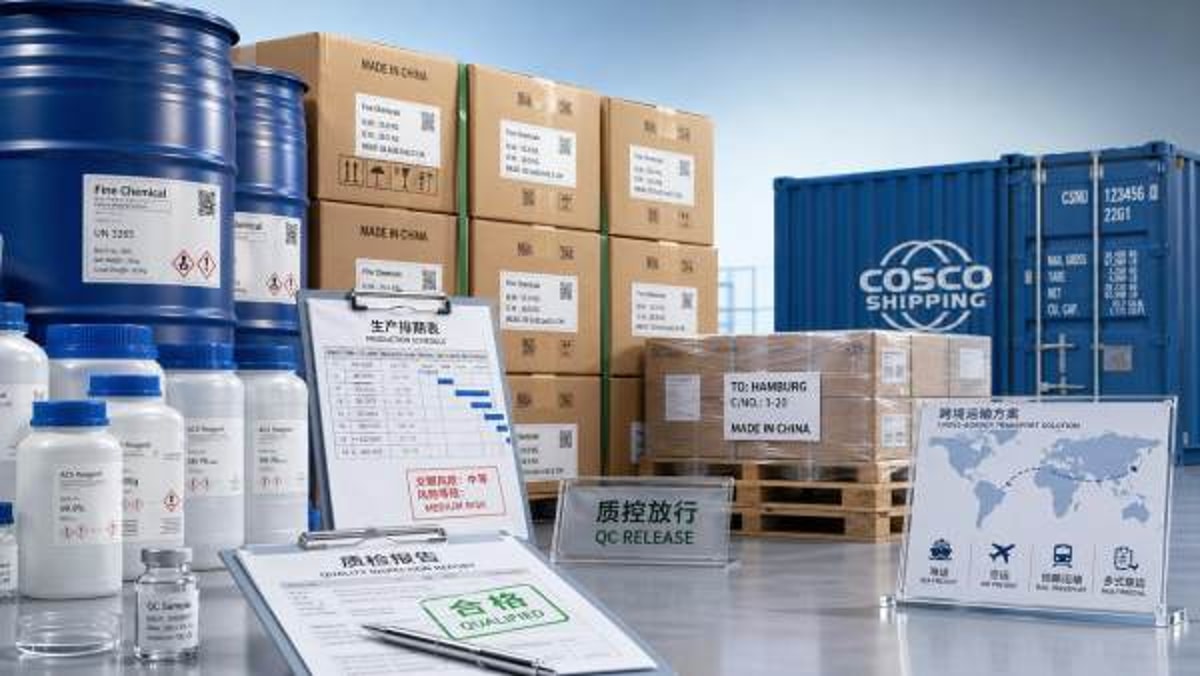
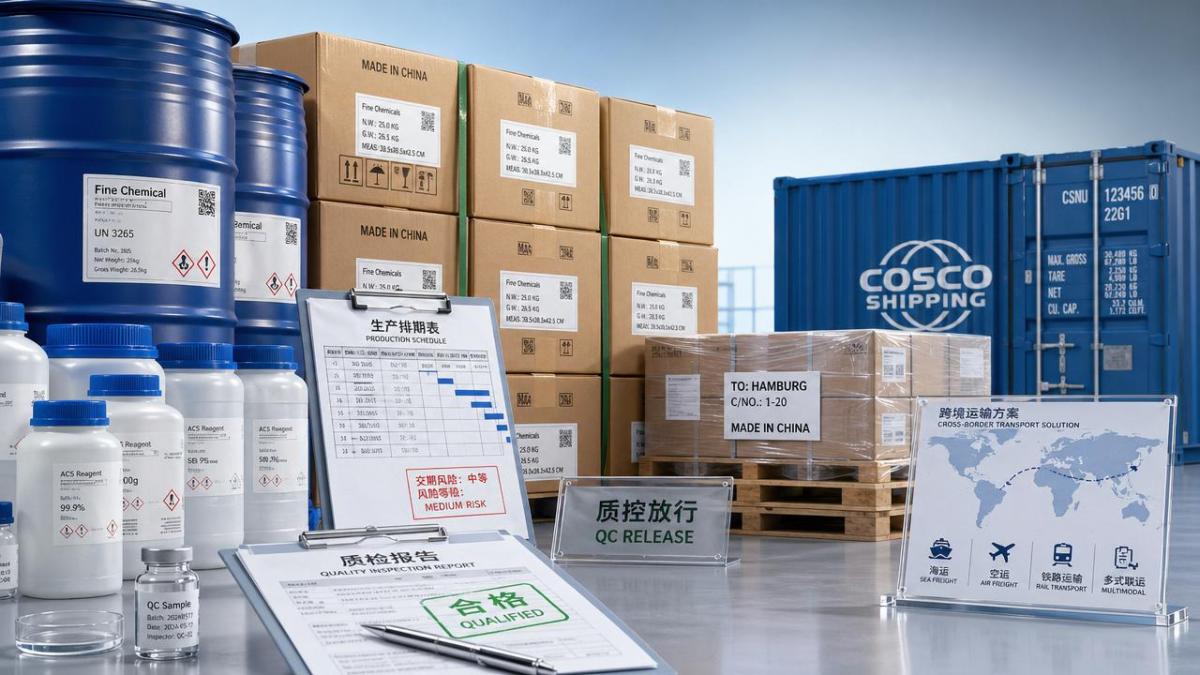
In fine chemicals wholesale, contract value alone does not protect project timelines. The real exposure often sits in lead time assumptions hidden behind batch scheduling, raw material allocation, regulatory release, and cross-border logistics. For project managers and engineering leads, understanding this overlooked risk is essential to preventing cost overruns, delayed commissioning, and supply disruption before they escalate into contractual and operational failures.
Why lead time risk matters differently across project scenarios
For teams working with fine chemicals wholesale supply, lead time is rarely a single date. It is a chain of dependent events: precursor sourcing, synthesis slot booking, in-process quality checks, final release, packaging approval, export documentation, and inland delivery. A delay in any one step can push out the entire project sequence. That is why project managers cannot treat lead time as a generic procurement field on a spreadsheet.
The risk becomes more serious because different projects absorb delay in very different ways. A pilot plant can often tolerate a partial shipment if testing can begin. A pharmaceutical intermediate program may be blocked entirely until a validated lot is released. An agricultural formulation line may face seasonal demand pressure, where a two-week slip means a lost sales window rather than a manageable inconvenience. In all these cases, fine chemicals wholesale contracts may look commercially sound while still being operationally fragile.
For engineering leads, the practical question is not simply whether a supplier can produce the chemical. The real question is whether the supplier can produce, release, document, and deliver it within the exact project scenario you are managing. That distinction is where many contracts fail to protect execution.
Common business scenarios where hidden lead time risk appears
In the broader world of fine chemicals wholesale, lead time exposure tends to cluster around a few recurring use cases. Understanding them helps project teams identify where assumptions are likely to be wrong before a purchase order is issued.
Scenario 1: New plant commissioning and startup
During commissioning, chemicals may be needed for cleaning, reaction validation, catalyst activation, water treatment, or early production trials. In this scenario, delay risk is amplified because chemical delivery is tied to a tightly managed startup sequence. A missed batch can idle contractors, utilities, and equipment teams at the same time. Here, fine chemicals wholesale decisions should be tied directly to the master commissioning schedule, not treated as routine indirect spend.
Scenario 2: Regulated manufacturing with QA release dependency
In API, biotech, or controlled specialty production, the issue is not just manufacturing duration. The hidden risk sits in sampling, certificate review, deviation handling, and documentation matching. A supplier may quote a four-week lead time, but if the lot requires extended QA review or additional stability evidence, the usable lead time becomes six or eight weeks. Project managers must distinguish between “production complete” and “material cleared for use.”
Scenario 3: Seasonal agricultural and feed-related demand
For agrochemical blending, feed additive production, and primary processing support, timing pressure often comes from seasons rather than plants. If fine chemicals wholesale deliveries slip during pre-planting, disease-control, or harvest preparation periods, recovery options are limited. Replacement supply may exist on paper but not in qualified or compliant form. In these scenarios, the cost of delay is often commercial loss rather than only operational inefficiency.
Scenario 4: Multi-country projects with import and logistics exposure
Projects involving cross-border sourcing face a second layer of lead time uncertainty. Hazard classification, customs inspection, port congestion, route changes, and local transport permits all affect arrival timing. A supplier may have excellent production discipline, yet the fine chemicals wholesale contract still underestimates the delivery window because the logistics assumptions were copied from standard cargo rather than controlled chemical shipment conditions.
A practical comparison of scenario-specific lead time priorities
The table below shows why the same fine chemicals wholesale supplier may be suitable for one project and risky for another. The difference usually lies in what kind of delay matters most.
What different stakeholders need from fine chemicals wholesale contracts
A major reason lead time risk is missed is that each function reads the same contract differently. Procurement may focus on price protection and payment terms. Quality teams look at specification alignment. Operations wants arrival dates. Project management needs all of these, plus dependency visibility. The contract appears complete, but no one has translated it into execution logic.
For project managers
The key need is schedule reliability. That means separating quoted lead time into measurable checkpoints: raw material readiness, batch start, batch finish, lab release, packing completion, dispatch, border crossing, and site receipt. In fine chemicals wholesale, a single promised delivery date is too coarse for critical-path planning.
For engineering leads
Engineering teams need to know whether the material can support phased work. Can a smaller quantity arrive first for loop checks or trial runs? Is there any handling limitation that affects storage, transfer, or process safety? Lead time is not only a sourcing issue; it interacts with plant readiness, utility testing, and equipment validation.
For procurement and supply chain teams
Their role is to turn vague promises into enforceable commitments. In fine chemicals wholesale, that often means adding shipment milestones, communication windows, escalation rights, approved substitute rules, and document delivery deadlines. Procurement teams that only negotiate unit cost may unintentionally transfer schedule risk back to the project.
The hidden assumptions that often cause misjudgment
Many delays begin with assumptions that sound reasonable but are not verified. One common assumption is that a supplier’s standard lead time applies to every order size. In reality, campaign scheduling can favor larger customers or recurring products. Another is that raw materials are always available. For niche intermediates, precursor constraints can be the true bottleneck even when reactor capacity exists.
A further mistake is confusing factory readiness with shipping readiness. Fine chemicals wholesale suppliers may finish production on time, yet still be delayed by drum availability, labeling language requirements, dangerous goods declarations, or customer-specific documentation. For projects operating under GMP, FDA-related review, or environmental compliance controls, release readiness is often more important than synthesis completion.
Project teams also underestimate how often logistics assumptions are outdated. Freight lanes that worked six months ago may now have capacity issues, new inspections, or seasonal disruptions. For imported chemicals, lead time should be scenario-tested against realistic transit variability, not based on historical averages alone.
How to match contract structure to the project scenario
The best fine chemicals wholesale contracts are not the longest contracts. They are the ones that reflect the operational reality of the buying scenario. For startup projects, milestone-based delivery clauses are more valuable than broad “best effort” language. For regulated environments, usable delivery should be defined as released and document-complete material, not simply shipped material.
In seasonal or campaign-driven businesses, it is often worth building in forecast locking dates, inventory reservation language, and explicit communication triggers if upstream raw material availability changes. For cross-border projects, contracts should identify document responsibility, chosen Incoterms, customs support obligations, and alternative route procedures. Each clause should answer one practical question: if delay begins here, who sees it first and what can be done immediately?
A useful checklist before signing
Before approving a fine chemicals wholesale agreement, project-led organizations should confirm the following points:
- Is lead time defined from order placement, raw material allocation, or confirmed batch slot?
- Does the promised date refer to ex-works readiness, port departure, or site delivery?
- Are QA release, COA issuance, and compliance documents included in the timeline?
- Can the supplier support partial lots, emergency rescheduling, or alternative packaging?
- What is the escalation path if a precursor shortage appears mid-cycle?
- Has logistics planning been reviewed for hazardous cargo, border inspection, and local receiving constraints?
When fine chemicals wholesale is a good fit, and when caution is needed
Fine chemicals wholesale works very well when demand is forecastable, specifications are stable, and the buyer has enough planning maturity to monitor intermediate milestones. It is also effective when suppliers have transparent campaign schedules and strong document discipline. In these cases, wholesale purchasing can improve cost position while still supporting reliable project execution.
Caution is needed when the project has a narrow startup window, a single qualified source, unstable formulation requirements, or heavy regulatory release dependencies. The same is true when the material has long precursor chains or requires complex export handling. In such environments, a low price in fine chemicals wholesale may hide a high delay cost. The smarter decision may be to pay more for reservation capacity, local stock support, or a supplier with stronger release discipline.
Frequently asked questions from project-led buyers
How early should project teams engage suppliers?
Earlier than many expect. In fine chemicals wholesale, meaningful risk review should begin when the project schedule is still flexible enough to change order timing, qualification sequence, or inventory strategy. Waiting until the procurement stage is often too late.
Is dual sourcing always the best answer?
Not always. Dual sourcing helps only if both suppliers are truly qualified, logistically viable, and able to release material within your scenario. Two weak sources do not reduce risk. Sometimes one highly transparent supplier with reserved capacity is better than two nominal options.
What metric matters more than quoted lead time?
Milestone reliability. For fine chemicals wholesale, buyers should track whether suppliers meet each stage consistently, not just whether the final shipment date was eventually recovered through expediting.
Final takeaways for project managers and engineering leads
The biggest mistake in fine chemicals wholesale is assuming that a signed contract has already controlled schedule risk. It has not, unless the lead time logic reflects the actual application scenario. Startup projects, regulated manufacturing, seasonal agricultural operations, and cross-border programs all experience delay differently. That is why contract review must move beyond price, quantity, and a single delivery date.
If your team is evaluating fine chemicals wholesale for a time-sensitive project, begin with a scenario map: where will the material be used, what task depends on it, what release conditions apply, and what recovery options exist if a milestone slips? Once those answers are clear, supplier discussions become sharper, contracts become more protective, and the project has a far better chance of staying on schedule without emergency purchasing or operational compromise.
Related Intelligence
- APIs & IntermediatesFine Chemicals GMP compliance gaps that delay qualificationFine Chemicals GMP compliance gaps can delay supplier qualification, slow audits, and raise risk. Learn the hidden issues buyers now flag—and how to avoid costly approval setbacks.
- APIs & IntermediatesHow Fine Chemicals API suppliers differ on audit readinessFine Chemicals API suppliers differ sharply on audit readiness. Discover how to assess documentation, traceability, validation, and change control to reduce compliance risk.
- APIs & IntermediatesPharmaceutical intermediates wholesale: spotting weak documentationPharmaceutical intermediates wholesale: learn how to spot weak documentation early, reduce compliance and quality risks, and screen suppliers with greater confidence.
The Morning Broadsheet
Daily chemical briefings, market shifts, and peer-reviewed summaries delivered to your terminal.
