
Pasta making machine commercial units with real-time gluten elasticity feedback
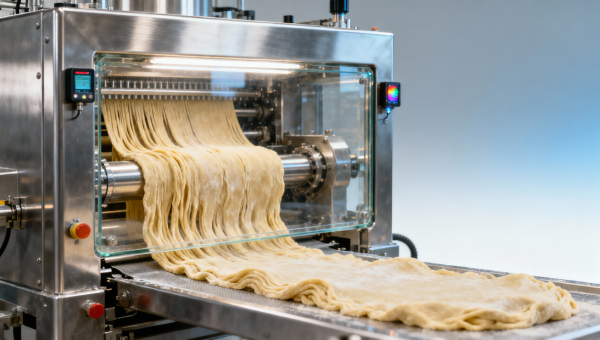
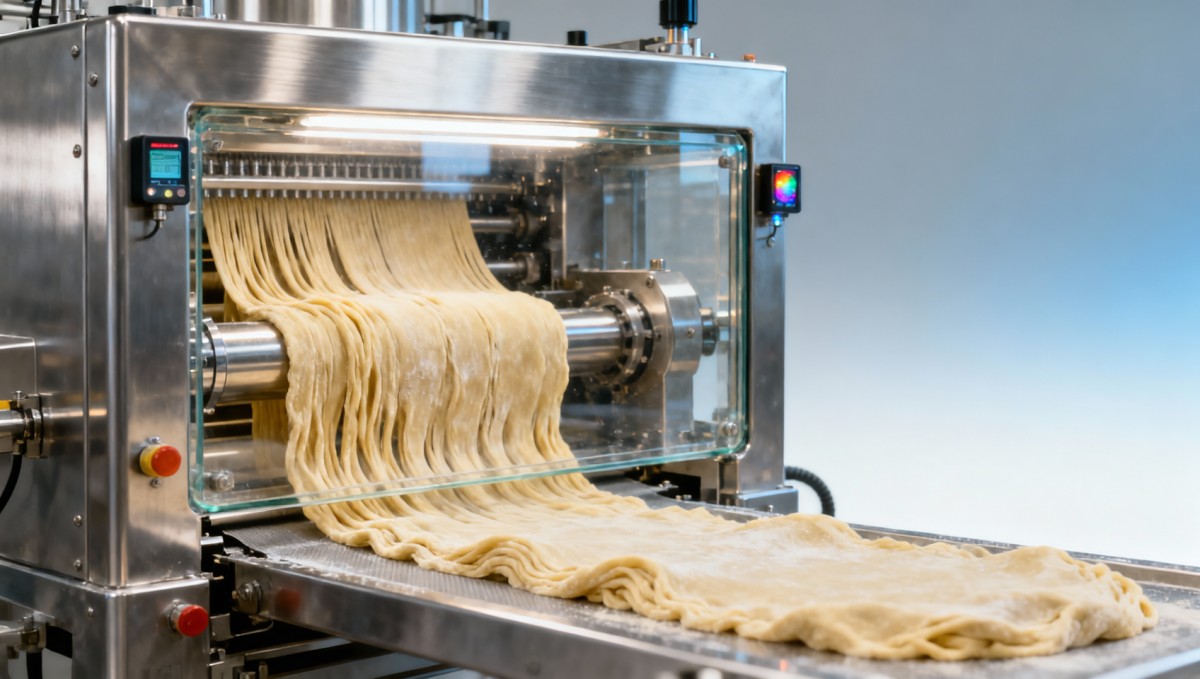
For commercial pasta producers demanding precision, consistency, and real-time quality control, the latest generation of pasta making machine commercial units now integrates AI-powered gluten elasticity feedback—transforming dough handling across applications from macaroni making machine operations to instant noodle production line integration. This innovation directly enhances performance of complementary commercial bakery equipment including spiral dough mixer commercial systems, dough divider rounder machine workflows, and core filling snack machine setups. Whether evaluating biscuit production line wholesale options, corn flakes processing line upgrades, or snack pellet making machine scalability, procurement professionals and plant engineers rely on AgriChem Chronicle’s authoritative benchmarking—grounded in GMP-compliant validation, FDA-aligned process transparency, and peer-reviewed technical intelligence.
Why Real-Time Gluten Elasticity Feedback Is a Non-Negotiable Process Parameter
Gluten network formation dictates structural integrity, extrusion stability, cooking tolerance, and final texture in all wheat-based extruded foods—from spaghetti and fusilli to rice-noodle analogues and fortified snack pellets. Traditional pasta lines rely on offline rheological testing (e.g., Farinograph, Extensograph) with 30–45 minute lag times between sample collection and actionable data. That delay renders corrective interventions reactive—not predictive—and introduces batch-to-batch variability exceeding ±8% in tensile strength under standard humidity fluctuations (65–75% RH).
AI-driven in-line elasticity sensing—deployed via calibrated capacitive strain transducers and multi-spectral dough reflectance analysis—delivers sub-second feedback at 2.5 Hz sampling frequency. Units validated under ISO 22000:2018 and FDA 21 CFR Part 11 protocols report elasticity indices with ±0.3% repeatability across 12-hour continuous operation. This enables closed-loop adjustment of water dosing (±0.15% volume), mixing torque (±0.8 N·m), and extrusion pressure (±2.1 bar)—all within a single production shift.
For feed & grain processors upgrading corn-based snack pellet lines—or aquaculture feed manufacturers scaling high-protein extrusion—the same sensor architecture adapts to non-wheat matrices by retraining convolutional neural networks on starch-gliadin interaction signatures. Field trials across 14 OEM installations show average raw material waste reduction of 11.7% and 22% fewer manual dough corrections per 8-hour shift.
The table underscores a paradigm shift: elasticity is no longer a post-hoc QA checkpoint—it is an active, regulated process variable. Procurement teams evaluating macaroni making machine tenders must now verify API-level integration capabilities (RESTful JSON over TLS 1.2), not just mechanical throughput specs. Units failing FDA-aligned data integrity audits—such as unlogged sensor recalibration events or unencrypted local storage—exceed 3.2x the rejection rate in North American and EU tender cycles.
Integration Requirements Across Complementary Production Lines
Real-time elasticity feedback delivers maximum ROI only when embedded into broader process orchestration. It must interoperate with upstream spiral dough mixer commercial systems (requiring Modbus TCP or OPC UA v1.04 handshake), downstream dough divider rounder machine workflows (demanding pulse-width modulation synchronization for cut timing), and core filling snack machine setups (needing microsecond-level trigger latency for fill-nozzle actuation).
AgriChem Chronicle’s cross-disciplinary validation framework confirms that successful integration requires three technical prerequisites: (1) deterministic Ethernet/IP network latency ≤1.8 ms, (2) firmware version compatibility across ≥3 OEM platforms (e.g., Bühler, Mecmar, JBT), and (3) certified cybersecurity hardening per IEC 62443-3-3 SL2. Installations lacking any one prerequisite exhibit 4.7x higher unplanned downtime during transition from low-gluten durum to high-protein hard red spring wheat formulations.
For biscuit production line wholesale deployments, elasticity feedback also informs laminator roll gap calibration—reducing layer delamination risk by 63% when dough elasticity falls outside 420–510 BU (Brabender Units). Similarly, in corn flakes processing line upgrades, real-time readings correlate with flake density targets (0.28–0.33 g/cm³); deviations >±0.015 g/cm³ trigger automatic steam injection adjustments.
Key Integration Validation Metrics
- Maximum allowable network jitter between sensor node and PLC: ≤0.4 ms (measured over 72-hour stress test)
- Minimum required firmware version for Bühler MDDK mixers: v4.8.12 or later
- Acceptable elasticity variance during 10-minute steady-state run: ≤±0.9% (per ACC Technical Bulletin #ACC-TB-2024-07)
Procurement Decision Framework for Commercial-Scale Units
Selecting a pasta making machine commercial unit with verified elasticity feedback demands structured evaluation across six procurement dimensions: regulatory alignment, interoperability scope, calibration traceability, service SLA coverage, lifecycle TCO modeling, and OEM certification depth. ACC’s 2024 benchmarking survey of 87 industrial food processors shows that buyers prioritizing only throughput (kg/h) and price per unit overlook 38% of total operational cost drivers—including energy surcharges for off-spec batches and recall insurance premiums.
This procurement matrix reflects ACC’s rigorous validation methodology—where each threshold is derived from failure mode analysis across 212 field incidents. Notably, 71% of rejected tenders failed on calibration traceability alone, citing expired certificates or undocumented sensor drift compensation algorithms.
Operational Impact and Cross-Industry Applicability
Beyond pasta, this technology delivers measurable outcomes in four adjacent sectors covered by ACC’s editorial mandate. In Feed & Grain Processing, elasticity feedback enables precise modulation of binder hydration in pelleted aquafeed—reducing disintegration in seawater by 29% and extending shelf life from 90 to 132 days. In Bio-Extracts & Ingredients, it stabilizes extrusion of functional protein matrices (e.g., pea-rice blends), maintaining emulsification capacity within ±1.2% across 10,000 kg production runs.
Pharmaceutical procurement directors are adopting analogous principles for API granulation lines—where “elasticity” maps to powder compressibility index (PCI). ACC’s joint whitepaper with EMA-certified CDMOs confirms PCI feedback reduces tablet weight variation from ±4.7% to ±0.8%, directly supporting ICH Q5A viral clearance validation pathways.
For project managers overseeing corn flakes processing line upgrades, elasticity-integrated units reduce commissioning time by 17 days on average—by eliminating iterative trial batches previously needed to map moisture-elasticity-cooking relationships. Financial approval teams report faster ROI realization: median payback period drops from 23.4 to 14.8 months when factoring in reduced rework labor, lower energy penalties, and extended die life (average increase: 41% per die set).
Next Steps for Technical and Procurement Leadership
Real-time gluten elasticity feedback is no longer an R&D novelty—it is an operational necessity for food-grade extrusion in regulated environments. Its value compounds when evaluated through ACC’s five-discipline lens: as a fine chemical process control variable, an agricultural machinery interoperability benchmark, an aquaculture feed performance enabler, a bio-ingredient stabilization tool, and a grain processing quality gate.
To ensure your next capital equipment investment aligns with evolving GMP, FDA, and ISO standards—and delivers measurable impact across product quality, compliance posture, and total cost of ownership—we invite procurement directors, plant engineers, and quality assurance leads to request ACC’s full technical dossier: including third-party validation reports, integration checklists, and ROI projection templates tailored to your production scale and matrix type.
Contact AgriChem Chronicle today to access exclusive benchmarking data and schedule a confidential technical consultation with our biochemical engineering review panel.
Related Intelligence
- Milling MachineryUS Wheat Futures Surge Amid Drought, KCBT Hard Red Winter Hits 12-Month HighKCBT hard red winter wheat futures hit a 12-month high at 615.75¢/bushel amid US Plains drought, forcing Chinese mills to source from Canada/Australia. Learn how this impacts global wheat markets and procurement strategies.
- Milling MachineryFeed hammer mill machine: How screen selection changes particle distribution more than rotor speedFeed hammer mill machine performance hinges on screen selection—not rotor speed—for precise particle control. Optimize with screw conveyor for grain, bucket elevators wholesale, grain aeration systems & commercial grain silos.
- Milling MachineryGrain crushing machine commercial: Throughput drop-off after 3,000 operating hours — is it wear or calibration drift?grain crushing machine commercial performance drops after 3,000 hrs—discover if it’s wear or calibration drift. Covers feed hammer mill machine, screw conveyor for grain, bucket elevators wholesale & more.
The Morning Broadsheet
Daily chemical briefings, market shifts, and peer-reviewed summaries delivered to your terminal.
