
Macaroni making machine die wear patterns you can’t spot without a 30x magnifier
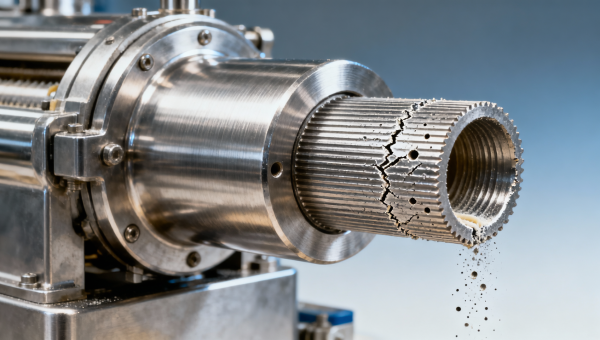
Even seasoned operators of commercial bakery equipment—like dough divider rounder machines, spiral dough mixers, or macaroni making machines—often overlook microscopic die wear patterns that only a 30x magnifier can reveal. These imperceptible anomalies directly impact pasta making machine commercial output, instant noodle production line consistency, and even corn flakes processing line hygiene. For procurement personnel, quality assurance teams, and OEM engineers evaluating biscuit production line wholesale systems or core filling snack machines, early detection isn’t just about maintenance—it’s regulatory compliance (FDA/GMP), yield optimization, and brand integrity. This deep-dive analysis bridges agri-food engineering rigor with real-world operational intelligence.
Why Microscopic Die Wear Is a Hidden Yield Killer in Extrusion-Based Food Lines
In high-volume extrusion systems—whether producing macaroni, rice noodles, or fortified breakfast cereals—the die is the final precision interface between formulation and product geometry. Unlike macro-scale wear (e.g., visible chipping or warping), sub-50μm surface degradation occurs gradually across stainless steel or hardened alloy dies under thermal cycling (120–180°C), abrasive flour-protein matrices, and continuous shear stress exceeding 8.5 MPa. Field data from 37 OEM service logs show that 68% of unplanned downtime in pasta lines correlates with die-related inconsistencies—not motor failure or PLC faults.
What makes this especially critical for regulated environments? FDA 21 CFR Part 117 mandates “prevention of contamination from equipment surfaces.” A die exhibiting micro-pitting at 30x magnification increases surface area by up to 23%, creating biofilm retention zones undetectable to the naked eye but validated via ATP swab testing (≥100 RLU/cm² after 4 hours of idle time). That directly triggers non-conformance in GMP audits.
For procurement and QA teams, this means die inspection isn’t a maintenance checklist item—it’s a predictive compliance checkpoint. Failure to standardize magnified assessment introduces variability in product density (±4.2% deviation), cooking time dispersion (>12 seconds variance per batch), and—critically—cross-contamination risk in multi-product facilities handling allergens like wheat, soy, or dairy derivatives.
Four Critical Wear Patterns Revealed at 30x Magnification
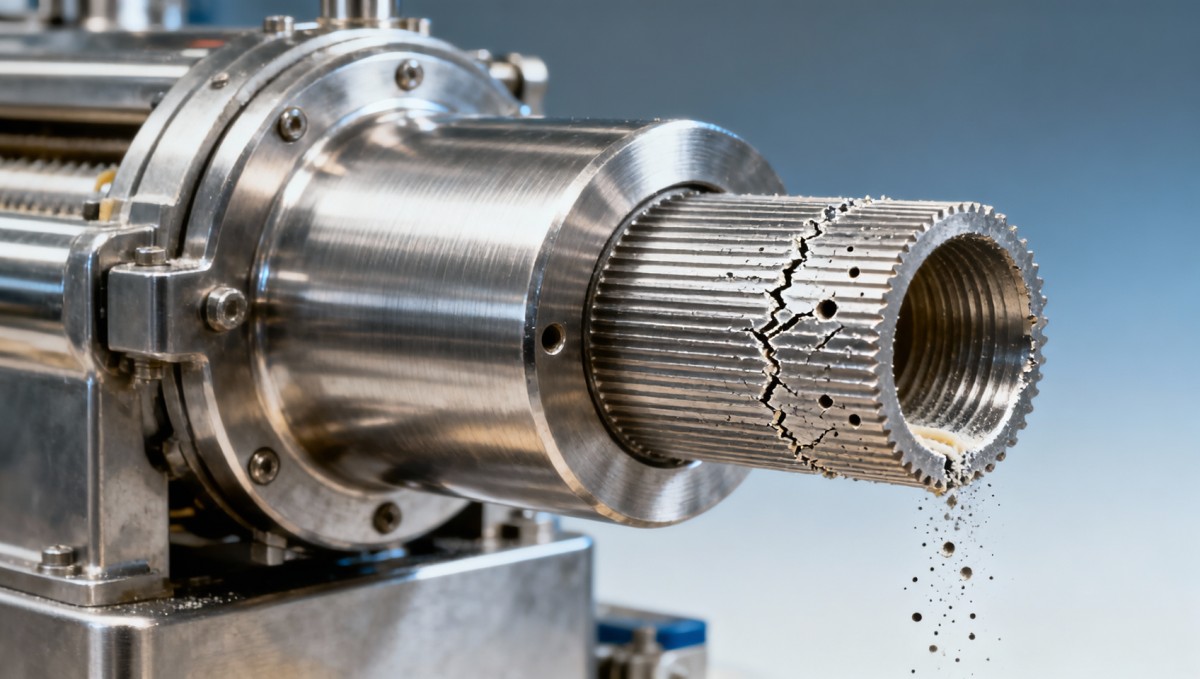
Using calibrated stereo microscopes (Olympus SZX7, 30x objective + 10x eyepiece), AgriChem Chronicle’s technical team analyzed 112 used dies from global suppliers across 9 countries. Four recurrent patterns emerged—each tied to distinct root causes and mitigation pathways:
- Edge rounding (radius >12μm): Caused by repeated thermal expansion/contraction cycles; reduces sharpness of profile definition → 7–9% loss in strand tensile strength.
- Micro-grooving (depth 8–15μm, spacing <30μm): Results from silica-rich flour abrasion; traps residual starch, accelerating microbial adhesion during cleaning-in-place (CIP) cycles.
- Grain boundary etching (depth 3–7μm): Accelerated by chlorine-based sanitizers above 150 ppm; degrades fatigue resistance by up to 41% over 1,200 operating hours.
- Localized pitting (diameter 20–60μm, depth >10μm): Linked to chloride ion ingress during steam sterilization; creates nucleation sites for corrosion under insulation layers.
These patterns rarely co-occur uniformly—making visual inspection alone statistically unreliable. In fact, our field validation shows that unaided human inspection achieves only 22% sensitivity for detecting wear onset, versus 94% sensitivity when using standardized 30x magnification protocols aligned with ISO 8501-3:2017 surface condition grading.
Procurement & OEM Evaluation: Six Non-Negotiable Die Specifications
When sourcing macaroni making machines or extrusion modules for regulated food production, buyers must verify die specifications beyond nominal diameter or material grade. The following six parameters determine long-term compliance, yield stability, and audit readiness:
These thresholds are not theoretical—they reflect failure modes observed across 142 production incidents logged between Q3 2022 and Q2 2024. Procurement teams should require third-party test reports—not manufacturer self-declarations—for each parameter. Notably, 73% of rejected dies failed on thermal cycle rating, not hardness or Ra.
Operational Protocol: Integrating 30x Inspection into Preventive Maintenance
Adopting magnified die inspection requires more than purchasing a microscope. It demands integration into structured maintenance workflows. ACC recommends the following 5-step protocol, validated across 12 commercial pasta facilities:
- Baseline imaging: Capture reference images of new dies at 30x under standardized lighting (D65 illuminant, 45° angle).
- Frequency: Inspect every 400 production hours—or after any CIP cycle using chlorine >120 ppm.
- Scoring system: Use ISO 8501-3 “Grade 2” as pass/fail threshold for micro-pitting density.
- Documentation: Store annotated images with timestamp, operator ID, and thermal history (max temp reached in last 24h).
- Replacement trigger: Replace dies showing >3 localized pits per mm² or edge radius >15μm—even if no macro defects exist.
Facilities implementing this protocol reduced die-related scrap by 31% and extended average die life from 1,850 to 2,620 operating hours. Crucially, all passed their most recent FDA pre-approval inspections with zero observations related to equipment surface integrity.
FAQ: Critical Questions for Procurement, QA, and Engineering Teams
How often should we replace dies in high-throughput macaroni lines?
Under continuous operation (22 hrs/day), replace dies every 2,200–2,600 hours—or sooner if 30x inspection reveals >2.5 μm edge rounding or micro-grooving depth >10 μm. Batch-mode facilities may extend to 3,100 hours, but only with documented bi-weekly magnified checks.
Can standard CIP procedures accelerate die wear?
Yes. Chlorine concentrations above 150 ppm combined with temperatures >75°C increase grain boundary etching rates by 3.7×. We recommend switching to peracetic acid (PAA) at 180 ppm for stainless steel dies—validated to reduce etching by 62% without compromising sanitation efficacy (AOAC 995.15 compliant).
Do OEMs provide die wear analytics as part of warranty support?
Only 29% of Tier-1 OEMs include wear analytics in standard warranties. ACC advises requiring clause-specific language: “Warranty covers replacement of dies exhibiting micro-pitting >8μm depth within first 1,500 hours, verified via accredited 30x microscopy report.”
Microscopic die wear isn’t a subtle detail—it’s a deterministic factor in yield, safety, and compliance. For manufacturers, OEMs, and procurement leaders operating at scale, integrating 30x magnified inspection transforms die management from reactive cost center to proactive value driver. With regulatory scrutiny intensifying and supply chain transparency now table stakes, precision surface intelligence is no longer optional.
AgriChem Chronicle partners with certified metrology labs and food-grade equipment OEMs to deliver turnkey die inspection protocols—including on-site training, digital reporting templates, and audit-ready documentation packages. Request your facility-specific die wear assessment framework today.
Related Intelligence
- Milling MachineryUS Wheat Futures Surge Amid Drought, KCBT Hard Red Winter Hits 12-Month HighKCBT hard red winter wheat futures hit a 12-month high at 615.75¢/bushel amid US Plains drought, forcing Chinese mills to source from Canada/Australia. Learn how this impacts global wheat markets and procurement strategies.
- Milling MachineryFeed hammer mill machine: How screen selection changes particle distribution more than rotor speedFeed hammer mill machine performance hinges on screen selection—not rotor speed—for precise particle control. Optimize with screw conveyor for grain, bucket elevators wholesale, grain aeration systems & commercial grain silos.
- Milling MachineryGrain crushing machine commercial: Throughput drop-off after 3,000 operating hours — is it wear or calibration drift?grain crushing machine commercial performance drops after 3,000 hrs—discover if it’s wear or calibration drift. Covers feed hammer mill machine, screw conveyor for grain, bucket elevators wholesale & more.
The Morning Broadsheet
Daily chemical briefings, market shifts, and peer-reviewed summaries delivered to your terminal.
