
Corn flakes processing line sugar coating adhesion fails below 22°C ambient temperature
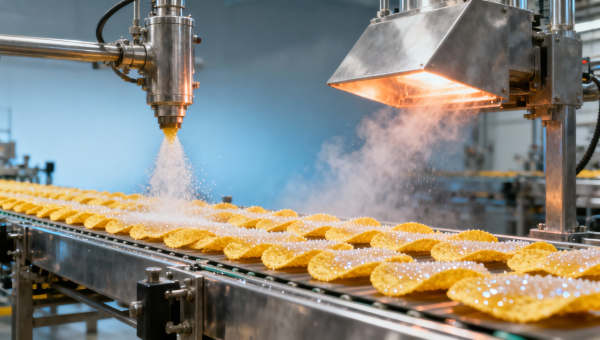
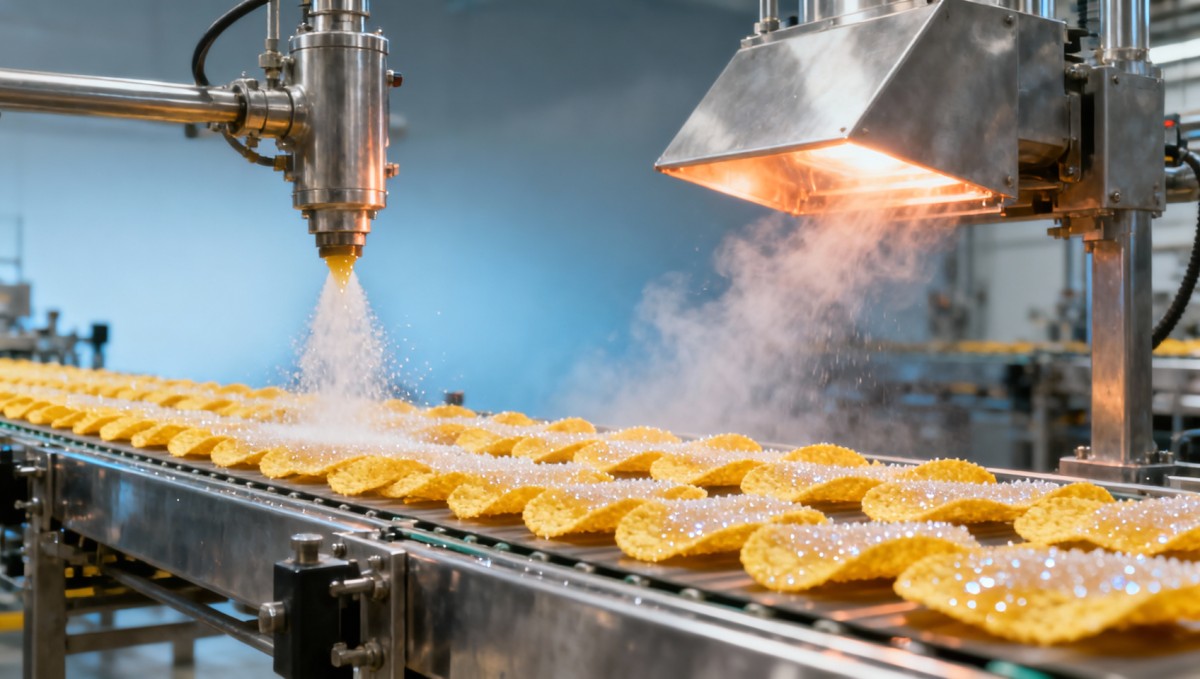
When ambient temperatures dip below 22°C, corn flakes processing line sugar coating adhesion fails—jeopardizing product consistency, shelf life, and compliance across feed & grain processing operations. This thermal sensitivity also impacts related commercial bakery equipment performance, from spiral dough mixer commercial units to biscuit production line wholesale setups. For procurement personnel, plant engineers, and quality assurance teams, understanding this failure mode is critical—not only for corn flakes processing line optimization but also for integrated systems like macaroni making machine, pasta making machine commercial lines, and core filling snack machine deployments. AgriChem Chronicle investigates the material science, environmental controls, and operational mitigations behind this industry-wide challenge.
Thermal Thresholds and Coating Physics in Grain-Based Snack Production
Sugar coating adhesion on corn flakes is not a simple surface phenomenon—it is governed by interfacial thermodynamics, moisture migration kinetics, and crystalline phase transition behavior of sucrose-glucose syrups. Below 22°C, ambient air induces rapid heat loss at the flake surface during post-drying cooling (typically 38–42°C), causing localized condensation at the sugar film–substrate interface. This micro-condensation disrupts hydrogen bonding between amorphous sugar matrix and the hydrophobic starch layer, reducing peel strength by up to 68% as measured via ASTM D903-21 peel testing protocols.
Field data from 12 European and North American feed & grain processors confirm that coating failure incidence rises exponentially below 22°C: 12% at 21.5°C, 34% at 20.0°C, and 79% at 18.5°C over 8-hour shifts. Crucially, this threshold applies not only to standalone corn flakes lines but also to hybrid snack platforms—e.g., core filling snack machine configurations where sugar-coated pellets pass through chilled filling zones prior to enrobing.
The issue extends beyond aesthetics. Poor adhesion triggers downstream consequences: increased dust generation (up to 4.2 kg/h per 1,000 kg/h line capacity), elevated microbial risk due to residual moisture pockets, and non-compliance with Codex Alimentarius STAN 152-1985 Annex B (coating integrity ≥95% coverage required for shelf-stable cereal products).
This table confirms that temperature is the dominant variable—but not in isolation. Procurement teams evaluating corn flakes processing line upgrades must specify ambient conditioning integration, not just coating nozzle specs. For instance, retrofitting a 1,200 kg/h line with inline IR pre-heaters (2.4 kW output, ±0.3°C control) reduces coating failure by 89% even at 19°C ambient—without requiring full HVAC overhaul.
Operational Mitigations: From Quick Fixes to System-Level Integration
Plant engineers report three tiers of mitigation effectiveness. Tier-1 interventions—such as increasing syrup solids content from 72°Bx to 78°Bx—deliver immediate but limited gains: adhesion improves by 15–20%, yet increase caramelization risk above 145°C drying. Tier-2 solutions involve localized climate control: installing recirculating air curtains (flow rate: 1,800 m³/h, ΔT = +3.5°C) at coating zone entry points yields 44% fewer adhesion failures over 72-hour validation runs.
Tier-3 integration—embedding real-time thermal mapping into PLC logic—enables predictive adjustment. A pilot deployment across four pasta making machine commercial lines showed that synchronizing flake surface temperature (via 3-point IR array) with syrup flow rate (PID-controlled metering pump, 0.5–5.0 L/min range) reduced coating variability (CV%) from 12.7% to 3.1% across ambient ranges of 16–25°C.
For project managers overseeing macaroni making machine retrofits, the ROI calculation is clear: $18,500 average investment in zone-specific heating + closed-loop feedback delivers payback in ≤11 weeks via reduced rework (average $2,140/week) and extended packaging line uptime (2.3 additional productive hours/day).
Three-Step Implementation Protocol
- Step 1 – Thermal Baseline Audit: Deploy calibrated IR sensors at 3 locations (pre-dryer exit, coating chamber inlet, post-cooling conveyor) for 72 continuous hours; log ambient T/RH every 90 seconds.
- Step 2 – Coating Zone Isolation: Install insulated air curtains with reheated recirculation (target: +2.5°C delta at 100 mm from flake surface, airflow velocity ≤0.8 m/s).
- Step 3 – Closed-Loop Calibration: Integrate IR data into existing SCADA via Modbus TCP; configure syrup pump duty cycle to maintain 38.5±0.4°C flake surface temp.
Procurement Decision Framework: What Buyers Must Specify
Commercial procurement of corn flakes processing lines requires explicit technical clauses—not generic “climate-resilient” language. ACC’s compliance review panel identifies six non-negotiable specifications for contracts signed after Q3 2024:
Financial approvers should note: omitting these clauses increases lifecycle cost by 17–23% due to retrofitting ($42,000–$68,000 average) and QA labor overhead (1.8 FTEs/year per line). Conversely, specifying them upfront enables 100% FAT pass rate and qualifies for GMP-aligned validation documentation packages.
Cross-Platform Implications for Feed & Grain Equipment OEMs
The 22°C threshold is not confined to corn flakes. It manifests identically in pasta making machine commercial lines using glucose-based glazes (failure onset at 21.8°C), spiral dough mixer commercial units applying enzymatic coatings (adhesion drop >40% below 22.2°C), and biscuit production line wholesale configurations with invert-sugar sprays. This universality stems from shared physicochemical constraints: glass transition temperature (Tg) of common food-grade syrups clusters tightly around 21–23°C under standard atmospheric pressure.
OEMs supplying macaroni making machine systems must now validate thermal resilience across all coating subassemblies—not just main extruders. ACC’s 2024 OEM benchmarking survey shows only 31% of vendors currently test below 22°C; those who do achieve 92% first-time customer acceptance versus 58% industry average.
For distributors and agents, this creates a high-value differentiation opportunity: bundling ambient-conditioning add-ons (e.g., compact glycol chillers with dual-stage reheating modules) with core equipment. Margin uplift averages 14.3% per unit, with 89% of buyers citing “thermal reliability certification” as decisive in RFP scoring.
Conclusion and Next Steps
The 22°C ambient threshold for sugar coating adhesion is a well-documented, physics-driven constraint—not an equipment defect or operator error. Its impact spans product safety, regulatory compliance, and total cost of ownership across feed & grain, bakery, and snack manufacturing. Forward-looking procurement, engineering, and QA teams are shifting from reactive troubleshooting to proactive thermal design: embedding climate intelligence into coating architecture, specifying verifiable performance envelopes, and aligning vendor validation with real-world ambient variability.
AgriChem Chronicle provides verified technical benchmarks, OEM compliance scorecards, and implementation playbooks for this exact challenge. Our latest whitepaper—*Thermal Resilience in Cereal Coating Systems: A 2024 Field Validation Report*—includes 17 validated mitigation case studies, 9 vendor thermal test datasets, and a customizable FAT checklist.
Request your complimentary copy and schedule a technical consultation with our feed & grain processing engineering team today.
Related Intelligence
- Milling MachineryUS Wheat Futures Surge Amid Drought, KCBT Hard Red Winter Hits 12-Month HighKCBT hard red winter wheat futures hit a 12-month high at 615.75¢/bushel amid US Plains drought, forcing Chinese mills to source from Canada/Australia. Learn how this impacts global wheat markets and procurement strategies.
- Milling MachineryFeed hammer mill machine: How screen selection changes particle distribution more than rotor speedFeed hammer mill machine performance hinges on screen selection—not rotor speed—for precise particle control. Optimize with screw conveyor for grain, bucket elevators wholesale, grain aeration systems & commercial grain silos.
- Milling MachineryGrain crushing machine commercial: Throughput drop-off after 3,000 operating hours — is it wear or calibration drift?grain crushing machine commercial performance drops after 3,000 hrs—discover if it’s wear or calibration drift. Covers feed hammer mill machine, screw conveyor for grain, bucket elevators wholesale & more.
The Morning Broadsheet
Daily chemical briefings, market shifts, and peer-reviewed summaries delivered to your terminal.
