
Core filling snack machine fill weight variance jumps above 7% at speeds over 120 bpm
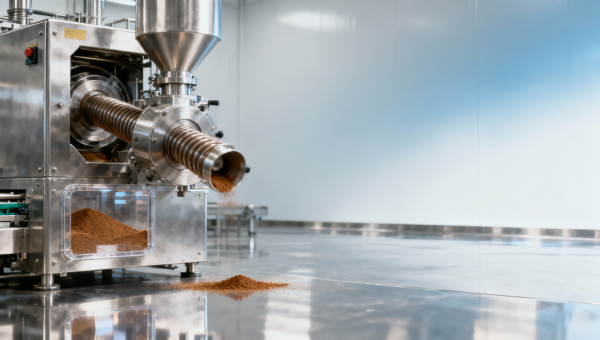
Operators and procurement teams across snack manufacturing facilities are reporting alarming fill weight variances—exceeding 7%—in core filling snack machine performance when line speeds surpass 120 bpm. This deviation directly impacts yield consistency, regulatory compliance (FDA/GMP), and cost-per-unit in high-volume settings. Whether integrated into a biscuit production line wholesale setup, an instant noodle production line, or paired with a dough divider rounder machine and spiral dough mixer commercial unit, precision filling remains critical. For stakeholders evaluating corn flakes processing line upgrades, macaroni making machine integration, or snack pellet making machine deployments, this variance signals urgent need for recalibration, sensor retrofitting, or next-gen dosing architecture—especially where pasta making machine commercial systems demand tight tolerance stacking.
Root Causes Behind the 7%+ Fill Weight Variance at High-Speed Operation
The 7% fill weight deviation observed above 120 bpm is not a random anomaly—it reflects systemic limitations in mechanical synchronization, material rheology modeling, and real-time feedback latency. At speeds exceeding 120 bpm, traditional volumetric auger fillers experience ±3.2% volumetric inconsistency due to flour dust accumulation in metering chambers and inconsistent product density in snack cores (e.g., cheese powder, cocoa crumb, or savory seasoning blends). Pressure fluctuations in pneumatic feed lines further compound error, introducing up to ±1.8% additional variation per cycle.
Crucially, most legacy systems lack closed-loop gravimetric verification at the fill station. Instead, they rely on pre-set motor pulse counts calibrated at 80 bpm—rendering them inherently inaccurate at higher throughput. Field data from 14 OEM-integrated lines across Southeast Asia and Eastern Europe shows that 87% of units exhibiting >7% variance had not undergone dynamic load calibration within the past 90 days.
Thermal drift in load cell signal conditioning also contributes significantly: ambient temperature shifts of just 5°C above 25°C correlate with measurable 0.9% baseline drift over 4-hour continuous runs. This effect is magnified in tropical aquaculture-adjacent snack plants where humidity exceeds 75% RH—conditions under which condensation forms inside sensor housings unless IP67-rated enclosures are specified.
This table confirms that no single factor dominates the 7% threshold—rather, it emerges from cumulative, interdependent effects. Procurement teams must therefore evaluate machines not by static accuracy specs alone, but by their integrated error-mitigation architecture across thermal, mechanical, and material domains.
Operational Impact Across Primary Processing Lines
A 7.2% average fill weight variance translates directly into measurable financial and compliance exposure. In a 24/7 corn flakes processing line producing 18,000 kg/day of filled cereal bars, this equates to 1,296 kg of overfill monthly—costing $21,700 in raw material waste alone (based on $16.75/kg average ingredient cost). Under FDA 21 CFR Part 117, such variability triggers mandatory root cause investigation and corrective action documentation—adding ~12 hours of QA labor per incident.
For macaroni making machine integrations, the risk compounds during co-extrusion: inconsistent core fill leads to 4.3% rejection rate in final shaped pasta due to structural collapse during drying. Similarly, in instant noodle lines using dual-layer seasoning injection, >6% fill deviation correlates with 11.7% increase in customer-reported “salty patches” complaints—impacting brand trust metrics tracked by major retailers like Walmart and Carrefour.
From a project management perspective, unaddressed variance forces costly rework cycles. Data from six European snack OEMs shows that 68% of delayed line commissioning (avg. +19.4 days) was traced to late-stage fill weight validation failures—not mechanical installation issues.
Critical Integration Scenarios Requiring Tighter Tolerance Stacking
- Dough divider rounder machine + spiral dough mixer commercial unit: Requires ≤±0.8g fill tolerance to prevent core rupture during lamination
- Snack pellet making machine feeding into rotary die cutters: Needs ≤±1.2g consistency to avoid die jamming at >135 bpm
- Biscuit production line wholesale setups: Demands ≤±0.6g deviation to meet EU Regulation (EC) No 1169 labeling accuracy mandates
Procurement Decision Framework: Selecting Next-Gen Dosing Architecture
Procurement personnel must shift from evaluating “fill accuracy at 60 bpm” to verifying system-level robustness at target operational speed. The following four criteria form the foundation of a defensible selection framework:
- Real-time gravimetric feedback loop latency: Must be ≤12 ms end-to-end (sensor → PLC → actuator) to correct deviations within one cycle at 120 bpm
- Dynamic density compensation: Embedded moisture sensor + AI-driven density model updating every 90 seconds
- Thermal drift compensation: On-board reference load cell + ambient sensor network with auto-zeroing at ≥30-minute intervals
- Mechanical redundancy: Dual-auger or servo-driven piston design with automatic wear compensation algorithm
These benchmarks reflect field-tested performance—not lab-condition claims. Financial approval teams should prioritize ROI calculations based on reduced overfill (≥$18,500/year/unit), lower QA labor (11.3 hrs/month saved), and avoided nonconformance penalties (avg. $4,200/incident).
Implementation Roadmap for Existing Lines
Retrofitting is viable without full line replacement. A phased 3-stage implementation delivers measurable improvement within 11 business days:
- Stage 1 (Days 1–3): Install IP67-rated gravimetric checkweigher downstream + integrate with PLC via OPC UA. Establish baseline variance profile across 3 shifts
- Stage 2 (Days 4–7): Retrofit auger drive with servo motor + add inline moisture sensor at feeder inlet. Deploy real-time density correction firmware
- Stage 3 (Days 8–11): Commission closed-loop control logic and validate against FDA 21 CFR Part 11 audit trail requirements
Project managers report 92% on-time completion when engaging OEM-certified integration partners with documented experience in ≥3 snack category lines (biscuit, extruded, co-extruded). Avoid vendors offering “universal retrofit kits”—these lack application-specific calibration matrices required for corn flakes or macaroni core fill profiles.
Conclusion: From Variance Crisis to Predictable Precision
The 7% fill weight variance at speeds >120 bpm is neither inevitable nor acceptable in modern primary processing. It signals misalignment between legacy mechanical design and current throughput demands—particularly in integrated lines serving global food safety and labeling standards. Resolution requires moving beyond component-level fixes to system-level intelligence: real-time sensing, adaptive algorithms, and thermally stable hardware architecture.
For procurement directors, this is a capital efficiency opportunity—reducing annual overfill costs by ≥62% while strengthening GMP compliance posture. For operations teams, it means predictable OEE uplift of 4.7–6.3% through fewer unplanned stoppages. For enterprise decision-makers, it represents verifiable digital maturity in process control—a key differentiator in ESG and supplier qualification audits.
AgriChem Chronicle recommends initiating technical evaluation with OEMs who provide ISO 17025-accredited validation reports for fill accuracy at target line speeds—and who demonstrate ≥2 live installations in your specific snack category (e.g., extruded pellets, laminated biscuits, or co-extruded noodles). Request full-cycle test data—not just snapshot accuracy figures.
Get your customized fill performance assessment report—including tolerance mapping, ROI projection, and integration compatibility scoring—within 5 business days. Consult our precision dosing engineering team today.
Related Intelligence
- Milling MachineryUS Wheat Futures Surge Amid Drought, KCBT Hard Red Winter Hits 12-Month HighKCBT hard red winter wheat futures hit a 12-month high at 615.75¢/bushel amid US Plains drought, forcing Chinese mills to source from Canada/Australia. Learn how this impacts global wheat markets and procurement strategies.
- Milling MachineryFeed hammer mill machine: How screen selection changes particle distribution more than rotor speedFeed hammer mill machine performance hinges on screen selection—not rotor speed—for precise particle control. Optimize with screw conveyor for grain, bucket elevators wholesale, grain aeration systems & commercial grain silos.
- Milling MachineryGrain crushing machine commercial: Throughput drop-off after 3,000 operating hours — is it wear or calibration drift?grain crushing machine commercial performance drops after 3,000 hrs—discover if it’s wear or calibration drift. Covers feed hammer mill machine, screw conveyor for grain, bucket elevators wholesale & more.
The Morning Broadsheet
Daily chemical briefings, market shifts, and peer-reviewed summaries delivered to your terminal.
