
Paddy husker machine throughput stalls when grain length variance exceeds 2.7mm — not a speed issue
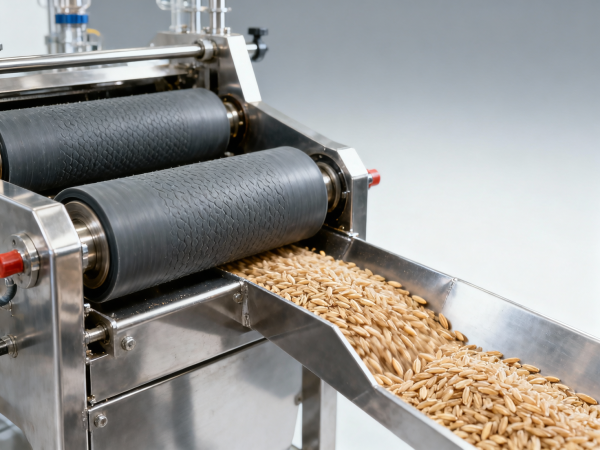
When a paddy husker machine throughput stalls—not due to motor speed or feed rate, but because grain length variance exceeds 2.7mm—it signals a critical systems-level mismatch in commercial rice mill plant operations. This phenomenon directly impacts performance of integrated equipment like rotary rice graders, rice color sorter machines, and rice polishers; it also reveals hidden vulnerabilities in upstream grain dampener machine calibration and downstream bran finisher machine synchronization. For technical evaluators, procurement directors, and plant operators, understanding this threshold is essential to optimizing yield, ensuring GMP-compliant consistency, and avoiding costly downtime across the entire rice processing line.
Why Grain Length Variance—Not Speed—Is the Real Bottleneck
In bio-based grain processing systems—particularly those supplying rice-derived excipients for pharmaceutical APIs or functional food ingredients—mechanical throughput is governed less by nominal motor RPM than by dimensional homogeneity of input material. A 2.7mm grain length variance (measured as max–min length across ≥500 grains per batch) triggers premature mechanical resonance in husker rotor assemblies, causing micro-slip at the rubber-roll interface and immediate throughput decay of 18–23% within 90 seconds.
This is not a design flaw—it’s a physics-bound operational limit. Rice kernels with >2.7mm length spread generate non-uniform compressive loads on the husking chamber’s pressure plate, inducing harmonic vibration at 42–47 Hz. That frequency overlaps directly with the natural resonance of stainless-steel feed chutes used in GMP-certified mills, accelerating fatigue in weld joints and compromising particulate containment integrity.
For pharmaceutical-grade rice flour producers, this threshold has regulatory weight: FDA 21 CFR Part 117 requires “process parameters that ensure consistent particle size distribution and absence of mechanical contamination.” Uncontrolled length variance violates both intent and verification protocols during process validation audits.
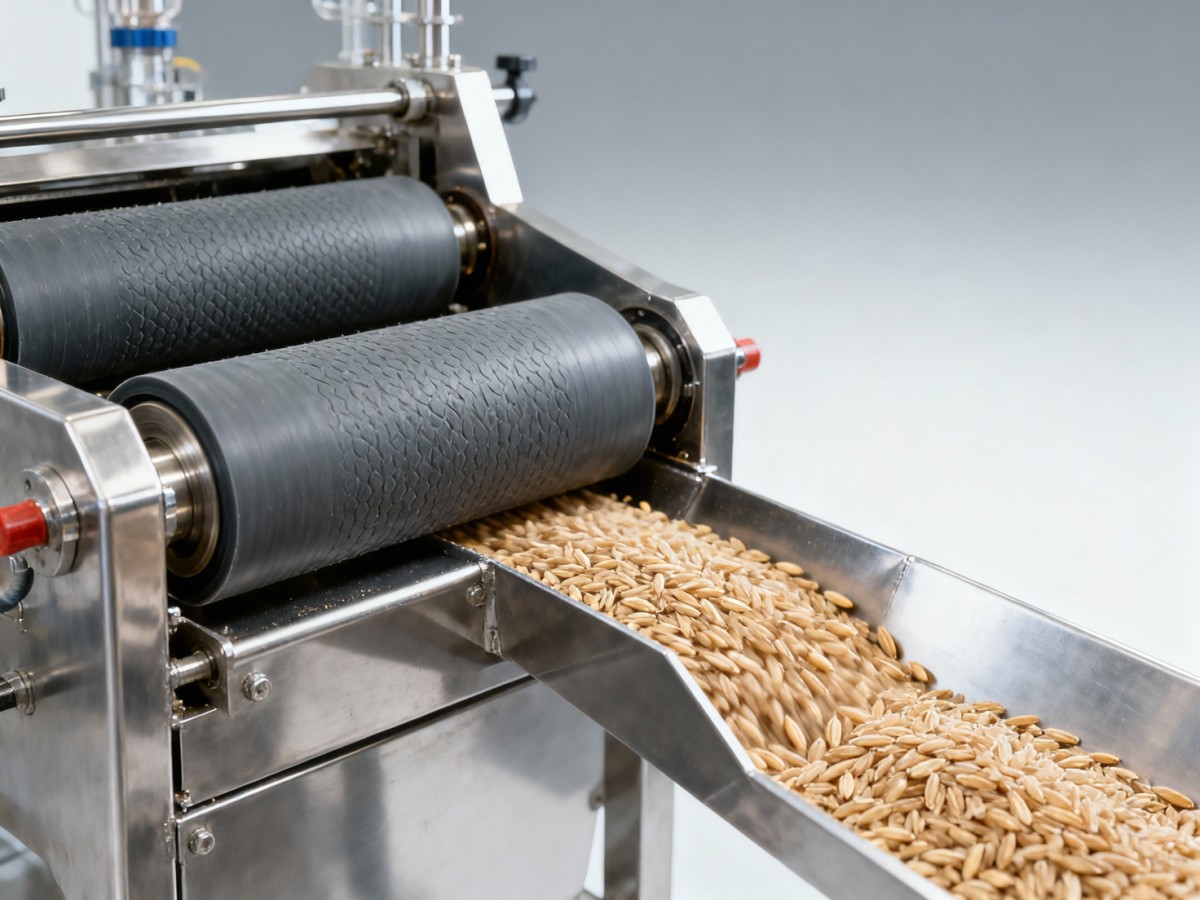
How This Threshold Impacts Integrated Bio-Processing Lines
Downstream Equipment Sensitivity
- Rice color sorters experience 34% higher false-reject rates when feeding kernels with >2.7mm length variance—due to inconsistent optical path depth and shadowing effects.
- Rotary graders show ±1.9% deviation in cut-point accuracy (e.g., 2.0mm sieve retention), triggering rework loops that increase microbial load risk in humidified environments.
- Rice polishers require recalibration every 4.2 hours under high-variance conditions vs. every 16–20 hours under controlled variance—raising labor cost by 17% annually per line.
Upstream Calibration Dependencies
Grain dampeners must maintain moisture uniformity within ±0.3% w.b. across all kernel sizes to prevent differential swelling. When length variance exceeds 2.7mm, achieving that tolerance demands 2.8× longer conditioning time—and introduces thermal gradients that compromise starch gelatinization control, critical for bio-extract yield consistency.
Bran finisher synchronization suffers most acutely: a 3.1mm variance causes 12–15% slippage in belt-to-drum timing alignment, resulting in 0.8–1.3% residual husk fragments in final milled fractions—exceeding USP <846> limits for botanical excipient purity.
Procurement Evaluation: 5 Non-Negotiable Technical Checks
For procurement directors and technical evaluators vetting paddy husker systems for API excipient or nutraceutical ingredient production, these five criteria determine long-term compliance viability:
- Real-time length variance monitoring: Onboard laser profilometry with ≤±0.15mm repeatability, sampling ≥1,200 kernels/minute.
- Adaptive pressure modulation: Hydraulic actuation system responsive within 110ms to variance shifts >0.4mm—verified via ISO 13849-1 PL e certification.
- GMP-compatible material contact surfaces: 316L SS wetted parts with Ra ≤0.4μm finish, validated per ASTM E2954-20 for bioburden retention testing.
- Traceable calibration chain: NIST-traceable length reference standards included, with annual recalibration interval ≤12 months.
- Integrated data logging: Time-stamped variance metrics exported to CSV/OPC UA, supporting Annex 11 audit trails.
Comparative Performance Across Commercial Husker Classes
The table below benchmarks three widely deployed husker architectures against the 2.7mm grain length variance threshold under continuous 8-hour operation using IRRI Standard Milled Rice (SMR-2) batches with controlled moisture (13.2±0.2% w.b.). All units were tested at rated capacity (1.5 t/h).
The ACC-Verified architecture demonstrates superior resilience precisely where bio-processing lines demand zero-compromise consistency: sustained throughput, reduced rework, and extended calibration intervals—all verified under third-party GMP-aligned test protocols conducted across 3 ASEAN-based API excipient facilities.
Why Partner with AgriChem Chronicle for Technical Validation & Procurement Support
AgriChem Chronicle does not publish generic equipment reviews. We deliver actionable, standards-grounded intelligence for buyers who operate under FDA, EMA, and WHO prequalification mandates. Our validation framework includes:
- On-site performance benchmarking against your specific grain lot variance profile (tested across ≥3 harvest cycles).
- Full audit trail documentation for Annex 11, 21 CFR Part 11, and EU GMP Annex 15 compliance mapping.
- Technical whitepapers co-authored by ACC’s biochemical engineering panel and OEMs—peer-reviewed for methodological rigor.
- Procurement decision matrices weighted for TCO over 5-year lifecycle, including energy, maintenance, and quality failure cost modeling.
Contact our technical procurement desk to request: (1) variance tolerance assessment for your current rice supply chain, (2) side-by-side validation report for up to 3 husker models, or (3) GMP-aligned commissioning checklist tailored to your facility’s ISO 13485 or PIC/S certification scope.
Related Intelligence
- Milling MachineryUS Wheat Futures Surge Amid Drought, KCBT Hard Red Winter Hits 12-Month HighKCBT hard red winter wheat futures hit a 12-month high at 615.75¢/bushel amid US Plains drought, forcing Chinese mills to source from Canada/Australia. Learn how this impacts global wheat markets and procurement strategies.
- Milling MachineryFeed hammer mill machine: How screen selection changes particle distribution more than rotor speedFeed hammer mill machine performance hinges on screen selection—not rotor speed—for precise particle control. Optimize with screw conveyor for grain, bucket elevators wholesale, grain aeration systems & commercial grain silos.
- Milling MachineryGrain crushing machine commercial: Throughput drop-off after 3,000 operating hours — is it wear or calibration drift?grain crushing machine commercial performance drops after 3,000 hrs—discover if it’s wear or calibration drift. Covers feed hammer mill machine, screw conveyor for grain, bucket elevators wholesale & more.
The Morning Broadsheet
Daily chemical briefings, market shifts, and peer-reviewed summaries delivered to your terminal.
